

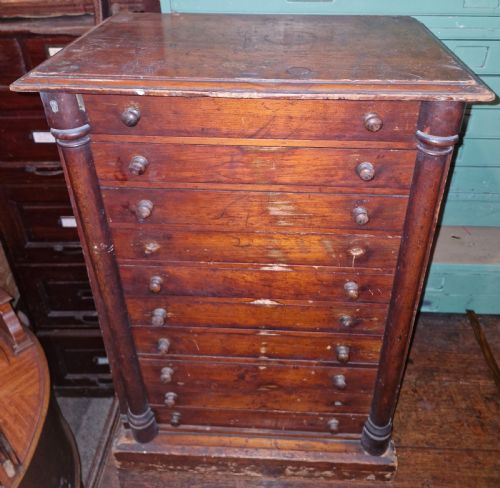


Dark Wood Specimen Cabinet
A dark wood specimen cabinet stores delicate collections in orderly rows, bringing tactile history and structured beauty into a modern interior.
Dark Wood Specimen Cabinet
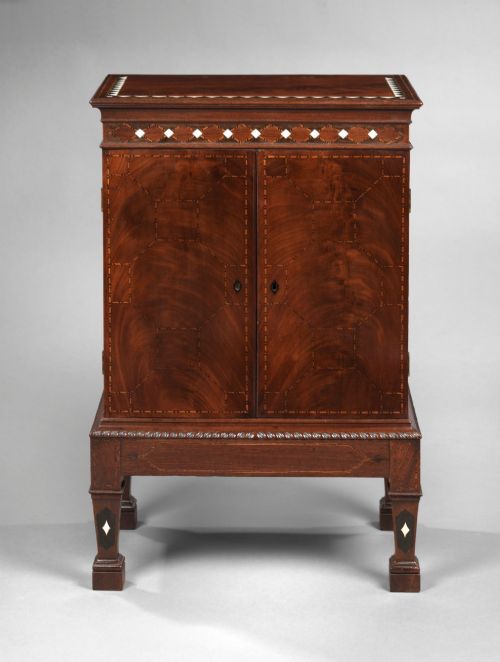
A dark wood specimen cabinet is typically a multi-drawer chest designed to house natural history objects, coins, slides, or instruments. The dark wood specimen cabinet category on this page leans heavily towards mahogany, rosewood, and walnut pieces from the Georgian, Regency, and Victorian periods.
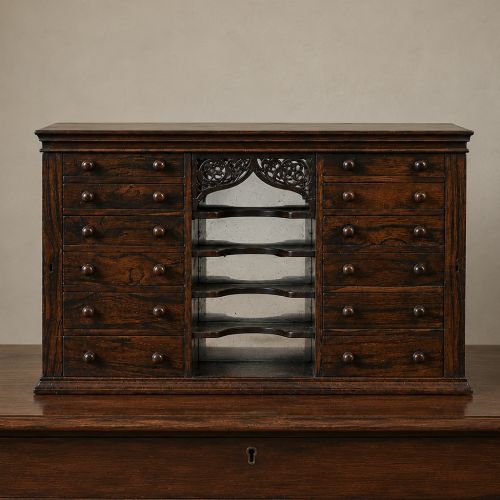
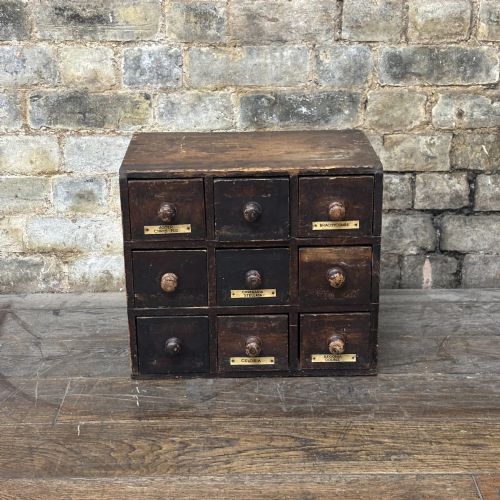
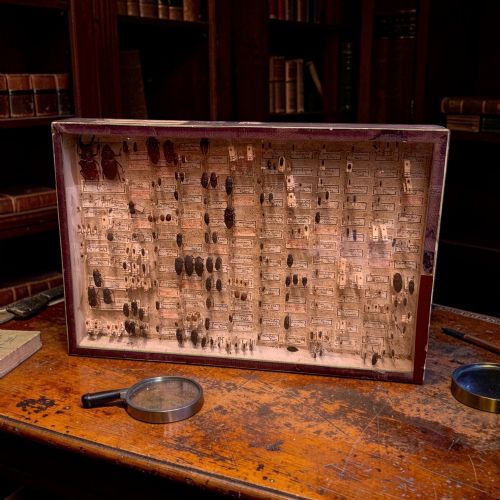
Buyers will encounter various forms ranging from tall collector cabinets and Wellington chests to compact banks of drawers and apothecary chests. Many examples feature numerous shallow drawers tailored for entomology, microscopy slides, or shells, often paired with glass doors or brass hardware.
Origins stretch across the nineteenth century into the early twentieth century, showing specialist uses by florists, watch repairers, and dentists alongside traditional natural history collectors. These pieces combine utilitarian storage with fine cabinet-making.
How they were made
Construction relies on dense hardwoods like solid mahogany, rosewood, and teak, chosen to protect contents and withstand heavy banks of drawers. Secondary timbers such as deal and pine appear in carcases and drawer linings.
Metal fittings include brass drop handles, recessed campaign handles, and lockable glass-fronted doors designed to secure fragile contents. Bone inlay and mirror glass occasionally accent the primary timber structure.
Listings feature woods including mahogany, rosewood, teak, walnut, and pine, spanning the Georgian, Regency, Victorian, and Edwardian periods.
What varies in quality
Quality rests in the density of the drawer arrangement and the precision of the joinery across multi-drawer banks. Maker attribution, such as signed work by identified cabinet-makers, elevates a piece significantly.
The choice of timber grain, the weight and finish of the brass hardware, and the integration of glass-fronted display elements distinguish standard utility storage from exceptional collector pieces.
Brady of Edmonton·Charles William Schofield
The Dark Wood Specimen Cabinet Glossary
- Wellington chest
- A tall, narrow chest of drawers secured by a hinged vertical locking side bar. This locking mechanism protects sensitive contents from unauthorised access.
- Apothecary chest
- A set of small drawers historically used by chemists for storing medicines and dry ingredients. These feature numerous compact compartments.
- Folio cabinet
- A flat storage unit intended for paper, prints, or illustrations. The shallow drawers prevent large sheets from rolling or creasing.
- Deal
- An old term for softwood timber cut from fir or pine. It was commonly utilised for internal framing and drawer construction.
- Entomology case
- A specialised enclosure built for housing insect specimens. These often incorporate airtight seals and glass viewing panels.
Dark Wood Specimen Cabinet: Frequently Asked Questions
What did people store in these cabinets?
These cabinets originally held natural history specimens, microscope slides, shells, coins, and specialised tools for trades like dentistry and watch repair. Their numerous shallow drawers kept delicate items separated and organised.
Over time, collectors adapted them to store anything from jewellery to small keepsakes, making them practical for modern organisation.
How do I date a dark wood specimen cabinet?
Dating relies on examining the timber species, handle styles, drawer construction methods, and secondary woods like pine or deal. Georgian and Regency pieces show different proportions and dovetail tightness compared to late Victorian or Edwardian examples.
Makers' stamps, brass hardware designs, and glass types also offer reliable clues to the decade of manufacture.
Are the drawers interchangeable?
In period multi-drawer cabinets, drawers are often individually fitted to their specific slots during initial construction. Wood movement over centuries means they usually belong in their original positions.
Forcing a drawer into a different slot can damage the runners or the interior sides of the carcase.
How should I clean dark wood surfaces?
Maintain the timber using a soft, dry cloth to remove dust without scratching the polished finish. Avoid modern silicone sprays or abrasive cleaners that penetrate the grain.
An occasional application of traditional beeswax feeds the antique wood and preserves the depth of the mahogany or rosewood surface.