



Dark Wood Serving Console
A dark wood serving console brings a commanding presence to a dining room, combining functional surface area with rich timber grain.
Dark Wood Serving Console
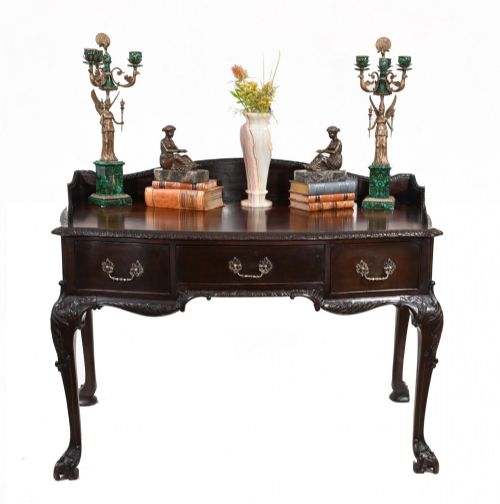
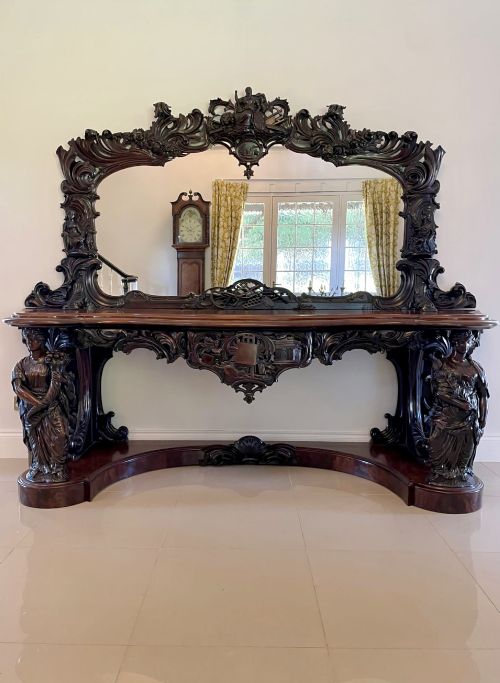
A dark wood serving console is a heavy timber table designed to hold food, silver, or linens during dining, most frequently appearing in mahogany across Georgian, Regency, and Victorian periods.
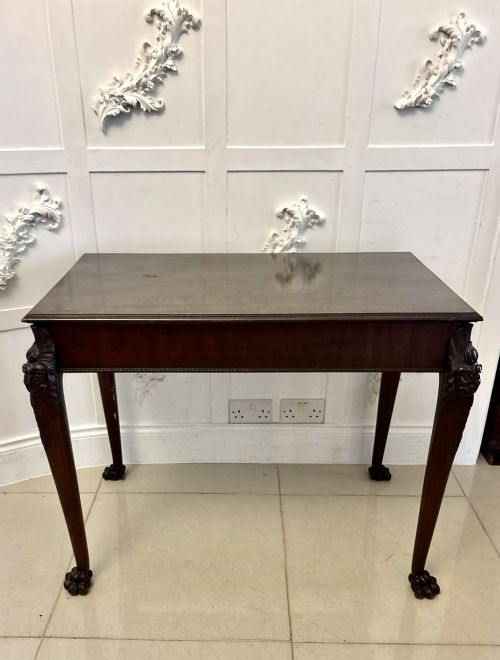
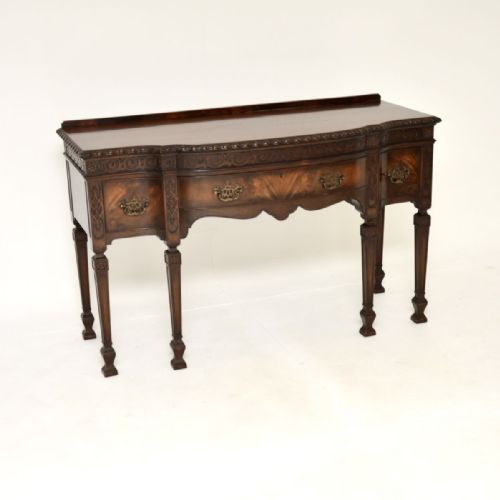
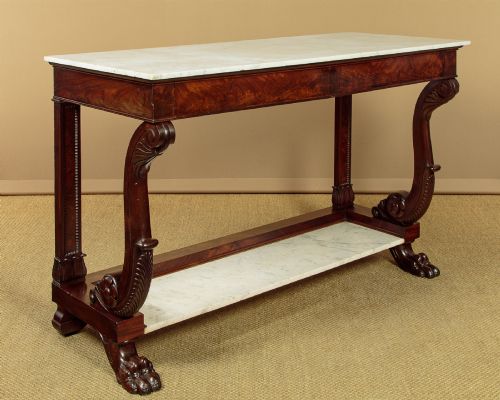
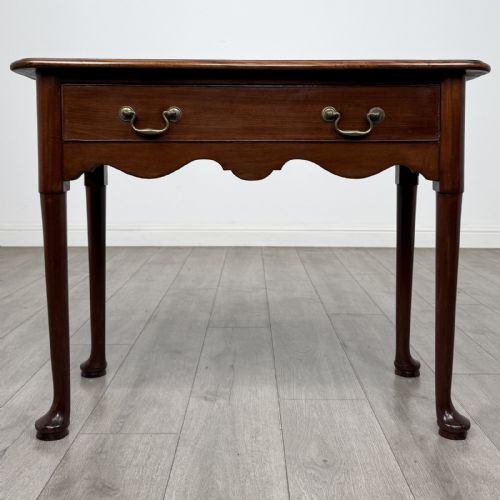
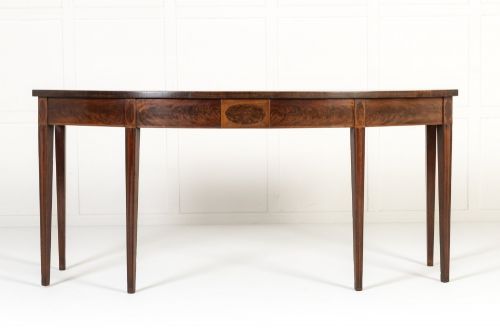
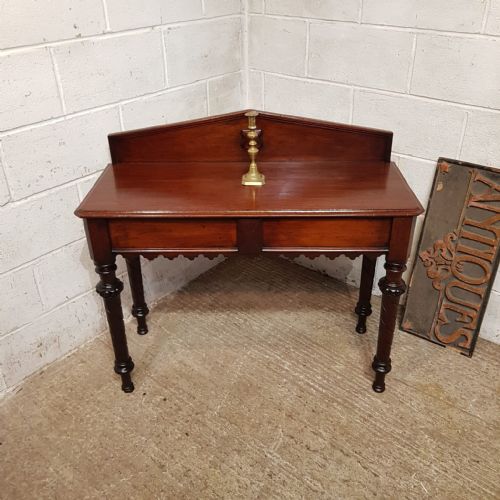
The versions most common on this page span the eighteenth and nineteenth centuries, taking forms such as serving tables, sideboards, and console tables with rectangular or serpentine tops.
Originating largely from English workshops, these pieces also include Irish and Scottish examples alongside continental walnut and oak variants.
How they were made
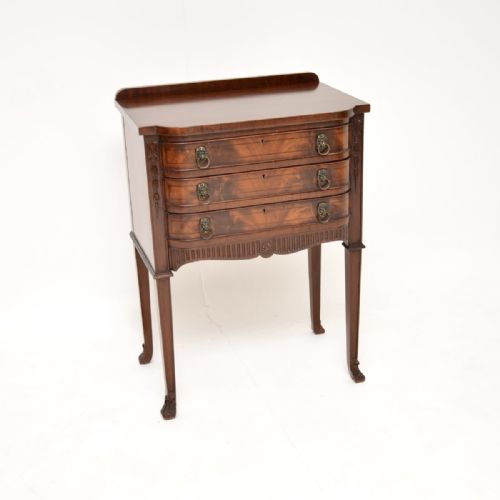
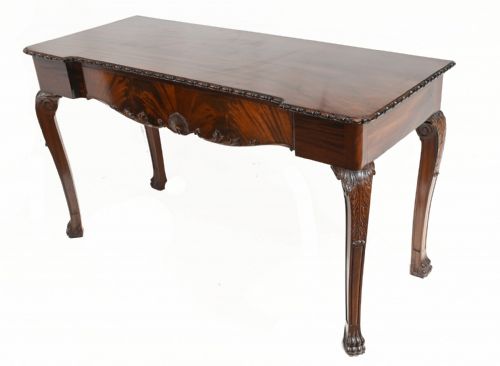
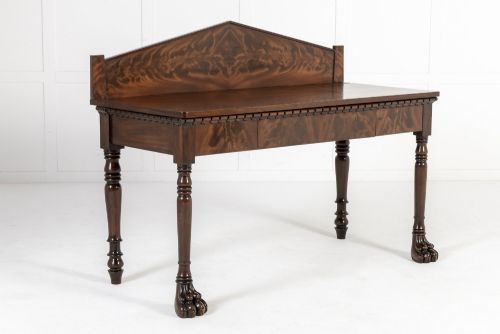
Cabinet makers built these consoles primarily from solid mahogany and oak, frequently applying flame mahogany veneer to tabletops to highlight figuring in the timber.
Joinery techniques relied on sturdy frames, sometimes reinforced with brass hardware, iron fittings, or stretchers, while embellishments included hand-carved mahogany details and inlaid satinwood.
Surface finishing involved polishing the dense woods to a deep sheen, which emphasised the natural colour variations of the grain.
Dark Wood Serving Console Retail Price Guide 2026
Typical asking prices for dark wood serving console among the pieces listed under this phrase on Sellingantiques today, from the lower quarter to the upper quarter. They describe what is for sale here now, not the wider market.
The listings on this site feature mahogany predominantly, alongside oak, walnut, and satinwood across periods spanning the seventeenth to the twentieth century.
What varies in quality
The grade of timber dictates much of the distinction, separating tables made with highly figured flame mahogany veneer or solid dense oak from those utilising simpler secondary woods.
Carving depth and execution set exceptional examples apart, where hand-carved mouldings and crisp geometric or floral motifs show superior artisan control.
Proportion and scale also define finer pieces, particularly in serpentine or Irish Regency forms where balanced curves require precise geometric alignment.
Gillows·Mack Williams And Gibton·Whytock And Reid
The Dark Wood Serving Console Glossary
- Serpentine
- A front edge or tabletop shaped with a convex centre flanked by concave curves. This contour requires skilled carpentry to execute cleanly.
- Flame mahogany veneer
- A thin slice of mahogany timber cut from the branch junction to produce a flamy, flickering pattern. It was widely applied to prominent surfaces during the Georgian and Regency eras.
- Console table
- A table designed to stand against a wall, frequently supported by wall brackets or distinct legs. In dining contexts, it functioned alongside larger sideboards.
- Stretcher
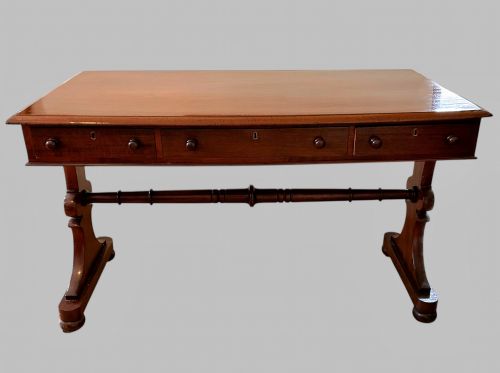
- A horizontal support connecting the legs of a table to increase stability. They appear frequently in earlier seventeenth and eighteenth-century forms.
- Pediment
- A decorative crowning feature above a mirror back or superstructure. It is found on exhibition-quality Victorian variants.
Dark Wood Serving Console: Frequently Asked Questions
Where should I place a dark wood serving console?
These tables suit dining rooms or wide hallways where surface space and a substantial timber presence are required. They anchor a wall neatly when paired with a mirror or painting above.
Because many historical examples are deep or long, measure the clearance carefully to ensure foot traffic flows freely past the piece.
How do I care for mahogany surfaces?
Dust the timber regularly with a soft, dry cloth to prevent particulate buildup in the grain. Avoid silicone sprays that can damage historic polish.
Keep the console away from direct heat sources and strong sunlight, which can fade the dark wood tones and dry out the veneer.
What is the difference between a serving table and a sideboard?
Serving tables generally offer an open frame underneath the tabletop, sometimes featuring one or two shallow drawers within the apron. Sideboards evolved to include enclosed cupboards and deeper storage compartments.
Both served similar dining functions, but open consoles prioritize lighter proportions and display space.
How can I tell a Georgian console from a Victorian revival piece?
Georgian pieces display the construction methods, timber maturity, and proportion typical of eighteenth-century workshops. Revival pieces from the nineteenth or twentieth century often feature heavier proportions and more exuberant carving.
Examining the secondary woods underneath and inside the drawers helps clarify the period of manufacture.