
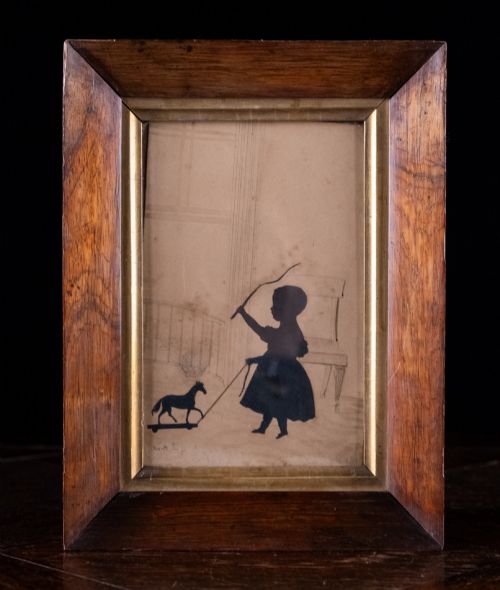
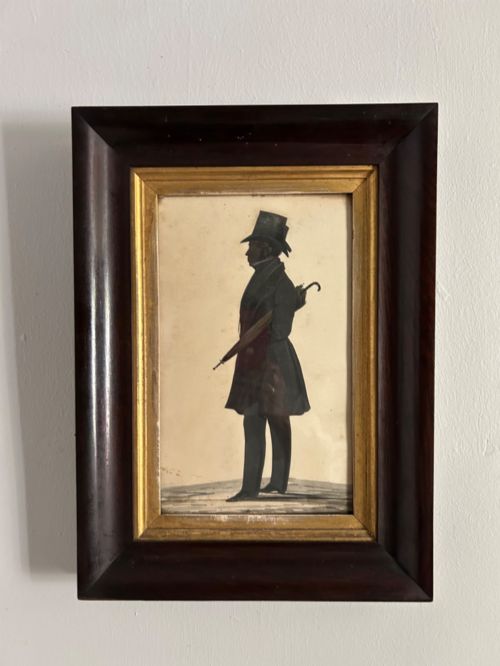


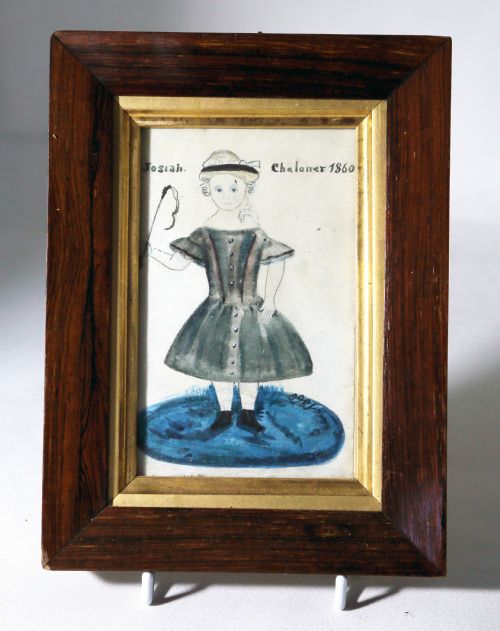


Dark Wood Portrait Miniature
A dark wood portrait miniature brings an intimate piece of history to your wall, capturing faces from past centuries in miniature frames.
Dark Wood Portrait Miniature
A dark wood portrait miniature encompasses small-scale likenesses housed within timber surrounds, frequently emerging from the nineteenth century and the Victorian era. These pieces capture individual subjects through varied mediums, ranging from silhouettes to oil paintings on copper and delicate watercolour works.
Originating across distinct historical periods such as the seventeenth, eighteenth, and nineteenth centuries, these works display stylistic influences from the Georgian era, Regency period, French Empire, and Gothic Revival. The presence of rosewood frames and darker timber housings defines the visual grouping.
Materials and construction
Makers utilised dense timbers such as rosewood to construct the protective frames that house these small likenesses, often pairing the dark wood with internal glass covers. The portraits themselves were executed using oil paint, watercolour, and ink on diverse substrates including paper, copper, and prepared panels.
Detailing frequently involved fine brushwork for oil paintings and precise cutting techniques for silhouette portraits. Gold leaf elements occasionally accented the composition or framing, while backing papers and historical annotations provided context to the rear of the piece.
Some nineteenth-century subjects come with chatty rear notes, proving people could not resist leaving backstory even back then.
Assessing quality and execution
The construction and preservation of the dark wood frame also determine the overall standard, alongside the survival of original glass and backing materials. Pieces that retain contemporary annotations or documented histories offer greater insight into their original subjects.
Augustin Edouart·Hubard Gallery·Skeolan
The Dark Wood Portrait Miniature Glossary
- Portrait miniature
- A small-scale painting or likeness created on materials such as copper, paper, or panel. Artists employed fine miniature techniques to render detailed human subjects within restricted dimensions.
- Rosewood
- A heavy, durable timber featuring pronounced dark grain patterns, frequently chosen for nineteenth-century picture frames. This material provided a rich, dark border that contrasted with the lighter portrait within.
- Oil on copper
- A painting technique where artists applied oil pigments directly onto a prepared copper sheet. This substrate offered a smooth surface that allowed for exceptional detail and longevity in small formats.
Dark Wood Portrait Miniature: Frequently Asked Questions
What periods do these miniatures come from?
The pieces span several centuries, with examples originating from the seventeenth, eighteenth, and nineteenth centuries. Victorian works and items dated around eighteen sixty appear frequently.
Specific stylistic traits align with Georgian, Regency, and Gothic Revival aesthetics, reflecting the changing tastes of each era.
What materials were used for the portraits?
Artists employed watercolour, oil paint, ink, and cut paper to create the likenesses. Substrates include paper and copper panels.
Frames are constructed primarily from dark woods like rosewood, often protected with glass fronts.
Are these portraits usually signed or identified?
Some pieces feature attributions to specific silhouette artists or galleries, while others include historical annotations to the rear. These notes often record the dates and identities of the subjects.
Many nineteenth-century works remain uncredited to individual makers but retain stylistic markers of their period.
How should I display a dark wood portrait miniature?
These framed works are intended for wall display, either individually or grouped as pairs. Their compact scale suits smaller wall spaces or gallery arrangements.
Placement should avoid direct sunlight to protect delicate watercolours, paper silhouettes, and organic wood frames.