
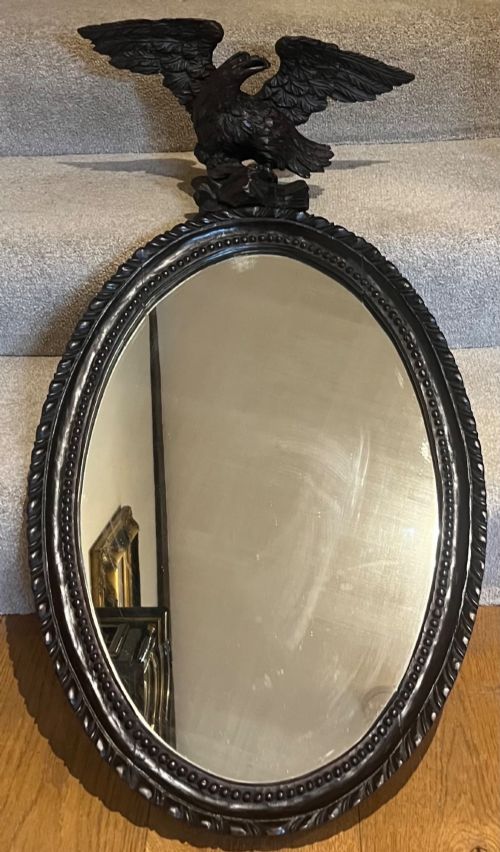


Dark Wood Oval Mirror
A dark wood oval mirror brings warmth and a distinct classical silhouette to any wall.
What these pieces are
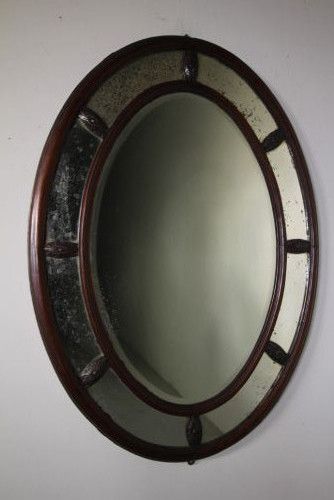
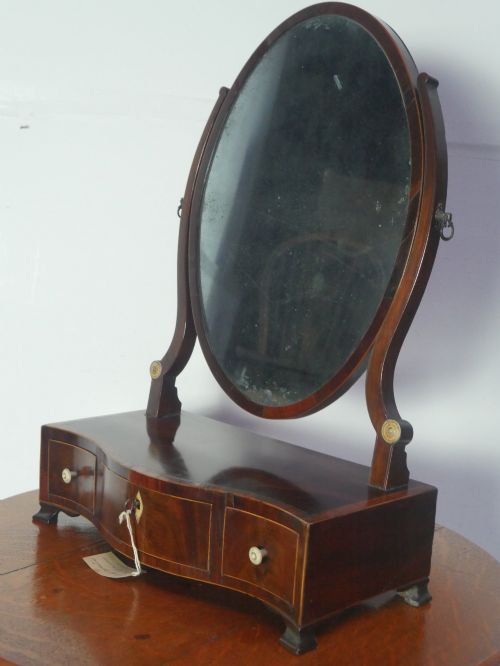
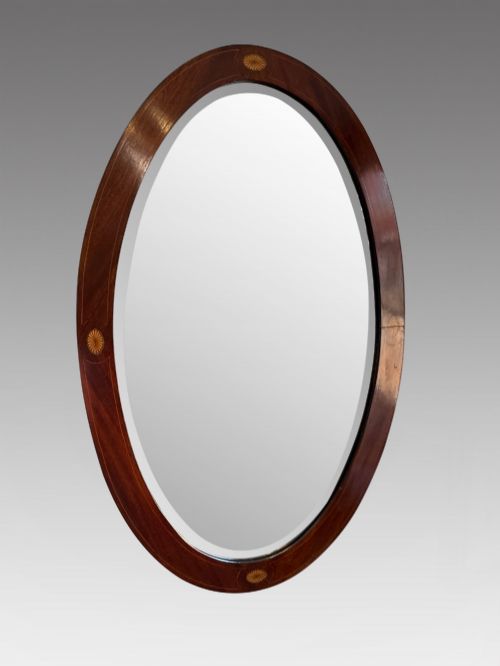
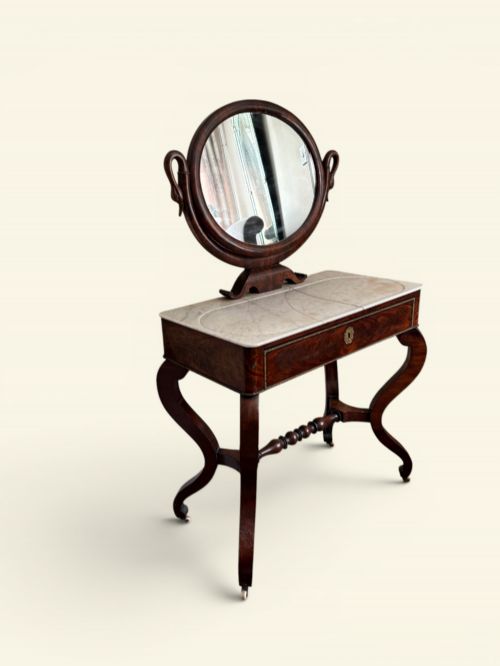
A dark wood oval mirror offers a compact yet striking vertical form designed for wall hanging. The selection spans the late nineteenth century and the early twentieth century, capturing Victorian, Edwardian, and Art Nouveau aesthetics.
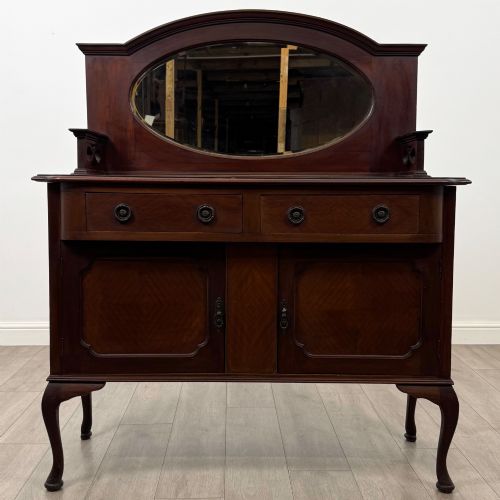
Most examples found here take the form of wall mirrors executed in oak, beech, mahogany, and wood veneer. These pieces reflect the shift from heavy nineteenth century revivalism to cleaner twentieth century domestic forms.
How they were made
The construction relies upon solid timbers such as oak, beech, and mahogany, alongside applied wood veneer. Artisans shaped these materials using traditional joinery and turning techniques suited to curved frames.
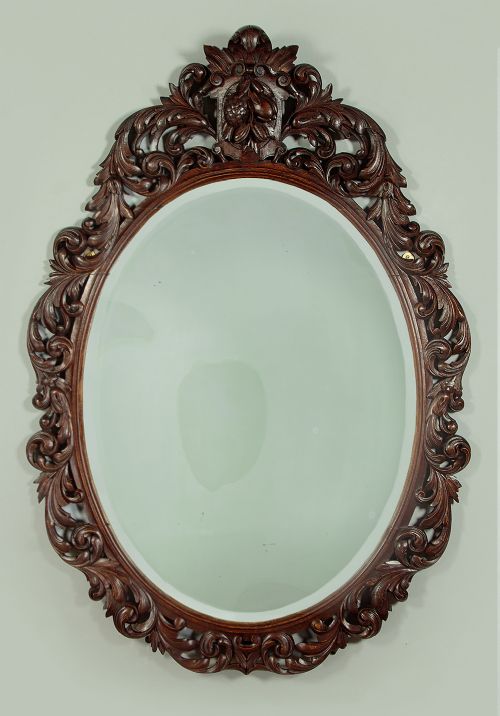
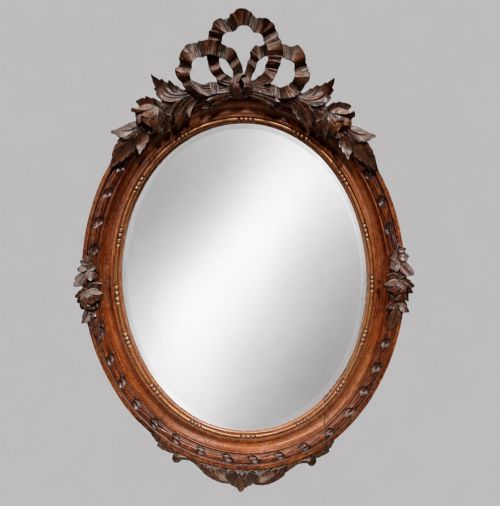
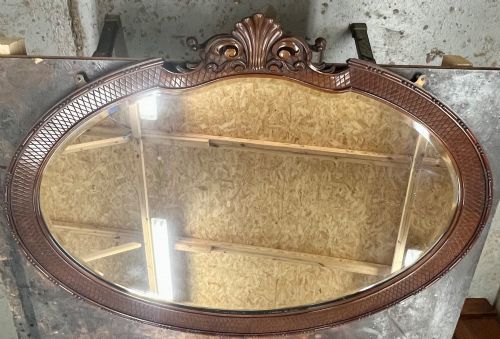
Decoration often involves hand carving directly into the timber, producing relief work and textural contrast across the frame. Mirror glass is fitted securely within the rebated wooden back of the oval aperture.
Retail Price Guide 2026
Typical UK retail prices for dark wood oval mirror, calculated from the Sellingantiques database of over a million retail prices indexed since 2003. This retail price guide relies exclusively on Sellingantiques data; no external sources or auction records are used, so the figures do not describe the wider market.
Every single piece on this page keeps its oval shape, steadfastly refusing to be a square.
What varies in quality
Quality rests in the depth and precision of the carved detail rather than the mere presence of decoration. Pieces featuring finely carved elements exhibit a sharper definition and a more confident handling of the timber.
The choice of primary wood also dictates character, where dense mahogany or figured oak presents a richer grain pattern than simpler beech or plain veneer surfaces.
The Dark Wood Oval Mirror Glossary
- Veneer
- A thin slice of superior wood applied to a secondary timber base to create a decorative surface. This technique allows makers to utilise striking grain patterns while maintaining structural stability.
- Rococo Revival
- A nineteenth century design style characterised by asymmetrical scrollwork, naturalistic motifs, and flowing organic curves. It draws inspiration from the eighteenth century French movement.
- Art Nouveau
- An international style prominent around the turn of the twentieth century, defined by sinuous plant-derived lines and rhythmic ornamentation. It rejects historical revivalism in favour of modern fluidity.
- Bevel
- An angled edge cut along the perimeter of the mirror glass to catch the light. This traditional finishing touch adds depth and refinement to the reflective surface.
Frequently Asked Questions
Where should I hang an oval mirror?
An oval mirror suits narrow wall spaces where a rectangular frame might feel too heavy. It works well above a mantelpiece, in an entrance hall, or paired with a dressing table.
The vertical orientation helps draw the eye upward, creating a sense of increased height and light within smaller rooms.
How do I date these mirrors?
Dating relies on stylistic clues and the choice of materials, such as heavy Victorian carving versus simpler Edwardian or later forms. Examining the timber preparation and the backboards offers further context regarding age.
Periods represented on this page stretch from the late nineteenth century into the nineteen twenties.
Are these mirrors heavy?
Weight depends entirely on the timber used and the thickness of the frame. Solid oak and mahogany examples carry significant weight compared to smaller beech versions.
Proper wall fixings suited to the specific weight of the mirror are essential for secure hanging.
How do I clean the wood frame?
Maintenance requires gentle dusting with a soft, dry cloth to protect the polished timber surface. Avoid harsh chemical cleaners that can strip the historic finish or damage the wood.
Applying a suitable wax occasionally helps nourish older wood and preserves its natural sheen.