





Dark Wood Monk Bench
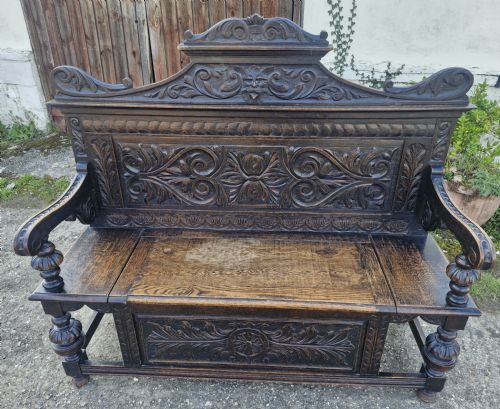
A dark wood monk bench provides seating with a practical hidden compartment, bringing centuries of historic British and European craftsmanship into an entrance hall.
Dark Wood Monk Bench
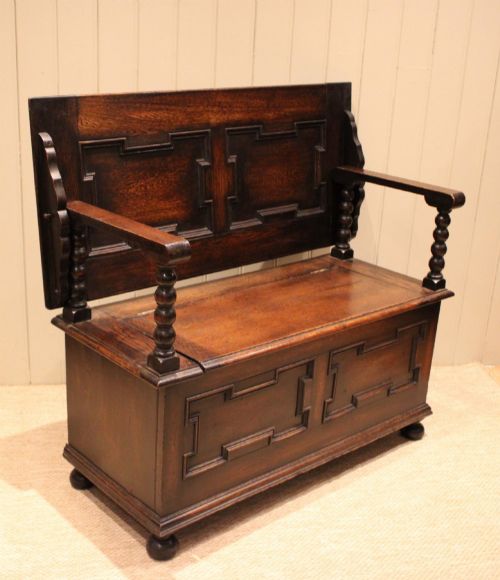
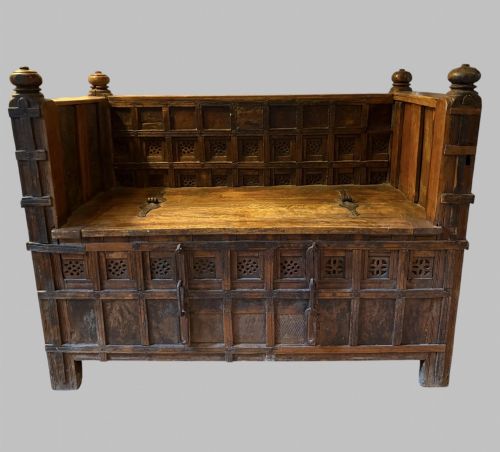
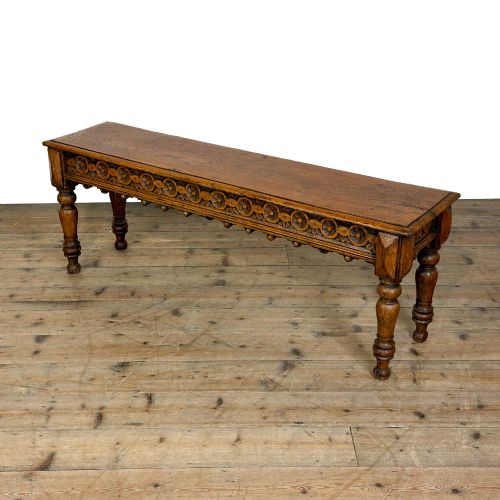
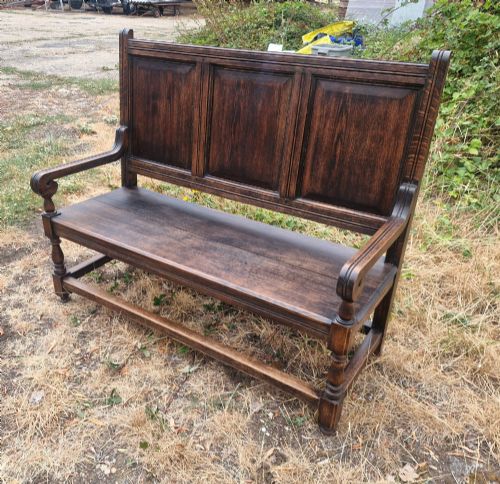
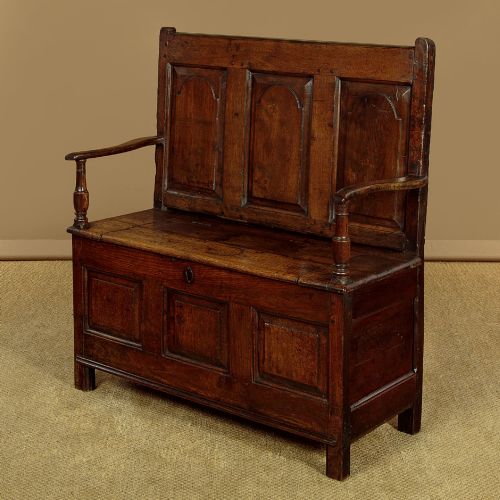
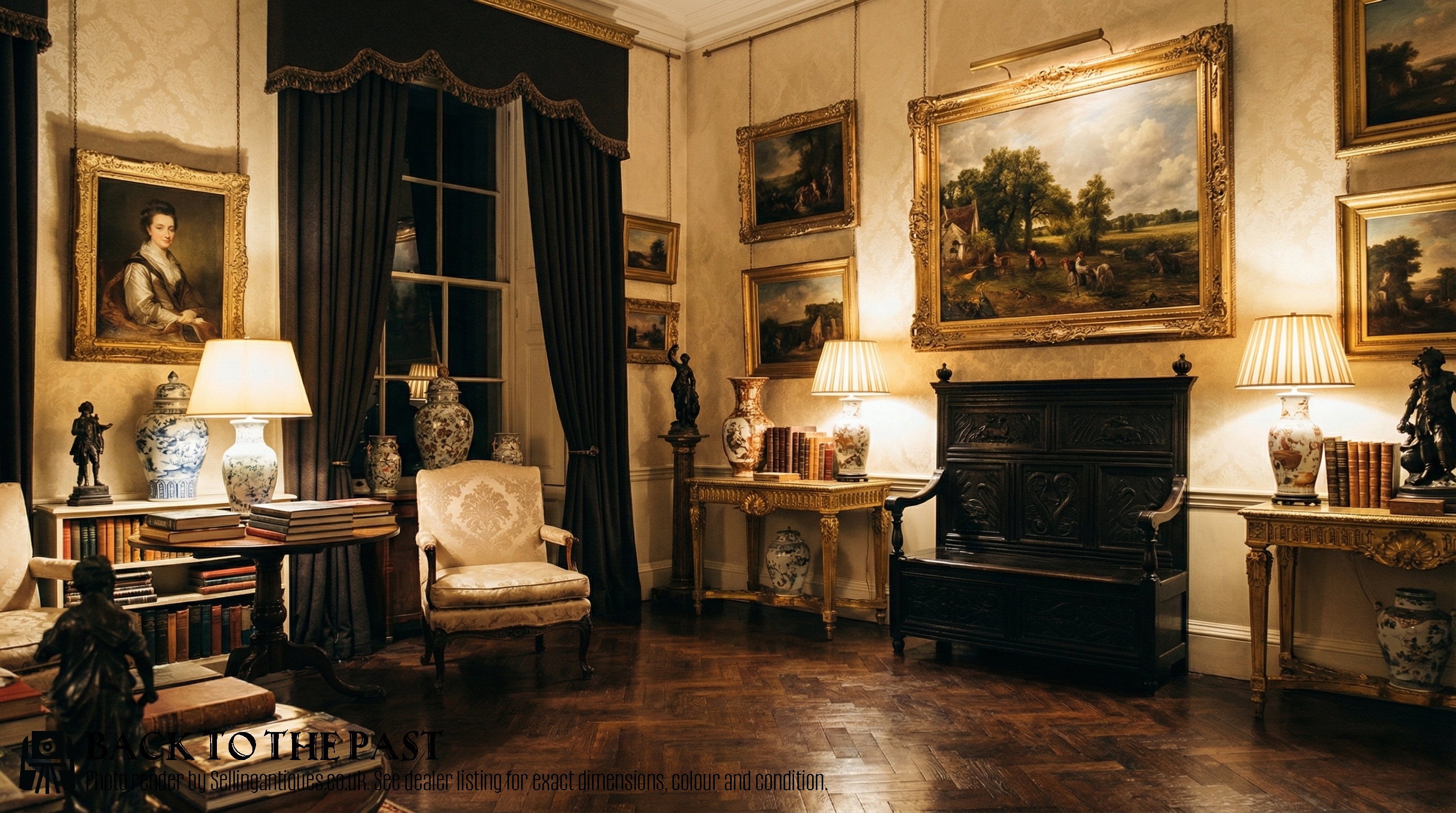
When you search for a dark wood monk bench, you are looking at heavy timber seating designed for hallways, corridors and principal rooms. These functional pieces merge the form of a bench with the storage utility of a chest, often featuring a hinged lid or a pivoting top that transforms the backrest into a table surface. The selection spans centuries of cabinet making, encompassing substantial hall seats, settles and convertible forms.
Materials and Construction Methods
The primary material across these listings is solid oak, supplemented by mahogany and assorted hardwoods. Cabinet makers utilised traditional joinery techniques such as mortise and tenon joints to construct the heavy frames, panelled backs and box seats capable of withstanding daily use. Iron and brass hardware, including hinges, latches and occasional drawers, provide the mechanical support for lift-up lids and storage compartments.
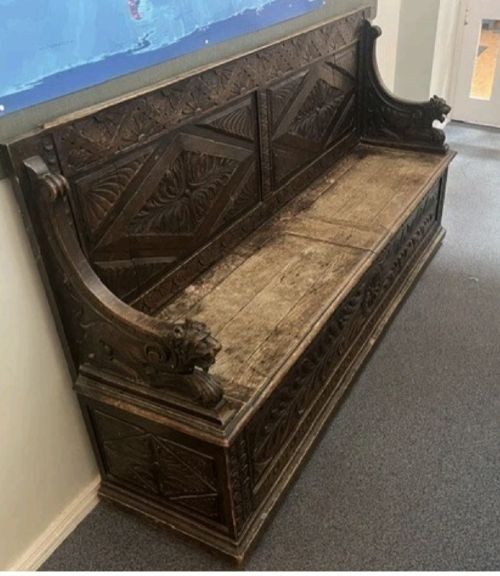
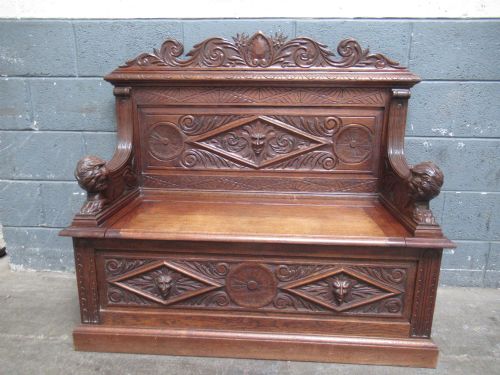
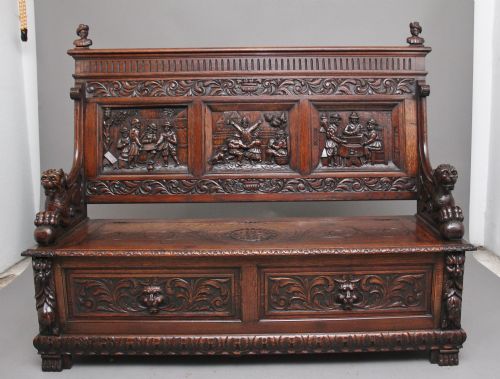
Surface decoration relies heavily on hand carving rather than applied veneers. Carvers cut deep relief patterns into the timber, producing motifs such as scrolling foliage, linenfold panels and figural carvings like Green Man masks. Timber surfaces were typically finished with wax or polish over time, accentuating the natural grain and dark patina of the aged wood.
Dark Wood Monk Bench Retail Price Guide 2026
Typical asking prices for dark wood monk bench among the pieces listed under this phrase on Sellingantiques today, from the lower quarter to the upper quarter. They describe what is for sale here now, not the wider market.
Several pieces feature carved Green Man faces hiding among the foliage, silently watching over the hallway.
Distinguishing Quality in Construction and Age
Quality in these pieces is dictated by the integrity of the timber and the depth of the cabinet work. Superior examples exhibit tightly fitted panel construction, substantial thickness in the seat boards and crisp, well-defined hand carving that integrates naturally with the structural frame. Lesser pieces may display mechanical shortcuts, loose joints or later embellishments applied to plainer antique foundations.
The proportion and balance of the timber also separate ordinary examples from exceptional ones. Finer benches maintain structural symmetry and use well-seasoned heartwood that resists warping, while simpler or later revival iterations may rely on lighter secondary timbers and standardised machine cutting for secondary components.
The Dark Wood Monk Bench Glossary
- Settle
- A wooden bench with a high back, solid arms and a box base designed to keep out draughts. They often served as the primary seat by the hearth in earlier centuries.
- Wainscot
- A term describing furniture constructed with panelled woodwork, mirroring the wall panelling found in period domestic interiors. It denotes solid timber frame and panel construction.
- Green Man
- A sculptural architectural ornament depicting a human face disgorged from foliage or entirely made of leaves. This motif appears frequently on nineteenth-century revival carvings.
- Jacobean Revival
- A nineteenth-century design movement that copied or reinterpreted seventeenth-century English furniture styles. Pieces from this aesthetic feature dark finishes, geometric mouldings and heavy turned supports.
- Box Settle
- A form of seating featuring a hinged seat lid that opens to reveal a storage well beneath. These hybrid items functioned simultaneously as chests and chairs.
Dark Wood Monk Bench: Frequently Asked Questions
How do I date an old monk bench?
Dating relies on examining the construction methods, tool marks and timber characteristics visible on the underside and interior of the piece. Hand-sawn boards, pegged joints and timber shrinkage point towards earlier centuries, while uniform machine sizing suggests later revival periods.
Stylistic clues also provide a reliable guide. Heavy geometric mouldings and dark finishes often align with seventeenth-century origins or nineteenth-century revival interpretations, whereas simpler panel arrangements frequently point to Edwardian or rural European workshops.
Can I use a monk bench as a table?
Many traditional examples feature a pivoting backrest mechanism designed to fold down flat over the arms, converting the seat into a table surface. This dual-purpose design allowed households to maximise space in smaller hallways and living quarters.
When utilising this function, check the pivot pins and hinge points to ensure the mechanism moves smoothly without straining the surrounding timber frame. Placing heavy items on the converted table top should be done with care to protect the historic joints.
How should I care for dark oak furniture?
Maintaining dark oak requires regular dusting with a soft, dry cloth to prevent particulate accumulation in the carved recesses. Applying a traditional beeswax polish periodically helps nourish the timber and preserves the natural patina without sealing the pores.
Keep these pieces away from direct heat sources and drastic humidity fluctuations, which can cause solid wood panels to split or warp. Placing felt pads under the feet helps protect both the furniture base and your hallway flooring.
What is the difference between a settle and a monk bench?
A traditional settle is a high-backed wooden bench with solid sides designed to shield the sitter from draughts, often incorporating a box seat for storage. A monk bench specifically refers to a convertible form where the upper back folds down to create a tabletop.
In many historical and marketplace listings, the terms are used interchangeably to describe heavy dark wood hall seating with enclosed storage compartments. Examining the backrest mechanism reveals whether the piece serves solely as a seat or transforms into a table.