


Dark Wood Leather Chairs
Dark wood leather chairs bring robust timber frames and supple hides together, offering durable seating shaped across multiple historic periods.
Dark Wood Leather Chairs
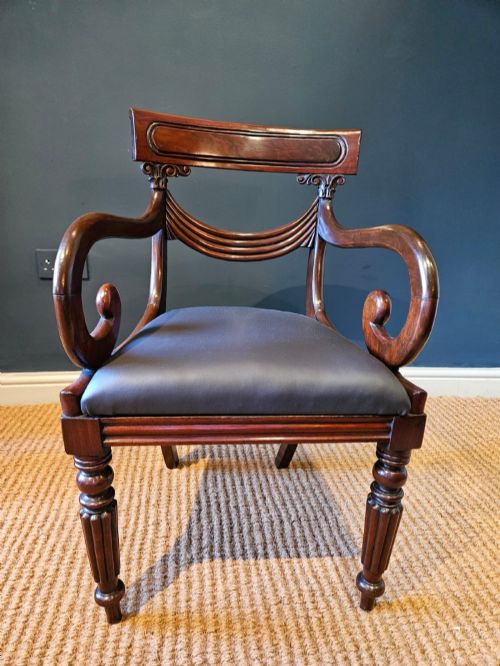
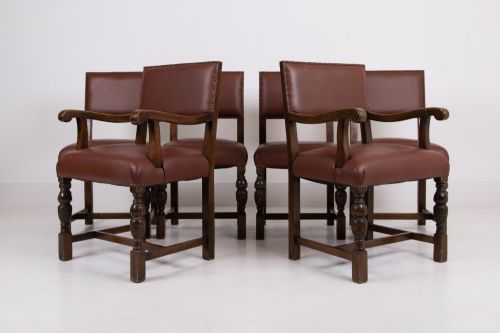
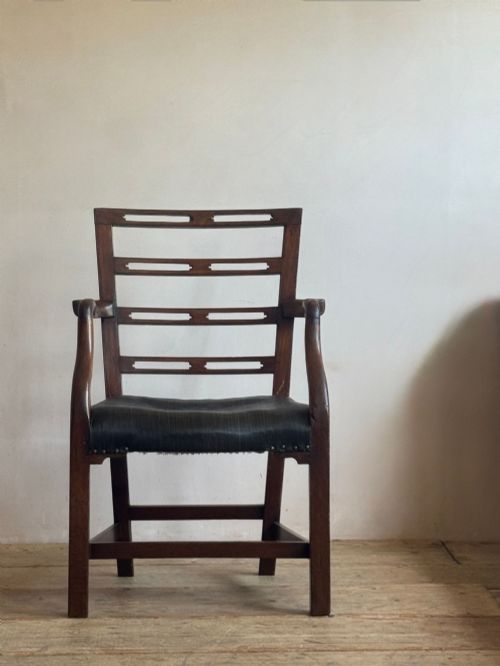
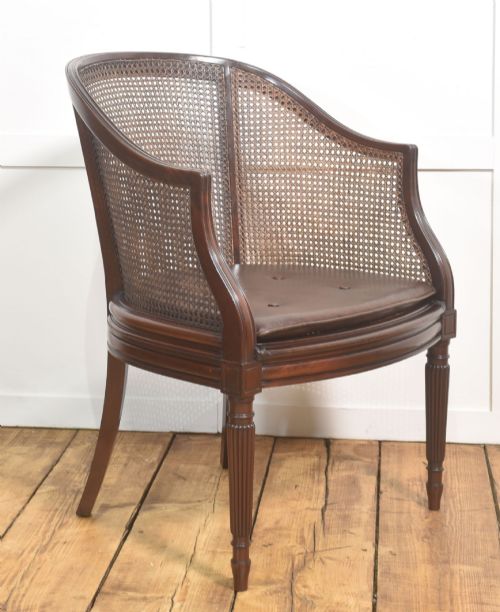
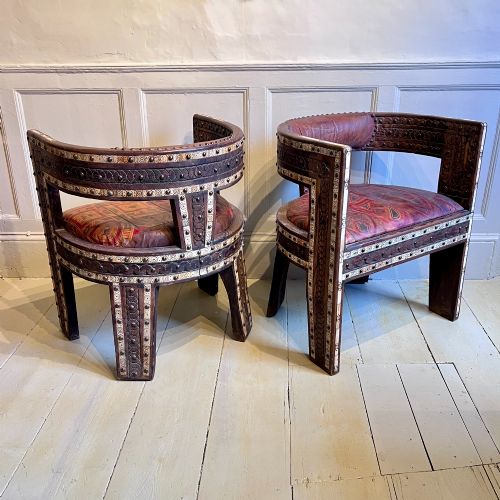
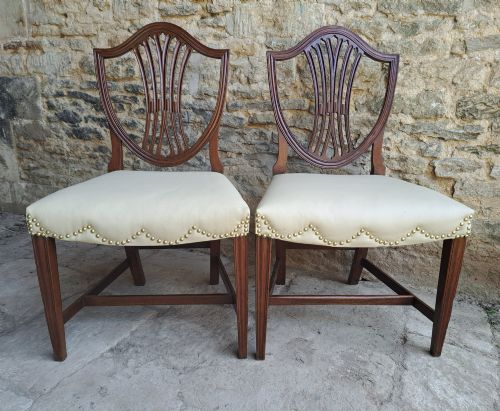
Dark wood leather chairs span various forms such as dining chairs, armchairs, and desk chairs originating from the nineteenth and early twentieth centuries. These pieces combine substantial timber frames with hide upholstery designed for both daily utility and formal interior settings.
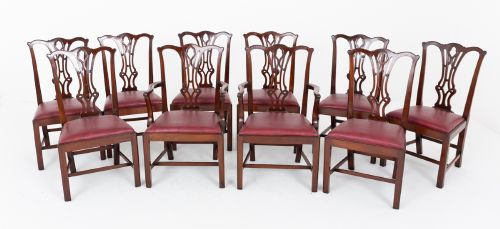
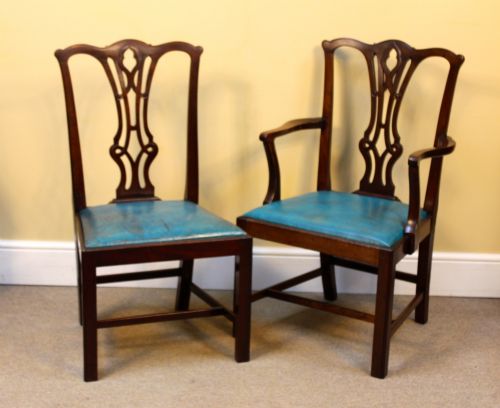
Buyers frequently encounter sets of dining chairs alongside individual armchairs and swivel desk chairs within this selection. Styles range from revival designs referencing earlier Georgian and Chippendale aesthetics to utilitarian office seating.
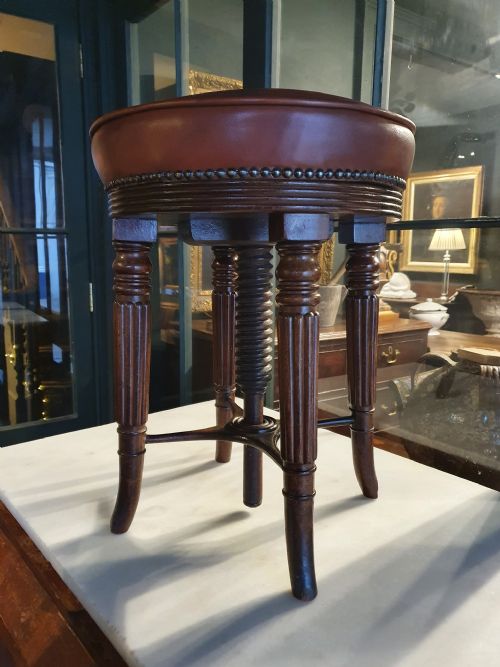
Origins stretch across British, French, and colonial workshops, demonstrating diverse regional interpretations of timber framing and leather integration. The inventory captures both grand dining suites and specialised seating like revolving piano stools and campaign folding chairs.
Materials and construction methods
Frames rely heavily on dense hardwoods such as mahogany, oak, and beech, frequently shaped through traditional joinery and turning techniques. Ebonised wood and elm also appear, providing rigid structural support for daily use.
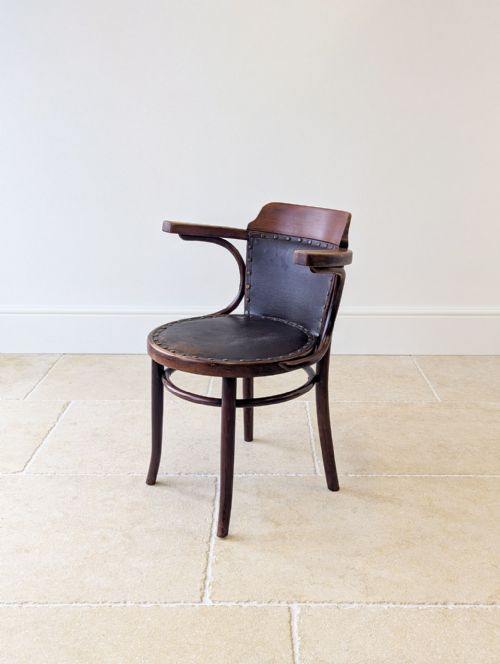
Leather upholstery is secured to frames using brass tacks or internal webbing, often complemented by carved details or inlay work on the surrounding timber. Bentwood construction methods also emerge in specific desk and rocking forms from the Edwardian era.
Listings feature nineteen-century and Edwardian pieces constructed from mahogany, oak, and leather.
Assessing quality in construction and material
Quality rests upon the density and grain of the timber utilised in the frame, alongside the depth and precision of any carved details. Solid mahogany or oak structures demonstrate greater longevity than softer hardwoods.
The condition and tanning quality of the leather seating surface influence the overall integrity of the piece. Superior examples maintain sturdy joinery and well-preserved upholstery without compromising the original framework.
Liberty and Co·Thonet
The Dark Wood Leather Chairs Glossary
- Chippendale style
- A decorative design movement characterised by intricate carving, cabriole legs, and interlaced ribbon backs. Pieces reflecting this aesthetic date from the eighteenth century onwards.
- Bentwood
- A technique where timber is moistened and heated to bend it into curved shapes without breaking. This method appears frequently in chairs from the twentieth century.
- Corner chair
- A seating form designed to fit into room angles, featuring a diagonal seat plan and continuous armrests supported by multiple legs. These often serve as desk or writing chairs.
- Ebonised wood
- Timber treated with a dark stain or chemical finish to imitate the appearance of ebony. This treatment provides a uniform black surface popular in nineteenth-century seating.
- Swivel desk chair
- An adjustable seating form equipped with a revolving mechanism to facilitate movement around a workspace. Edwardian examples often combine this rotation with oak frames and leather seats.
Dark Wood Leather Chairs: Frequently Asked Questions
How do I care for leather seats?
Maintain leather upholstery by keeping it away from direct heat sources and applying appropriate conditioning balms to prevent drying.
Regular dusting with a soft dry cloth protects the hide from abrasive particles over time.
Are these chairs suitable for daily dining?
Many of these pieces were built for regular dining use, employing sturdy mahogany and oak frames to withstand daily sitting.
Checking the stability of the joints ensures the frame handles continuous weight comfortably.
What defines an Edwardian desk chair?
Edwardian desk chairs typically feature swivel mechanisms, adjustable heights, and bentwood or oak construction.
These functional additions catered to growing office spaces in the early twentieth century.
How do I identify a revival style?
Revival pieces adopt decorative motifs from earlier eras, such as Georgian Chippendale carving applied to nineteenth or twentieth-century frames.
Examine the construction methods and wood ageing to distinguish between the original period and later interpretations.