
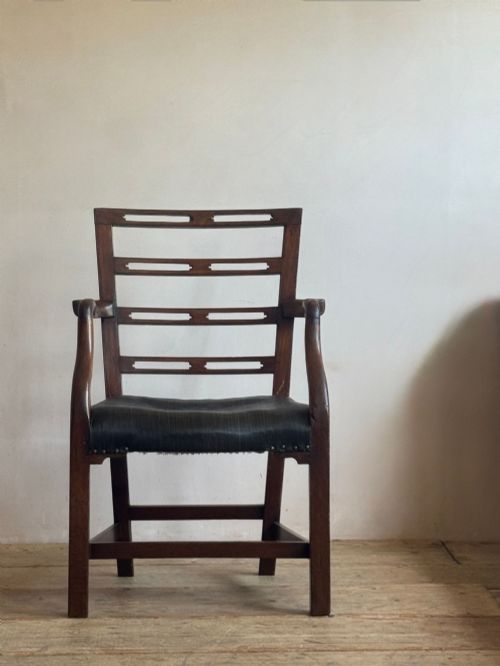
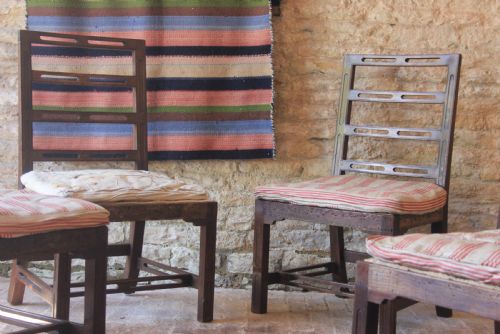
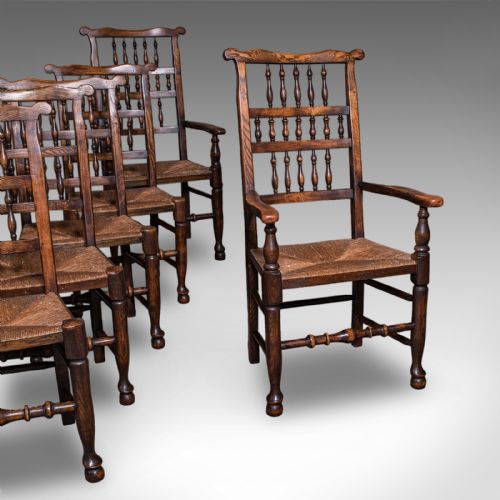
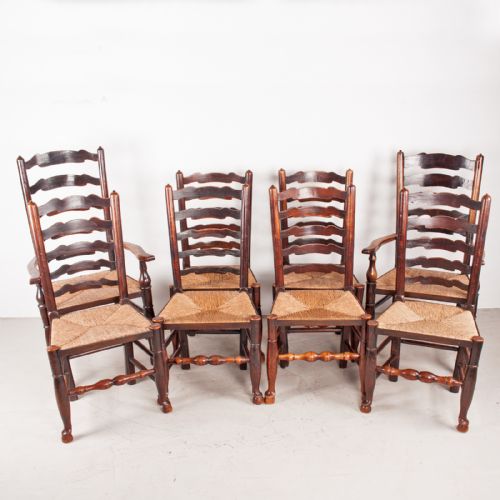


Dark Wood Ladderback Chair
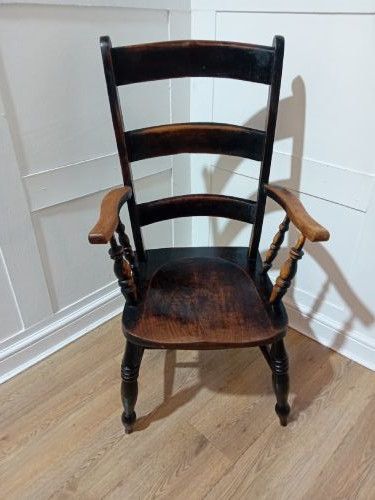
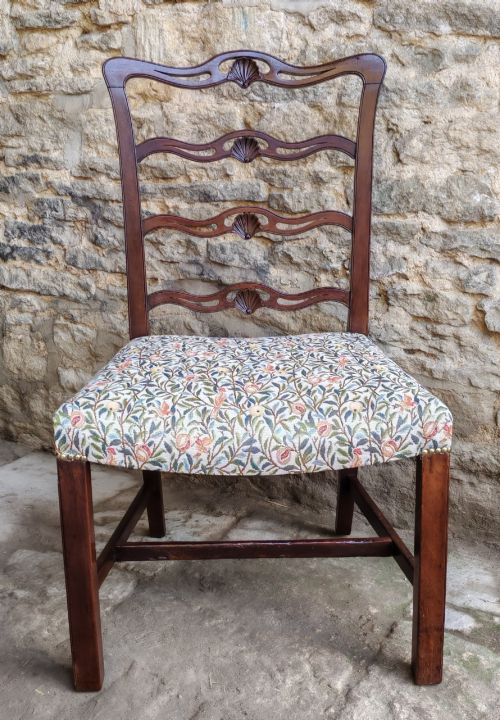
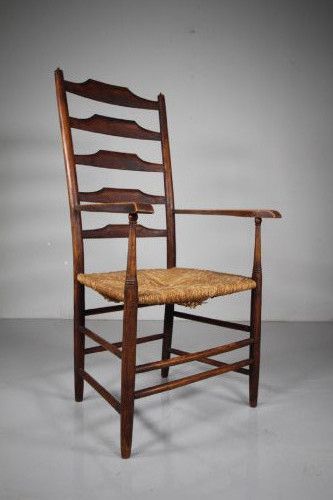
A dark wood ladderback chair brings sturdy vernacular practicality and shaped horizontal slats into a room with understated character.
Dark Wood Ladderback Chair
A dark wood ladderback chair forms a cornerstone of traditional seating, drawing on centuries of vernacular and formal design. When you search for a dark wood ladderback chair, you encounter forms ranging from rustic farmhouse seating to refined Georgian dining chairs.
The selection includes armchairs, side chairs, rocking chairs, and high chairs originating from periods spanning the eighteenth, nineteenth, and early twentieth centuries. Regional vernacular traditions appear alongside formal revival styles.
Makers utilised native timbers to construct frames intended for daily service, resulting in surviving examples that display deep patination. Dining sets and individual carvers populate the available options.
What varies in quality
The integrity of the timber and the crispness of the slat shaping dictate the standing of an individual piece. Superior examples retain original surface patination and tight joinery without excessive timber replacement.
Design sophistication separates standard utility seating from high-style workshop productions. Proportions, refined turning on the uprights, and balanced proportions distinguish finer pieces.
Several chairs include wheels for mobility, proving that nineteenth-century Victorians appreciated office ergonomics just as much as we do.
Philip Clissett·Liberty and Co
The Dark Wood Ladderback Chair Glossary
- Ladderback
- A chair featuring horizontal wooden slats resembling the rungs of a ladder between the rear upright posts. These slats are frequently curved or shaped for lumbar comfort.
- Rush
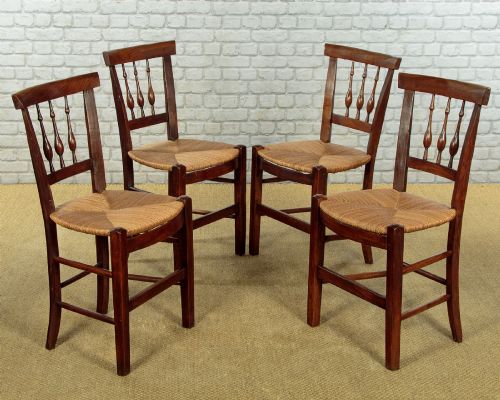
- A marsh plant woven tightly to create traditional resilient seating bases. This material appears across numerous country vernacular chairs.
- Carver
- An armchair designed to match a set of dining side chairs, usually placed at the head of a table. These often feature substantial arm terminals.
- Vernacular
- Objects built by regional craftsmen to local traditions rather than following strict metropolitan pattern books. Such pieces prioritise utility and local materials.
- Patina
- The surface sheen and colour acquired by wood and organic finishes through age, handling, and light exposure. Genuine patination develops slowly over generations.
Dark Wood Ladderback Chair: Frequently Asked Questions
How do I identify a true ladderback?
Look for a series of horizontal wooden slats set between the vertical rear posts of the frame. These slats are usually curved or graduated in width.
Traditional examples rely on turned uprights and joined construction rather than modern hardware.
Were these chairs used for dining?
Many examples were produced in sets specifically for dining rooms and country kitchens. Single armchairs and carvers frequently accompanied matching groups of side chairs.
Sturdy timber construction ensured they withstood daily household service.
How should I care for rush seats?
Rush seating requires a dry environment to prevent the natural fibres from degrading over time. Gentle dusting maintains the surface without introducing moisture.
Avoid placing woven chairs in direct sunlight or damp spaces.
What woods were commonly used?
Cabinetmakers and country joiners utilised native hardwoods including oak, ash, elm, beech, and imported mahogany. Timbers were selected for strength and local availability.
Dark finishes often developed naturally through polishing and age.