
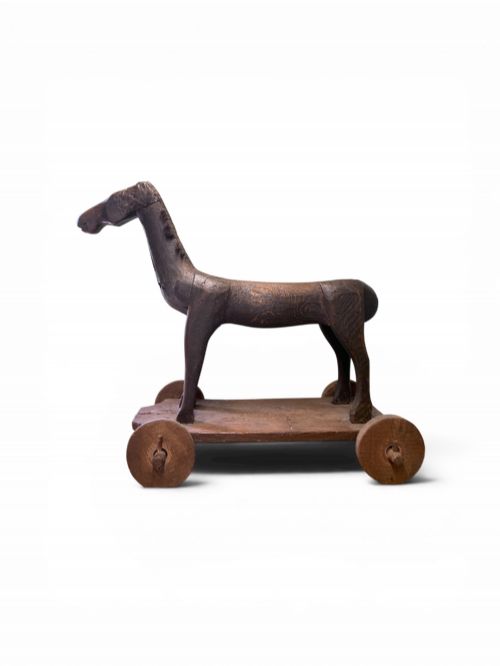


Dark Wood Horse Carving
These dark wood horse carving examples range from naive folk art sculptures to Black Forest relief panels, prized for their character and tactile timber.

Dark Wood Horse Carving
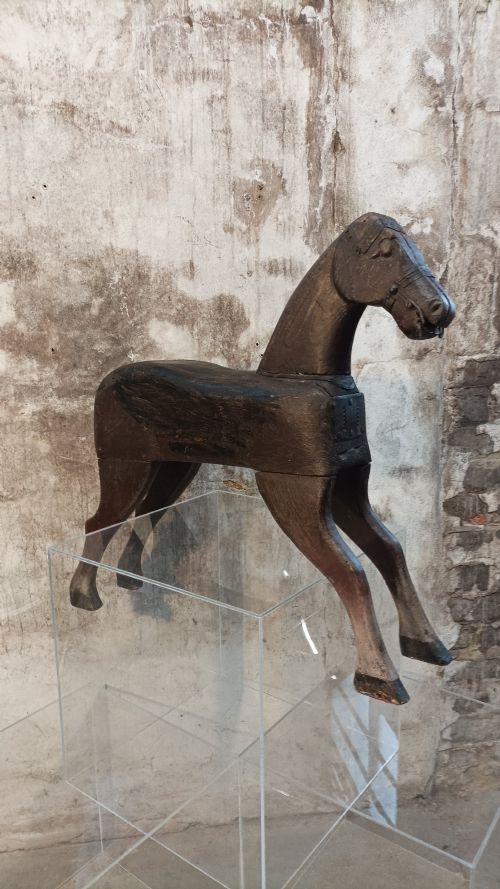
A dark wood horse carving brings together diverse sculptural forms, from naive folk art animal figures to detailed Black Forest relief panels and utilitarian objects with equine handles. Buyers search for these pieces to add organic warmth and historical narrative to an interior space.
The selections span centuries, incorporating pieces from the eighteenth, nineteenth, and early twentieth periods. Common formats include freestanding sculptures, architectural elements like mangle boards, and functional items such as walking stick handles.
Geographic origins vary widely across the inventory, touching upon Scandinavian, German, Russian, and Chinese traditions. Each regional style brings distinct carving techniques and timber choices to the subject.
How they were made
Carvers worked primarily in hardwood, walnut, padouk, and oak, selecting dense timbers that allowed for crisp detail and enduring structural strength. Hand chisels and gouges shaped the muscle tone and movement of each animal directly from the solid log.
Finishes relied on natural oils, wax, and traditional lacquering to protect the timber while developing a deep patina over generations of handling. Some items integrate contrasting brass fittings or steel components to accent the carved wooden form.
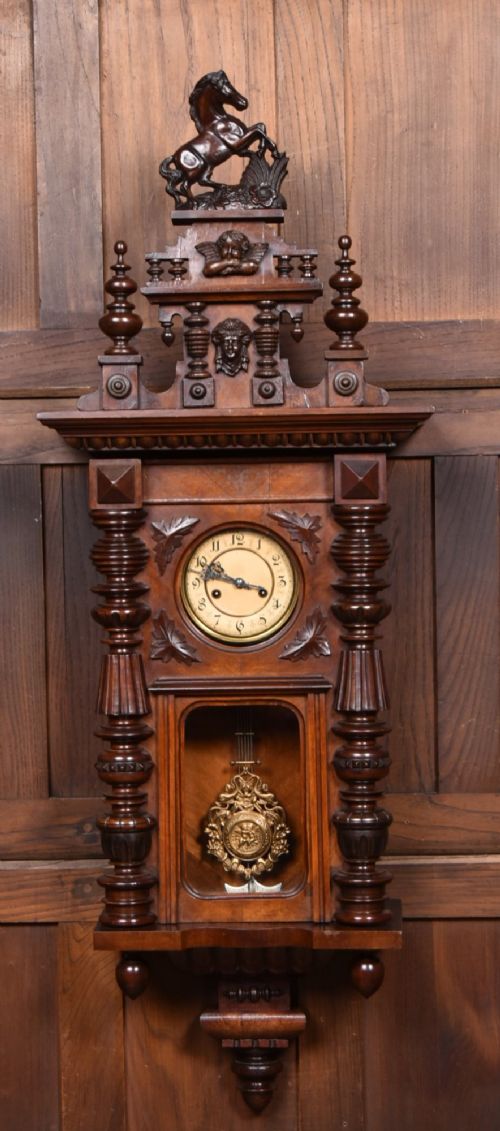
Horses pop up everywhere, hiding on walking sticks, wall clocks, and even inside old gingerbread moulds.
What varies in quality
Quality rests in the anatomical conviction and expressive energy of the carving, distinguishing confident artistic interpretations from stiff or static renditions. The precision of the toolwork and the preservation of the original surface texture dictate the stature of the piece.
The choice of timber significantly influences the distinction of an object, with dense hardwoods holding sharper details over time than softer woods. Retaining an untouched, period-correct finish elevates the integrity of the work considerably.
The Dark Wood Horse Carving Glossary
- Folk art
- Objects created within a traditional community culture by self-taught makers rather than formally trained academic sculptors. These pieces prioritise expressive directness over rigid academic proportion.
- Black Forest carving
- Intricately detailed wooden sculptures and panels produced in the Swiss and German mountain regions during the nineteenth century. They frequently depict local wildlife and domestic animals in realistic poses.
- Mangle board
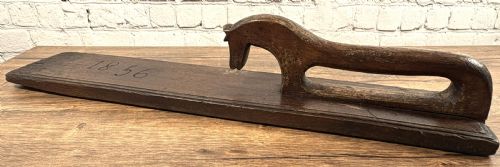
- A domestic Scandinavian laundry tool consisting of a flat wooden board and an elaborately carved handle shaped like a horse. These functional household implements served as traditional engagement gifts.
- Animalier
- A nineteenth-century artistic genre dedicated to the realistic representation of animals. Sculptors in this tradition focused on capturing accurate musculature and movement.
- Padouk
- A heavy, durable tropical timber known for its deep reddish-brown colour which darkens with age. It provides a stable base for fine, detailed carving.
Dark Wood Horse Carving: Frequently Asked Questions
How do I clean a carved wooden horse?
Dust the surface gently with a soft, dry brush to prevent dirt accumulation in the carved recesses.
Avoid using water or chemical polishes, applying a microcrystalline wax sparingly only when the timber appears dry.
Are these carvings suitable for everyday handling?
Sturdier animalier sculptures and functional items like walking stick handles were designed for physical interaction.
More delicate folk art pieces require careful placement away from high-traffic areas to preserve protruding ears and tails.
Where should I display a wooden horse carving?
Position the piece on a stable surface away from direct sunlight and sudden temperature fluctuations.
Keeping the object clear of heating vents protects the timber from drying out and splitting over time.
How can I tell nineteenth-century carvings apart?
Examine the tool marks left on the underside or unpolished areas to identify hand-chiseled work versus later machine production.
Comparing the patina and wear patterns against known regional styles helps confirm the period of origin.