


Dark Wood Extension Table
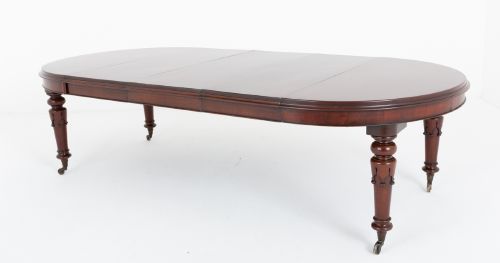
A dark wood extension table brings centuries of dining heritage into a room, offering adaptable scale through ingenious mechanical leaves.
Dark Wood Extension Table
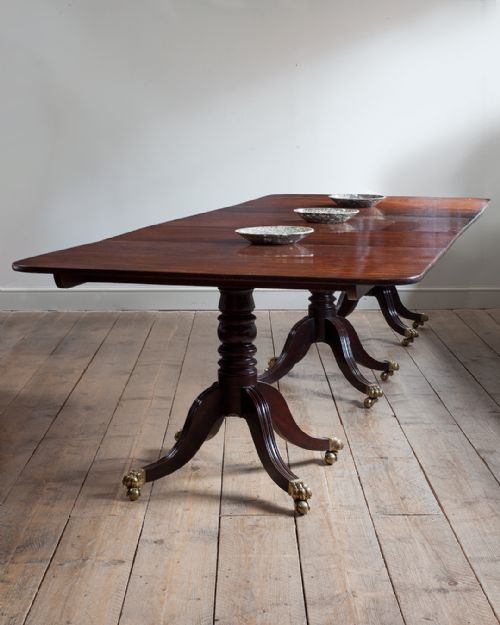
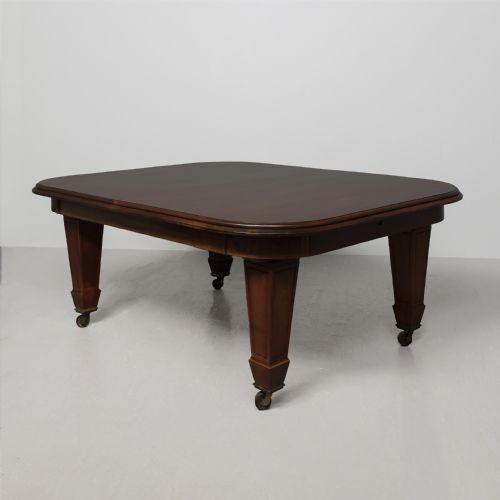
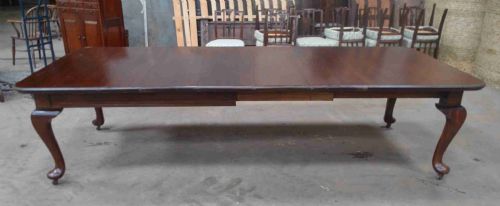
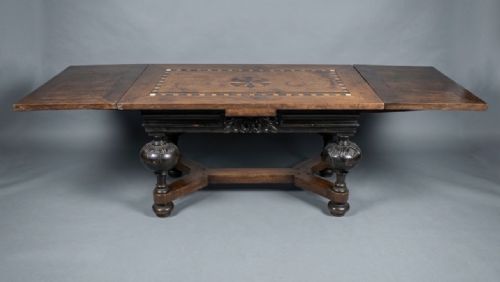
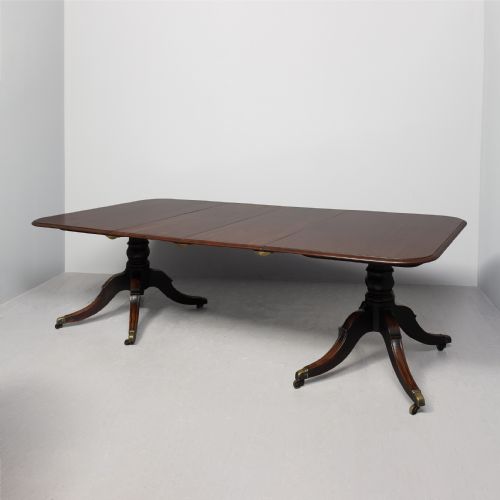
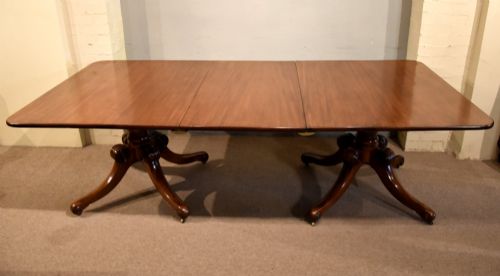
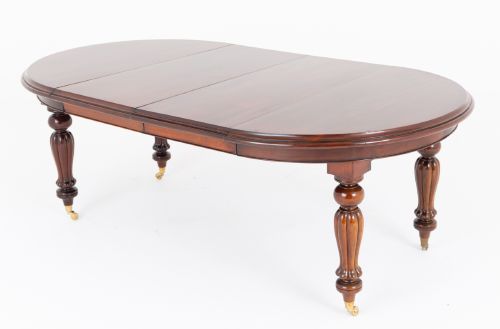
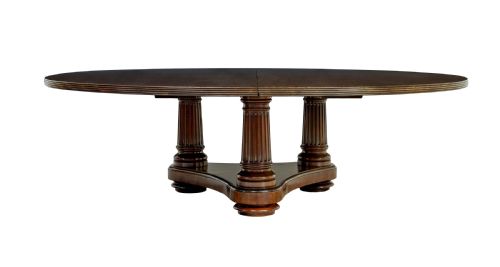
A dark wood extension table spans centuries of dining furniture, appearing most frequently in forms from the 19th century alongside earlier examples in oak and walnut. Buyers examining this page will encounter substantial pedestal formats, multi-pillar designs with extra leaves, and drop-leaf mechanisms designed to expand for guests.
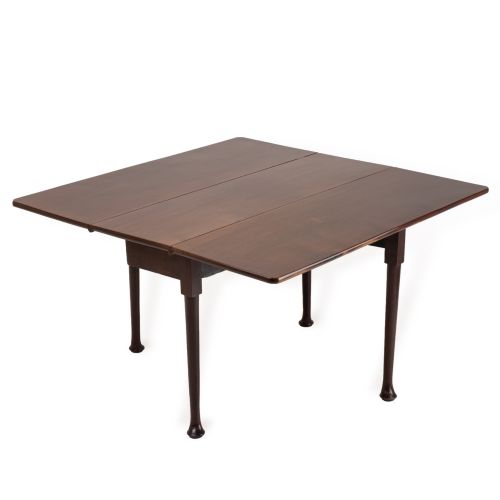
The selections range from large Victorian dining tables of grand proportions down to compact drop-leaf gateleg formats and draw leaf tables. These pieces originate from periods including the Regency, William IV, and Georgian eras, utilising dark timbers tailored for formal dining rooms and domestic spaces alike.
Judging Quality
The standard of a dark wood extension table rests upon the cohesion of its timber grains when extended and the smooth operation of its internal mechanisms. Superior examples maintain a uniform colour and finish across both the main top and the accompanying leaves, indicating that materials were selected from the same stock.
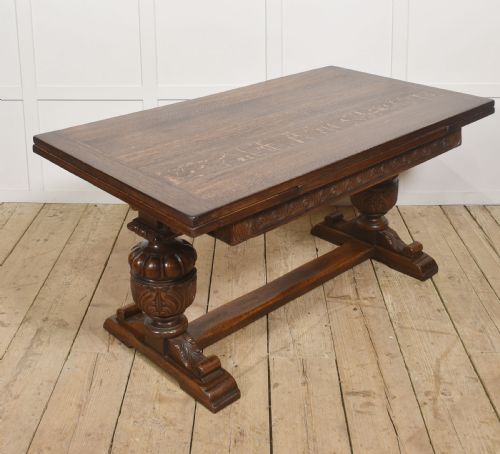
Execution of carved details, such as pedestal bases or friezes, separates standard commercial output from finer workshop productions. The integrity of the extension track and the snug fit of closed leaves demonstrate the precision applied by the original cabinet maker.
Listings span from the 17th century through the 1920s, predominantly showcasing mahogany and oak dining tables fitted with extra leaves.
William Trotter
The Dark Wood Extension Table Glossary
- Extension leaf
- A removable board inserted into a dining table to lengthen the surface area. These boards are stored separately when not in use.
- Drop leaf
- A table design featuring fixed centre sections with hinged flaps that drop down at the sides. Brackets or swing legs support the leaves when raised.
- Draw leaf
- A table equipped with underleaves that pull out from beneath the main top. This mechanism extends the surface without requiring separate loose leaves.
- Gateleg
- A table construction where hinged legs swing outward like a gate to support folding leaves. This allows the furniture to fold down into a compact footprint.
- Pedestal
- A central columnar support, often resting on splayed legs with brass castors. Multiple pedestals provide stability for longer extending dining tables.
Dark Wood Extension Table: Frequently Asked Questions
How do extension leaves work?
Extension leaves slide into the centre of a table once the main top sections are pulled apart on wooden runners or mechanical tracks. Additional support legs often drop down from the centre to bear the extra weight safely.
Storing these loose leaves properly prevents warping and ensures they match the patina of the main table top over decades of use.
How do I seat ten people?
Selecting a dining table listed with multiple extra leaves provides the necessary length to accommodate larger dinner parties comfortably. Tables featuring twin or triple pedestals offer greater legroom underneath for seated guests.
Measuring the room space around the extended table ensures adequate clearance for chairs to pull out easily on all sides.
Are oak and mahogany different?
Oak provides a prominent grain and a lighter natural hue that darkens with age, frequently seen in 17th century and revival pieces. Mahogany offers a finer, tighter grain with deep reddish-brown tones favoured during the Georgian and Victorian periods.
Both timbers deliver the structural durability required for heavy daily use as a dining surface.
What is a pedestal base?
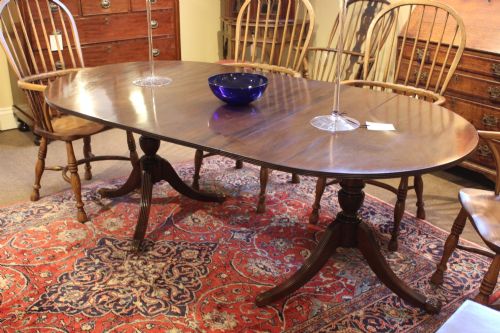
A pedestal base consists of a central wooden column supported by curved legs, frequently terminating in brass castors. This design removes corner legs, making it easier to arrange dining chairs around the table.
Larger extending tables utilise two or three pedestals connected by a stretcher or beam to distribute weight evenly.