


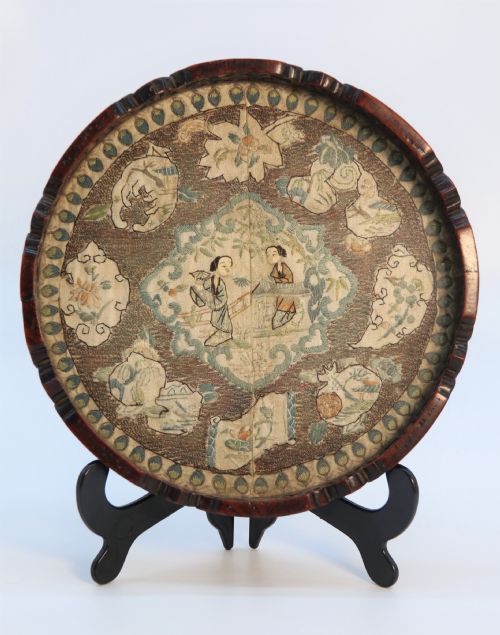


Dark Wood Embroidery
Dark wood embroidery unites deep timber frames and finely worked needle craft, bringing rich texture and period character into modern rooms.
Dark Wood Embroidery
Dark wood embroidery encompasses functional furniture and framed decorative works produced across the nineteenth century, including the Georgian, Regency, and Victorian eras. Buyers seeking dark wood embroidery frequently encounter sewing tables, work boxes, and freestanding fire screens that combine timber frames with textile panels.
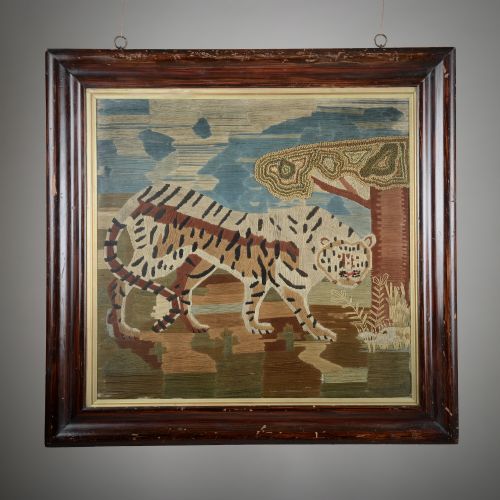
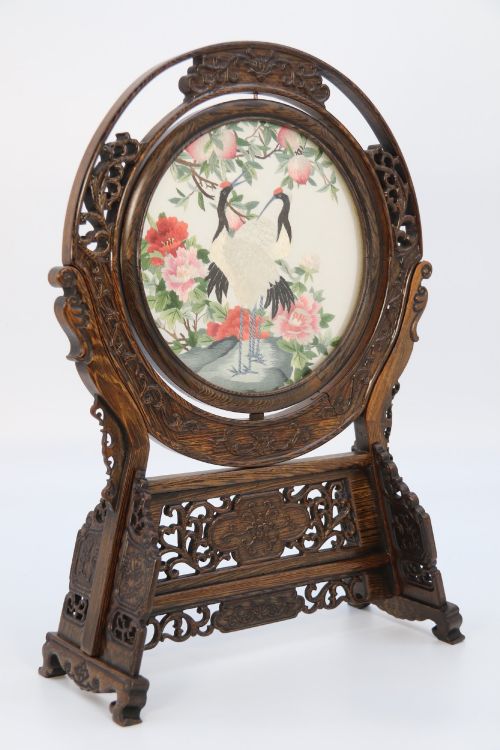
English and Chinese workshops dominate these offerings, spanning traditional European needlework, samplers, and double-sided silk table screens on carved stands. Pieces range from small tabletop sewing boxes in rosewood or mahogany to substantial tapestry frames and wall art.
The materials balance sturdy structural woods with delicate fibre arts, merging practical household objects with decorative displays intended for domestic parlours.
Materials and construction
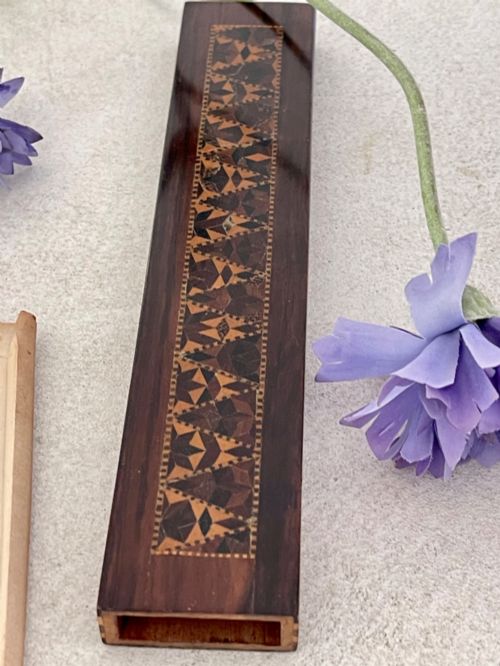
Construction relies heavily on dense dark hardwoods such as rosewood, mahogany, and general hardwood, chosen for their stability and capacity to take a fine polish. Frames and table bodies employ traditional joinery to support inset panels of textile, wool, or silk.
Needlework components utilise silk, wool, and cotton threads, occasionally incorporating metallic elements like silver and gold thread for pictorial depth. Glass frequently protects delicate silk embroideries within screens and framed pictures, while brass fittings add functional hardware to work tables.
Assessing quality in dark wood pieces
Quality rests upon the execution of both the timber frame and the textile work, where crisp wood carving and tight joinery indicate superior craftsmanship. The density of the needlework, the complexity of the pictorial design, and the preservation of the silk or wool determine the visual success of the piece.
Superior items maintain original glass, matching hardware, and unblemished wood surfaces that reveal deep grain patterns without excessive restoration.
The Dark Wood Embroidery Glossary
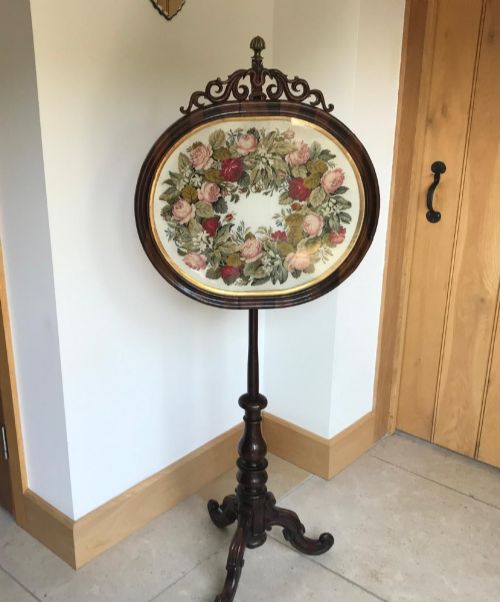
- Pole screen
- A vertical wooden stand with an adjustable sliding screen panel designed to block fireplace heat from a person's face. These often showcase elaborate needlework mounted within the frame.
- Work table
- A specialised piece of furniture containing drawers, compartments, or hanging silk bags for sewing supplies. They frequently incorporate a tapestry stretcher or needlepoint top.
- Needlepoint
- Embroidery stitched onto a stiff open-weave canvas foundation, creating a durable pictorial surface. It appears frequently on Victorian fire screens and footstools.
- Sampler
- A piece of cloth embroidered with various alphabets, motifs, or stitches to demonstrate a maker's skill. Nineteenth-century examples often record the creator's name and date.
- Palisander
- A dense, dark timber belonging to the rosewood family, prized for rich grain patterns. Regency makers utilised it for high-status furniture and decorative screens.
Dark Wood Embroidery: Frequently Asked Questions
What is a work table?
A work table is a nineteenth-century multi-purpose item designed for sewing and needlecraft, featuring internal compartments and often an integrated fabric storage bag beneath the main body.
These pieces served as practical furniture in drawing rooms, allowing makers to keep threads and tools organised while providing a stable surface for handwork.
How do I care for silk embroidery?
Silk embroidery requires protection from direct sunlight to prevent the fibres from fading and weakening over time. Displaying pieces away from excessive moisture preserves the integrity of both the textile and the surrounding wood.
Dusting the glass or timber frame gently with a dry cloth keeps the surface clean without risking the delicate threads inside.
What is the difference between a fire screen and a table screen?
Fire screens are larger vertical panels mounted on sturdy floor stands, originally placed before hearths to deflect heat. Table screens are smaller decorative pieces designed for display on desks or cabinets.
Both types frequently house intricate needlework or silk embroidery secured within carved wooden frames.
How can I tell a Victorian piece from a Regency one?
Regency items generally exhibit cleaner classical proportions with restrained mahogany or rosewood surfaces reflecting earlier neoclassical influences. Victorian examples often display heavier carving, more ornate inlays, and varied wood tones.
Examining the internal construction details and the style of the needlework helps confirm the period of manufacture.