
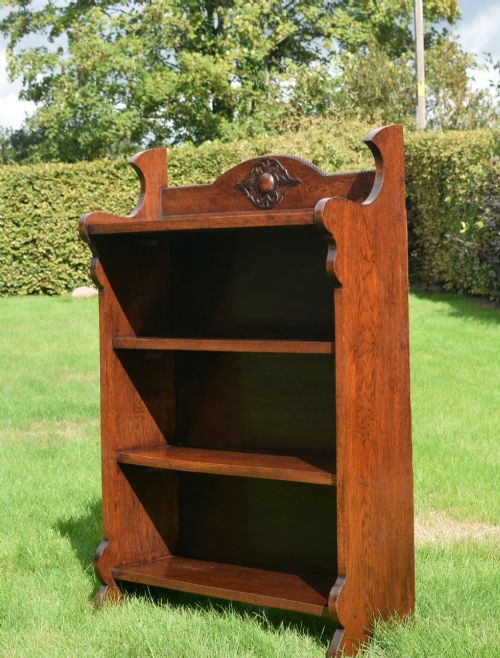
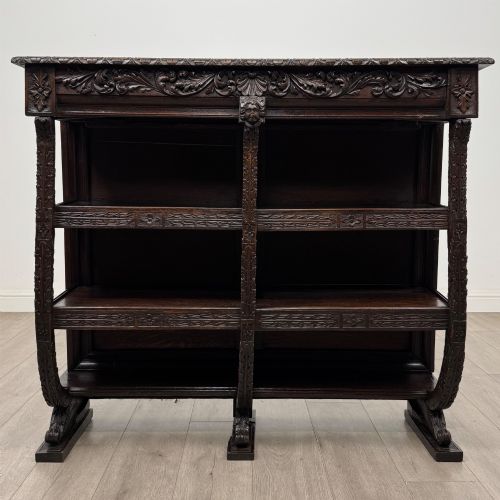
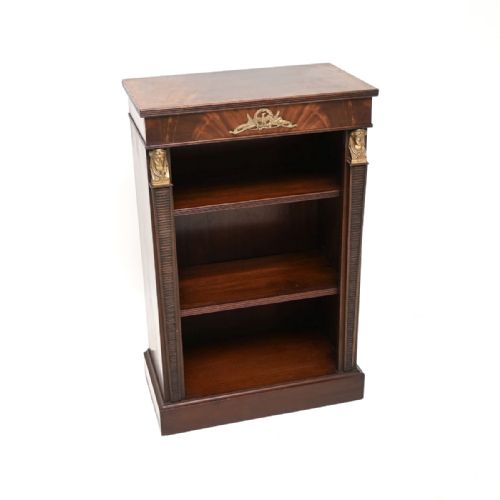
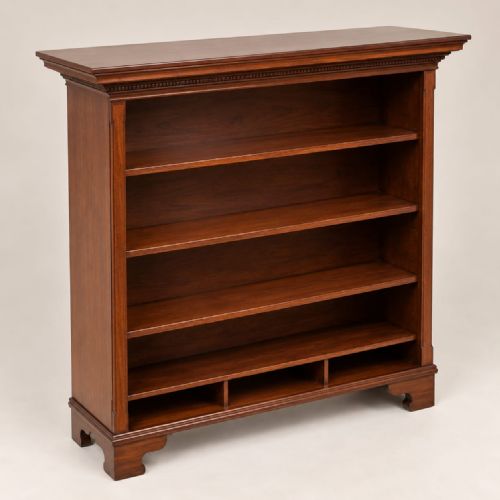
Dark Wood Display Unit
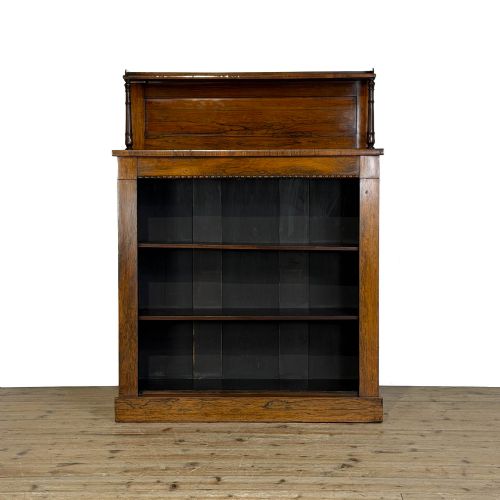
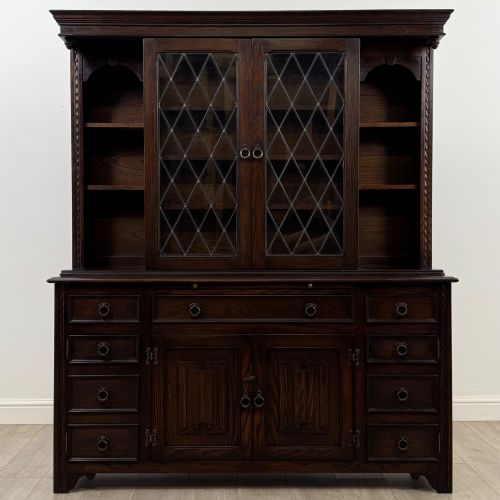
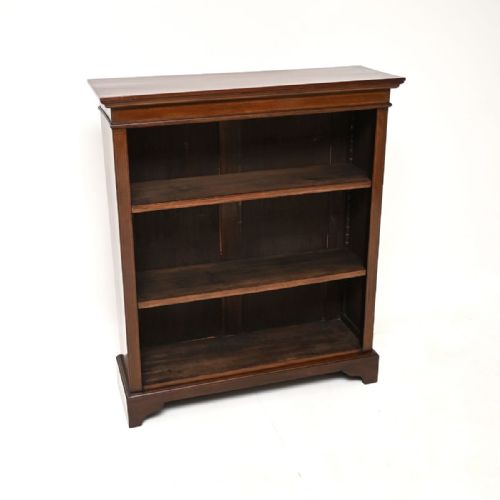
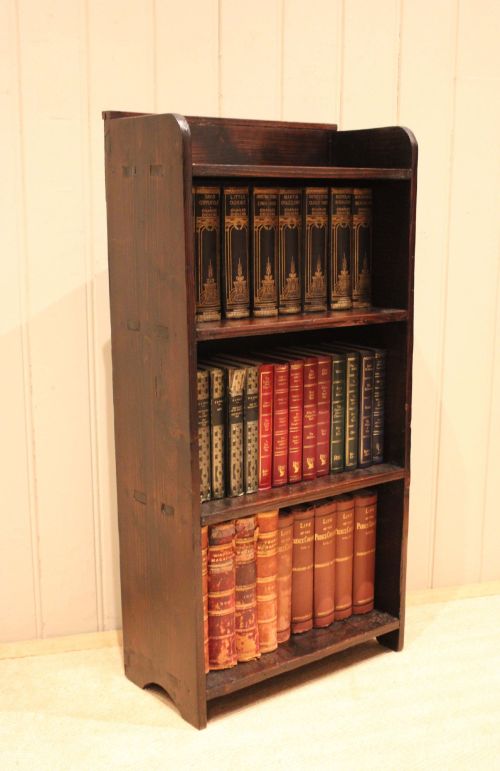
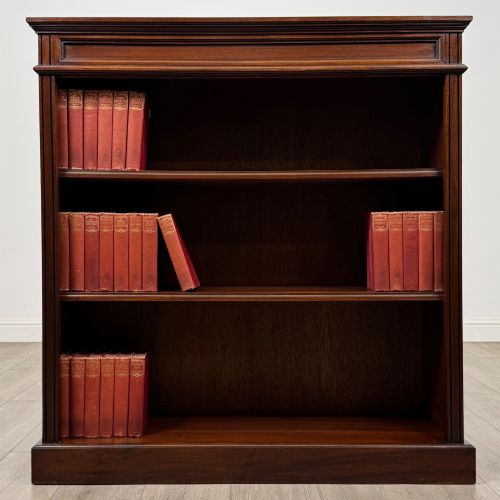
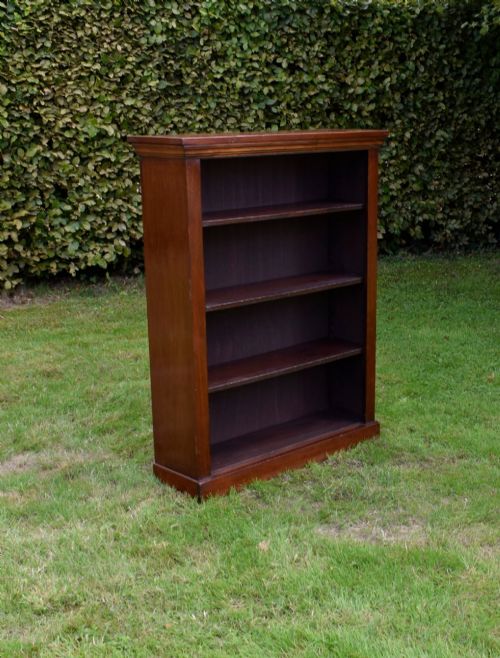
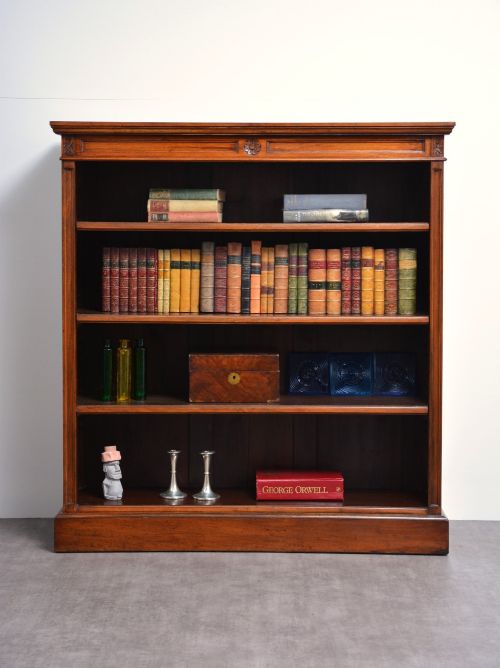
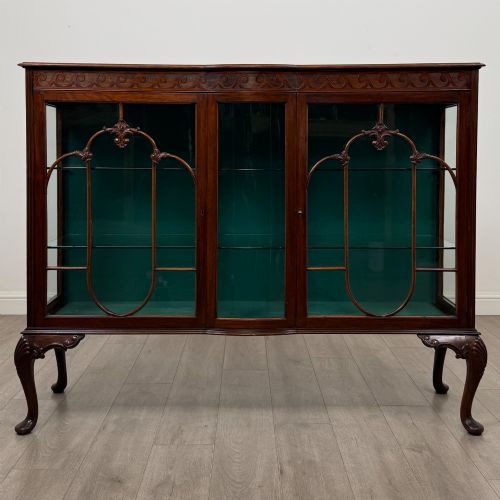
A dark wood display unit organises books and treasures while anchoring a room with deep, rich tones.
Dark Wood Display Unit
A dark wood display unit encompasses bookcases, cabinets, corner cupboards, and étagères designed to showcase and store objects. These pieces range from compact wall shelves to large floor-standing furniture created across the eighteenth, nineteenth, and twentieth centuries.
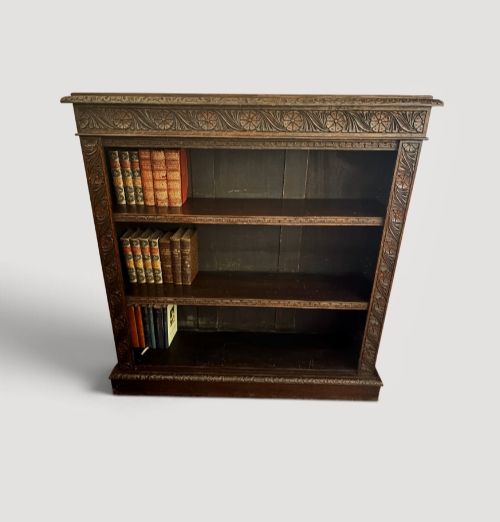
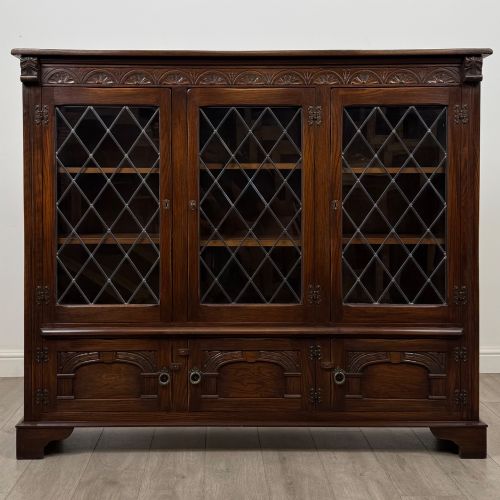
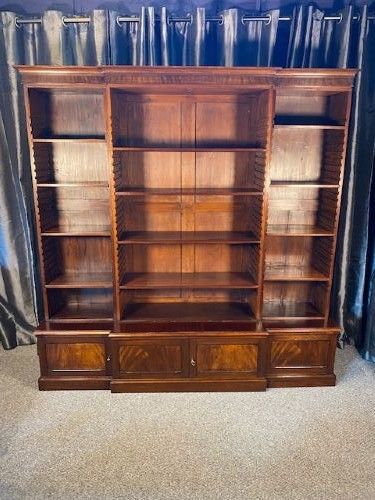
The selections here most frequently take the form of open bookcases and glazed display cabinets executed in mahogany, oak, and walnut. Pieces span Victorian, Edwardian, and earlier periods, reflecting shifts in domestic storage from enclosed display to accessible shelving.
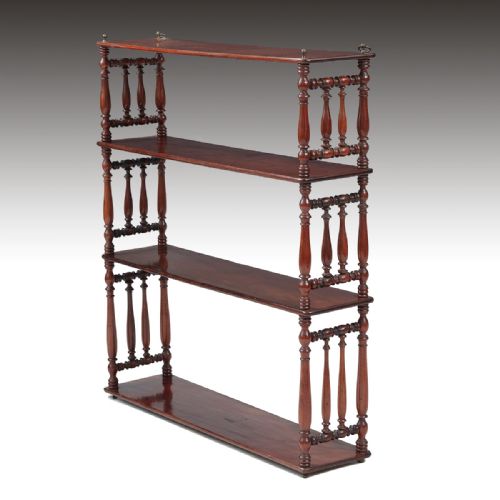
Forms extend to specialised items such as corner cabinets, whatnots, and tiered étagères featuring brass details or inlaid motifs. Buyers encounter both utilitarian shelving and formal display furniture rooted in Georgian, Regency, and revival styles.
Materials and construction
Cabinet makers utilised dense hardwoods including mahogany, oak, walnut, rosewood, padauk, teak, and pine to build these structures. Timber selection determined the weight and structural capacity needed for heavy volumes or delicate porcelain.
Surface detailing relied on carving, brass mounts, and wood veneers, alongside glass panels for glazed cabinet doors. Adjustable shelving systems in nineteenth and twentieth-century examples allowed owners to reconfigure internal spaces for varying book heights.
Several units incorporate clever adjustable shelving so books of peculiar heights can finally stand upright without leaning.
Markers of construction quality
Quality rests upon the selection of timber and the precision of joinery, particularly in the dovetailing of drawers and the fitting of doors. Superior examples display thoughtful grain matching and robust internal framing that supports heavy loads without sagging.
Refinement appears in secondary decorative elements, such as fine inlay work, carved ornamentation, and original brass hardware. The integration of adjustable shelving mechanisms and properly hung doors distinguishes standard utility pieces from finer cabinet work.
The Dark Wood Display Unit Glossary
- Open Bookcase
- A freestanding or fixed shelving unit without doors, designed for the accessible storage and display of books. These pieces frequently feature adjustable wooden shelves supported by internal racks.
- Étagère
- A set of open shelves for small ornaments and display, often freestanding with multiple tiers. They appear frequently in rosewood and include brass supports or delicate upright frames.
- Corner Cabinet
- A specialised storage unit constructed to fit directly into the corner of a room, maximising floor space. They occur in hanging wall formats and substantial floor-standing variations.
- Whatnot
- A multi-tiered piece of furniture used for displaying ornaments, books, or bric-a-brac, popular throughout the nineteenth century. These items commonly utilise stacked platforms held by slender vertical turnings.
- Secretaire
- A cabinet incorporating a pull-down writing desk drawer alongside conventional shelving or storage compartments. This dual-purpose form combines workspace utility with display capacity.
Dark Wood Display Unit: Frequently Asked Questions
How do I choose the right size?
Measure your available wall space and floor area carefully before selecting a unit, accounting for door clearance and cornice overhangs.
Consider the depth of the shelves relative to the items you intend to display or store, ensuring adequate circulation space remains in the room.
Are shelves usually adjustable?
Many nineteenth and twentieth-century bookcases feature adjustable wooden shelves supported by brass studs or wooden ratchets.
Fixed shelves are more common in earlier Georgian cupboards and specific rustic variants built for dedicated storage.
Where should I place a corner cabinet?
Corner cabinets utilise awkward room junctions that standard rectangular furniture cannot occupy effectively.
They work well in dining rooms or studies to house collections without interrupting primary traffic routes through the space.
How do I identify Victorian pieces?
Victorian display furniture often employs dense mahogany, walnut, or oak with heavier proportions and characteristic carved decoration.
Construction details like machine-sawn timber or specific patent shelf supports can help narrow down the manufacturing decade.