

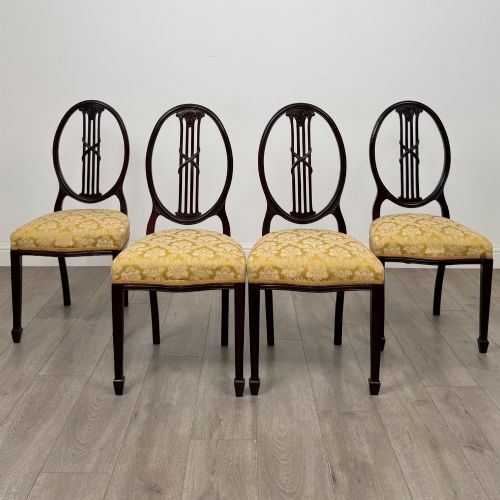
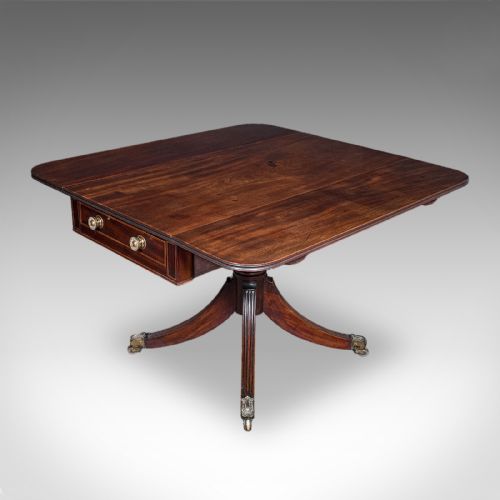
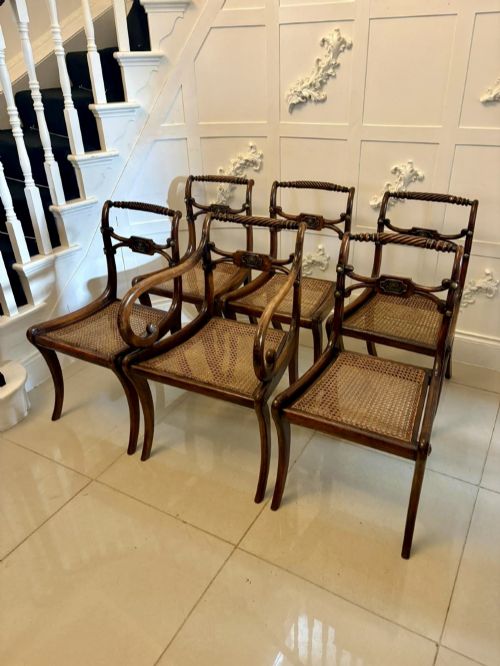
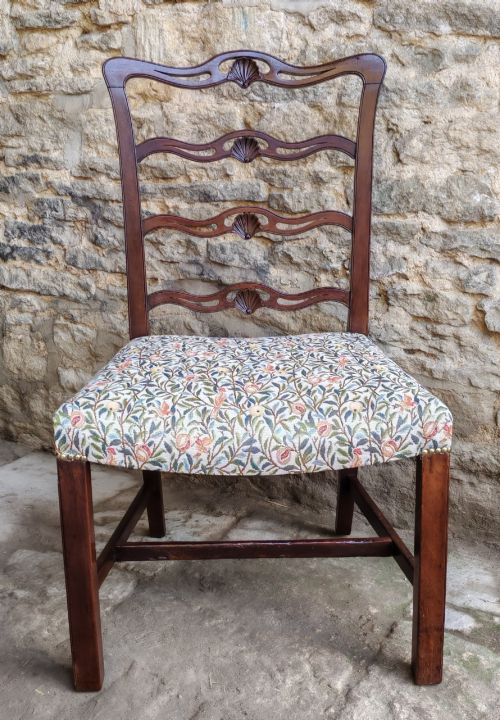
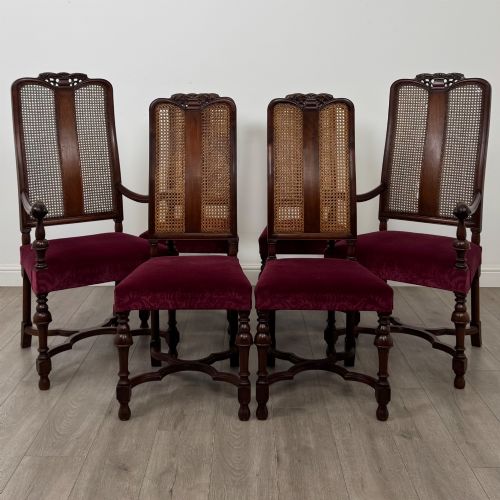
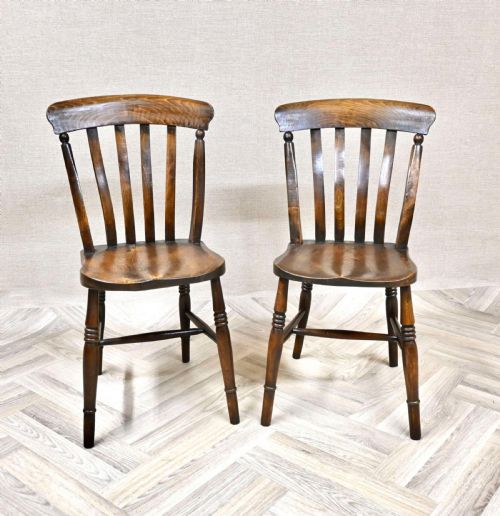
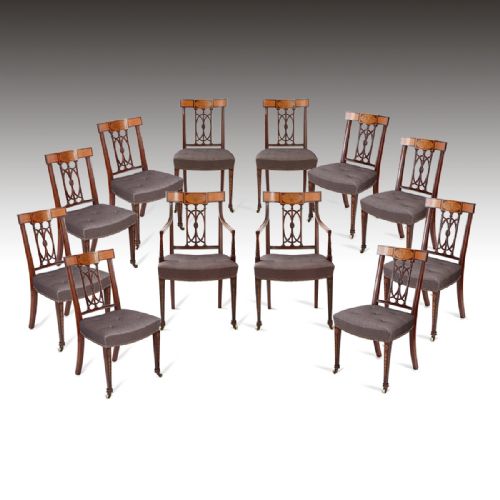
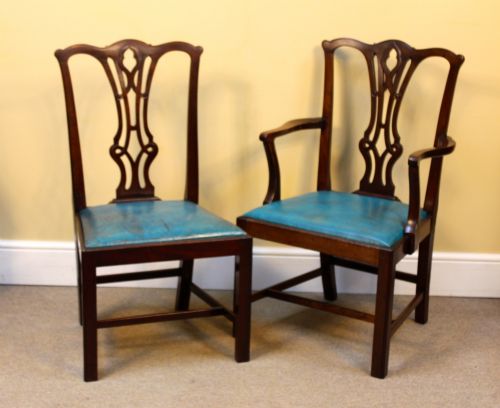
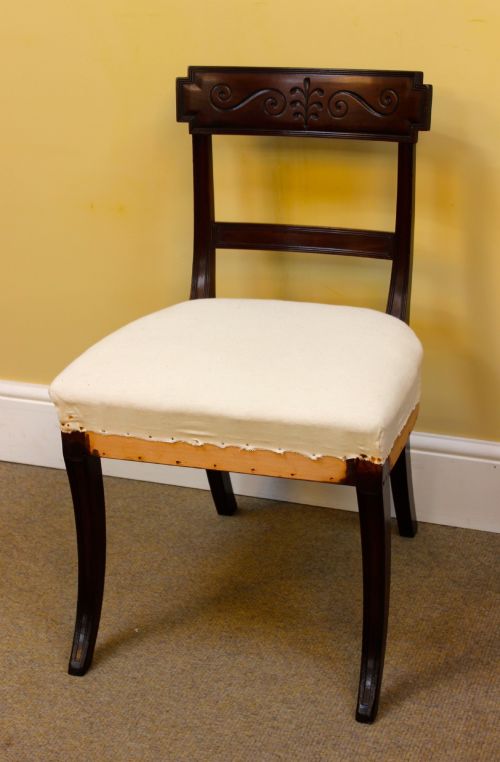
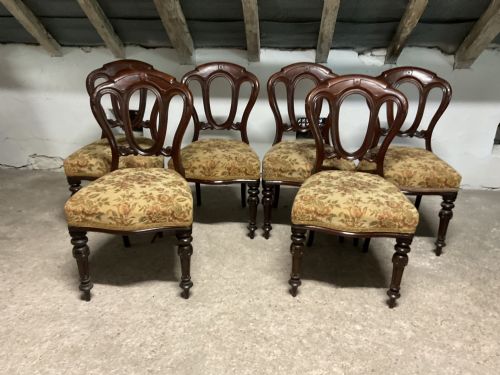
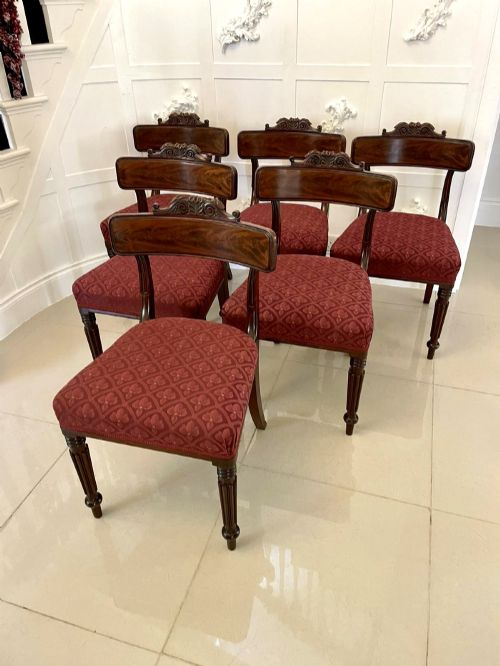
Dark Wood Dining Seating
These dark wood dining seating pieces bring substance to the table, offering sturdy timbers and classic frames that anchor a room.
Dark Wood Dining Seating
Dark wood dining seating encompasses dining chairs, side chairs, armchairs, and hall chairs intended for daily use around a table. These pieces span periods from the 18th century through the Georgian, Regency, Victorian, and Edwardian eras.
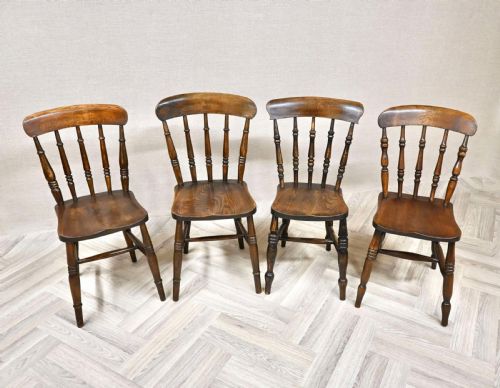
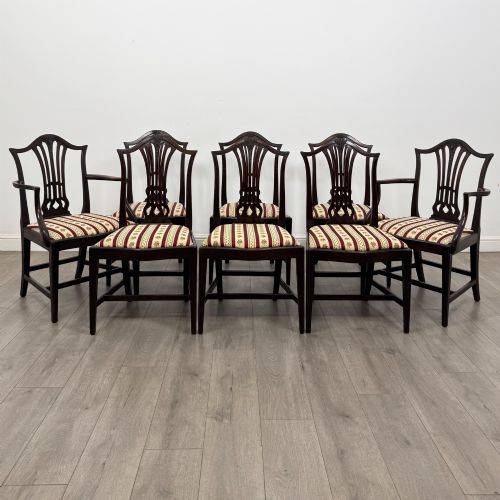
Sets ranging from pairs to groups of twelve appear alongside individual farmhouse kitchen chairs and library chairs. Buyers encounter mahogany frames, oak structures, and elm timbers shaped in styles such as Windsor, ladder-back, and shield back.
Timbers and Joinery
Makers utilised dense hardwoods such as mahogany, oak, rosewood, and beech, frequently pairing them with secondary woods like elm for seats and frames. Turning, carving, and steam-bending shaped the components.
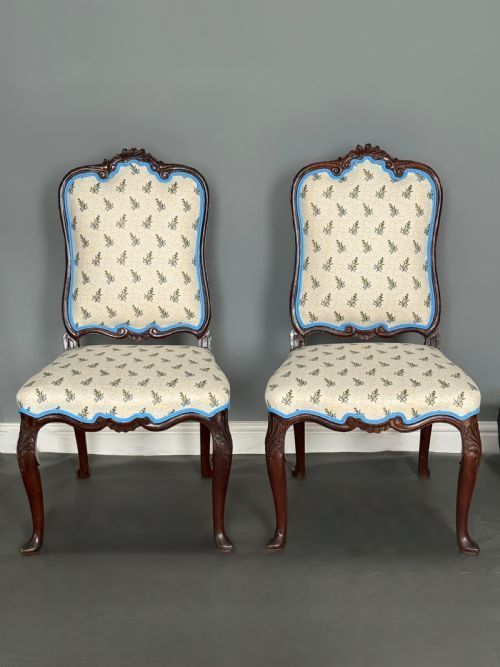
Upholstery fabric, cane, rush, and leather provided seating surfaces, secured with brass tacks or drop-in frames. Brass inlay and ormolu mounts added decorative detail to select Regency and French pieces.
Listings feature mahogany, oak, elm, beech, and rosewood across Georgian, Victorian, and Edwardian periods.
Gradations of Make
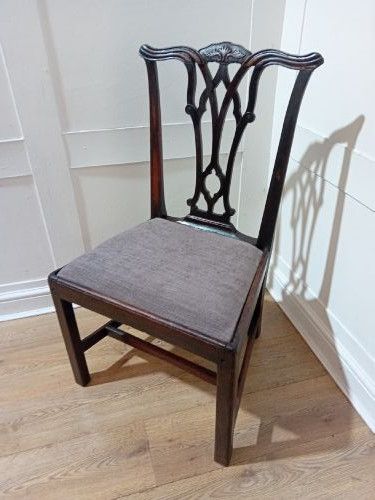
The standard of a set rests upon the depth of the timber's grain and the crispness of the hand-carving on the splats and crest rails. Rigidity in the frame joints and matching timber selection across a large set distinguish finer examples from standard production.
Original surfaces with patination command greater interest than stripped or overly restored frames. The survival of matching original elements, such as cane seats or brass inlay, governs the standing of the piece.
Gillows·Thonet·Codina
The Dark Wood Dining Seating Glossary
- Shield back
- A chair back shaped in the outline of a heraldic shield, popular in the late 18th century. This design often incorporates carved drapery or pierced splats.
- Ladder-back
- A chair back featuring horizontal slats resembling the rungs of a ladder between the uprights. This style appears in both country vernacular and formal Georgian seating.
- Windsor
- A chair constructed with a solid wooden seat into which the legs and spindled back are wedged. These vernacular seats utilise timbers like elm and beech.
- Carver
- An armchair designed to match a set of single dining chairs, traditionally placed at the head of the table. These incorporate supportive armrests.
- Cane
- Strips of rattan woven into an open mesh pattern for chair seats and backs. This material offers lightweight flexibility.
Dark Wood Dining Seating: Frequently Asked Questions
How do I care for antique dark wood?
Apply traditional beeswax periodically to nourish the timber and maintain a soft sheen. Avoid placing wooden chairs near direct heat sources to prevent the wood from drying and splitting.
Keep upholstery clean using appropriate methods for fabric, leather, or cane. Check joints regularly for stability.
Can I mix different chair styles?
Mixing single carvers with matching side chairs follows historical precedent in large dining spaces. Pairing chairs of similar height and wood tone creates a cohesive arrangement.
Ensure seat heights align comfortably with standard dining table clearances.
What defines a Carver chair?
A carver is an armchair styled to match a set of dining chairs. Historically, these stood at the head of the table for the host.
They feature supportive wooden armrests integrated into the back frame.
How do I identify a Georgian chair?
Georgian seating often displays carved mahogany frames, pierced splats, and cabriole or straight legs. Proportions tend to be formal and balanced.
Construction details such as hand-cut tenons point toward this period.