


Dark Wood Desk Clock
These dark wood desk clock pieces bring rich timber tones and precise movement to a room, offering both practical timekeeping and period craft.
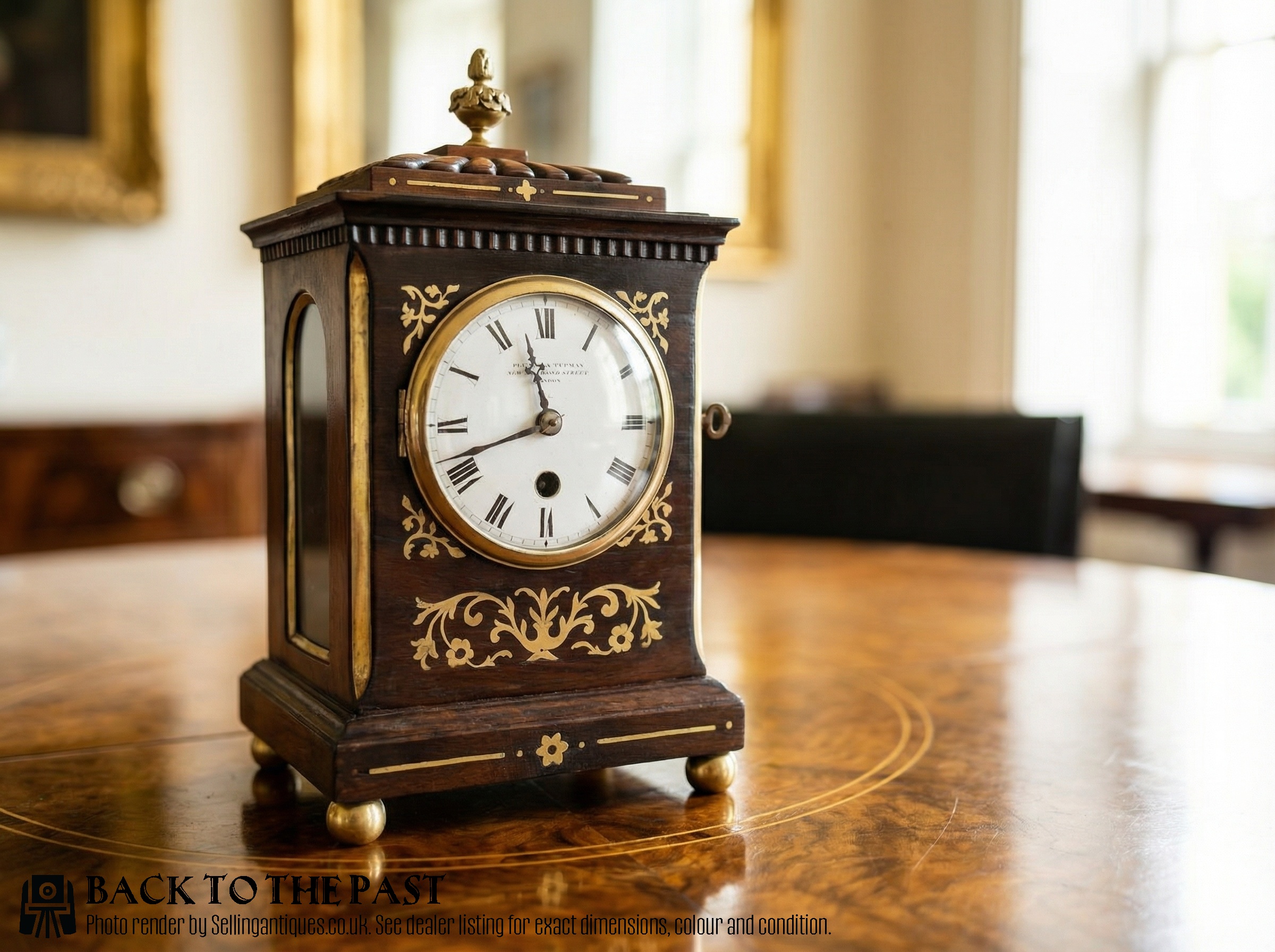
Dark Wood Desk Clock
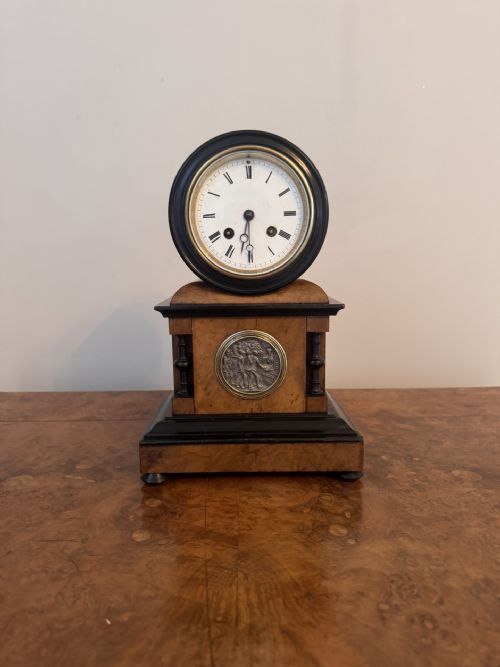
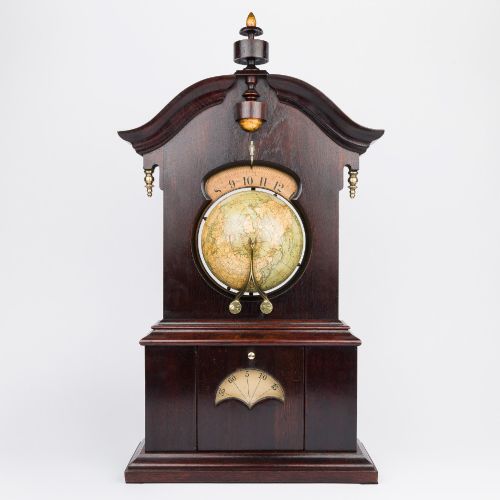
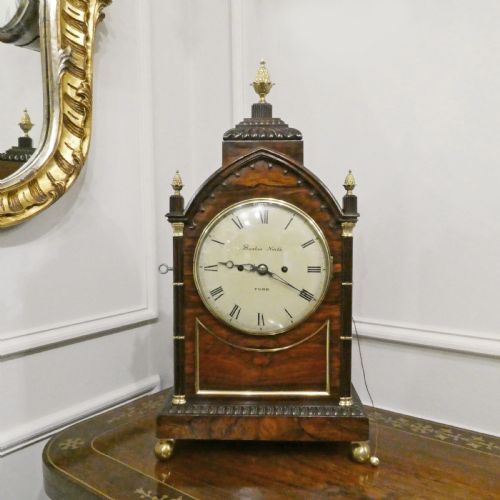
When searching for a dark wood desk clock, you encounter solid timber cases spanning the Georgian, Victorian, and Edwardian eras. The selection on this page centres heavily on mahogany, rosewood, and ebonised wood structures housing mechanical movements.
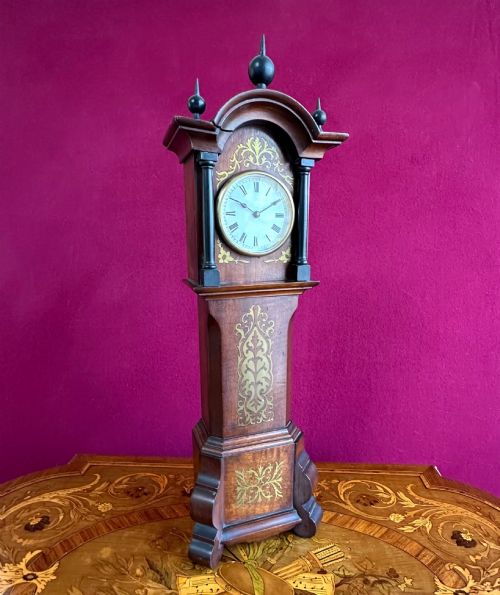
Mantel clocks and bracket clocks dominate the forms, alongside library clocks and occasional miniature grandfather styles. These pieces range from restrained Regency and Georgian designs to ornate Black Forest carvings and French portico formats.
Most examples originate from British workshops, though German and French makers also contribute significantly to the variety. You will find both architectural wooden cases and delicate marquetry finishes designed for table or desk placement.
Materials and Construction
Makers utilised dense timbers such as mahogany, rosewood, burr walnut, and coromandel for the primary cases, often enhancing the rich grain with polished surfaces. Brass details, silvered dials, and bevelled glass bezels frame the visible dial faces.
Interior movements rely on brass plates and wheels, with many quality examples incorporating fusee mechanisms to maintain even tension as the mainspring unwinds. Enamel dials and hand-engraved backplates frequently complete the internal engineering.
Materials represented include brass, glass, mahogany, enamel, rosewood, carved wood, burr walnut, and ebonised wood.
Assessing Craft and Mechanics
The distinction between standard and superior pieces rests in the execution of the timber case and the sophistication of the movement. Hand-carved details, finely figured burr veneers, and signed mechanical movements by notable makers elevate a piece.
Quality also shows in the integration of components, such as heavy cast brass bezels, crisp silvered chapter rings, and intact enamel dials free from heavy hairline cracks. Original keys, pendulum locks, and well-preserved maker signatures further distinguish higher-tier examples.
Barber and North·Winterhalder and Hofmeier·Henry Marc·Joseph Jump·Budgen Croydon·Plumbly and Tupman
The Dark Wood Desk Clock Glossary
- Fusee
- A conical pulley used in mechanical clocks to maintain even power delivery as the mainspring unwinds. This mechanism ensures more accurate timekeeping throughout the duration of the wind.
- Bracket clock
- A portable table clock originally designed to sit on a wall bracket. Most later examples function as substantial desk or mantel pieces.
- Chapter ring
- The outer ring on a clock dial that bears the hour numerals. These are frequently silvered brass or painted enamel.
- Portico clock
- A distinct architectural clock style shaped like a classical portico with columns. They often feature French rosewood and marquetry decoration.
- Silvered dial
- A brass dial treated with a silver compound to produce a matte, reflective surface for the engraved numbers. This finish provides high legibility against dark timber cases.
Dark Wood Desk Clock: Frequently Asked Questions
How do I wind a fusee desk clock?
You insert the winding key into the dial aperture and turn it gently clockwise until resistance indicates the mainspring is fully tensioned. Care must be taken not to overwind antique mechanisms.
Most fusee movements require a key specific to their square arbor size. Ensure you support the case and avoid sudden movements while handling the clock.
Where should I place a dark wood desk clock?
These clocks suit stable flat surfaces away from direct sunlight, central heating vents, and damp areas. A sturdy desk, mantelpiece, or bookshelf provides an ideal display.
Keeping the clock on a level surface ensures the pendulum swings evenly and the escapement ticks correctly. Avoid vibration-prone locations like heavy closing doors.
How do I tell Victorian clocks from Georgian ones?
Georgian clocks generally exhibit restrained neoclassical proportions, simpler mahogany cases, and understated brass fittings. Victorian pieces often display heavier proportions, richer veneers like burr walnut, and more eclectic decorative influences.
Examining the internal movement and construction style helps confirm the era. Maker signatures and style cues also offer reliable dating evidence.
What is a library clock?
A library clock is a portable table clock designed for quiet spaces like studies and libraries. They frequently feature protective glass panels that showcase the mechanical movement.
Many library clocks utilise fusee movements for precise timekeeping. Their compact architectural cases allow easy placement on writing desks.