
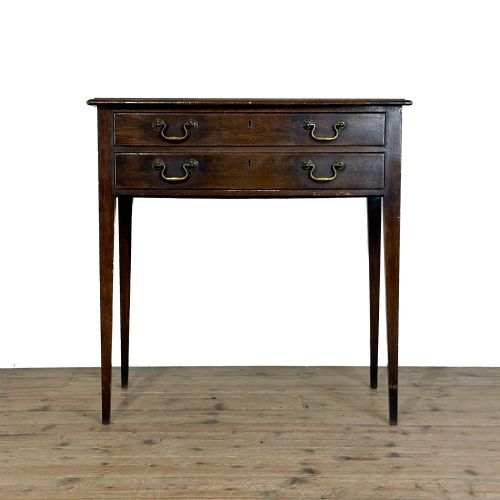
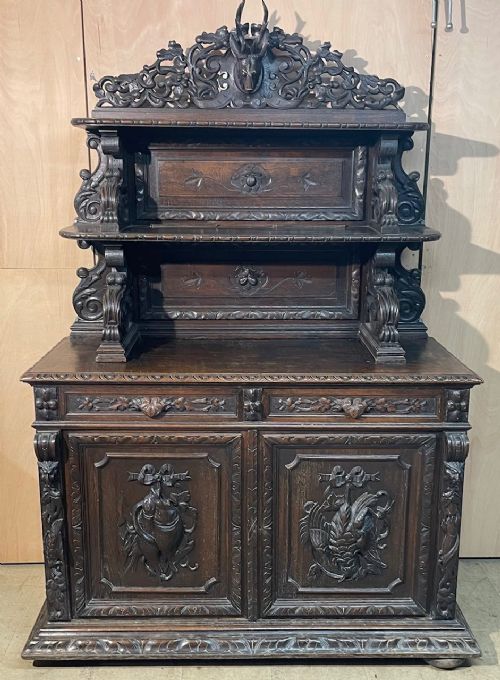
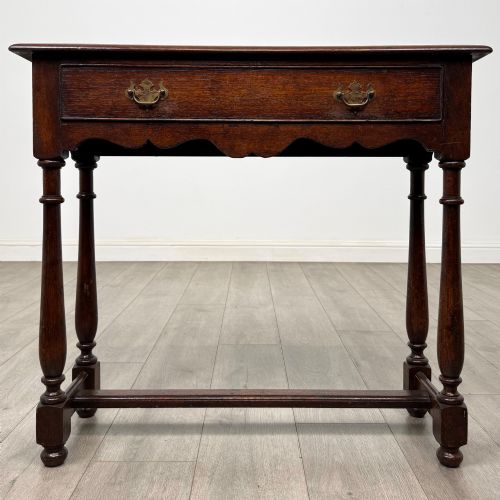
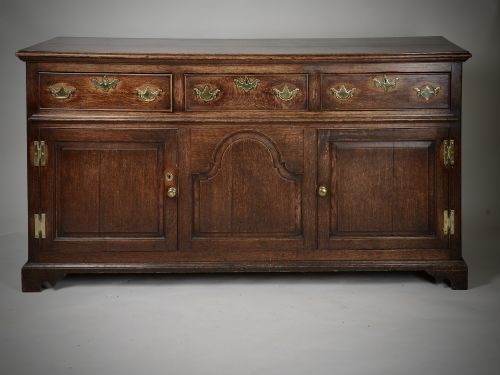




Dark Wood Country Server
A dark wood country server brings honest grain and deep utility to a room, offering sturdy surfaces built for daily use.
Dark Wood Country Server
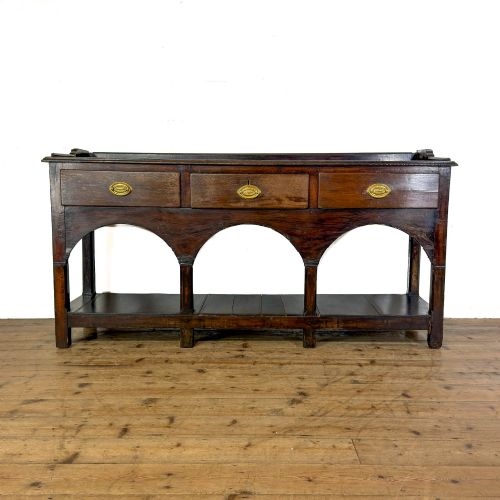
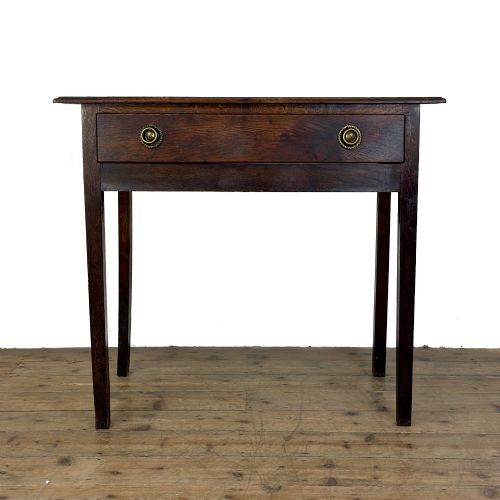
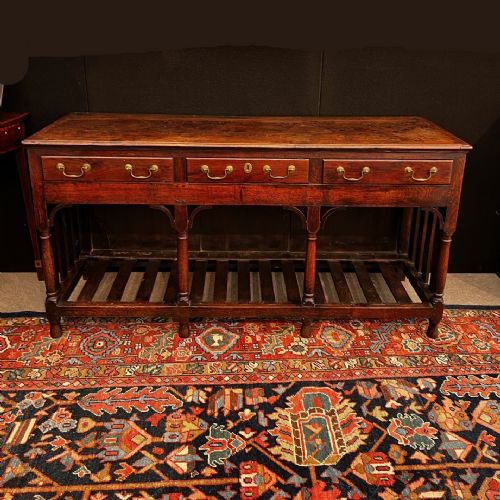
When you search for a dark wood country server, you encounter robust utility items designed for storing provisions and serving food in domestic spaces. The selection ranges from lowboys and side tables to dresser bases and console tables rooted in rural traditions.
Most examples you meet here span the eighteenth and nineteenth centuries, taking the form of low oak dresser bases or elm side tables. English and French country workshops dominate the forms, yielding substantial timbers and unpretentious silhouettes.
How they were made
Joiners built these pieces primarily from solid oak, elm, pine, and fruitwood, selecting native timbers for their toughness and density. Boards were joined using traditional pegged mortise and tenon construction to withstand heavy daily labour.
Makers occasionally applied simple painted finishes, scumble glazes, or iron and brass hardware to secure drawers and doors. Surfaces relied on hand planing and sustained friction for their smooth, utilitarian finish rather than heavy varnishing.
Bread prep tables carry the flour-dusted ghosts of countless past loaves baked in rural kitchens long before modern bakeries existed.
What varies in quality
The distinction between a standard utility piece and a finer specimen rests in the selection of timber and the restraint of the carving. Better examples display thicker boards of quarter-sawn oak or figured elm with patination earned through decades of service.
Proportion and structural integrity define the upper tier, where drawer linings remain original and potboards stay firmly tenoned into the legs. Lesser pieces suffer from heavy timber replacement or awkward scaling that compromises the original domestic function.
The Dark Wood Country Server Glossary
- Dresser base
- A low wooden sideboard fitted with drawers and occasionally a lower potboard shelf, traditionally used for food preparation and storage in country kitchens.
- Lowboy
- A small chopping or dressing table featuring a low waist and one or more rows of drawers, standing on four legs.
- Potboard
- An open slatted or solid lower shelf built between the legs of a dresser base to store pots and heavy kitchen utensils.
- Scumble
- A translucent layer of paint dragged or mottled over a lighter ground colour to simulate the richer grain of expensive timbers on cheaper woods like pine.
Dark Wood Country Server: Frequently Asked Questions
What is a dark wood country server used for?
These pieces served as practical workhorses in historic kitchens and dining spaces, holding food supplies, crockery, and linens on their sturdy tops and within deep drawers.
Today, they function well in modern hallways, dining rooms, and kitchens as sideboards or serving surfaces that ground a room with historical character.
How do I tell an 18th-century piece from a 19th-century one?
Eighteenth-century examples often display hand-sawn timber marks, pegged joinery without modern fasteners, and timber patination developed over centuries of household friction. Elm and early oak dominate these earlier builds.
Nineteenth-century items frequently show more standardised machine-sawn components, occasional pine secondary woods, and revived styles such as Gothic or Jacobean details.
Are painted finishes original on country servers?
Many regional pieces received layers of paint or scumble glazes to protect the cheaper woods underneath or to match changing interior fashions over generations. Surviving historic paint adds significant character and historical depth to a piece.
Buyers should examine the surface for natural wear patterns that confirm the age of the decorative layer against the underlying timber frame.
How do I care for antique oak and elm furniture?
Maintain the wood by applying natural beeswax sparingly to nourish dry timber and preserve the historic surface patination. Avoid placing these pieces near direct heat sources or strong sunlight to prevent timber shrinkage and splitting.
Clean surfaces regularly with a soft, dry cloth rather than wet solutions that can penetrate unsealed historic joints.