





Dark Wood Corner Storage
Dark wood corner storage turns awkward wall junctions into practical space, bringing together oak and mahogany cabinets from the Georgian and Victorian eras.
Dark Wood Corner Storage
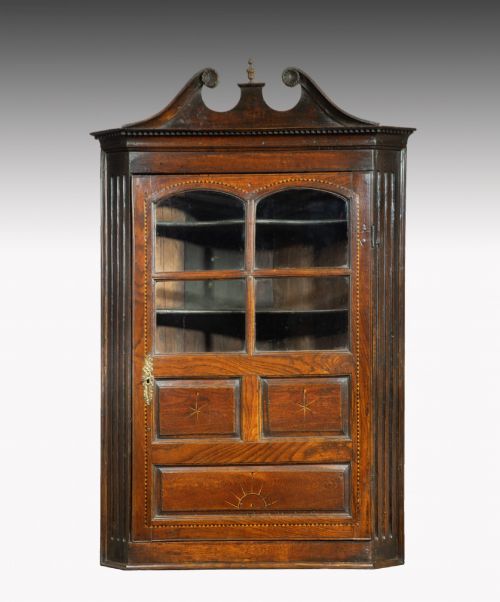
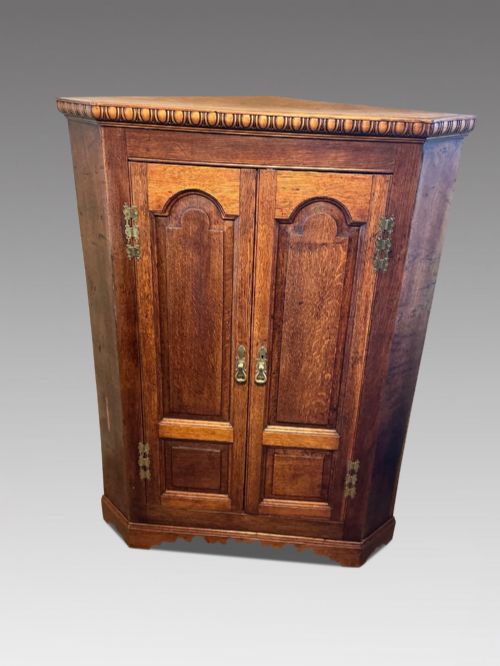
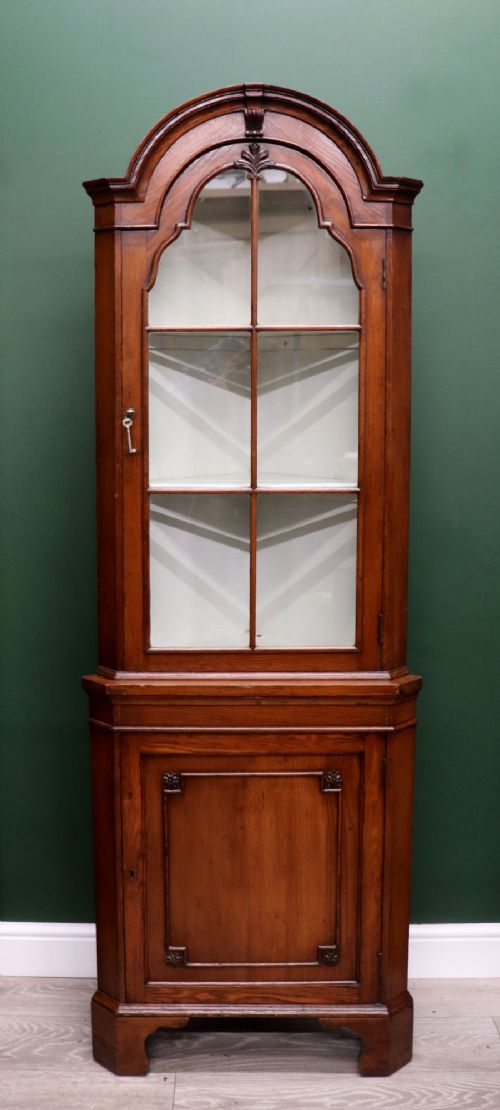
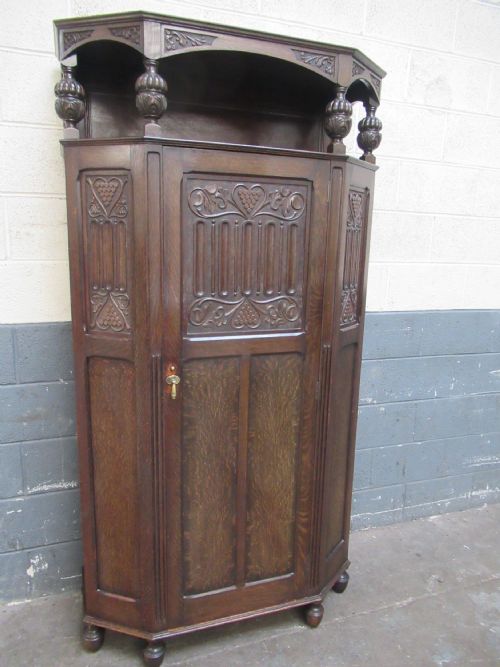
Dark wood corner storage encompasses a variety of timber furniture designed specifically to fit room angles, ranging from wall hanging cupboards to substantial floor standing cabinets. These pieces serve to utilise neglected architectural spaces while providing enclosed shelving for display or concealment.
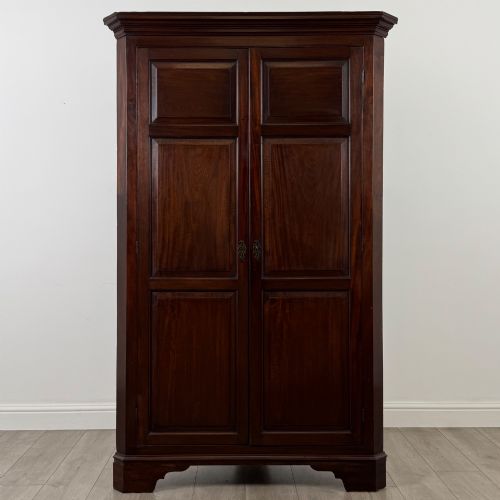
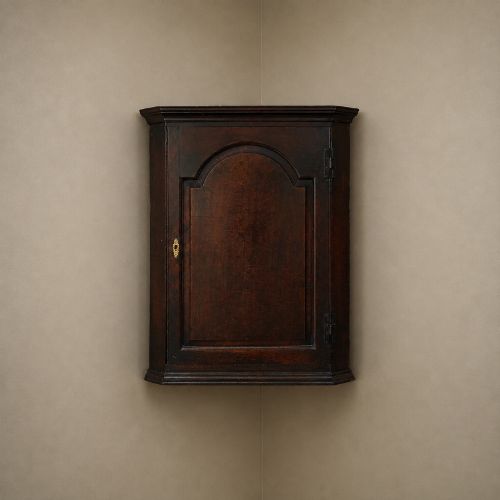
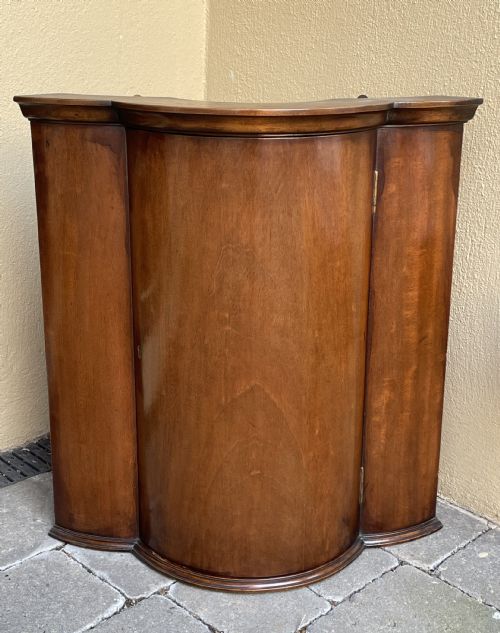
Buyers will encounter both hanging units intended to mount directly on walls and standing pieces that rest firmly on the floor. Oak and mahogany appear most frequently, spanning simple country designs to more formal styles such as George III and Jacobean Revival.
Materials and construction methods
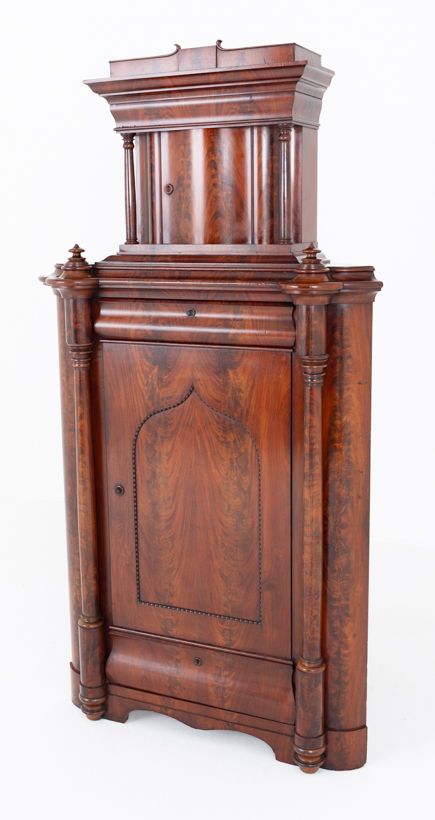
Makers utilised dense hardwoods such as oak and mahogany for their durability and grain, occasionally employing flame mahogany veneers or elm for decorative effect. Brass hardware, including hinges, escutcheons and campaign-style fittings, provides structural contrast and functional reinforcement.
Joinery techniques rely heavily on traditional panelled construction, allowing timber to expand and contract naturally within wall-mounted and standing frames. Carved details and inlaid elements appear on specific regional and period variants, demonstrating hand-worked craftsmanship across centuries.
Some corner cabinets hide secret internal drawers behind their lower shelves for storing confidential papers.
Distinctions in quality and finish
Quality rests upon the selection of timber figures, such as the depth of grain in flame mahogany or the tight growth rings in early oak. Superior pieces display thoughtful proportion between the cabinet body and any supporting stands, cornices or brass accents.
Internal construction and secondary woods reveal the standard of workshop execution, distinguishing utilitarian items from finer cabinetwork. Original brassware, well-fitted doors and intact interior shelving separate standard examples from those modified over time.
The Dark Wood Corner Storage Glossary
- Bow front
- A convex curved cabinet front that projects outward from the corner. This curved profile requires skilled joinery to shape solid timber or bend veneers.
- Hanging corner cupboard
- A wall-mounted storage unit fitted with brackets or fixing points. These pieces maximise vertical wall space without consuming floor area.
- Floor standing corner cabinet
- A tall storage unit resting directly on the floor. They often feature distinct upper display sections paired with lower cupboards.
- Flame mahogany
- A veneer cut from the fork of a mahogany tree where the branch meets the trunk. It produces a fiery, feather-like pattern prized by cabinet makers.
- Panelled door
- A door constructed with a central floating panel set within a rigid frame. This technique prevents warping as temperature and humidity fluctuate.
Dark Wood Corner Storage: Frequently Asked Questions
How do I hang a wall corner cupboard?
Hanging corner cupboards require secure fixing to solid wall studs or masonry using appropriate internal brackets. The weight of hardwood timber demands robust hardware to ensure stability.
Professional installation is recommended, particularly for older heavy oak or mahogany pieces that carry significant weight in their doors and shelves.
Are these cabinets suitable for small rooms?
Corner storage units are specifically designed to occupy unused wall angles, freeing up central floor space. Their triangular footprint tucks neatly into room perimeters.
Wall hanging versions further reduce visual weight by leaving the floor entirely clear beneath the unit.
How do I identify a Georgian corner cupboard?
Georgian examples typically feature proportions aligned with 18th-century design standards, often utilising solid oak or mahogany. Details such as H-brass hinges, dental mouldings and panelled doors frequently point to this period.
Many incorporate shaped interior shelving and butterfly plates that support the structural integrity of the corner joints.
What is the difference between standing and hanging units?
Hanging units mount directly onto walls at eye level or above furniture, utilising vertical space efficiently. Floor standing cabinets rest on the ground and often provide greater capacity with lower storage compartments.
Standing versions sometimes incorporate stands or drawers beneath the main cupboard body.