
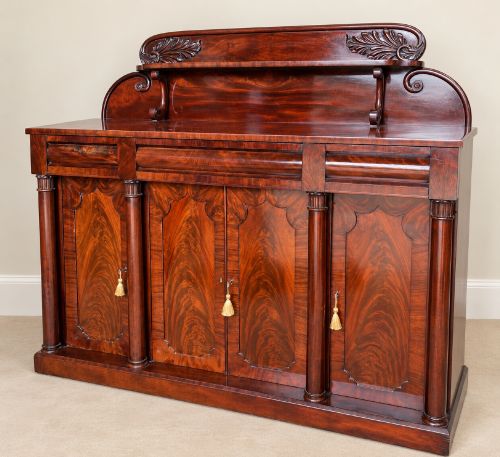
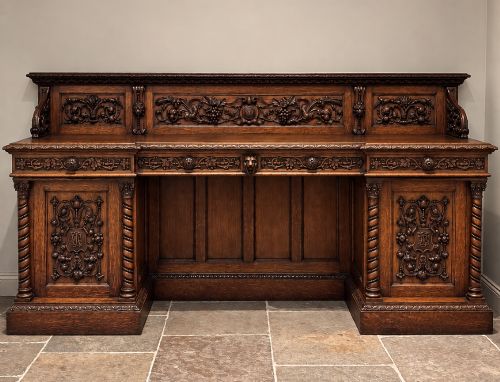
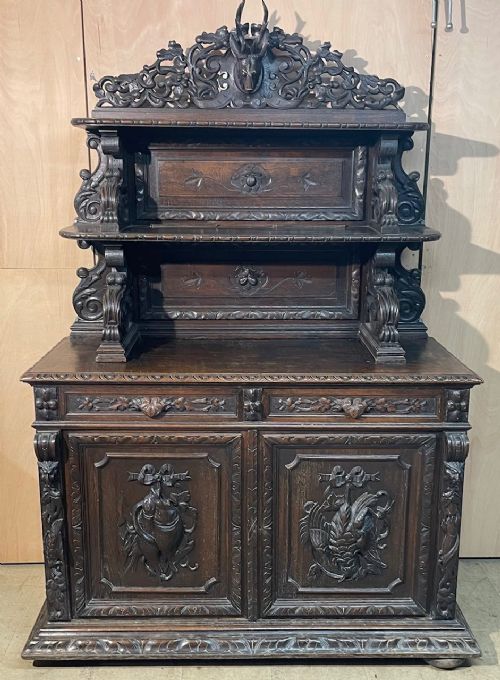

Dark Wood Carved Sideboard
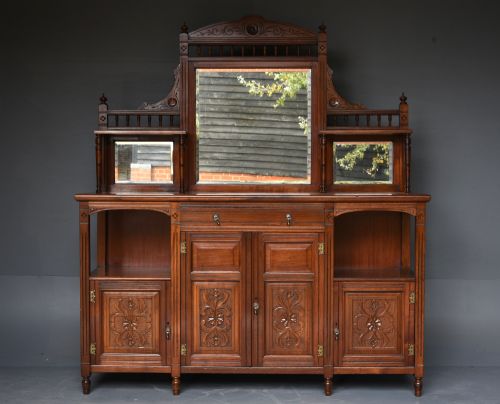
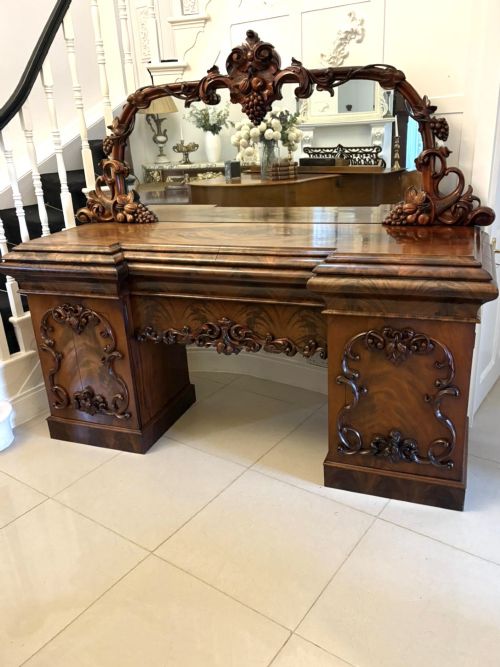
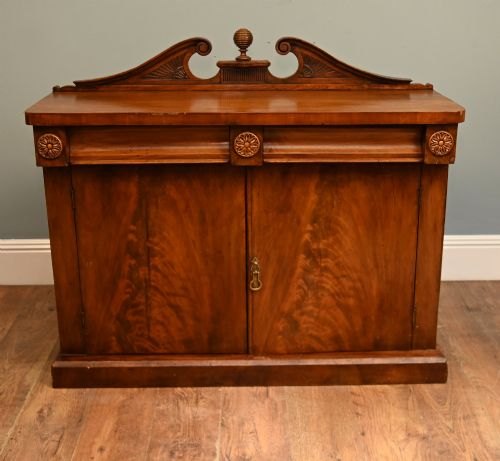
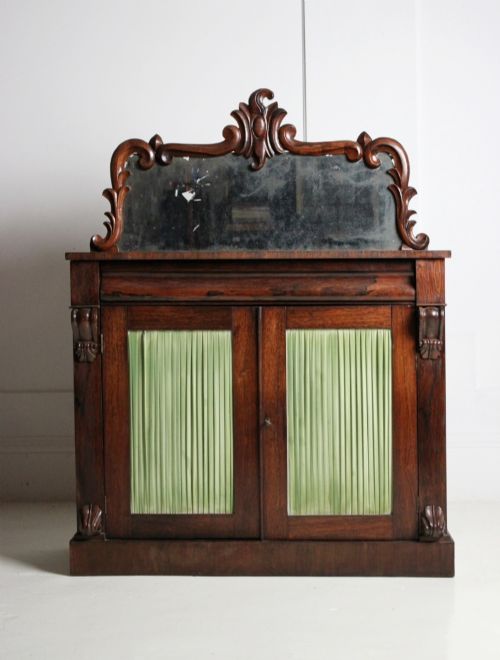
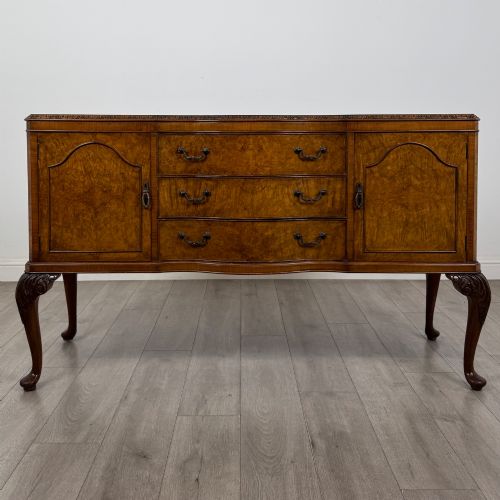
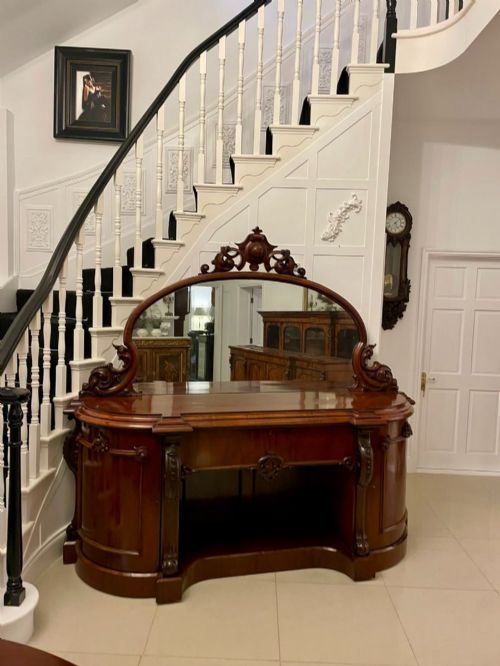
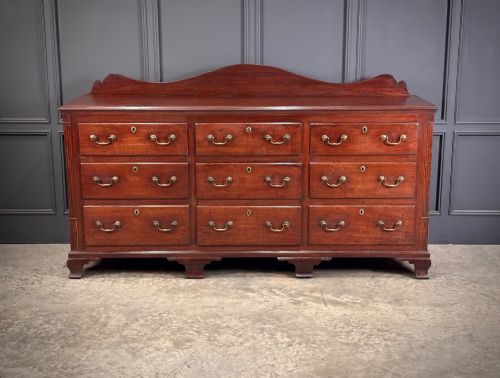
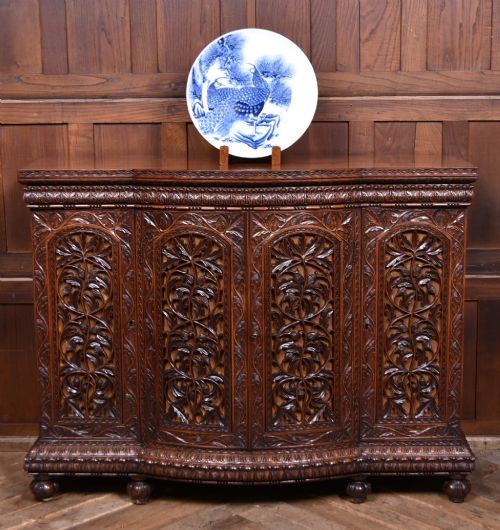
A dark wood carved sideboard anchors a dining room with heavy grain, deep relief work, and generous proportions inherited from centuries of cabinet-making.
Dark Wood Carved Sideboard
A dark wood carved sideboard serves primarily as a formal dining room server, cabinet, or buffet used for storing silver, linen, and china. When searching this phrase, you encounter heavy timber forms designed to display wealth and host large households.
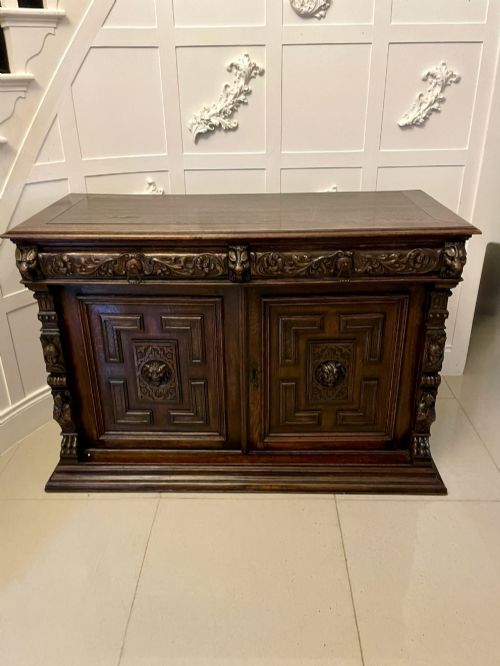
The most common examples on this page date from the Victorian and Edwardian eras, spanning heavy mahogany mirror-backs and substantial carved oak pieces. These range from French hunting styles to simpler Jacobean revival designs with barley twist legs.
Earlier pieces from the eighteenth century appear alongside nineteenth-century walnut and rosewood iterations, offering different regional interpretations of the form. Sideboards merge utility with display, frequently incorporating upper shelves, glazed doors, or marble tops.
Materials and construction
Makers utilised dense timbers such as oak, mahogany, flame mahogany, walnut, and rosewood to build these substantial frames. These woods take deep carving well and provide the dark, rich ground characteristic of the style.
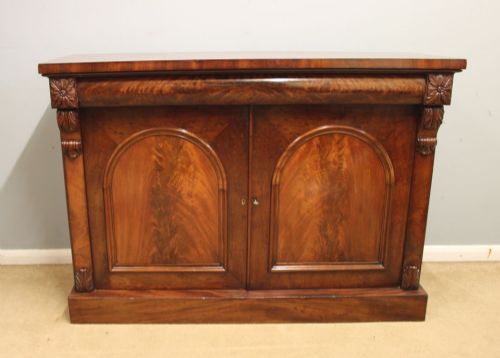
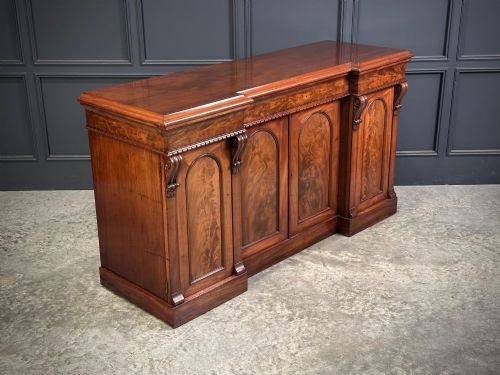
Cabinet-makers combined solid timber construction with figured veneers on large flat surfaces like drawer fronts and door panels to highlight grain patterns. Brass hardware, iron fittings, and inset glass complete the structural assembly.
The listings span multiple centuries, uniting 18th-century serving tables with Victorian mirror backs and Edwardian oak cabinets.
Judging quality in carved furniture
Quality reveals itself in the crispness and depth of the hand carving rather than the mere presence of decoration. Superior pieces display undercut foliage, crisp figures, and smooth symmetry executed by skilled hands.
Construction details distinguish workshop standards, seen in the thickness of the timber, the quality of drawer linings, and the integration of mirror backs or marble tops. Weight, stability, and the integrity of the original polish separate standard production from exhibition pieces.
The Dark Wood Carved Sideboard Glossary
- Mirror back
- A wooden superstructure incorporating a plate glass mirror, designed to sit atop a sideboard for light and display. These became particularly popular during the Victorian period.
- Chiffonier
- A low sideboard or cabinet with shelves or drawers, traditionally used for serving food or storing bottles. They often feature enclosed cupboards below.
- Buffet
- A sideboard or serving table designed for holding food and tableware during dining. Large nineteenth-century examples often include extensive carved panels.
- Barley twist
- A carved wooden furniture leg or support turned in a spiral resembling a twisted rope. This decorative turning appears frequently on Edwardian oak furniture.
- Flame mahogany
- Mahogany timber sliced to reveal a distinctive flickering flame pattern in the grain. Cabinet-makers used these veneers on prominent surfaces for visual impact.
Dark Wood Carved Sideboard: Frequently Asked Questions
How do I date a sideboard?
Dating relies on combining the timber species, style of carving, and construction methods visible in the drawers and backboards. Victorian and Edwardian examples often feature machine-sawn components alongside hand finishing.
Hardware styles, mirror bevelling, and secondary woods inside the carcass also provide reliable chronological clues for matching a piece to its period.
Where should I place a sideboard?
These heavy wooden pieces require a substantial dining room, hallway, or drawing room with adequate wall space to support their proportions. Ensure the floor can bear the weight of dense hardwoods like oak and mahogany.
Keep the timber away from direct heat sources and strong sunlight to prevent the polish from drying out and the wood from splitting over time.
How do I care for dark wood?
Maintain the surface by dusting with a dry, soft cloth and applying a traditional beeswax polish sparingly to nourish the timber. Avoid modern silicone sprays that build up and attract dust.
Address spills immediately with a dry cloth and protect the top from hot dishes or standing water by using appropriate mats and runners.
What is the difference between a sideboard and a dresser?
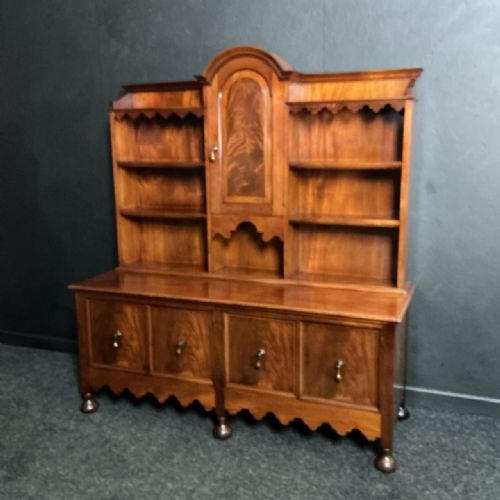
A sideboard functions primarily as a low cabinet with cupboards and drawers for serving and storage. A traditional dresser typically incorporates an open rack of plate shelves above the base.
Both forms utilise heavy carved timbers in the surviving examples, but their upper sections determine their classification in historical inventories.