


Traditional French Country Sideboard
A traditional french country sideboard offers rustic utility and regional charm, anchoring a room with heavy timbers and practical storage.
Traditional French Country Sideboard
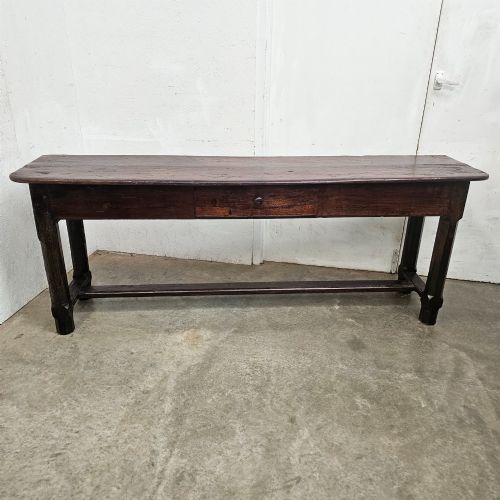
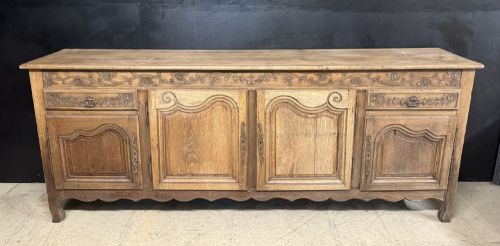
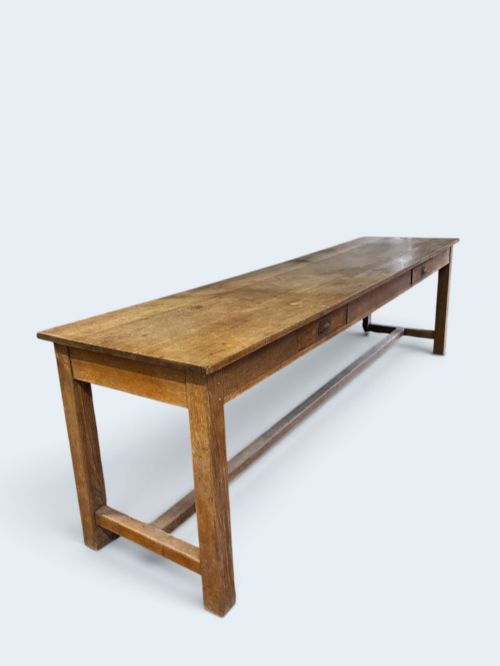
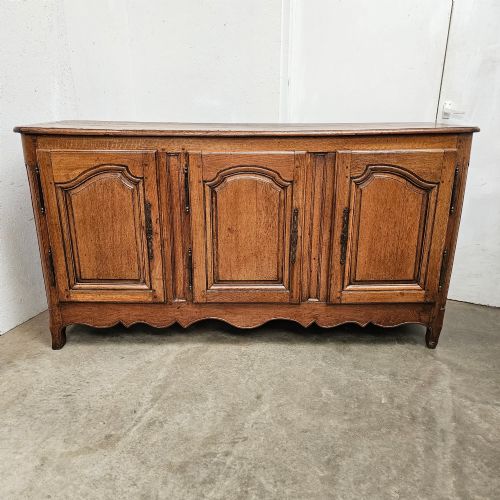
When buyers search for a traditional french country sideboard, they encounter robust storage furniture built for provincial French homes. The pieces appearing here span the eighteenth century, the nineteenth century, and nineteen ten, representing long-standing rural woodworking traditions.
The forms on this page include sturdy serving tables, substantial enfilades with three doors, regional buffets, and dressers. Buyers are most likely to meet solid oak and fruitwood examples reflecting French provincial and rustic farmhouse styles.
Makers in these regions also constructed specialised forms like workbenches and commodes with marble tops. Each object shows the practical design priorities of French country interiors, whether walnut buffet or inlaid fruitwood dresser.
Materials and construction
Constructors relied heavily on solid oak, fruitwood, and solid cherrywood to build these heavy storage units and work tables. Walnut also appears among the eighteenth-century pieces, showing the local timber choices available to provincial cabinetmakers.
Hardware and functional elements incorporate iron, brass, wrought iron, and cast iron. These metal components secure doors, support vices on workbenches, and provide durable handles for daily use in country kitchens and dining rooms.
One listed cabinet originated from a closed bed front in Brittany.
Judging quality in these pieces
Quality separates the standard utilitarian work table from finer regional furniture through the selection of timber and decorative restraint. Solid oak and cherrywood constructions demonstrate superior structural ambition compared to simpler utility benches.
Detailing such as inlaid fruitwood surfaces, marble tops, and regional carvings elevate certain buffets and dressers above basic farmhouse forms. The presence of original hardware like brass fixtures and wrought iron also distinguishes higher-grade examples.
The Traditional French Country Sideboard Glossary
- Enfilade
- A long sideboard featuring three or more doors in a continuous line. This form originated in France to serve large dining rooms.
- Fruitwood
- Timber sourced from fruit-bearing trees such as cherry, pear, or apple. Cabinetmakers valued it for its fine grain and warm tone.
- Commode
- A low chest of drawers, often fitted with a stone or marble top. These pieces served domestic storage needs in provincial homes.
- Breton
- Pertaining to the Brittany region of France. Items from this area often exhibit distinctive folk art carving and regional joinery.
Traditional French Country Sideboard: Frequently Asked Questions
What is an enfilade?
An enfilade is a long buffet or sideboard with three or more doors along the front. These pieces provided extensive storage in large French country dining rooms.
They sit low to the ground and offer wide surface areas for serving food or displaying household objects.
How do I date these sideboards?
Dating relies on examining the timber species, construction joinery, and regional style markers. Pieces span from the eighteenth century into the early twentieth century.
Earlier examples often use solid walnut or fruitwood, while later rustic pieces frequently employ solid oak.
Where were these pieces made?
These items originated in various provinces across France, including Brittany and other rural districts. Local artisans built them using regional hardwoods.
Each area developed distinct carving styles and structural forms suited to local country houses.
Are workbenches used as sideboards?
French artisans' workbenches occasionally serve alternative interior roles as sideboards or serving tables. Their sturdy wooden frames and integrated vices offer unique character.
Buyers often place them in kitchens or living spaces to function as industrial preparation or display surfaces.