
Dark Wood Breakfront
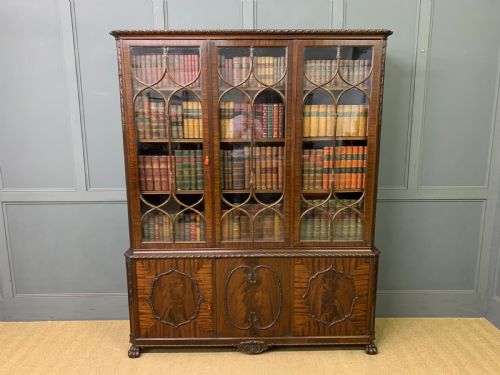
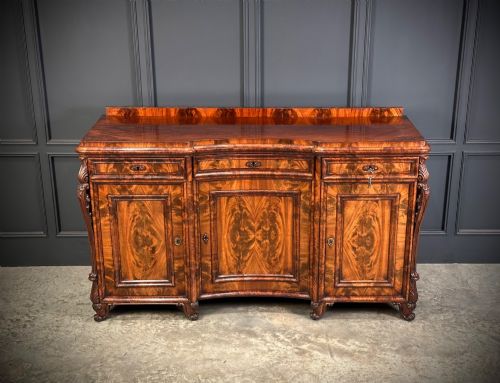
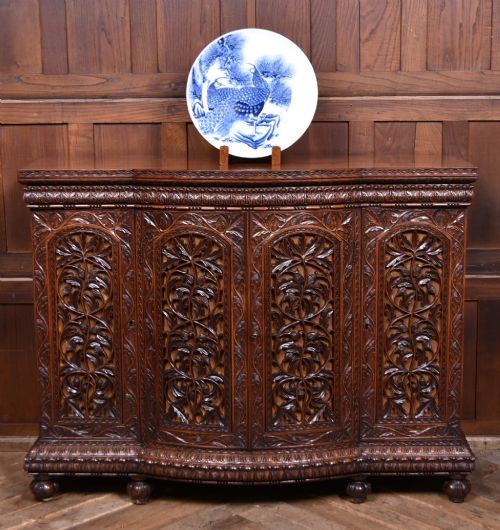
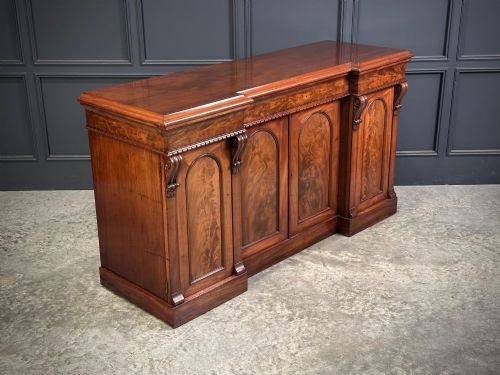
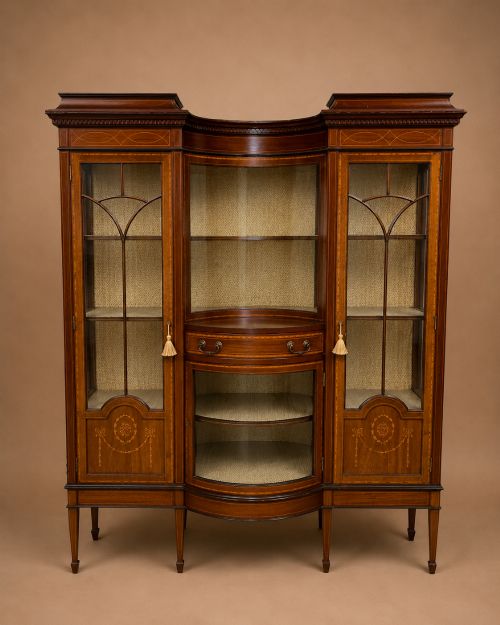
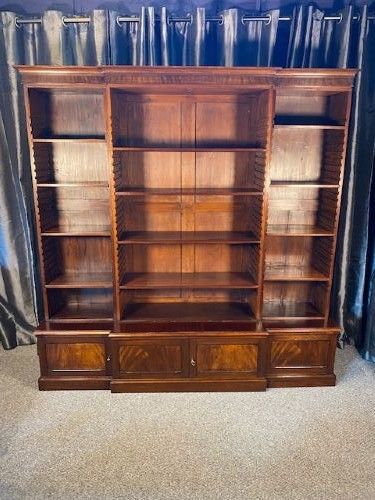
A dark wood breakfront commands attention in a room, offering generous storage through its distinctive projecting central section.
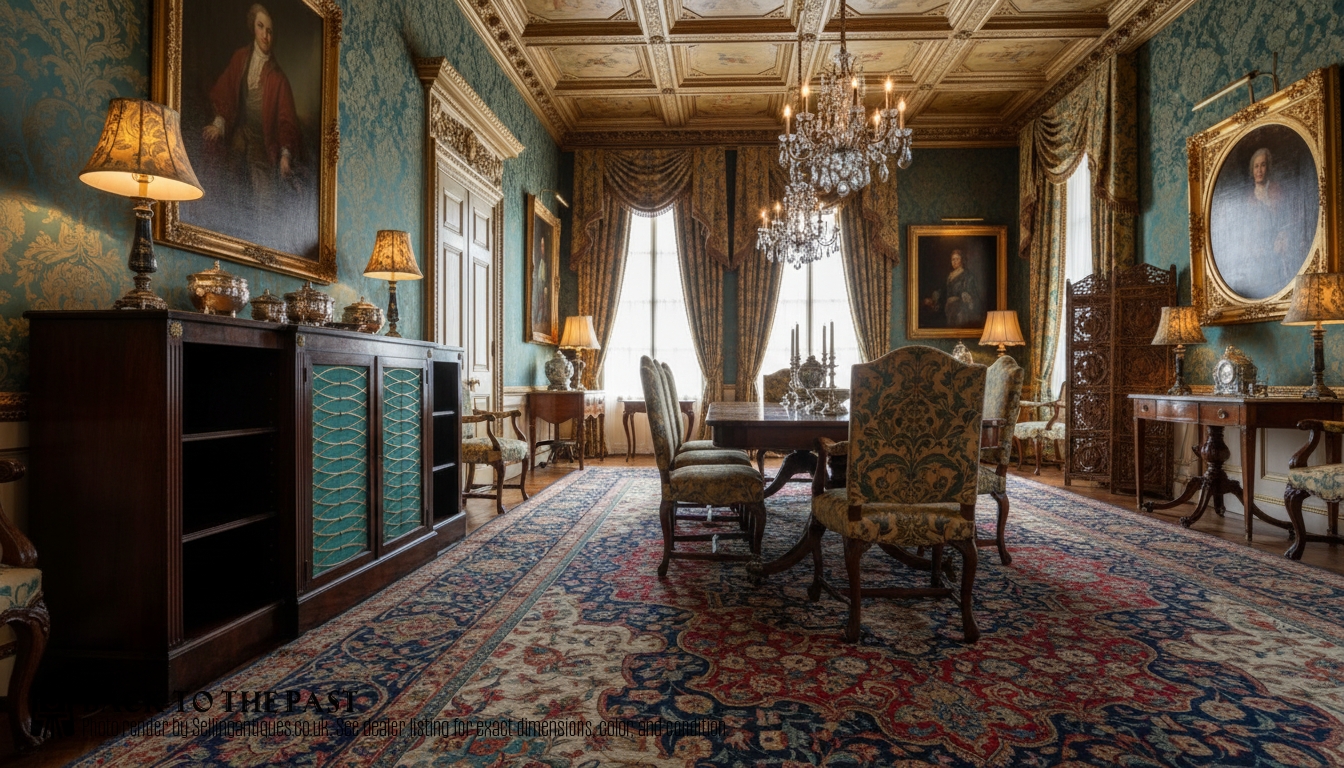
Dark Wood Breakfront
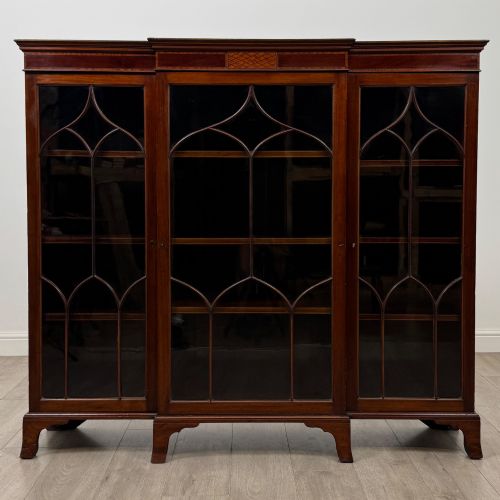
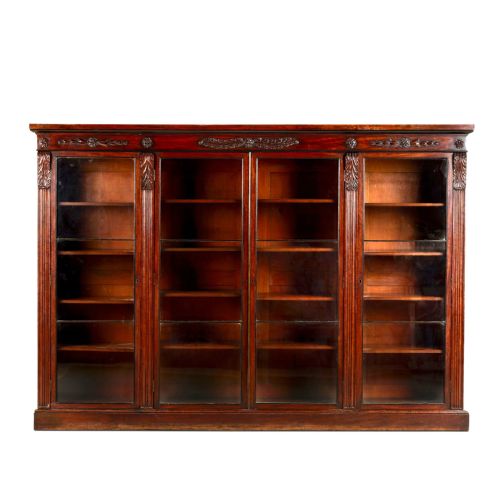
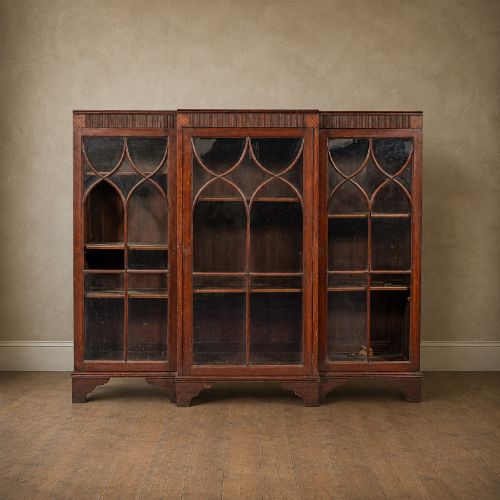
A dark wood breakfront is a substantial cabinet or bookcase defined by its recessed centre flanked by projecting ends, creating a striking architectural silhouette. These pieces appear frequently from the Regency, Victorian, and Edwardian periods, constructed to anchor grand libraries, dining rooms, and parlours.
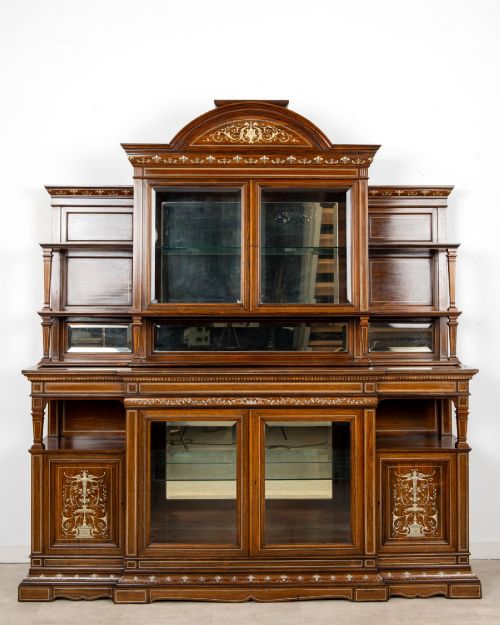
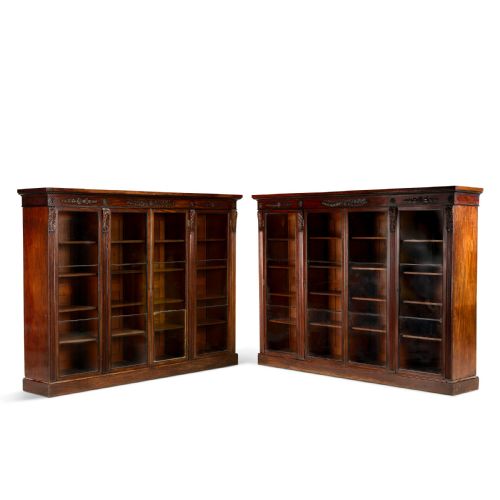
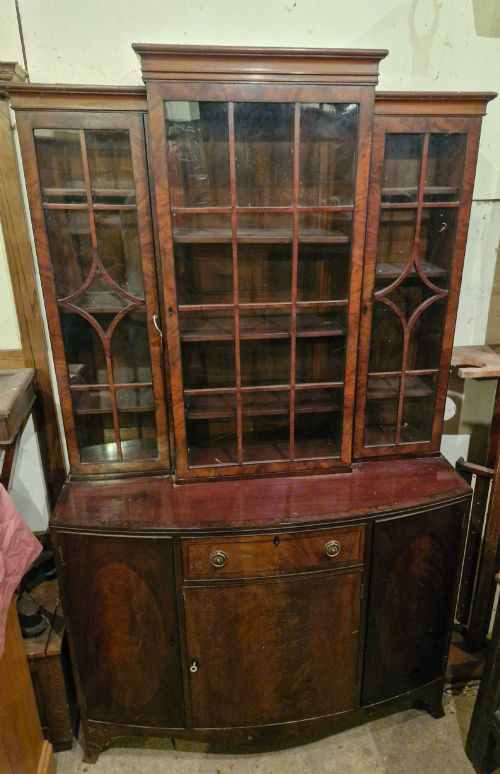
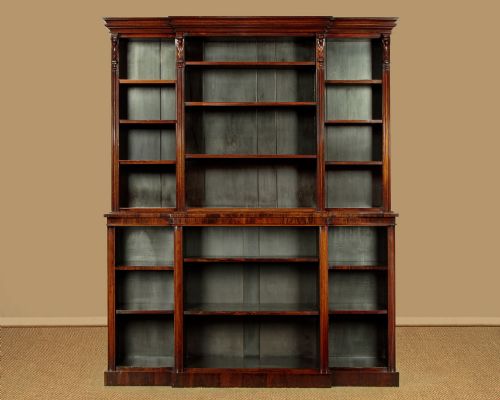
Bookcases and sideboards dominate the available forms, often featuring glazed upper doors for the display of volumes or porcelain, alongside lower cupboards and drawers. Woods such as mahogany, flame mahogany, and rosewood provide the rich, dark tones characteristic of these impressive furnishings.
Materials and Construction
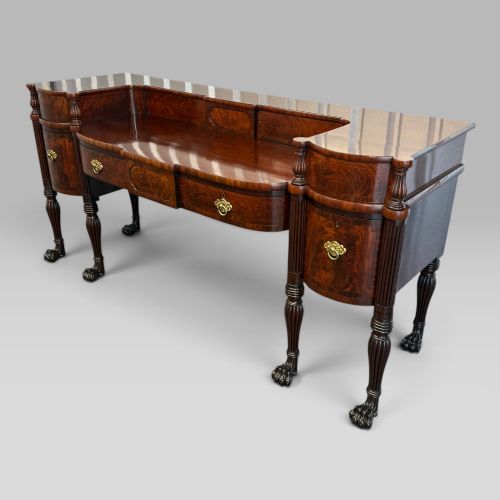
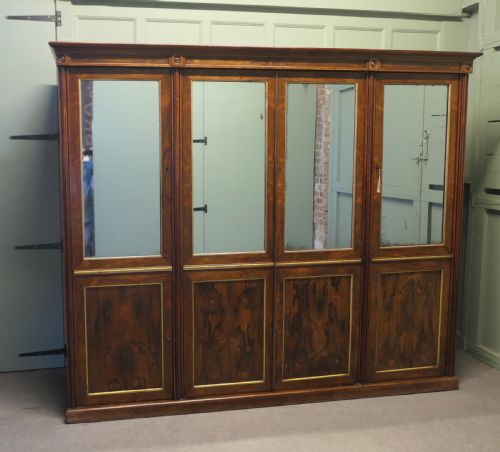
Cabinet makers utilised dense, durable timbers like solid mahogany, walnut, and rosewood, frequently applying highly figured flame mahogany veneer to large flat surfaces to create mesmerising grain patterns. Satinwood inlay, brass mounts, and ormolu details were often integrated to accent the deep tones of the primary woods.
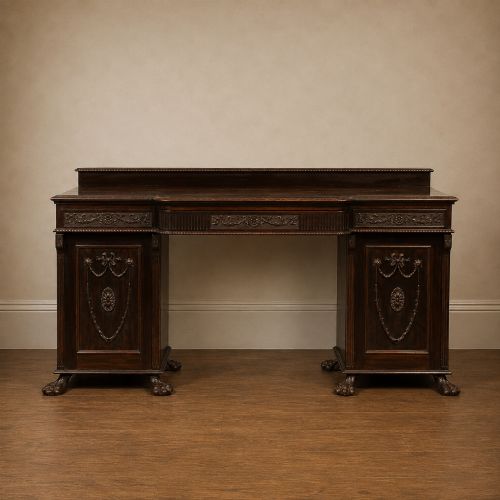
Construction involved robust carcase work designed to support heavy shelving and large glazed doors, sometimes incorporating carved lion paw feet or classical Revival motifs. Joinery standards demanded precise fitting of multiple cupboard doors and intricate breakfront mouldings.
Listings feature mahogany, rosewood, walnut, and oak across 19th-century Victorian, Regency, and Edwardian periods.
Assessing Quality and Distinction
Quality rests heavily upon the selection of timber and the dexterity of the veneer work, where book-matched flame mahogany creates symmetrical, mirror-image patterns across wide drawer fronts and cabinet doors. Superior examples display refined proportions in the central projection rather than heavy, blocky masses.
Hand-carved details, such as crisp foliage or well-defined lion paw feet, separate standard production pieces from master-workshop commissions. The integration of high-grade brass hardware and finely glazed mullions further distinguishes the upper tier of these architectural cabinets.
Jas Shoolbred·Collinson & Lock·Robert Strahan
The Dark Wood Breakfront Glossary
- Breakfront
- A cabinet design where the central section projects forward from the flanking wings, adding architectural depth to large case pieces.
- Flame Mahogany
- A tropical hardwood veneer prized for its vivid, undulating flame-like grain patterns, common in high-end 19th-century cabinet making.
- Compactum
- A large fitted wardrobe or multi-compartment storage unit combining hanging space, drawers, and linen shelves in a single piece.
- Mullion
- A vertical bar dividing the panes of glass within the doors of a bookcase or display cabinet.
- Ormolu
- Gilded bronze mounts applied as decorative ornaments to furniture surfaces during the 19th century.
Dark Wood Breakfront: Frequently Asked Questions
What is a breakfront cabinet?
A breakfront cabinet is a large storage piece characterised by a central section that steps forward from the flanking outer sections, creating a three-dimensional facade.
This architectural arrangement was historically favoured for large libraries and dining rooms to break up the monotony of flat walls.
How do I care for rosewood and mahogany?
Maintain these dark woods by keeping them away from direct sunlight and heat sources to prevent the veneers from drying out and cracking.
Dust regularly with a soft, dry cloth and apply a quality beeswax sparingly when the wood appears dry to preserve its deep lustre.
Are these pieces modular?
Most antique breakfronts are built in sections, typically separating into a lower base, a middle waist, and an upper bookcase or cornice.
This modular construction was essential for transporting heavy furniture into large townhouses and country estates during the 19th century.
How can I distinguish Regency from Victorian styles?
Regency pieces lean towards classical restraint with clean lines, architectural symmetry, and restrained brass or inlay decoration inspired by antiquity.
Victorian pieces often display heavier proportions, richer carving, and eclectic revival influences such as Gothic details or elaborate marquetry.