
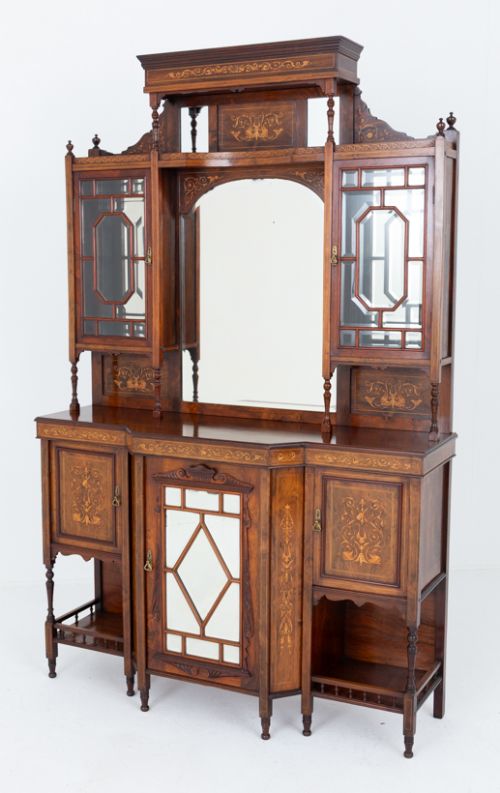


Dark Wood Breakfront Sideboard
A dark wood breakfront sideboard brings architectural weight and rich timber tones to a room, offering substantial storage beneath a stepped facade.
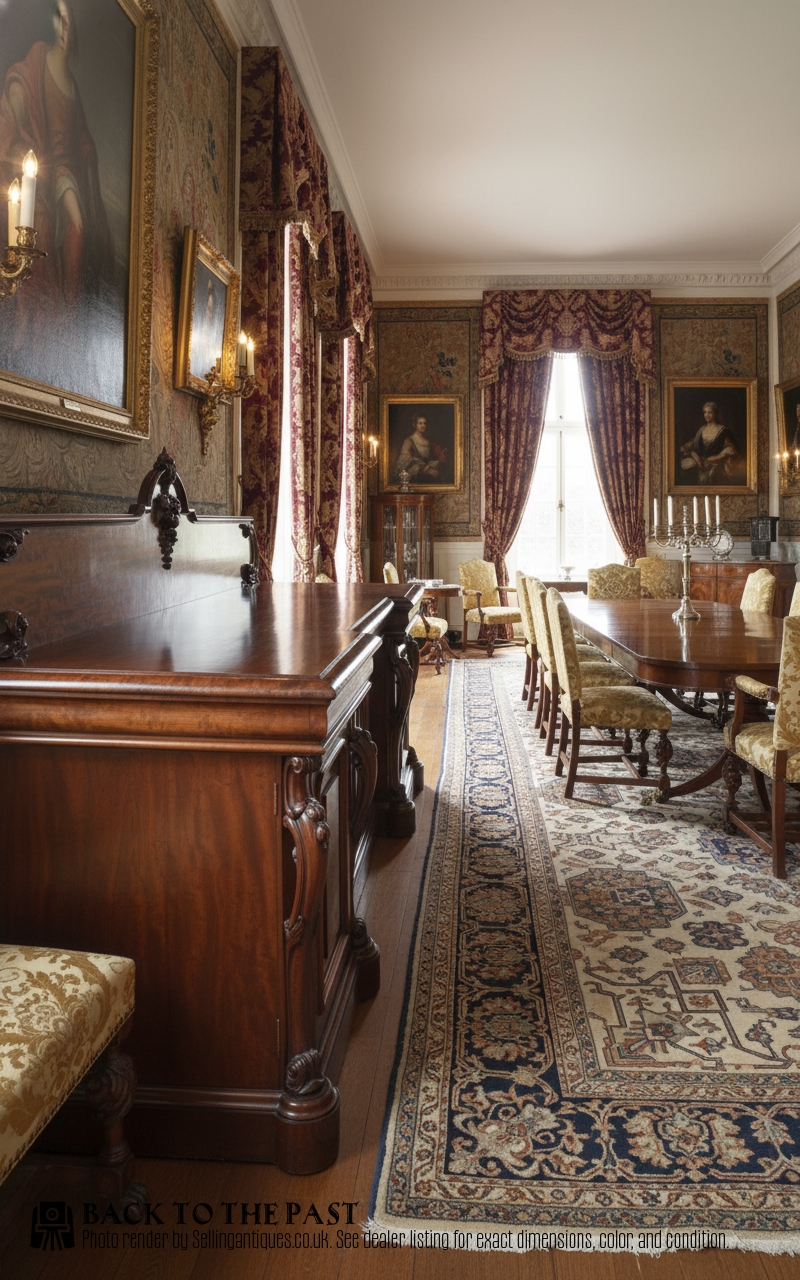
Dark Wood Breakfront Sideboard
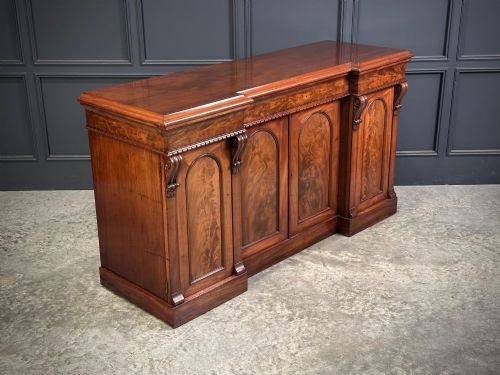
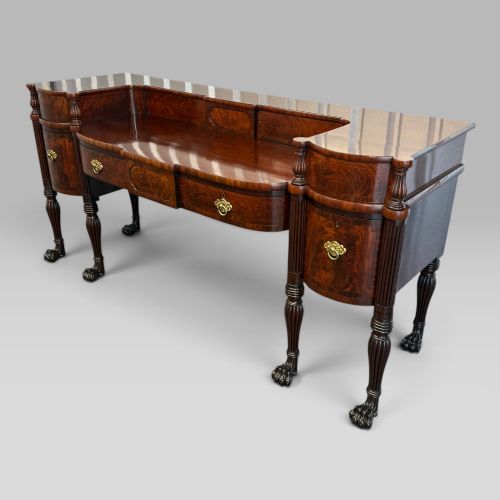
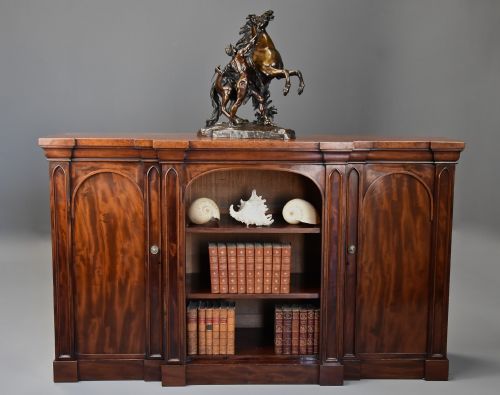
A dark wood breakfront sideboard presents a projecting central section flanked by slightly recessed wings, creating a strong rhythm of depth along a dining room or drawing room wall. When searching for a dark wood breakfront sideboard, buyers encounter pieces stretching from the Regency era through the Victorian period and into Edwardian interpretations, reflecting changing tastes in formal domestic furniture.
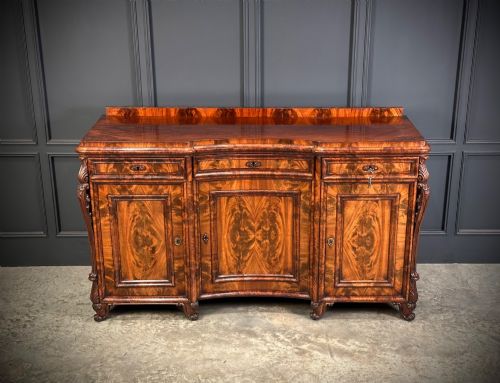
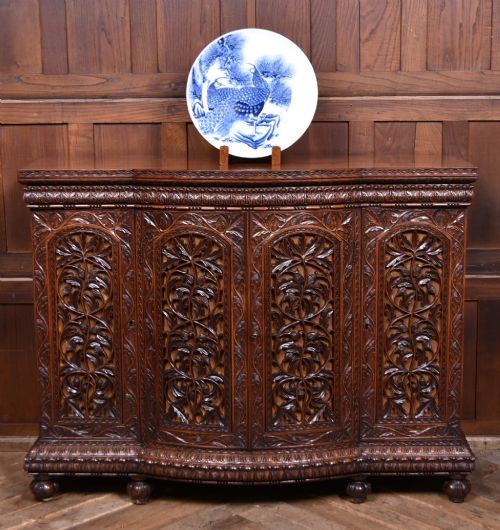
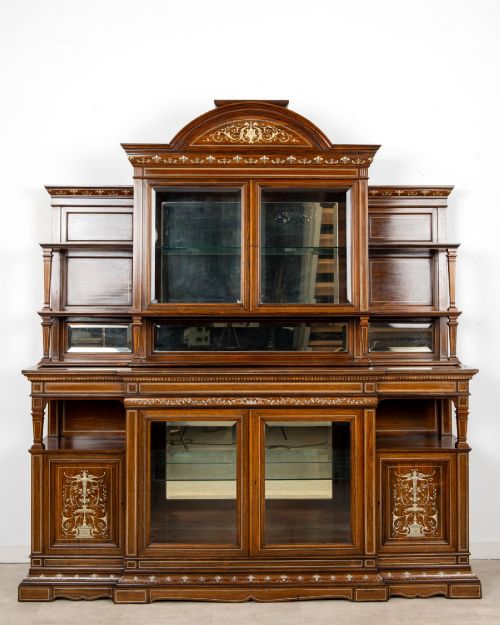
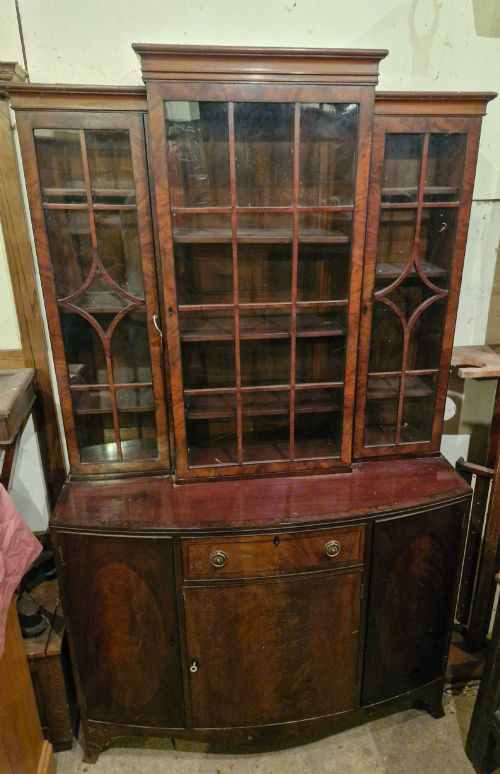
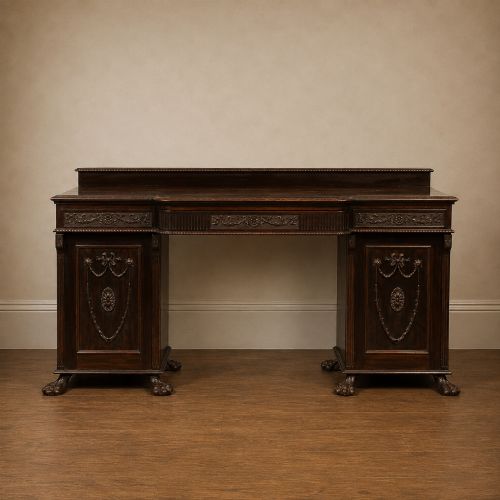
The selection ranges from grand mahogany examples featuring lion paw feet and classical revival details to smaller rosewood and padouk pieces built with restrained neoclassical lines or rich marquetry. Many examples employ breakfront configurations to break up long expanses of timber, often incorporating four doors, glazed display sections, or inverted pedestals that add depth and shadow.
Makers and workshops of the nineteenth century utilised dense tropical timbers and native hardwoods to construct these imposing carcasses, sometimes adapting earlier styles during revival periods. The pieces appearing on this page span several decades of cabinet-making, uniting practical storage with formal presence.
Materials and Construction
Cabinet-makers relied heavily on mahogany, rosewood, and padouk, often selecting flame mahogany veneer to create striking, figured surfaces across large cabinet doors and drawer fronts. These primary timbers were chosen for their durability and deep natural grain, which took a high polish and darkened gracefully over time.
Construction techniques included the application of brass inlays, ormolu mounts, and intricate marquetry to accent the architectural breaks of the facade. Carved elements such as lion paw feet, barley twist columns, and Gothic influences required skilled hand-tooling by specialised artisans working within established urban workshops.
Listings feature woods like rosewood, padouk, and flame mahogany veneer across nineteenth-century and Edwardian forms.
Craftsmanship and Proportion
The distinction between ordinary and exceptional pieces lies in the selection of the timber veneers and the precision of the joinery where the breakfront steps forward. Superior examples display continuous, book-matched flame mahogany grain across multiple doors, whereas simpler pieces rely on plain or more uniform boards.
Proportion and the integration of decorative elements dictate the overall success of the design. Master workshops balanced heavy brass mounts, fine inlay work, and carved feet so that the architectural prominence of the breakfront remained refined rather than heavy-handed.
Collinson and Lock·Howard and Sons
The Dark Wood Breakfront Sideboard Glossary
- Breakfront
- A piece of furniture whose front projects forward in the centre section, flanked by recessed side sections. This architectural arrangement creates dynamic shadows and breaks the flat line of a long wall.
- Flame Mahogany
- A veneer cut from the fork of the mahogany tree where the branch meets the trunk. It yields a distinctive, swirling flame-like pattern prized for high-status cabinet work.
- Padouk
- A dense tropical hardwood with a rich reddish-brown colour that deepens with age. It was frequently utilised in colonial and nineteenth-century cabinet making for its durability.
- Marquetry
- The art of applying pieces of veneer to a structure to form decorative patterns and pictures. Craftsmen used various tinted woods to achieve tonal depth without paint.
- Ormolu
- Gilded bronze used for decorative mounts, feet, and key escutcheons on fine furniture. It provided a bright metallic contrast against dark rosewood and mahogany surfaces.
Dark Wood Breakfront Sideboard: Frequently Asked Questions
What is a breakfront sideboard?
A breakfront sideboard is a large storage cabinet featuring a central section that projects further forward than the flanking ends. This design creates a stepped facade that breaks up long expanses of timber.
Cabinet-makers used this configuration to add architectural depth and visual interest to dining rooms and formal reception spaces.
How do I identify Regency pieces?
Regency dark wood furniture typically exhibits classical restraint, clean architectural lines, and classical revival motifs such as brass inlay and paw feet. These pieces often draw inspiration from ancient Roman and Greek design.
Look for dense rosewood or mahogany timbers finished with a high polish and minimal, precise ornamentation.
Where were these sideboards used?
These sideboards originally stood in formal dining rooms, grand hallways, and drawing rooms of large nineteenth-century homes. They served to store silver, linen, and glassware, or to display decorative porcelain.
Today, they function well in spacious modern dining areas or living rooms as statement storage pieces.
How do I care for dark wood?
Protect dark wood furniture by keeping it away from direct sunlight and sudden temperature changes, which can dry out old veneers. Regular dusting with a soft, dry cloth maintains the finish.
Apply a quality wax sparingly when the timber appears dry, buffing it gently to preserve the natural lustre of the mahogany or rosewood.