



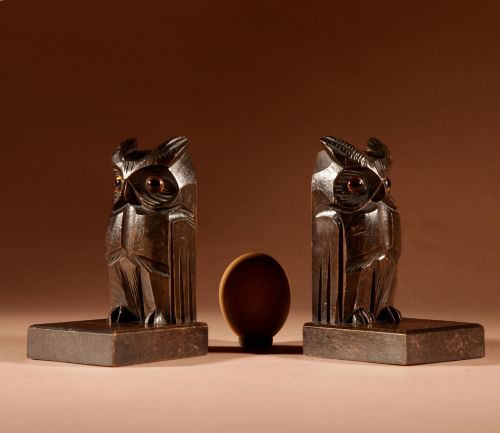


Dark Wood Bookends
Dark wood bookends hold heavy volumes upright on shelves while adding rich timber tones and carved character to a library.
Dark Wood Bookends
Dark wood bookends serve the practical purpose of supporting collections of volumes on shelves while bringing period character to a room. When you search for dark wood bookends, you encounter sturdy timber supports designed to keep rows of books neat and upright.
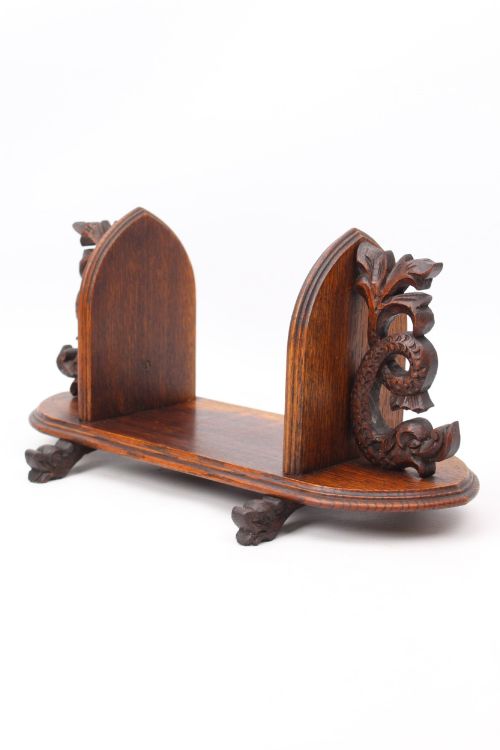
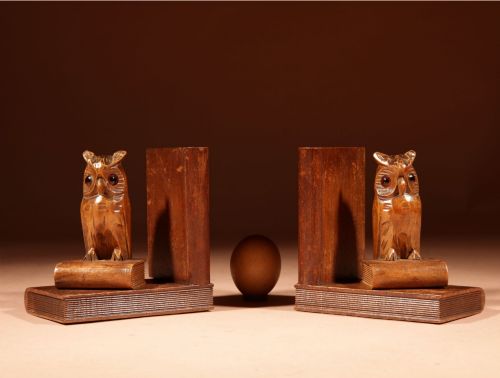
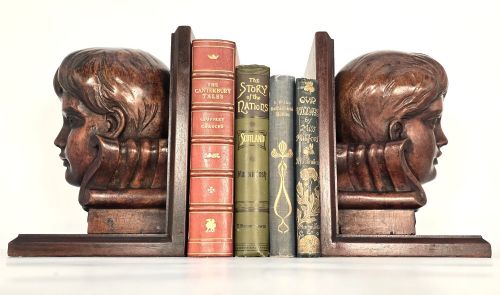
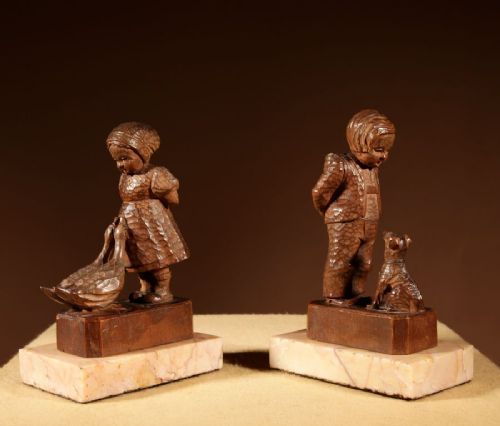
The selections available range from sturdy Victorian library pairs in mahogany and yew to intricately carved Black Forest animal figures. You are most likely to meet carved wooden pairs depicting owls, elephants, or goldfish alongside traditional architectural library supports.
Materials and construction
These pieces utilise dense timbers such as mahogany, oak, ebony, linden wood, and solid yew wood. Makers selected these durable dark woods for their strength and ability to hold fine detail under carving tools.
Craftsmen shaped the timber through hand carving and joinery, incorporating applied details in bone and glass where appropriate. The natural grain of the wood remains visible beneath traditional finishes, highlighting the organic texture of the material.
Dark Wood Bookends Retail Price Guide 2026
Typical asking prices for dark wood bookends among the pieces listed under this phrase on Sellingantiques today, from the lower quarter to the upper quarter. They describe what is for sale here now, not the wider market.
Design styles present across the catalogue include Black Forest, Victorian Gothic Revival, and Anglo-Indian Colonial traditions.
Judging quality in carved supports
The choice of timber and the integrity of the original construction dictate the overall merit of a pair. Heavier, denser woods with stable joints and well-preserved surfaces represent the higher end of the range.
The Dark Wood Bookends Glossary
- Black Forest
- A style of wood carving originating from the Swiss region, known for realistic animal subjects and deep relief work. These pieces often depict woodland creatures with expressive glass eyes.
- Ecclesiastical
- A design style drawing on church architecture and Gothic ornamentation, frequently seen in Victorian library furnishings. Pointed arches and trefoil motifs define this aesthetic.
- Anglo-Indian Colonial
- Furniture and decorative objects made in the Indian subcontinent during British rule, often featuring dense native hardwoods and intricate relief carving. Elephant motifs frequently appear in this tradition.
- Yew wood
- A durable British timber with a distinctive grain pattern ranging from rich amber to deep reddish-brown tones. Georgian makers utilised this wood for items requiring exceptional strength.
- Mahogany
- A heavy tropical hardwood prized for its deep reddish-brown colour and stable grain. Victorian cabinet makers favoured this material for formal library accessories.
Dark Wood Bookends: Frequently Asked Questions
What periods do these bookends cover?
The available items span from the Georgian era around eighteen hundred through the Victorian period and into the early twentieth century. Each era brings distinct carving styles and timber choices to the shelf.
Early nineteenth-century examples often feature plain timber and architectural forms, while later Victorian and Edwardian pieces lean towards figurative animal carvings.
Are these bookends heavy enough for large books?
Solid timber construction provides the natural weight needed to support rows of heavy octavos and folios. Dense woods like mahogany and ebony offer substantial mass in a compact footprint.
Heavier pairs featuring carved animals or thick mahogany bases manage large volumes easily without sliding across the shelf.
How can I tell Black Forest carvings apart?
Black Forest carvings are distinguished by their lively animal subjects, such as owls, elephants, and goldfish, rendered in deep relief. These pieces often date from the late nineteenth or early twentieth century.
Realistic detailing, such as inset glass eyes and textured fur or scales, marks out genuine examples from this distinct European tradition.