


Dark Wood Bookcase Chest
These dark wood bookcase chest pieces combine writing desks, shelved libraries and drawer storage in substantial furniture built to last centuries.
Dark Wood Bookcase Chest
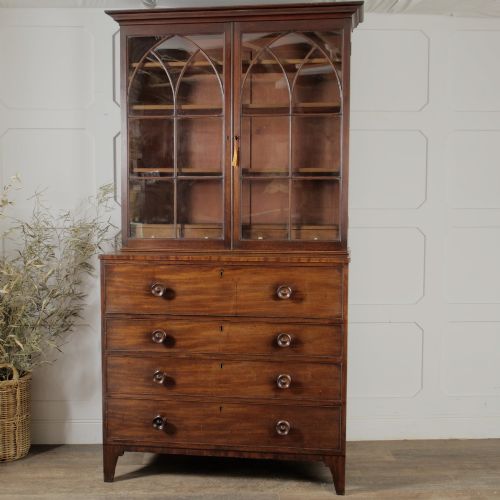
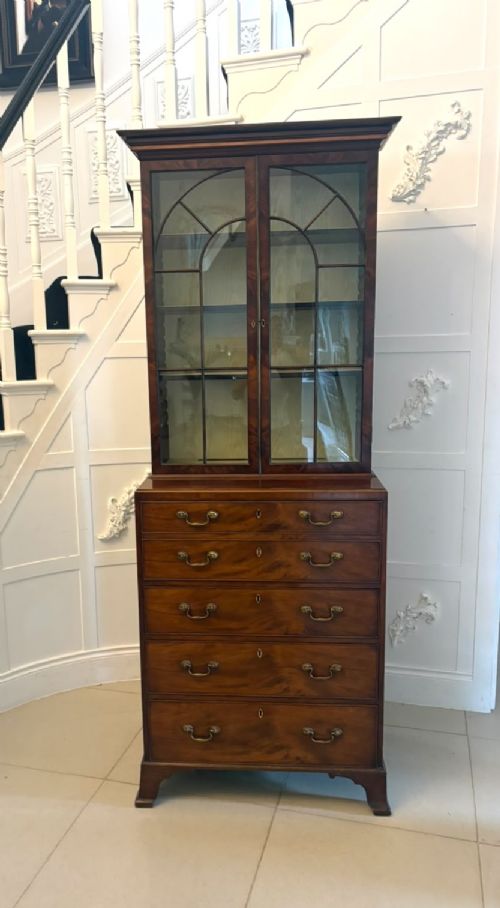
When you search for a dark wood bookcase chest, you encounter tall, two-part furniture pieces that combine upper display or shelving sections with lower chest and writing desk components. These items span periods from the eighteenth century through the Edwardian era, with Georgian and Regency examples appearing frequently.
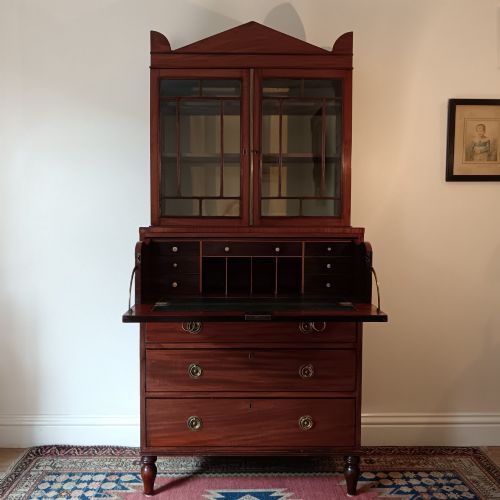
The lower section typically functions as a chest of drawers or incorporates a fitted secretaire drawer with a drop-front writing surface. Above this base sits either a glazed bookcase with timber framing or an open display cabinet designed to house volumes and decorative objects.
Most pieces utilise rich native and imported timbers, prominently featuring mahogany and oak alongside walnut. Cabinetmakers designed these hybrid forms to serve as multifunctional library and study furniture for domestic interiors.
Materials and Construction
Cabinetmakers built these pieces primarily using solid mahogany and oak, often applying figured mahogany veneers to drawer fronts and door panels to highlight the grain. Structural carcass work relied on sturdy pine or oak framing joined with traditional cabinetmaking techniques.
Glass doors featured delicate wooden glazing bars arranged in geometric or Gothic tracery patterns to hold individual panes securely. Brass hardware, including drop handles, escutcheons and campaign-style flush fittings, completed the functional exterior elements.
Makers integrated internal writing drawers with pigeonholes and small compartments, utilising secondary woods like oak or pine for drawer linings and internal dividers.
Many secretaire drawers retain secret compartments hidden behind removable pigeonhole blocks for confidential papers.
Evaluating Quality and Craftsmanship
The selection of timber veneers defines the visual appeal, with well-figured mahogany displaying deep chatoyancy and consistent grain patterns across the front of the cabinet. Superior examples exhibit precise dovetail joinery in the drawers and seamless integration between the upper bookcase and lower chest sections.
The delicacy and precision of the astragal glazing bars on the upper doors indicate the skill of the original workshop. Finer pieces retain original brass hardware, working locks and well-fitted internal stationery compartments within the secretaire drawer.
George Oakley·Gillows
The Dark Wood Bookcase Chest Glossary
- Secretaire bookcase
- A tall cabinet featuring a pull-down writing drawer that conceals small pigeonholes and drawers, combined with upper shelving. This form serves both storage and writing functions.
- Astragal glazed
- Doors fitted with thin wooden mouldings that divide individual glass panes into geometric patterns. These delicate frames are characteristic of fine library furniture.
- Campaign style
- Portable furniture constructed with recessed brass handles and reinforced corners for military travel. These pieces retain rigid structural integrity despite their modular design.
- Commode and vitrine
- A lower storage chest combined with an upper glass-fronted display cabinet. This form originates from continental European cabinetmaking traditions.
- Dovetail
- A interlocking wood joint formed by fan-shaped tenons that fit tightly together. This construction method secures drawer corners against lateral pull.
Dark Wood Bookcase Chest: Frequently Asked Questions
How do I use a secretaire drawer?
The front of the top drawer hinges downward on brass arms to create a flat writing surface at a comfortable desk height. Inside, you find a collection of small drawers and pigeonholes designed for stationery and letters.
When you finish writing, simply lift the front panel back into place and secure it with the key. This conceals your papers and restores the clean lines of the chest.
Are these pieces delivered in one piece?
Most of these items are constructed in two distinct sections, separating the upper bookcase from the lower chest of drawers. This modular design makes transport and placement through standard doorways much easier.
The upper cabinet simply rests upon the flat top of the lower chest, sometimes secured with internal brackets or wooden locating pins.
How do I distinguish Georgian from Regency pieces?
Georgian examples often display restrained classical proportions with subtle carving, astragal glazing bars and traditional bracket feet. They date from the eighteenth and early nineteenth centuries.
Regency pieces tend to embrace bolder classical influences, occasionally incorporating brass inlay, pillar supports or campaign fittings reflecting early nineteenth-century design trends.
How do I care for antique mahogany furniture?
Keep the wood away from direct heat sources and strong sunlight to prevent the timber and veneers from drying out or fading. Apply a traditional beeswax polish occasionally to nourish the grain and maintain a soft sheen.
Avoid using modern silicone sprays or liquid cleaners, as these can penetrate the aged finish and damage the patina built up over generations.