


Dark Wood Book Storage
Dark wood book storage brings together bookcases, cabinets, and whatnots crafted from mahogany, oak, and rosewood across the Georgian, Victorian, and Edwardian periods.
Dark Wood Book Storage
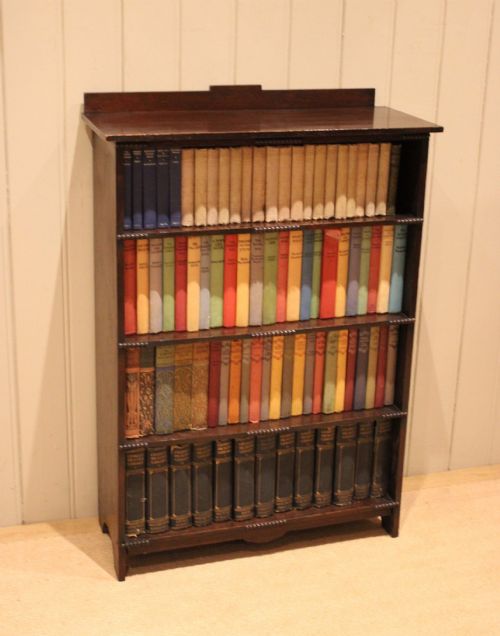
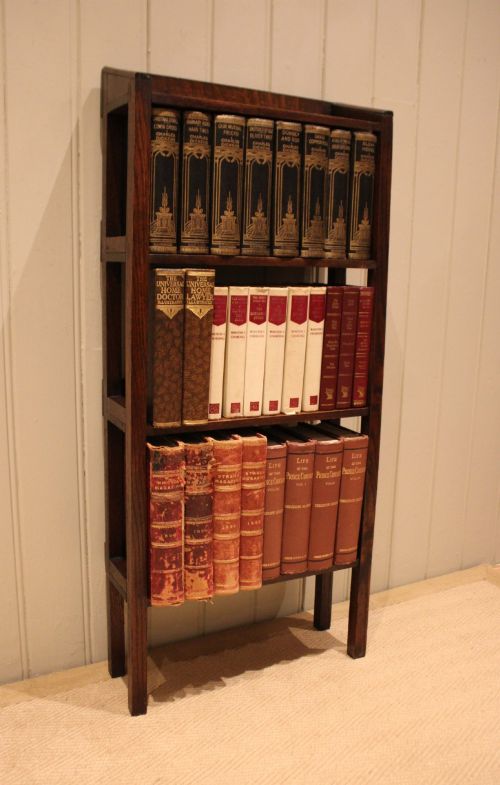
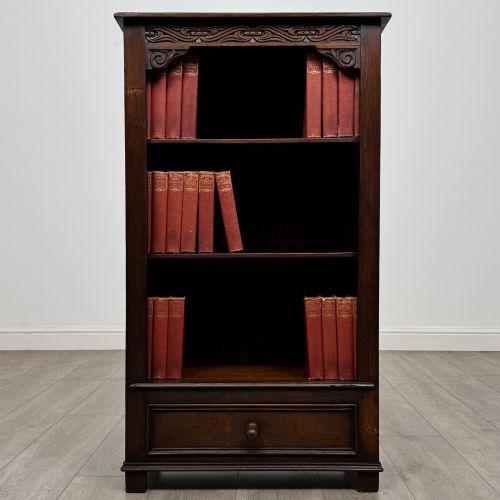
When you search for dark wood book storage, you encounter functional furniture designed to hold libraries and display volumes in domestic settings. The pieces span open bookcases, glazed display cabinets, side cabinets, and tiered whatnots from the Georgian, Victorian, and Edwardian eras. Mahogany and oak dominate the selection, offering sturdy frames suited to heavy collections.
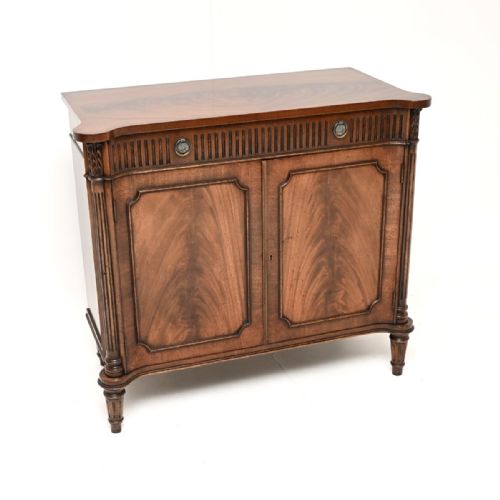
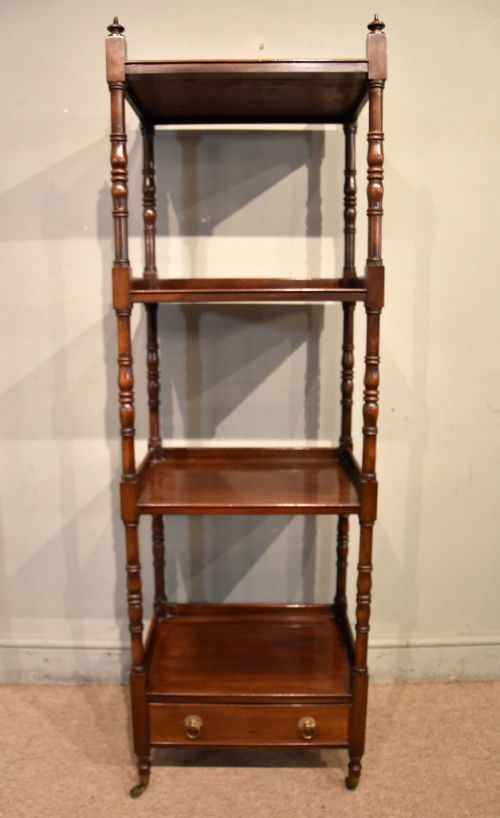
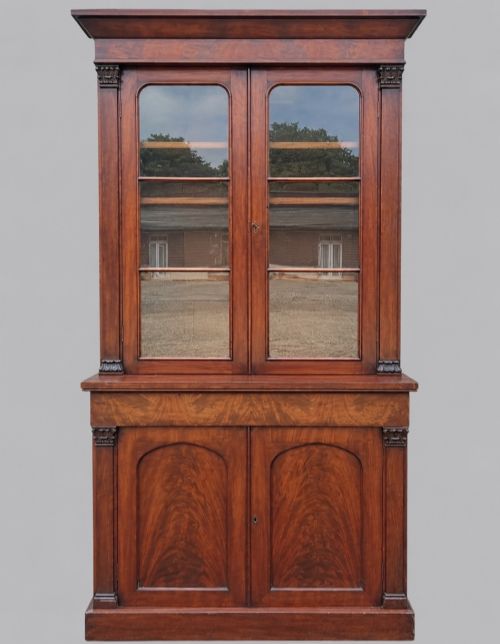
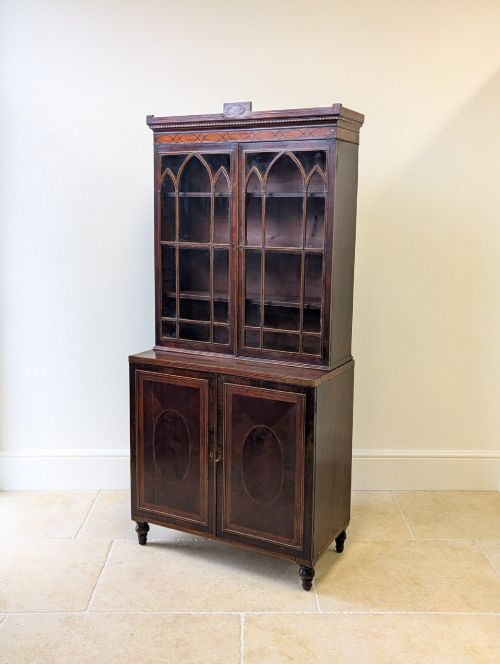
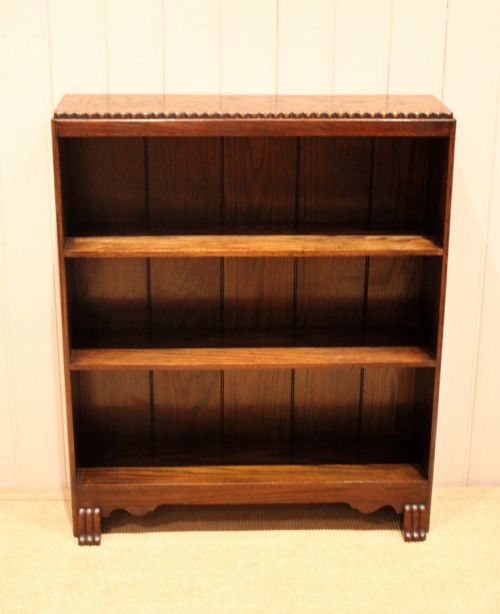
You are most likely to meet open-front oak bookcases from the early twentieth century alongside substantial mahogany library cabinets from the nineteenth century. These forms vary from simple adjustable shelving units to elaborate two-part breakfront bookcases with glazed upper doors and enclosed lower cupboards. Smaller pieces like book carriers and four-tier whatnots also appear to serve more compact spaces.
How they were made
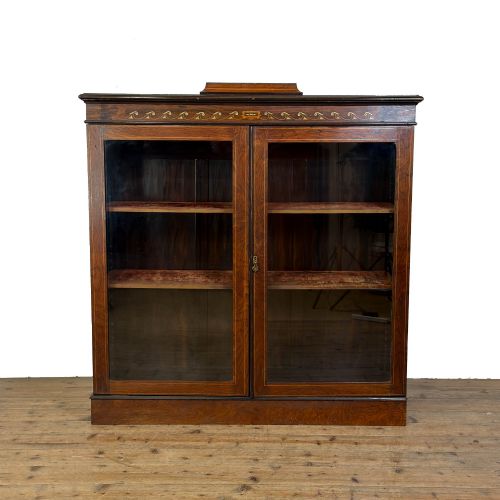
Makers utilised solid timbers alongside veneered surfaces, constructing carcasses in mahogany, oak, and rosewood with brass hardware and glass panels. Craftspeople applied detailed carving, notably in Jacobean Revival and Victorian Renaissance Revival pieces featuring motifs such as the Green Man. Satinwood inlay frequently provides contrast on Edwardian display cabinets and side units.
Structural methods included adjustable shelving systems on later Edwardian bookcases and multi-tier construction for open whatnots. Larger library pieces often split into two distinct parts for transport, combining lower cupboards with upper bookcase sections behind glazed or open frames.
Carved Green Man faces stare out from Victorian oak bookcases, watching over your reading habits with ancient woodland vigilance.
What varies in quality
The distinction between standard utility items and finer examples rests on timber selection and decorative execution. Elaborate carving, balanced proportions, and thoughtful additions such as satinwood inlay elevate a piece beyond basic function. Solid oak and figured mahogany demonstrate superior material choice compared to plainer secondary woods.
Construction integrity defines the upper tier of dark wood book storage, visible in properly operating adjustable shelves, robust joints, and intact original glass or brass fittings. Pieces that retain their original surfaces and structural cohesion command greater regard among collectors.
The Dark Wood Book Storage Glossary
- Breakfront
- A cabinet design where the central section projects forward from the flanking wings. This architectural arrangement creates depth and visual interest in large library bookcases.
- Whatnot
- An open set of tiered shelves used for displaying books and decorative objects. These freestanding items became popular during the nineteenth century for secondary rooms.
- Library bookcase
- A tall, substantial piece of furniture combining enclosed lower cupboards with upper shelving for volumes. They frequently feature two-part construction to aid placement in domestic spaces.
- Satinwood inlay
- Contrasting light wood inserted into darker timber surfaces to form decorative patterns. This technique appears on refined Edwardian display cabinets.
- Open bookcase
- A shelving unit without doors designed for immediate access to working collections. Examples range from simple nineteenth-century oak frames to adjustable Edwardian models.
Dark Wood Book Storage: Frequently Asked Questions
How do I date a dark wood bookcase?
Dating relies on combining stylistic clues with construction methods seen across the Georgian, Victorian, and Edwardian periods. Architectural cornices and bracket feet often point to earlier Georgian work, while machine-cut elements and adjustable shelf racks indicate later nineteenth or twentieth-century manufacture.
Examining the timber species and interior linings provides further context. Mahogany and oak were used across multiple centuries, so hardware such as brass handles and hinges helps narrow down the production era.
Are these bookcases suitable for modern homes?
Many examples adapt well to contemporary interiors, particularly smaller Edwardian open bookcases and compact nineteenth-century whatnots. Their dark wood tones add warmth while providing practical shelf space for books and display items.
Larger two-part library bookcases require more generous wall space and ceiling height. Ensuring correct placement away from direct heat sources helps protect the timber and veneer over time.
What is the difference between a cabinet and a bookcase?
Bookcases primarily feature open or glazed shelving designed specifically for storing and displaying books. Cabinets incorporate enclosed cupboard doors, often hiding contents behind solid timber panels or lower storage sections.
Many pieces bridge this distinction by combining upper open or glazed book storage with lower enclosed cupboards. These hybrid library pieces served both working and display functions in traditional rooms.
How should I care for antique dark wood?
Maintaining antique dark wood involves keeping pieces away from direct sunlight and sudden temperature shifts that cause timber to warp. Regular dusting with a soft, dry cloth preserves the polished surface without applying heavy chemical build-up.
Occasional application of appropriate wax feeds the wood and maintains its natural sheen. Checking structural joints and shelf supports periodically ensures the furniture remains stable under the weight of books.