
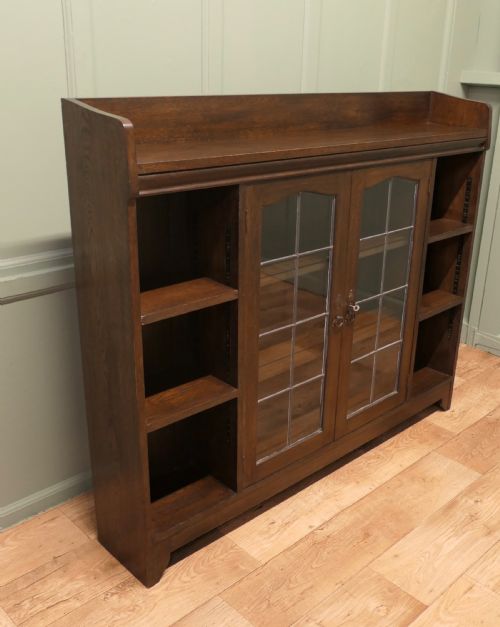
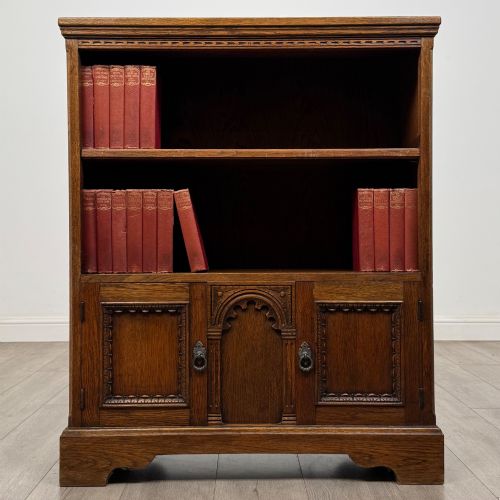
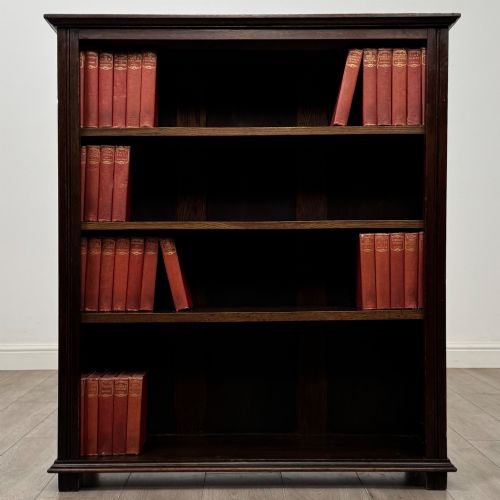
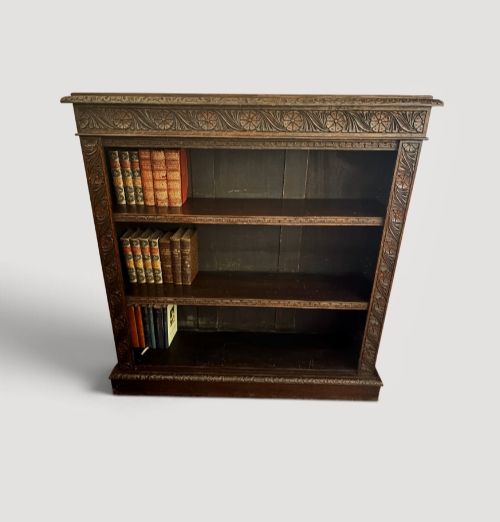
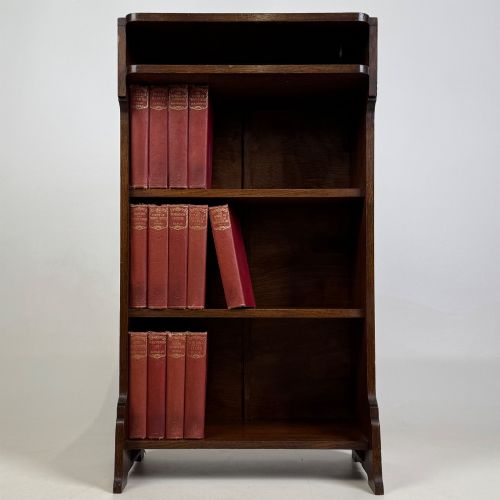
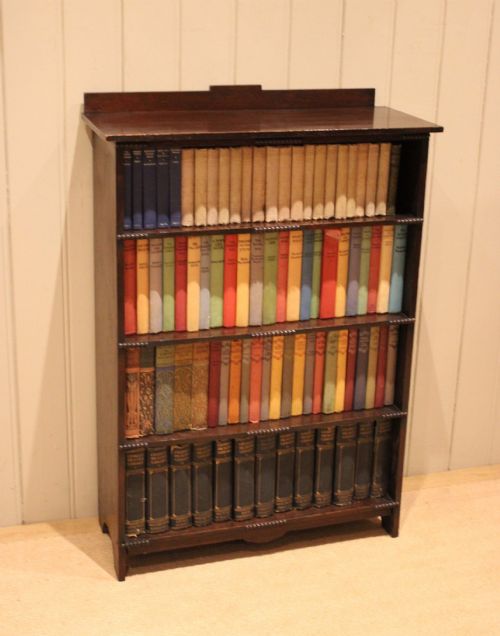
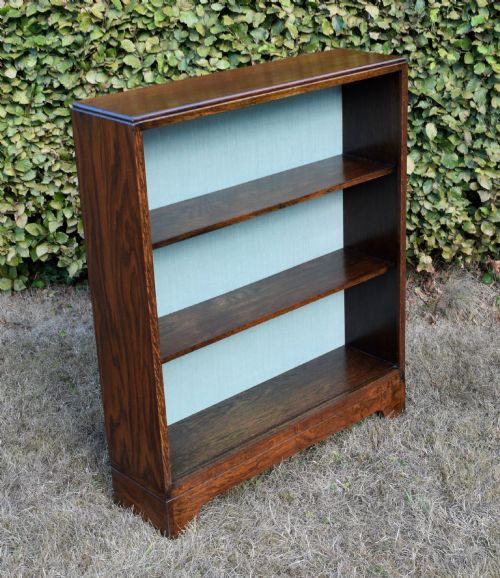
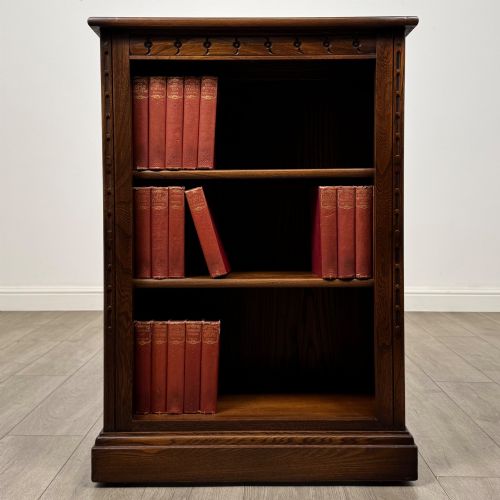
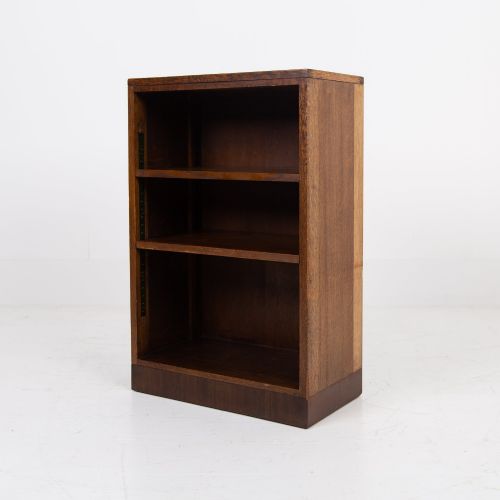
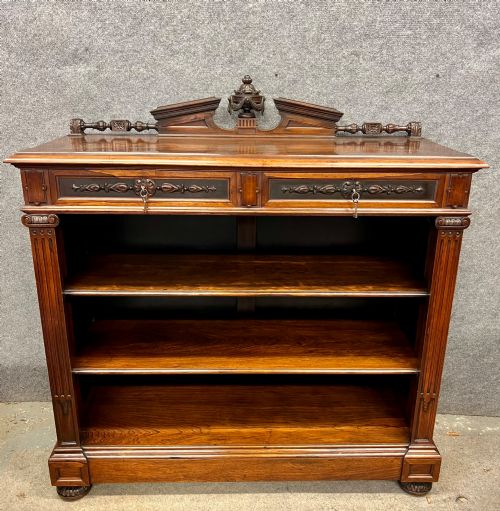
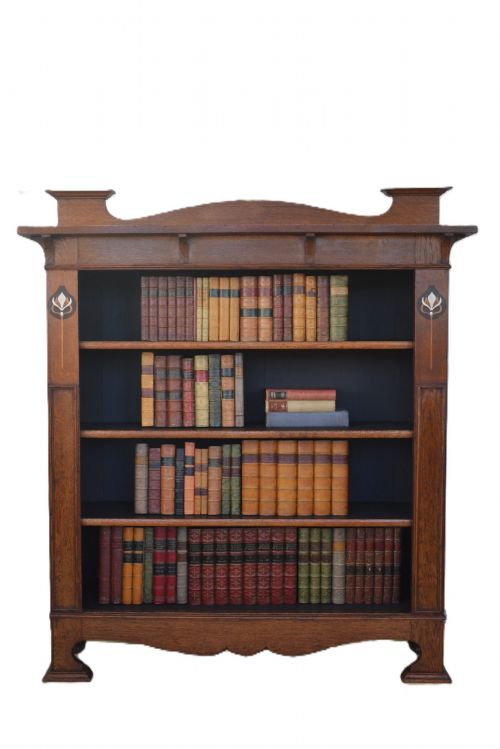


Low Open Oak Cabinet
A low open oak cabinet offers accessible shelving and solid construction, uniting utility with period character for everyday rooms.
Low Open Oak Cabinet
A low open oak cabinet provides waist-height storage and display space without enclosing the room, making it a versatile addition to domestic interiors. These pieces appear across several periods, including Victorian, Edwardian, and the 1930s, often taking the form of bookcases or dwarf cabinets.
The versions most frequently met on this page span the 19th century through to the interwar years, displaying stylistic influences ranging from Arts and Crafts simplicity to Gothic Revival and Tudor Revival carving. They combine open shelving with sturdy timber frames designed to hold heavy volumes or display objects.
Makers and designers working in these styles utilised solid oak to create enduring furniture that adapts easily to modern living spaces. Whether plain and beaded or elaborately carved with figures like the Green Man, each piece reflects the practical needs of its original period.
Assessing quality in oak cabinets
Superior examples distinguish themselves through the selection of timber and the crispness of any carved ornamentation, such as the detailed work seen on Gothic Revival or Flemish pieces. Fine quality also shows in the integration of adjustable shelving mechanisms and solid backboards that ensure structural stability over time.
Simpler pieces rely on proportion and clean lines, particularly within Arts and Crafts or Art Deco designs where the grain of the oak forms the primary decorative element. The weight of the solid timber and the precision of the joints ultimately determine how well a cabinet survives decades of daily use.
Listings span the 19th century, Edwardian era, and the 1930s, constructed mainly in solid oak with occasional walnut and brass details.
Liberty·Heals·Richard Bridgens·William Trotter
The Low Open Oak Cabinet Glossary
- Open bookcase
- A piece of furniture designed for storing books without enclosing doors, allowing direct access to the shelves. This form constitutes the majority of pieces in this category.
- Breakfront
- A cabinet design where the central section projects forward from the flanking sections, creating architectural depth. This layout appears on larger carved oak examples.
- Gothic Revival
- A 19th-century style inspired by medieval architecture, characterised by pointed arches, tracery, and heavy carved details. Pieces from this movement often feature robust oak framing.
- Arts and Crafts
- A design movement prioritising traditional craftsmanship and simple forms over mass-produced ornamentation. Cabinets from this style frequently highlight the natural grain of solid oak.
- Dwarf bookcase
- A low-standing shelving unit designed to sit below picture rail height. These diminutive pieces provide compact storage for domestic spaces.
Low Open Oak Cabinet: Frequently Asked Questions
What are low open oak cabinets used for?
These cabinets serve primarily as accessible bookshelves or display surfaces for ornaments, fitting easily beneath windows or against low walls.
Their open structure keeps frequently read volumes within arm's reach while maintaining an open, uncluttered feel in a room.
How do I date an oak cabinet?
Dating relies on examining the timber, construction methods, and stylistic cues such as hardware or carved motifs.
Victorian and Edwardian pieces often display distinct revival styles, whereas 1930s examples favour cleaner lines or Art Deco influences.
Are the shelves adjustable?
Many examples include adjustable shelving systems, though older or simpler models may feature fixed shelves.
Checking the interior uprights reveals whether slots or metal pins were utilised to allow height variation.
How do I care for solid oak furniture?
Solid oak benefits from occasional treatment with appropriate wax or polish to nourish the grain and protect the surface from drying out.
Keeping the timber away from direct heat sources and sudden humidity changes prevents warping or splitting over time.