


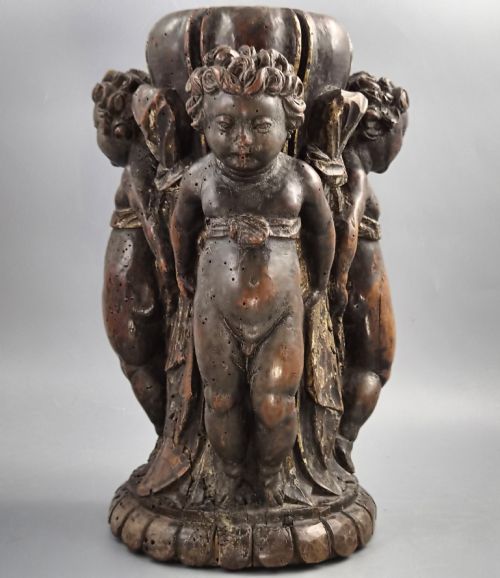
Dark Walnut Wood Carving
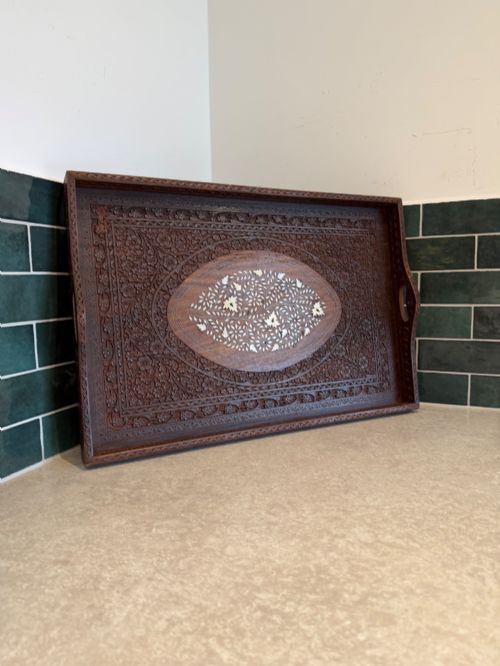
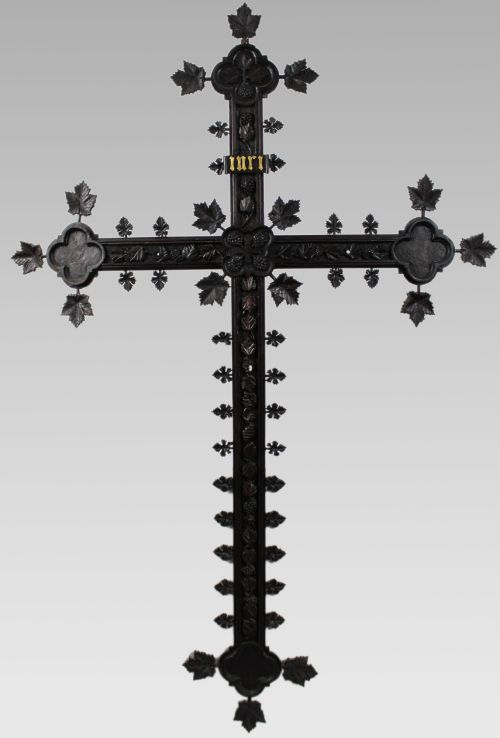
Dark walnut wood carving brings deep tone and rich relief work to period furniture, decorative objects and seating.
Dark Walnut Wood Carving
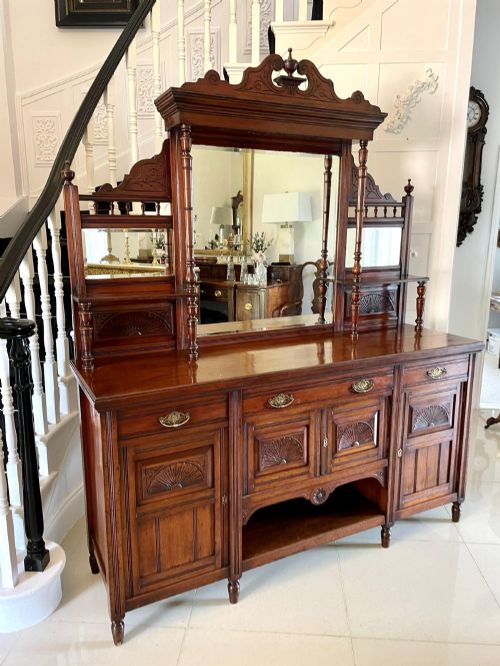
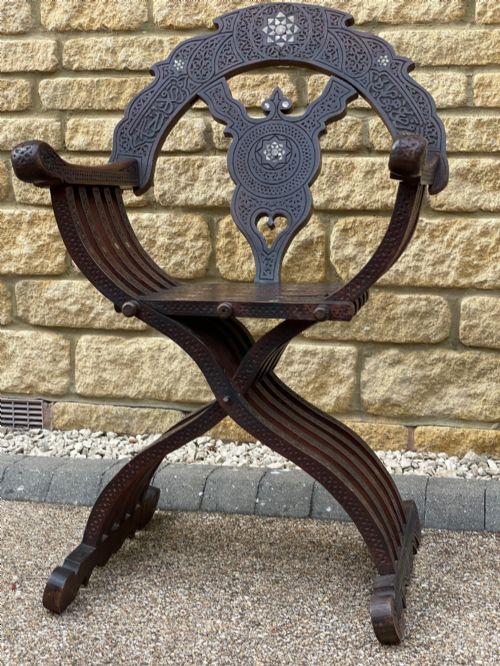
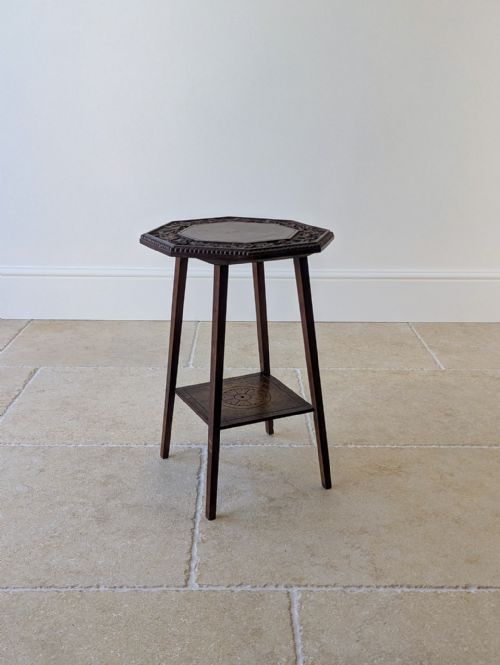
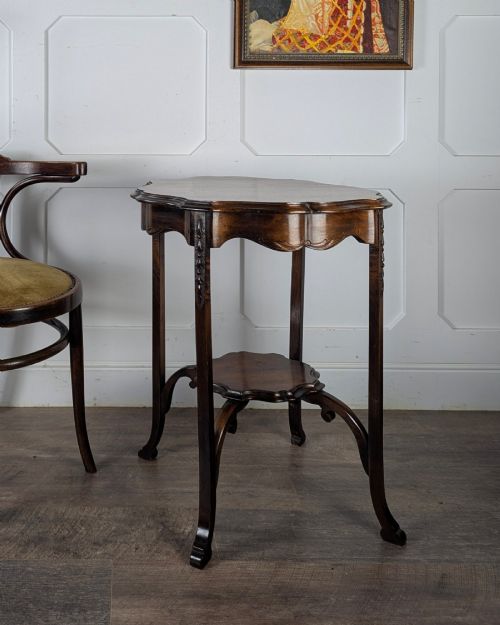
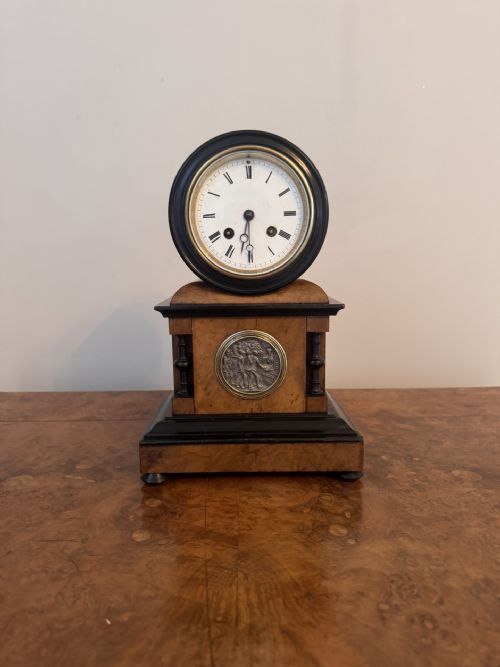
Dark walnut wood carving appears on nineteenth-century Victorian furniture, tables, chairs and clocks alongside seventeenth-century Italian and Spanish seating.
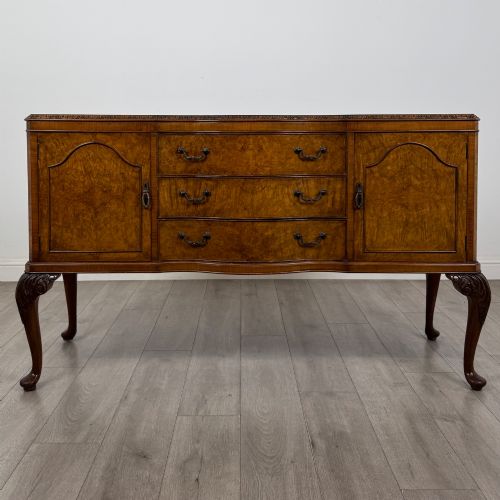
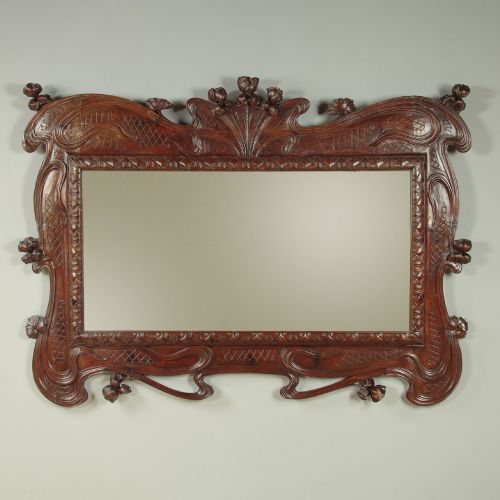
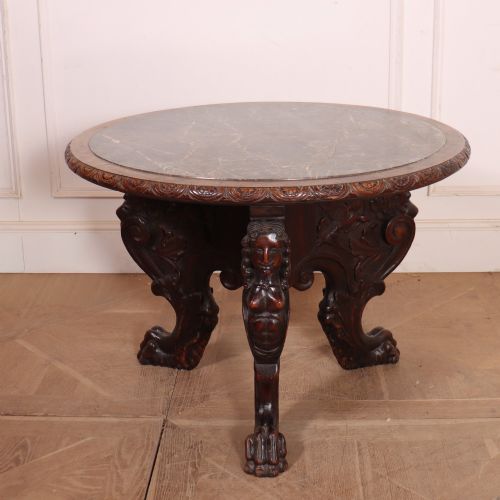
Buyers seeking dark walnut wood carving commonly encounter occasional tables, bookcases, mirrors and Black Forest wall panels.
Makers utilised walnut, burr walnut and timber to create sideboards, armchairs, pedestals and mantel clocks reflecting Victorian, Baroque and Arts and Crafts styles.
Assessing Quality
The standard of a dark walnut wood carving rests on the depth of the chisel work and the natural figure of the timber.
Superior examples display sharp relief and balanced proportions, whereas inferior pieces show shallow detailing and heavy, uniform surfaces.
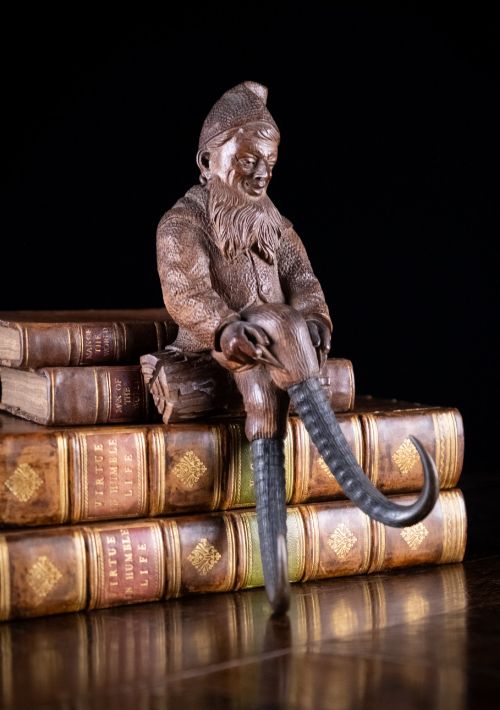
Keep an eye out for a carved gnome holding a whip hook.
Gabriel Viardot·Andrea Brustolon·Thomas Hope
The Dark Walnut Wood Carving Glossary
- Burr walnut
- A figured timber harvested from tree growths, producing swirling patterns across table tops and cabinet doors. This veneer requires skilled application.
- Black Forest
- A regional style of carving originating in Switzerland and Germany, known for realistic animal and foliage motifs. Pieces often depict bears or gnomes.
- Monopodia
- A furniture support featuring a single carved animal leg and foot, common in classical revival seating. This design echoes ancient Roman stone tables.
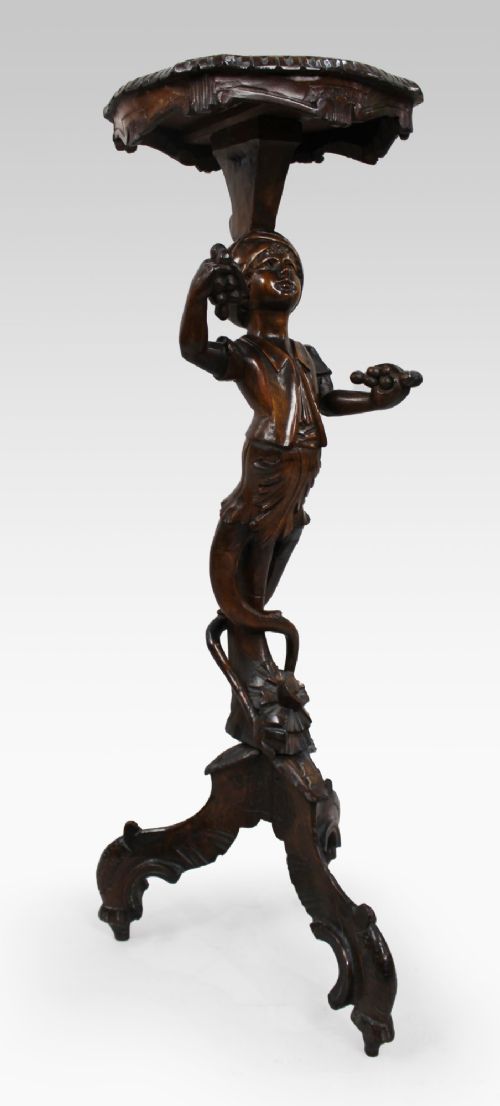
- Torchiere
- A tall stand or pedestal designed to hold a light source or decorative object, often carved with figures. Italian Baroque versions frequently incorporate putti.
Dark Walnut Wood Carving: Frequently Asked Questions
How do I clean dark walnut carvings?
Dust surfaces regularly with a soft, dry cloth to prevent dirt accumulation within the carved crevices.
Apply a quality beeswax periodically to nourish the timber and maintain a soft sheen without building up heavy residue.
Where should I place these carvings?
Position walnut tables and chairs away from direct sunlight and heat sources to prevent the wood from drying and splitting.
Allow adequate space around wall mirrors and cabinets so the relief work and dark grain remain visually prominent.
How do I identify Victorian walnut pieces?
Look for dense, dark heartwood combined with elaborate carving influenced by Gothic, Renaissance or naturalist revival styles.
Examine the secondary timbers and construction methods underneath or behind the piece to confirm nineteenth-century origins.
What distinguishes Black Forest carvings?
These items feature deeply undercut foliage, wildlife and rustic subjects rendered in dark timber by Swiss and German woodworkers.
Items range from large wall barometers and clocks to small snuff boxes and whip hooks.