

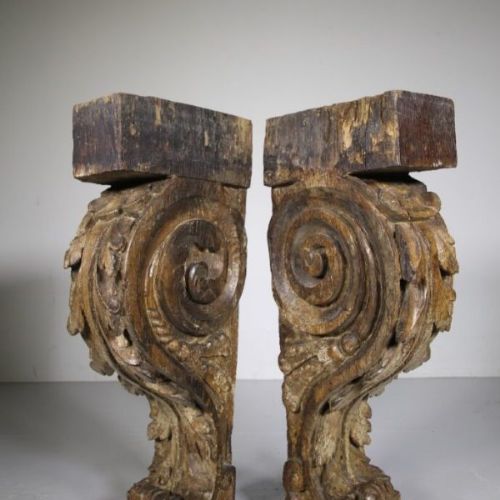


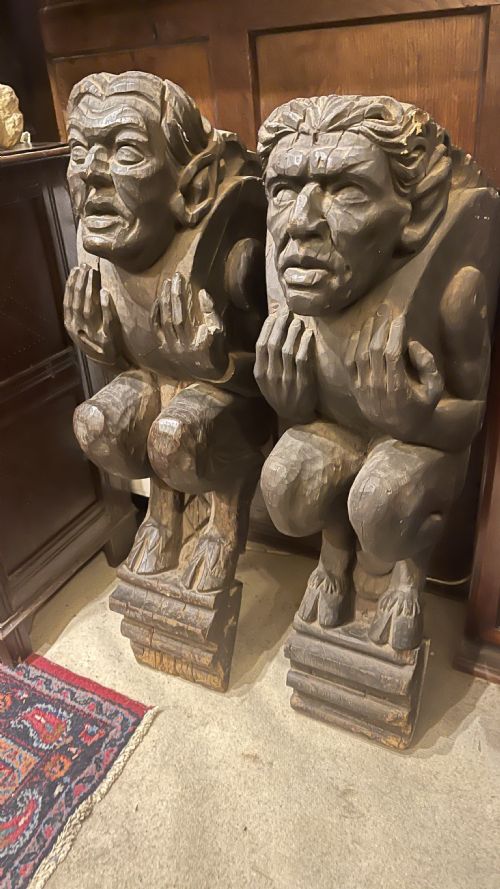

Architectural Wood Carving Corbel
An architectural wood carving corbel brings weight and structure to a wall, offering solid support carved from timber across centuries.
Architectural Wood Carving Corbel
When you search for an architectural wood carving corbel, you are looking at structural supports and decorative wall brackets shaped from timber. These objects range from early 16th century fragments to later Victorian and 20th century examples.
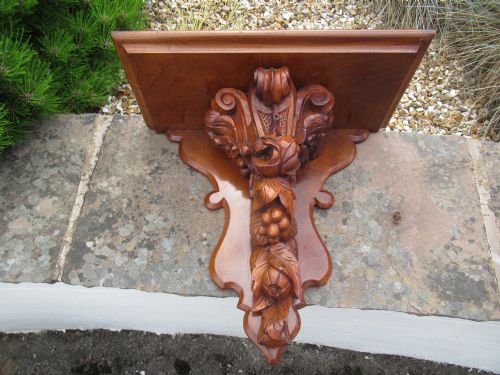
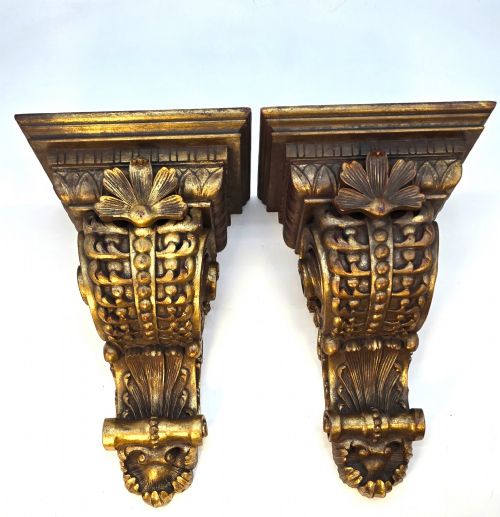
The pieces on this page appear as wall brackets, capitals, architectural fragments, and figurative wall sculptures. Oak and walnut dominate the selection, often taking the form of pairs designed to carry a shelf or beam.
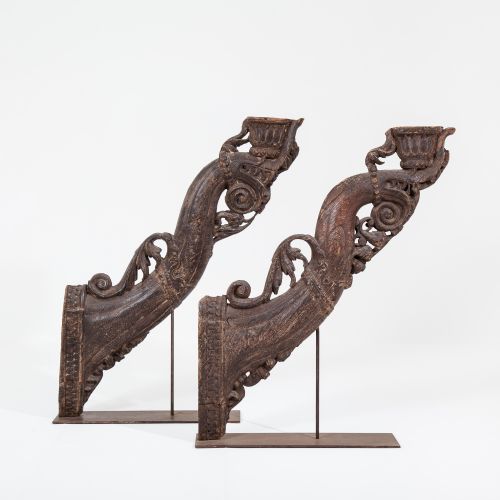
You will encounter regional variations including Italian neoclassical brackets, Black Forest carvings, and traditional Indian roof decorations. Oak examples from the 17th and 18th centuries provide a robust presence suited to period interiors.
Materials and construction methods
Carvers shaped these items from dense hardwoods such as oak, walnut, and pine using hand chisels and gouges. The grain of the timber dictates the depth and crispness of the relief work visible on lions' heads, angels, and acanthus leaves.
Surface treatments include traces of historic paint, bare carved timber, and applications of gold leaf. Iron fixings or mounting points frequently appear on the reverse of these architectural fragments for wall hanging.
Angels, tigers, devils, and lions all keep watch from these wooden walls.
Assessing craftsmanship and depth of carving
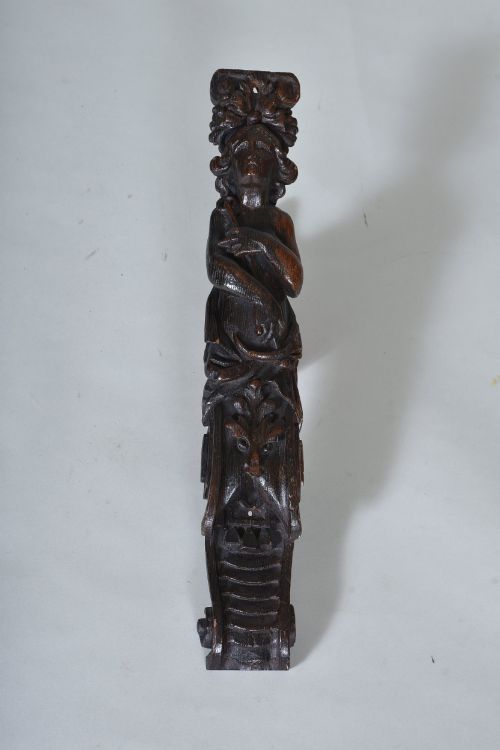
The distinction between ordinary joinery work and master carving lies in the undercut depth and anatomical accuracy of the relief. Figures such as angels, caryatids, and animal heads display sharper details and more confident proportions in superior examples.
Age and original context also influence the standing of a piece, with ecclesiastical fragments and signed works showing distinct artistic ambition. The integrity of the surviving timber surface without excessive modern intervention preserves the character of the carving.
Luigi Frullini
The Architectural Wood Carving Corbel Glossary
- Corbel
- A structural projection from a wall designed to support a weight above it, often carved into decorative scrolls or figures.
- Caryatid
- A sculpted female figure serving as an architectural support taking the place of a column or pilaster.
- Capital
- The uppermost member of a column, frequently carved with classical foliage or volutes in the Corinthian style.
- Architectural fragment
- A surviving portion of a larger building element, removed from its original structural context.
- Giltwood
- Timber that has been coated with a thin layer of gold leaf or gold paint for decorative effect.
Architectural Wood Carving Corbel: Frequently Asked Questions
What is an architectural corbel?
An architectural corbel is a bracket projecting from a wall to bear a load, typically shaped from timber with carved ornamentation.
Historically used in buildings to support beams or lintels, these pieces now function primarily as decorative wall brackets or sculptural focal points.
How do I hang a heavy wooden bracket?
Heavy wooden brackets require secure wall fixings anchored directly into masonry or structural studs rather than plaster alone.
Many antique corbels feature integrated iron brackets or rear mounting holes designed for sturdy load-bearing installation.
How can I tell the age of a carved corbel?
Dating relies on examining the tool marks left by the carver, the species of timber, and the style of the ornamentation.
Earlier pieces from the 16th and 17th centuries display hand-hewn oak and heavier proportions, while 19th-century examples often utilise walnut with sharper machine-assisted preparation.
Where should I place a wall bracket at home?
Wall brackets work well mounted in pairs beneath open shelving, above doorways, or displayed alone as standalone sculptures.
Placing them at eye level allows the depth of the wood carving and any historic surface finishes to be appreciated properly.