



Dark Walnut Handgun
These dark walnut handgun pieces combine functional historic engineering with rich timber stocks, drawing collectors of military and civilian antiques.
Dark Walnut Handgun
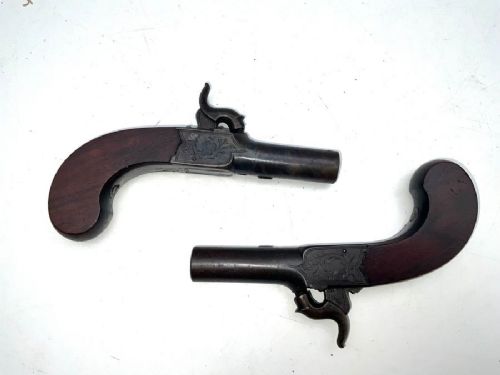
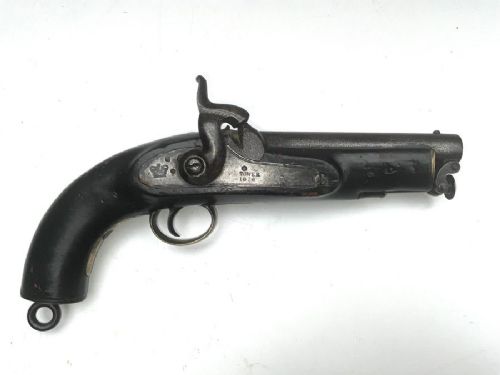
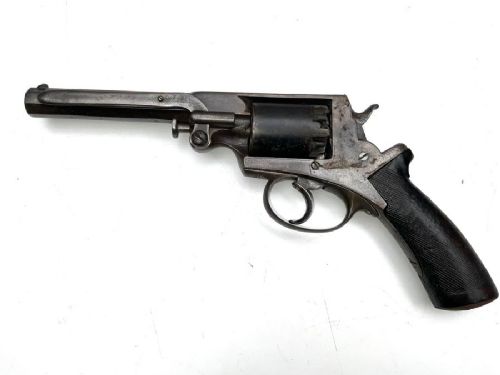
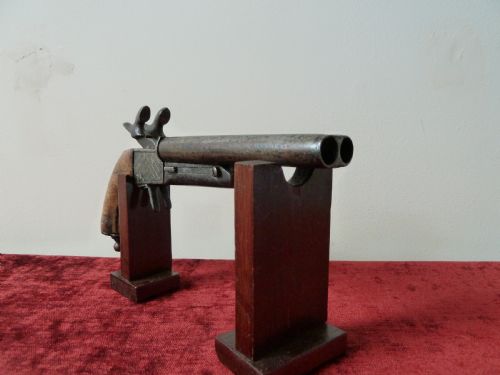
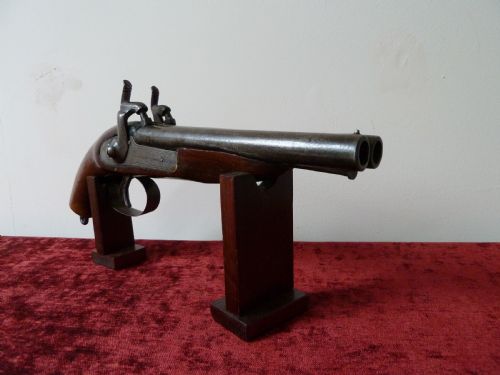
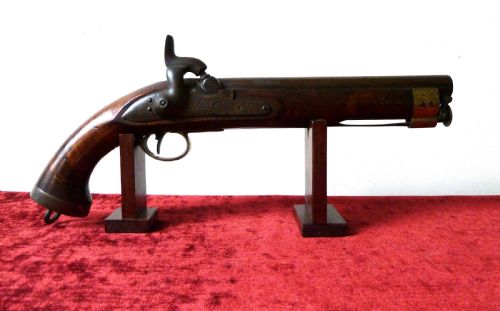
A dark walnut handgun on this page typically spans periods from the seventeenth century through to the nineteenth century, encompassing flintlock and percussion mechanisms. These items include pocket pistols, belt pistols, holster pistols, and revolvers originating from British, European, American, and Ottoman makers.
Militaria and antique firearms forms dominate the selection, reflecting utilitarian design modified by regional stylistic preferences. Makers such as T. Potts, Auguste Francotte, and Barber of Newark represent the diverse geographical origins found across these listings.
Materials and Construction
The primary construction of these firearms relies on the combination of dark walnut wood for the stocks and steel or iron for the barrels and lock mechanisms. Timber stocks provide a dense, durable foundation shaped to fit the hand, while metal components undergo forging and machining to withstand the pressures of discharge.
Many specimens incorporate brass furniture, silver parc, or cast decorative elements integrated into the metalwork and wooden stocks. Engraved details, gilt inlay decoration, and official stamps indicate the level of craftsmanship applied during production in British, Belgian, Italian, and Ottoman workshops.
Mail coach inspectors clearly required serious persuasion, judging by the specialised overcoat pistols tucked into their travel gear.
Quality Variations
Quality in these pieces depends upon the precision of the lock mechanism, the crispness of maker signatures, and the integrity of the walnut stock. Master gunmakers applied refined checkering, balanced proportions, and careful metal finishing that distinguish high-grade officers' weapons from standard military issue.
The survival of original surface finishes, legible proofs, and matching serial numbers separates superior examples from heavily altered pieces. Integration of decorative elements such as cast brass furniture or silver inlay further elevates the standard of individual manufacture.
T. Potts·Auguste Francotte·Barber of Newark·Colt
The Dark Walnut Handgun Glossary
- Flintlock
- An ignition mechanism utilising a piece of flint held in a cock to strike a steel frizzen and create sparks for gunpowder ignition. This system was standard for military and civilian handguns from the seventeenth through the early nineteenth century.
- Percussion cap
- A small metal cup containing priming compound placed on a nipple to detonate the main powder charge when struck by the hammer. It replaced the flintlock system during the nineteenth century.
- Holster pistol
- A large handgun designed to be carried in a saddle holster rather than on a belt or in a pocket. These military and civilian arms typically date from the eighteenth and nineteenth centuries.
- Proof mark
- An official stamp applied to a firearm barrel to certify that it has undergone pressure testing. These marks help identify the origin and date of British and European pieces.
- Silver parc
- A decorative technique involving the application of silver wire or sheet into channels carved within the wooden stock. This adornment appears on Ottoman and European arms.
Dark Walnut Handgun: Frequently Asked Questions
What periods do these pieces cover?
The listings span from the seventeenth century through to the late nineteenth century, capturing significant technological shifts in firearm development.
Collectors encounter flintlock mechanisms from the 1650s alongside mid-nineteenth-century percussion revolvers and pocket pistols.
How were pocket pistols used?
Civilian pocket and overcoat pistols provided personal defence for travellers, merchants, and mail coach inspectors during the eighteenth and nineteenth centuries.
Their compact size allowed concealed carry in pockets or specialised garments for immediate protection.
What is the difference between flintlock and percussion?
Flintlock arms rely on a flint striking a steel frizzen to produce a spark that ignites the powder charge in the pan.
Percussion firearms use a chemical cap struck by a hammer onto a nipple, offering a faster and more reliable ignition method developed in the nineteenth century.