


Dark Walnut Drop Leaf
These dark walnut drop leaf tables bring rich, deep timber tones and practical folding leaves to any room.
Dark Walnut Drop Leaf
A dark walnut drop leaf table is a versatile surface designed to save space when folded and expand when the hinged leaves are raised. The selection here spans the seventeenth, eighteenth, and nineteenth centuries, taking forms such as gateleg dining tables, smaller occasional pieces, and Sutherland tables.
Most pieces you meet on this page date from the eighteenth century or the Victorian era, often constructed as gateleg or Sutherland tables in walnut, red walnut, and burr walnut, sometimes combined with oak, mahogany, brass, or ceramic elements.
How they were made
Cabinet makers constructed these tables primarily from solid walnut and burr walnut, frequently pairing walnut with oak, red walnut, or mahogany for structural framing and secondary timbers.
Hinged drop leaves relied on timber pivot joints, gateleg swing actions, or specialised drop flap mechanisms, occasionally accented with brass fittings or small single drawers.
Early makers occasionally built these drop leaf tables in unusually small proportions, perfect for tight corners where standard furniture simply refused to fit.
What varies in quality
Quality rests upon the selection of timber figure, such as richly patterned burr walnut or deep red walnut, alongside the integrity of the patination built up over centuries.
Proportion and scale distinguish finer examples, particularly in smaller gateleg and Sutherland tables where timber choice and structural lightness elevate the piece.
The Dark Walnut Drop Leaf Glossary
- Drop-leaf
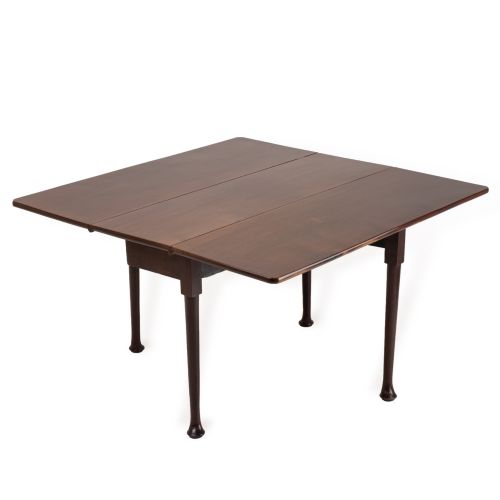
- A table with a fixed centre section and hinged flaps that fold down when not in use. These leaves are supported by swing legs or brackets when raised.
- Gateleg
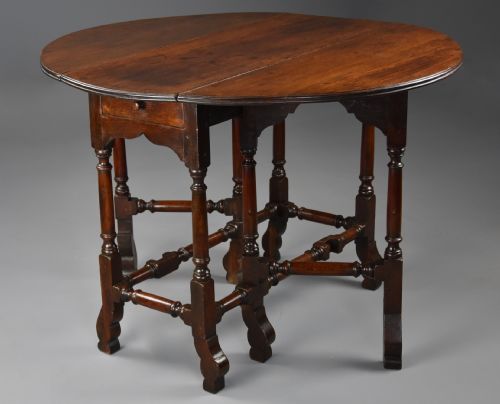
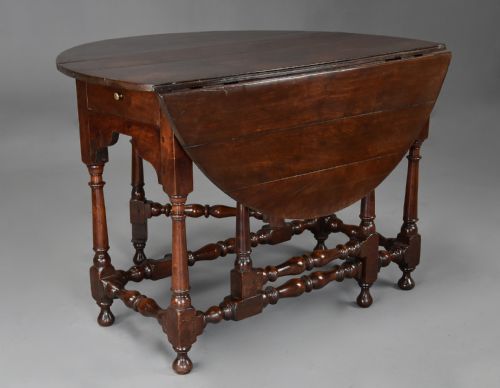
- A table with swing legs that pivot out from the frame to support the drop leaves, resembling a gate opening. This form is common in seventeenth and eighteenth-century walnut tables.
- Sutherland
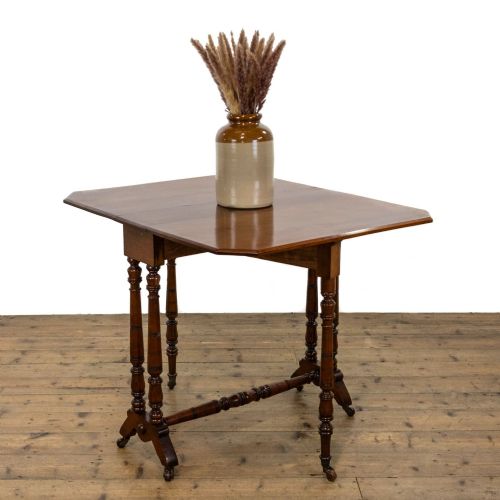
- A narrow table with exceptionally slender drop leaves and folding legs, popular during the Victorian period. It folds down to a very slim profile for easy storage.
- Patina
- The surface sheen and deep colour developed by aged timber through handling, waxing, and exposure over many decades. Fine patina is a key indicator of age and untreated care.
- Burr walnut
- Timber taken from a walnut tree outgrowth, featuring swirling, highly decorative grain patterns. It was used by cabinet makers for premium table tops and cabinet fronts.
Dark Walnut Drop Leaf: Frequently Asked Questions
What is a dark walnut drop leaf table?
A dark walnut drop leaf table is a folding timber table featuring hinged leaves supported by movable legs or brackets. They range from compact seventeenth-century gateleg designs to larger eighteenth-century dining tables and slender Victorian Sutherland tables.
These pieces use walnut timber, often showing rich brown tones, burr figuring, or red walnut variations, combined with secondary woods like oak and mahogany.
How were gateleg tables used?
Gateleg tables served primarily as flexible dining and utility surfaces in homes where space needed to be reclaimed between meals. Dropping the leaves allowed the table to sit compactly against a wall.
When guests arrived, the swing legs folded outward to support both leaves, creating a much larger surface area for dining or writing.
How do I identify a Victorian Sutherland table?
A Victorian Sutherland table is typically recognised by its extremely narrow central top and two wide drop leaves supported by pairs of pivoting legs. They are lighter in construction than earlier gateleg tables.
Many examples date from the nineteenth century and utilise solid walnut, burr walnut, or mahogany, sometimes featuring small turned columns and ceramic castors.
How do I care for antique walnut furniture?
Antique walnut requires stable indoor humidity and protection from direct sunlight and excessive heat, which can dry out and crack aged timber. Regular dusting with a soft cloth keeps the surface clean.
Applying a traditional beeswax polish occasionally helps nourish the wood and maintain the natural lustre of the historical patina without sealing the surface.