




Dark Teak Chairs
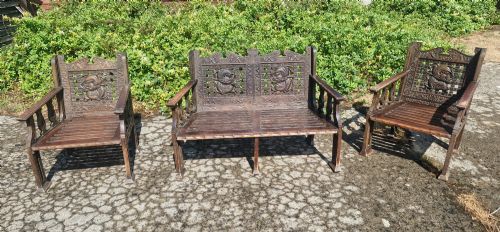
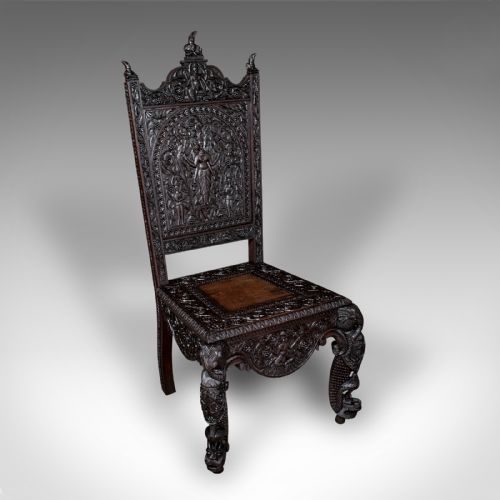
These dark teak chairs are heavy, intricately carved colonial seats crafted in teak, hardwood, and rush during the nineteenth and early twentieth centuries.
Dark Teak Chairs
When you search for dark teak chairs, you encounter nineteenth-century and early twentieth-century seating created within the British colonial sphere, spanning Anglo-Indian, Burmese, and Ceylonese traditions. The forms range from simple rush-seated side chairs to massive throne chairs, ceremonial armchairs, folding chairs, and complete conservatory suites.
The most common examples on this page are carved armchairs and dining chairs from the Victorian period and around nineteen hundred. These pieces blend traditional South and Southeast Asian woodworking techniques with European seating forms demanded by colonial administrators and merchants.
How they were made
Makers constructed these chairs primarily from dense tropical timbers, notably teak and allied hardwoods, chosen for their resilience and deep natural colour. Artisans carved the frames by hand with intricate foliate, figural, and geometric motifs, often creating deep relief across the backrests and aprons.
Seating surfaces utilised a variety of materials depending on regional tradition and utility, including woven rush, fitted leather, plush velvet, and secondary upholstery. Structural elements frequently incorporated supplementary hardwoods, brass fastenings, and occasionally rosewood details to accent the carved frames.
Peacock armchairs bring avian splendour indoors, allowing you to sit surrounded by carved wooden feathers every evening.
What varies in quality
The distinction between ordinary and exceptional examples lies in the depth and precision of the hand carving rather than the age alone. Superior pieces exhibit crisp, undercut details on figures and foliage, whereas lesser chairs show shallower, more mechanical execution.
Timber selection and structural integrity also divide the range, with heavier, well-figured teak frames commanding greater presence. Original surfaces, intact rush work, and undisturbed patination distinguish the best-preserved specimens from those with heavily altered components.
The Dark Teak Chairs Glossary
- Anglo-Indian
- Describing furniture made in India during the British colonial period, often combining local carving styles with European forms. These pieces frequently utilise dense native timbers like teak.
- Plantation chair
- A large armchair featuring broad, extended arms designed for reclining in tropical climates. They commonly incorporate turned members and adjustable footrests.
- Throne chair
- An imposing, high-backed armchair designed for ceremonial or formal use. They feature dense, figurative carving and substantial proportions.
- Rush
- A wetland plant material woven into durable seats for chairs. It provides a textured, flexible surface that contrasts with wooden frames.
Dark Teak Chairs: Frequently Asked Questions
Where were dark teak chairs made?
These chairs originated in regions under British colonial influence, including India, Burma, and Ceylon, during the nineteenth and early twentieth centuries.
Local workshops adapted traditional woodworking skills to produce European furniture forms for British officials and affluent residents.
How do I care for teak furniture?
Keep teak chairs away from direct heat sources and sudden humidity changes to prevent the dense hardwood from splitting. Dust the carved surfaces regularly with a dry cloth and avoid harsh chemical polishes.
Occasional application of suitable wax helps maintain the natural sheen of the dark timber without building up residue.
Are these chairs comfortable for daily use?
Many of these chairs were built with generous proportions, deep seats, or reclining angles designed for tropical lounging. Armchairs and plantation chairs offer relaxed seating, though rigid carved backs encourage upright posture.
Adding appropriate loose cushions can improve comfort for modern living without altering the historic frames.
How can I date a colonial chair?
Dating relies on stylistic clues, construction methods, and materials recorded across the Victorian era up to around nineteen hundred. Elaborate Victorian carving styles and documented design shifts help place pieces within specific decades.
Examine the joins, fastener types, and timber patination to corroborate the period indicated by the form.