


Dark Rosewood Pole Screen
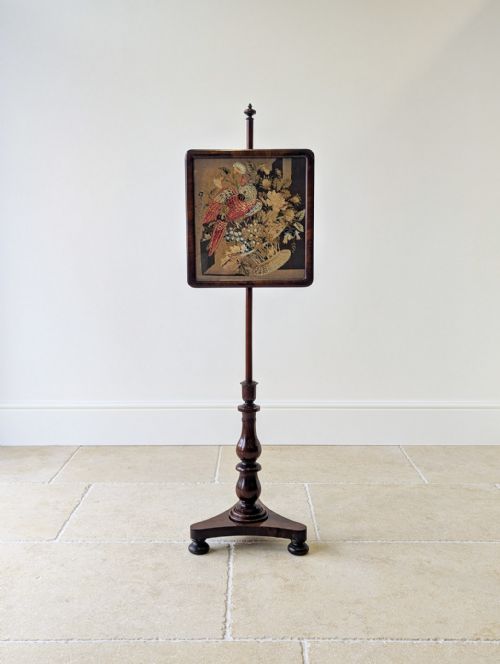
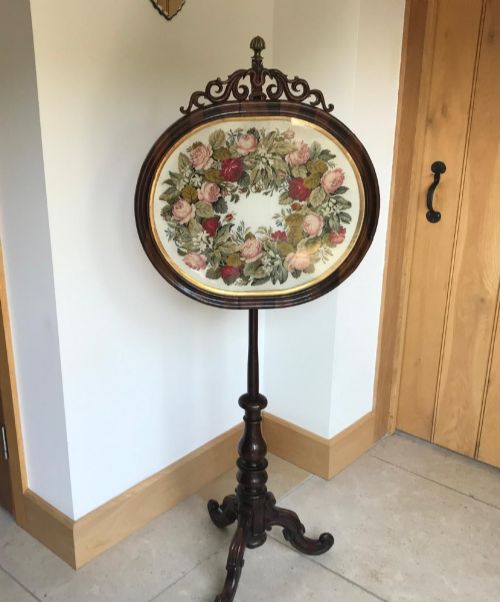
A dark rosewood pole screen stands as a clever piece of parlour furniture designed to shield the face from the fierce heat of an open fire.
Dark Rosewood Pole Screen
A dark rosewood pole screen comprises a tall turned or carved vertical shaft supported by a tripod or circular weighted base, carrying a sliding panel that adjusts up and down. These items served a practical domestic purpose in nineteenth-century drawing rooms where ladies protected their complexions from coal fires.
The versions met on this page belong predominantly to the Victorian, William IV, and Regency periods, executed in dark rosewood with occasional use of goncalo alves. They take the form of fire screens and fireplace screens with distinct adjustable panels.
Most examples feature a needlework, tapestry, or wool panel worked in canvas or needlepoint, sometimes protected behind glass. The upright column typically rises from a tripod base with carved details.
How they were made
Cabinet makers utilised dense rosewood for the slender upright poles and heavy supporting tripod bases, turning the timber on a lathe and applying hand-carving to the capitals and feet. Brass mechanisms were fitted within or behind the panels to allow the needlework screen to slide smoothly up and down the vertical shaft and hold its position at the desired height.
The decorative panels themselves were worked by hand using wool, silk, and canvas, employing needlepoint or tapestry techniques to create floral or figurative compositions. These textile inserts were then mounted into wooden frames designed to match or complement the turned rosewood support.
The listings on this page span the Georgian, Regency, William IV, and Victorian periods, constructed primarily from rosewood with brass and textile elements.
What varies in quality
The distinction between ordinary and finer examples rests upon the ambition of the timber turning and the crispness of the carved details on the tripod base. Heavier proportions, such as those described of grand proportions, junto with superior joinery in the frame, separate standard utility pieces from more substantial parlour furnishings.
The execution and preservation of the needlework panel dictate much of the visual character, with finely worked wool and tapestry retaining greater decorative integrity. Original brass adjustment hardware and intact glass covers also contribute to the completeness of a surviving piece.
The Dark Rosewood Pole Screen Glossary
- Pole screen
- A freestanding vertical screen with an adjustable panel mounted on a pole, used to block radiant heat from a fireplace.
- Needlepoint
- A type of canvas work embroidery stitched by hand using wool or silk, frequently seen mounted in the adjustable frames of these pieces.
- Tripod base
- A three-legged support structure commonly utilised on these vertical stands to ensure stability on uneven floorboards.
- Goncalo alves
- A dense exotic hardwood with distinct figuring, utilised in period cabinet making as an alternative to standard rosewood.
- Tapestry
- A form of textile art traditionally woven on a loom or worked by hand, forming the central display panel of the screen.
Dark Rosewood Pole Screen: Frequently Asked Questions
What is a dark rosewood pole screen?
A dark rosewood pole screen is a nineteenth-century freestanding piece of furniture featuring a sliding textile panel mounted on a tall wooden shaft. It was positioned near the fireplace to shield sitters from the direct heat.
These items combine turned woodwork, often with a tripod base, and hand-worked needlepoint or tapestry panels that adjust in height using internal brass fittings.
How were pole screens used?
Victorian and Regency households placed these screens between seating areas and open fires to prevent facial skin from becoming overheated and flushed from the flames. The sliding mechanism allowed the user to raise or lower the panel depending on where the heat needed blocking.
They also served as decorative items in drawing rooms, displaying fine needlework skills through elaborate floral or pastoral tapestry designs.
How do I date a pole screen?
Dating relies on observing the stylistic details of the woodwork, such as the heavy scrolling and turned profiles typical of William IV and early Victorian pieces, or the cleaner lines of the Regency era. The construction methods of the base and the mounting of the panel offer further chronological clues.
Descriptions referencing specific periods like 1830 or 1850 help anchor the piece within the broader nineteenth-century timeline of British cabinet making.
How do I live with a pole screen?
Living with a pole screen involves placing it in a drawing room or study where its vertical form can fill an empty corner or sit gracefully beside seating. It requires minimal floor space due to the compact footprint of the tripod base.
Care should be taken to keep textiles away from direct sunlight to prevent fading of the wool needlepoint and tapestry panels over time.