


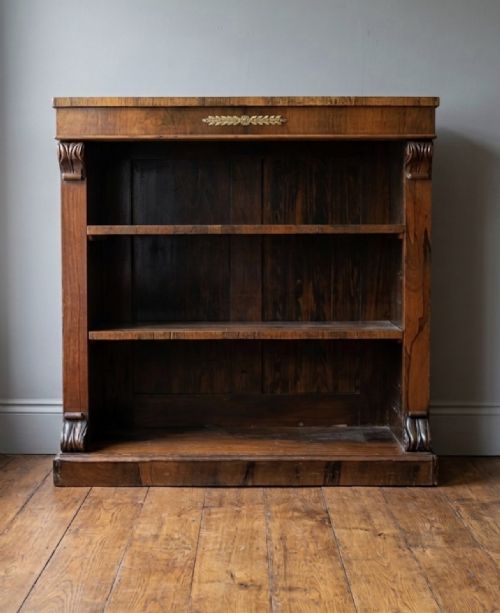

Dark Rosewood Open Bookcase
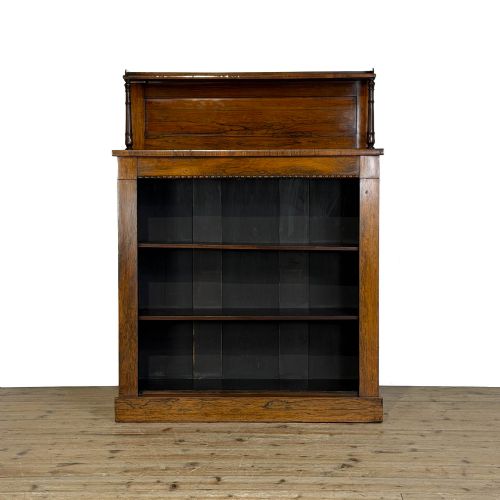
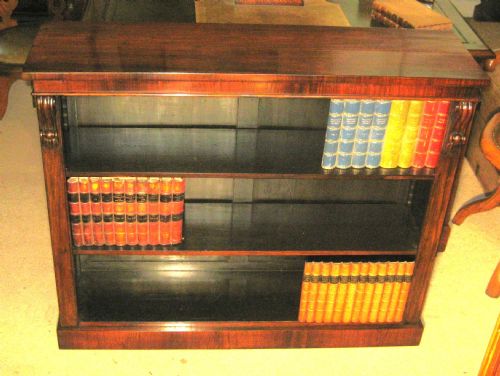
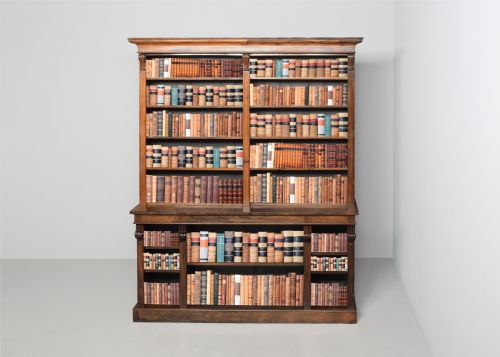
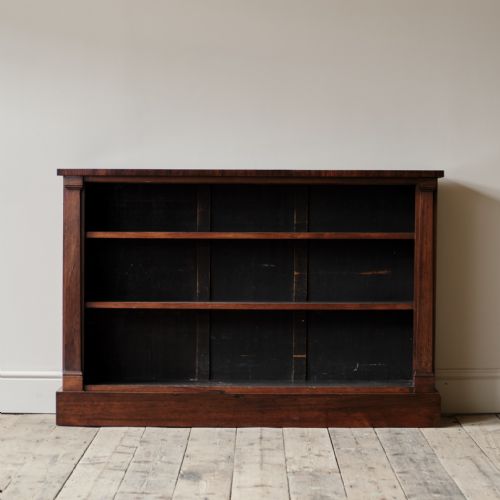
A dark rosewood open bookcase brings rich timber grain and accessible shelving to a room, offering both display space and architectural presence.
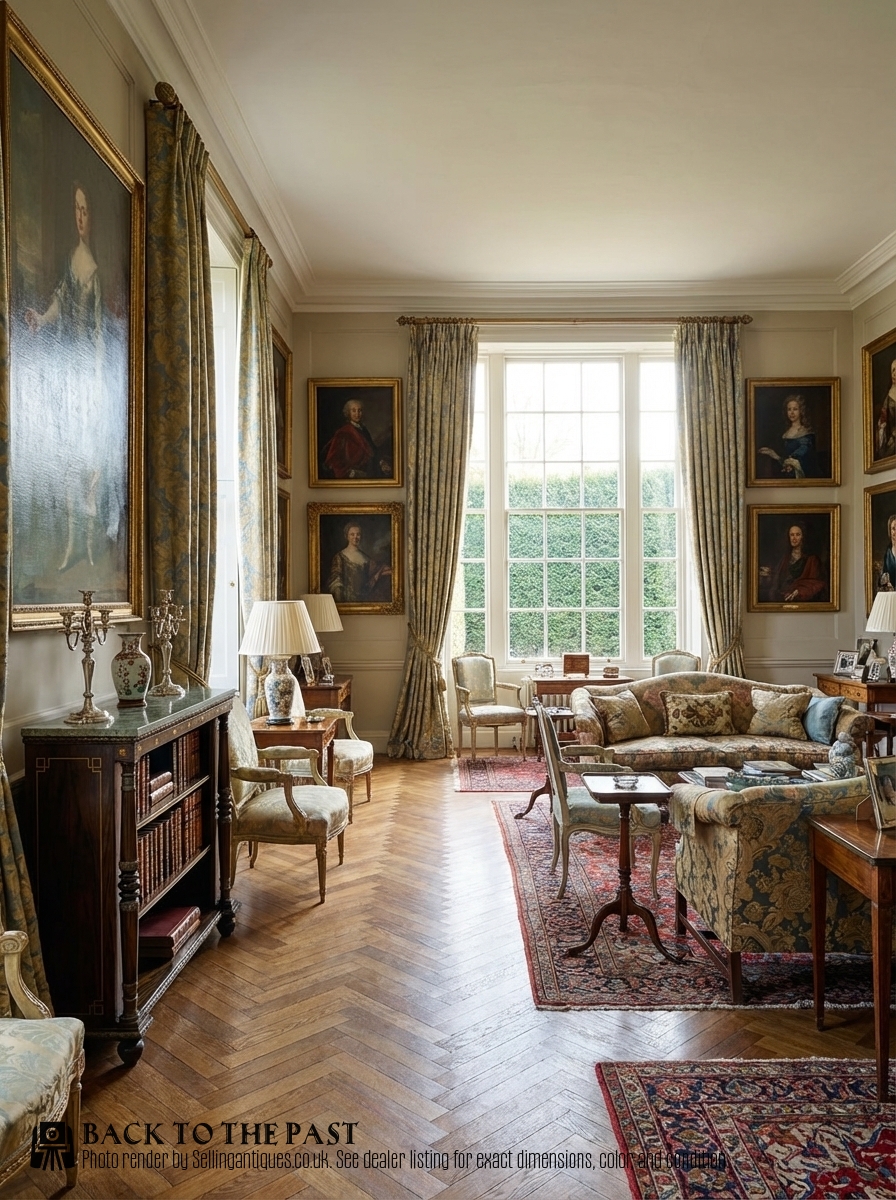
Dark Rosewood Open Bookcase
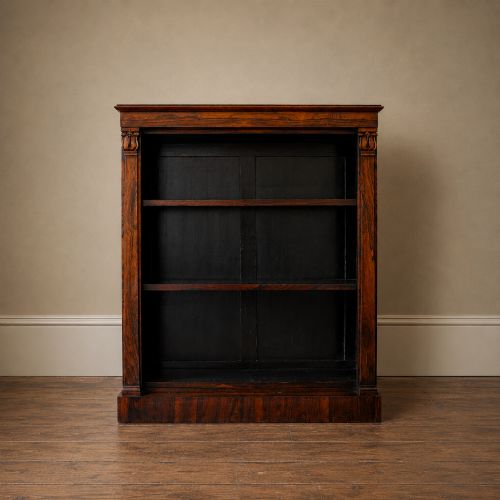
A dark rosewood open bookcase provides tier upon tier of accessible display and storage, keeping volumes or objects visible without the barrier of glazed doors. These pieces emerge chiefly from the nineteenth century, spanning periods from the Regency and William IV eras through to Victorian craftsmanship.
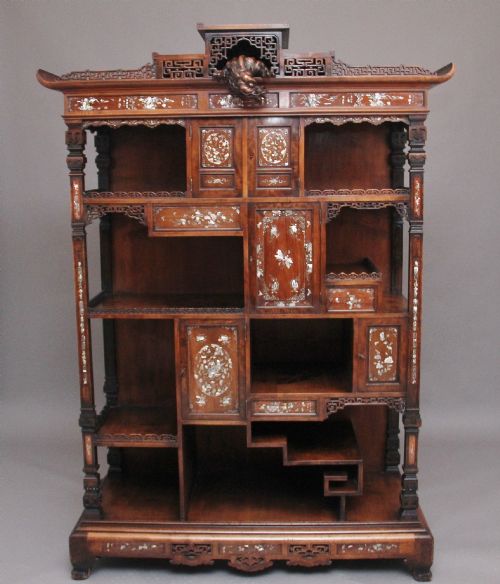
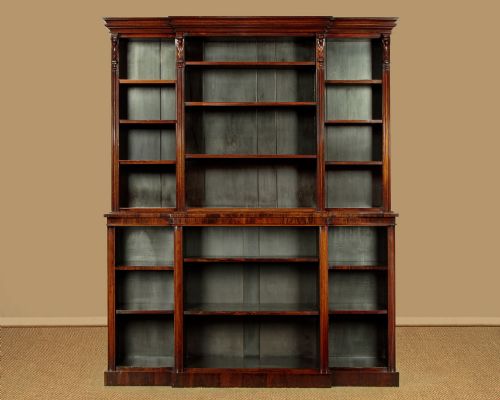
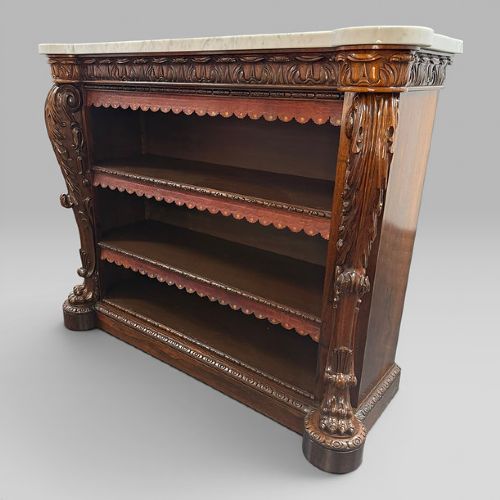
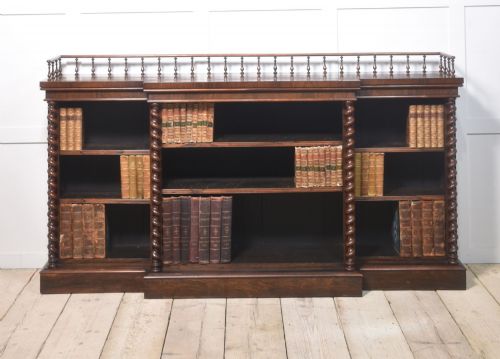
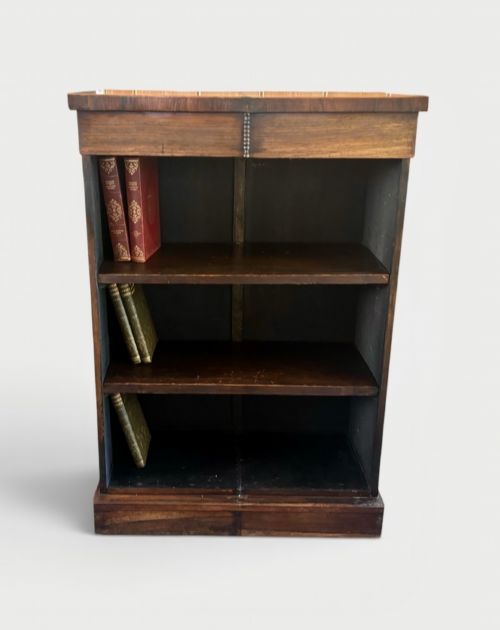
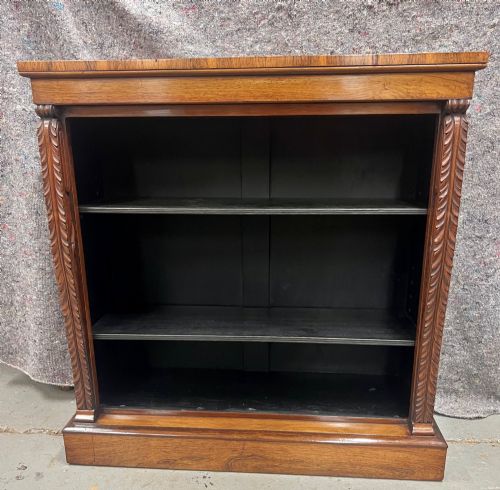
The format varies considerably in scale and design, ranging from neat, compact proportions to large breakfront arrangements and multi-tiered whatnots or wall shelves. Buyers frequently encounter standard standing bookcases alongside variations featuring marble tops, brass inlays, or carved corbels.
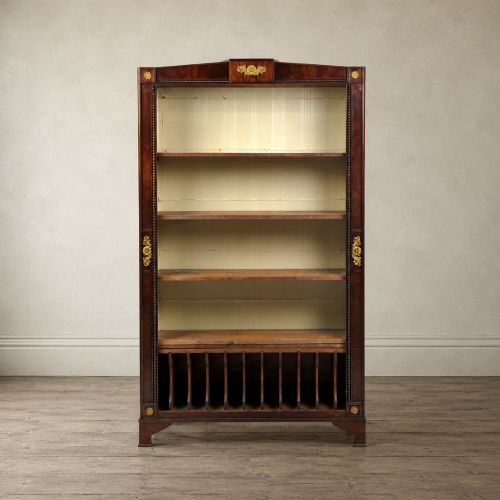
Origins stretch across British workshops as well as French Empire and Anglo-Indian traditions, demonstrating how makers adapted the form to suit formal libraries, drawing rooms, and intimate boudoirs alike. The unifying element remains the open shelf construction housed within dense, dark timber.
Construction and Materials
Makers utilised dense rosewood, often applied as fine veneers over secondary woods such as pine and general hardwood, to achieve deep colour and prominent grain patterns. The timber is frequently paired with contrasting materials like patinated marble tops, mirrored glass panels, and detailed brass inlays.
Structural execution relies on traditional joinery techniques appropriate to each period, accommodating adjustable shelving systems supported by wooden ratchets or brass pins. Carved elements such as corbels, gilded highlights, and delicate fretwork show the hand of skilled cabinet-makers working across different regional styles.
Some Victorian multi-tiered whatnot stands feature up to six open levels, offering surprisingly lofty display space for remarkably small floor footprints.
Judging Quality and Execution
Quality rests heavily on the selection of the rosewood veneer, where rich, figured grain patterns and deep, warm tones distinguish superior examples from plain or heavily distressed surfaces. The crispness of carved corbels, the refinement of brass inlay, and the integration of secondary elements like inset marble tops signal the level of workshop care.
Proportion and structural integrity dictate the standing of a piece within its period, with neat, balanced dimensions and original, unaltered shelving systems commanding greater respect. Finer examples retain working adjustable mechanisms and harmonious brass or gilded detailing without clumsy restoration.
Gillows
The Dark Rosewood Open Bookcase Glossary
- Breakfront
- A cabinet or bookcase whose central section projects forward from the flanking wings. This architectural arrangement creates depth and visual interest in larger room settings.
- Whatnot
- A multi-tiered open stand designed for displaying small ornaments, books, or collections. These pieces typically feature several open shelves supported by slender upright columns.
- Corbel
- A projecting bracket carved from wood to support a weight above it. On these bookcases, they often appear beneath the cornice or framing the upper shelf tiers.
- Veneer
- A thin layer of finely figured rosewood applied to a sound secondary timber carcass. This technique allows cabinet-makers to display striking grain patterns while ensuring structural stability.
- Regency
- A British design period spanning the early nineteenth century defined by classical restraint and neoclassical motifs. Furniture from this era often incorporates bold rosewood timbers and restrained brass enrichment.
Dark Rosewood Open Bookcase: Frequently Asked Questions
How do I spot a Regency bookcase?
Regency bookcases generally display classical architectural proportions, clean lines, and restrained ornamentation such as brass inlay or gilded details. They often date from the early nineteenth century and reflect neoclassical design influences.
Cabinet-makers of this period focused on the natural beauty of the rosewood grain, keeping mouldings crisp and structure balanced without heavy Victorian carving.
What is a whatnot used for?
A whatnot is a multi-tiered open shelving unit designed primarily for displaying small decorative objects, porcelain, or accessible books. They originated as versatile display furniture for drawing rooms and parlours.
The open tiers allow items to be viewed from multiple angles, making them both decorative and functional pieces of furniture.
Are the shelves usually adjustable?
Many nineteenth-century examples feature adjustable shelving supported by wooden ratchets or brass shelf-pins. This flexibility allowed owners to accommodate books of varying heights.
When examining a piece, look for the original adjustment mechanisms inside the uprights to confirm whether the interior layout remains adaptable.
How do I care for rosewood furniture?
Rosewood benefits from stable indoor humidity and protection from direct sunlight, which can fade the deep natural tones of the timber over time. Dusting with a soft, dry cloth preserves the polished surface without the need for heavy chemical polishes.
Maintaining a consistent environment prevents the timber and any underlying veneer from drying out or shifting.