

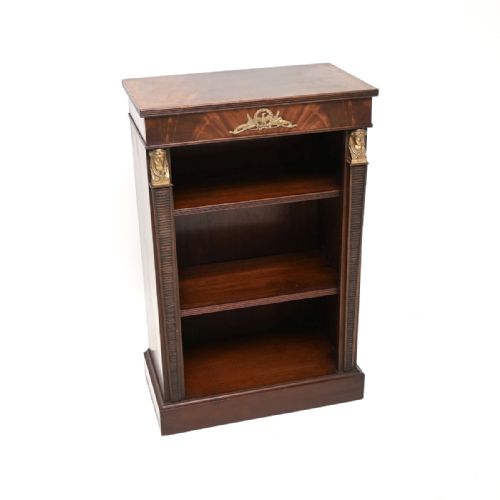
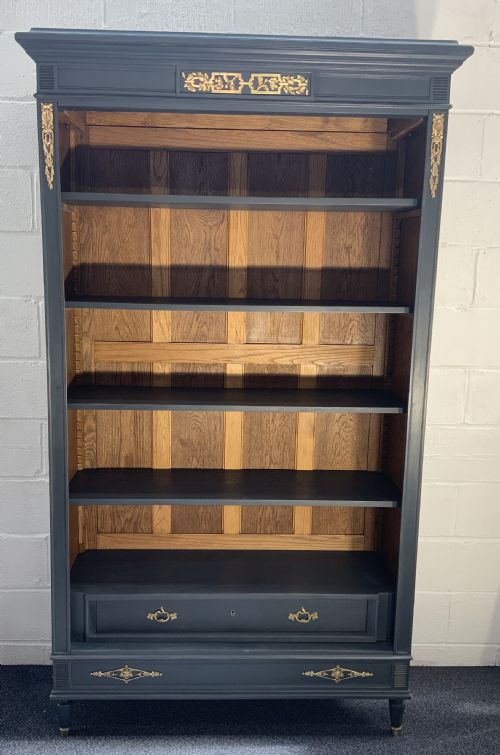


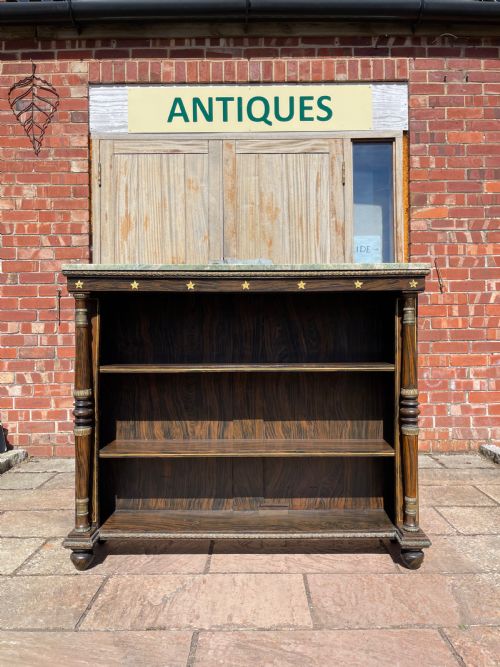


Empire Style Open Bookcase
An empire style open bookcase brings architectural dignity and accessible shelf storage to a room through classical proportion and rich timbers.
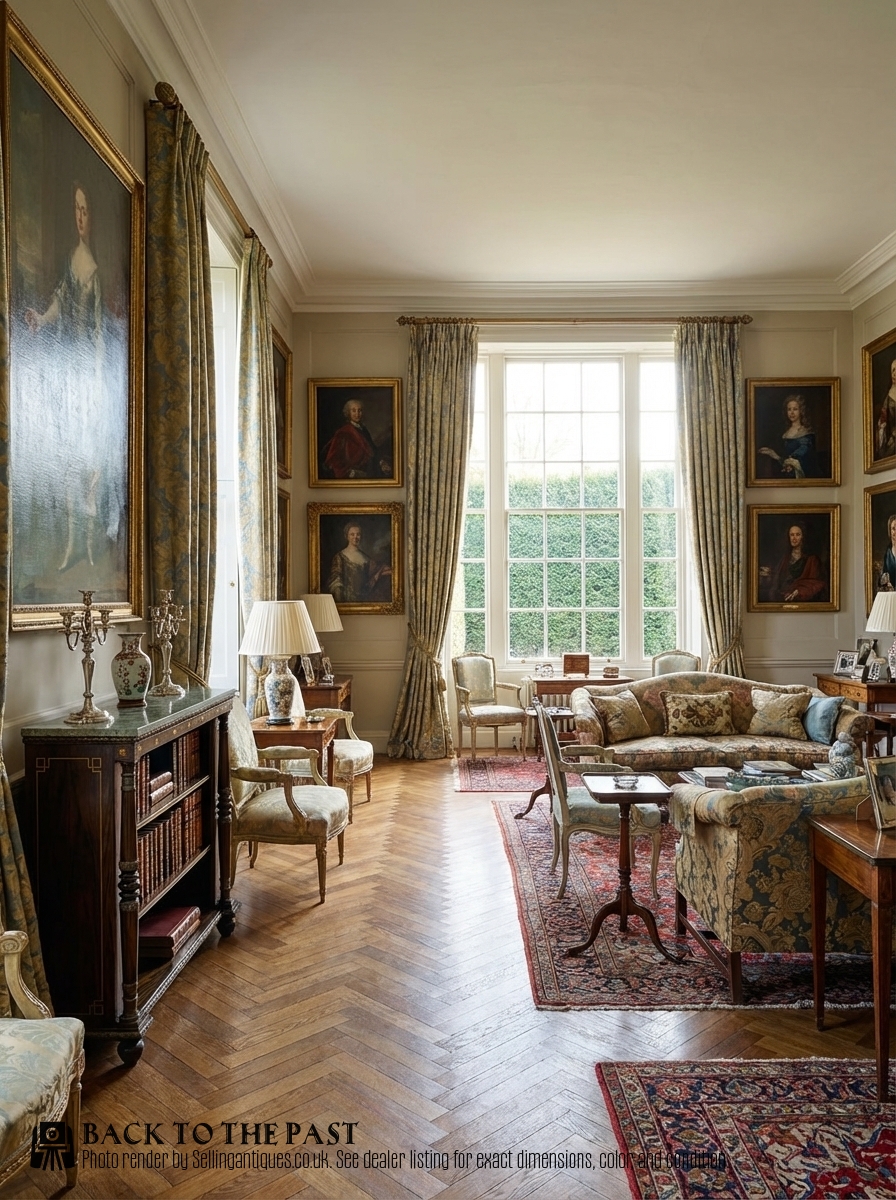
Empire Style Open Bookcase
An empire style open bookcase provides functional shelving framed by the classical lines and decorative vocabulary of the nineteenth century and later revivals. These items appear in forms ranging from nineteenth century French examples to early twentieth century Swedish birch pieces.
Origins stretch across French Empire, Regency, and Empire Revival idioms, reflecting a sustained interest in neoclassical design. Each piece adapts ancient Roman and Greek motifs to domestic storage requirements.
How they were made
Cabinetmakers constructed these bookcases using solid timbers and rich veneers such as mahogany, rosewood, and birch, laid over sturdy carcases. Surfaces received meticulous polishing to highlight the natural grain patterns of the wood.
Metal enrichment forms a defining part of the construction, utilising cast ormolu and brass mounts applied to corners, pilasters, and friezes. Painted finishes also appear, utilising simulated paint techniques to achieve specific decorative effects.
Empire Style Open Bookcase Retail Price Guide 2026
Typical asking prices for empire style open bookcase among the pieces listed under this phrase on Sellingantiques today, from the lower quarter to the upper quarter. They describe what is for sale here now, not the wider market.
What varies in quality
The refinement of the cast bronze or brass mounts separates standard examples from superior pieces, with finely chased ormolu demonstrating higher workshop skill. Crisp detailing on capitals, bases, and applied ornaments indicates superior craftsmanship.
Timber selection and veneer matching dictate visual appeal, where symmetrical grain alignment across the front elevates the piece. The subtlety of neoclassical proportions and the execution of architectural details further define the hierarchy of quality.
The Empire Style Open Bookcase Glossary
- Ormolu
- Gilded bronze mounted onto furniture as a decorative embellishment. This technique creates metallic highlights that contrast with dark timbers like mahogany and rosewood.
- Neoclassical
- A style inspired by the classical art and architecture of ancient Greece and Rome. It emphasises symmetry, straight lines, and classical proportions.
Empire Style Open Bookcase: Frequently Asked Questions
How do I style an open bookcase?
An open bookcase invites a balanced arrangement of books laid horizontally and vertically alongside decorative objects and framed art. Leaving small margins of empty space lets the timber frame and architectural proportions remain visible.
Position the piece against a flat wall where the vertical lines and brass mounts can catch natural light. Pairing it with traditional seating or classical accessories helps anchor its substantial presence in the room.
What is the difference between Empire and Regency?
Empire style originates from early nineteenth century France under Napoleon, favouring heavy classical symmetry, dark mahogany timbers, and prominent ormolu mounts. Regency design develops concurrently in Britain, sharing classical roots but often displaying lighter proportions and alternative decorative motifs.
Both idioms draw heavily on Roman and Egyptian archaeological discoveries, yet French pieces tend towards stricter architectural discipline. British Regency examples frequently incorporate rosewood, simulated painting, and delicate gilding alongside open shelving.
Are these bookcases sturdy enough for heavy books?
These pieces use dense traditional hardwoods like mahogany, rosewood, and birch that provide robust structural support for large volumes. The fixed or adjustable wooden shelves are built to carry substantial weight without bowing over time.
Checking the thickness of the shelf timber and the integrity of the internal supports helps confirm suitability for a working library. Placing heavier folios on the lower shelves maintains a stable visual and physical centre of gravity.
How do I identify Empire Revival pieces?
Empire Revival pieces date from later periods such as the early twentieth century, echoing the forms of original nineteenth century furniture. They utilise contemporary machining alongside traditional hand-finishing, often resulting in lighter Scandinavian birch constructions or simplified neoclassical details.
Examining the construction methods, secondary woods, and wear patterns helps distinguish a revival piece from an earlier original. The overall vocabulary remains faithful to classical prototypes while reflecting the manufacturing standards of its actual date.