


Dark Painted Chest Drawers
These dark painted chest drawers bring utilitarian storage and historic character into a room through deep finishes and solid timber construction.
Dark Painted Chest Drawers
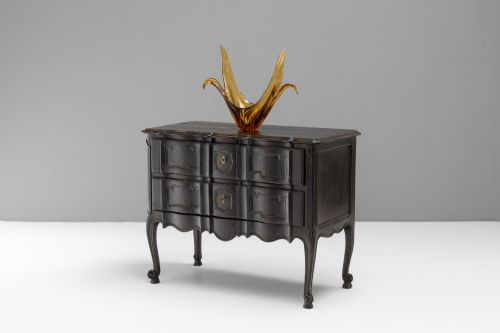
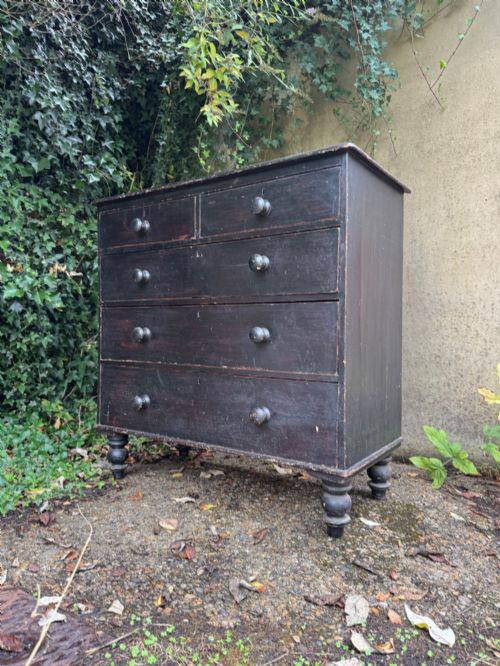
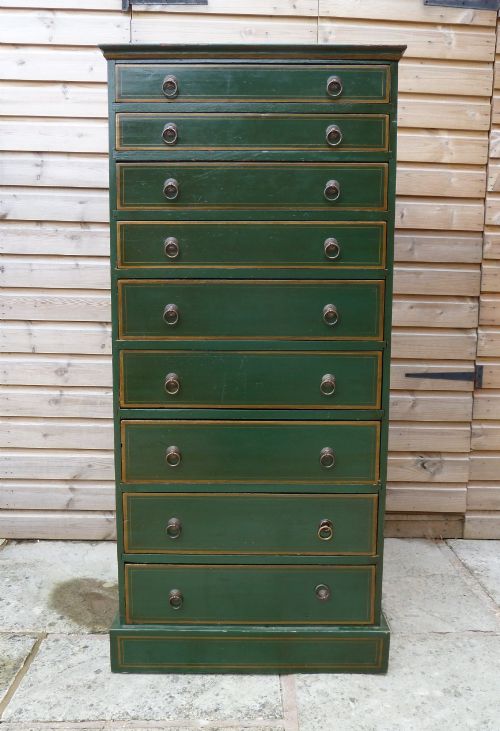
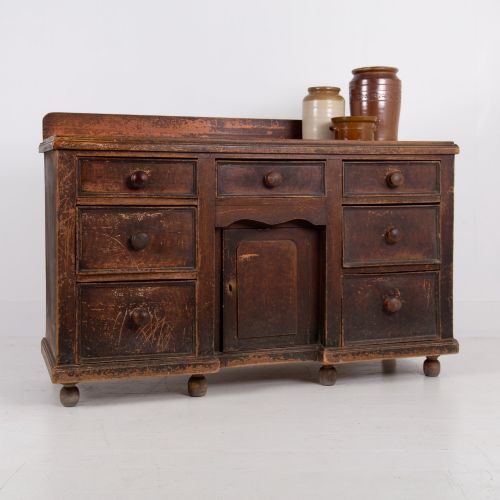
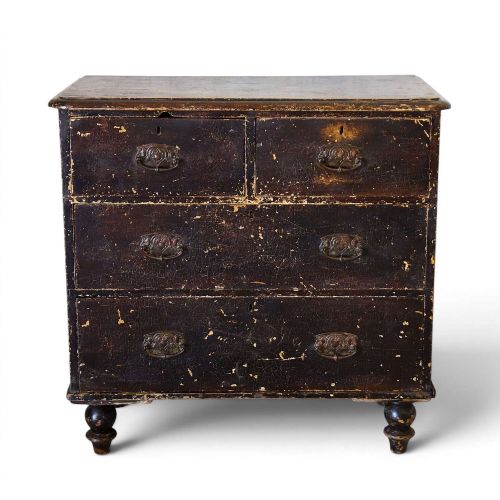
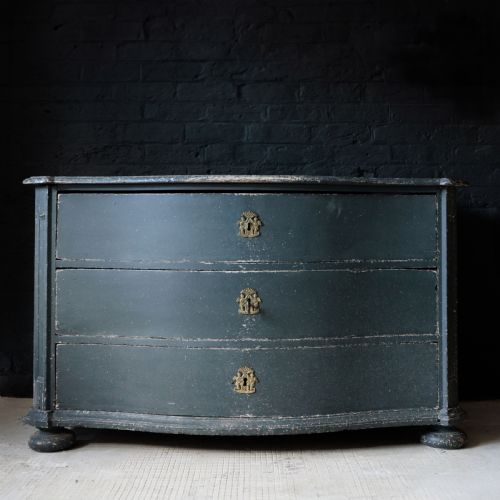
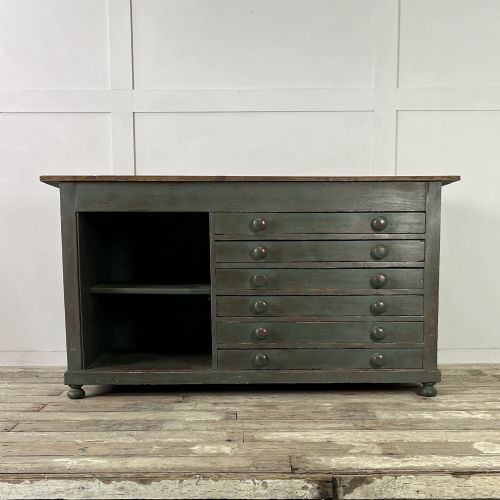
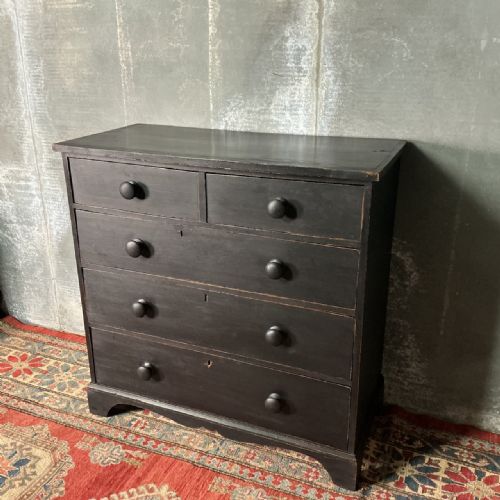
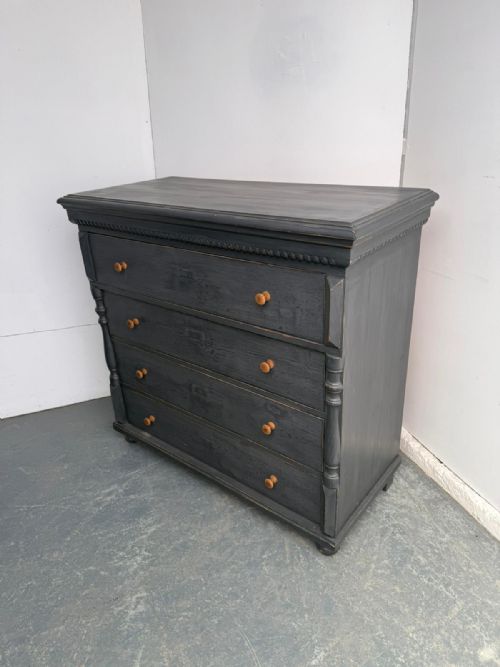
A dark painted chest drawers encompasses items created across multiple centuries, including pieces from the Georgian, Victorian, and later periods. The selection on this page ranges from modest pine bedroom pieces to substantial banks of drawers, kitchen dressers, and French commodes.
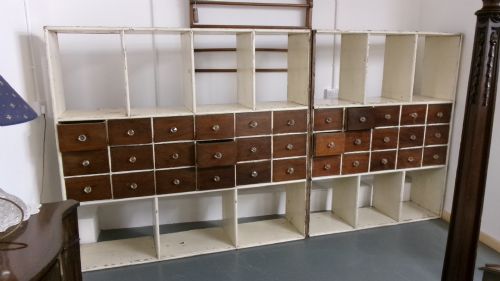
Buyers encounter forms constructed for specific domestic or commercial roles, such as artists' chests, chemist shop fittings, and office storage. Pine and oak serve as the primary woods beneath the dark or scumble painted surfaces.
Origin varies from English country workshops to French provincial makers and Hungarian domestic pieces. The common thread is a darker painted exterior finish, whether original brown scumble, mid grey, or deep blue tones.
Materials and construction methods
Makers utilised solid timbers like pine, oak, and mahogany for the carcase and drawer construction, securing joints with traditional techniques appropriate to the period. Iron and brass hardware, including drop handles and drawer pulls, complete the structural assembly.
Surfaces received layers of paint, with many examples retaining original scumble glaze or muted colour treatments applied decades ago. Over time, this paint layer has aged to develop a characteristic matte or softly worn texture across the front and sides.
Periods represented span from the 18th century through the Victorian era up to the 1920s.
Distinguishing quality in older painted chests
Quality rests in the integrity of the timber framing, the smoothness of drawer operation, and the retention of an authentic early painted surface. Pieces showing undisturbed original scumble glaze or period decorative paint hold greater interest than later re-painted items.
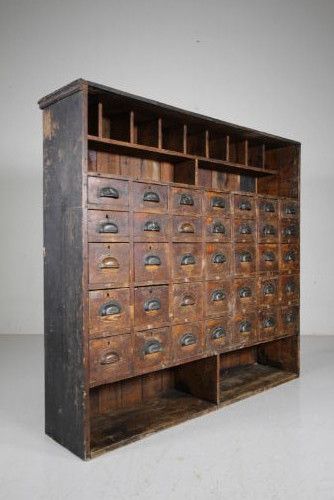
Proportion and execution define the better examples, whether seen in the subtle curves of a serpentine commode or the precise multi-drawer configuration of a shop fitting. Hardware originality and sound structural joinery further elevate a piece.
The Dark Painted Chest Drawers Glossary
- Scumble paint
- A decorative technique involving translucent glaze dragged or brushed over a lighter base coat to simulate grain or create mottled depth. This finish appears frequently on Victorian and 19th-century pine furniture.
- Serpentine commode
- A chest of drawers featuring a front that curves outward in the centre and concaves at the sides. This sophisticated shape demands precise woodworking skill.
- Bank of drawers
- A utilitarian storage unit containing numerous smaller drawers stacked in rows, originally used in shops, offices, or studios. They provide extensive compartmentalised storage.
- Mule chest
- A traditional storage chest featuring one or two drawers built into the base beneath the main compartment. It combines the deep storage of a coffer with the accessibility of drawer storage.
Dark Painted Chest Drawers: Frequently Asked Questions
How do I clean a painted finish?
Dust gently with a dry or very slightly damp soft cloth to protect the historic surface. Avoid modern chemical solvents that might strip or soften original paint.
Test any cleaning method on a hidden rear corner first. Preserving the integrity of the aged patina matters most.
Are these drawers suitable for daily use?
Solid timber construction and traditional joinery make these chests robust enough for everyday bedroom or living room storage. Drawers should slide smoothly on their original wooden runners without binding.
Some antique drawers require occasional wax lubrication on the runners to maintain easy operation. Care ensures these historic pieces function reliably in modern homes.
What rooms suit a dark painted chest?
The deep tones and varied proportions work well as bedside storage, hallway focal points, or living room sideboards. Smaller pine chests fit easily into guest rooms, while larger banks of drawers anchor a study.
Pairing the dark painted finish against neutral walls highlights the character of the wood and paint. Their historical utility translates naturally into contemporary spaces.
How can I tell if the paint is original?
Original paint displays natural wear patterns, minor craquelure, and uniform ageing consistent with the timber beneath. Examination under close light often reveals the subtle integration of paint into the grain.
Modern repainting typically shows even coverage without the microscopic wear expected from decades of handling. Look for consistent accumulation of dust and polish in the crevices of mouldings.