



Wooden Turned Knob Chest
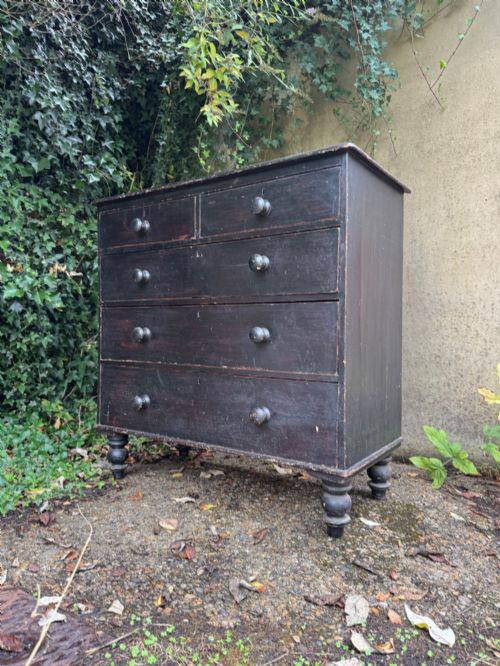
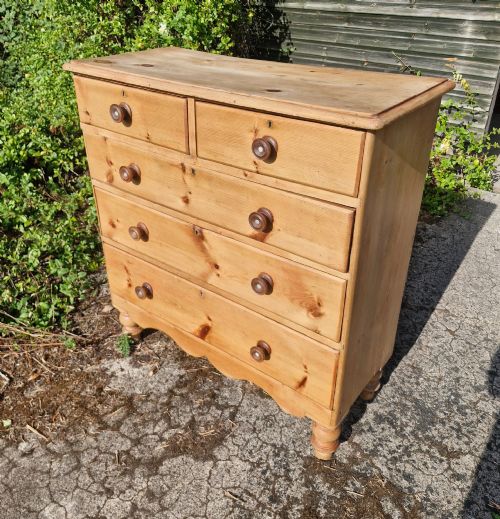
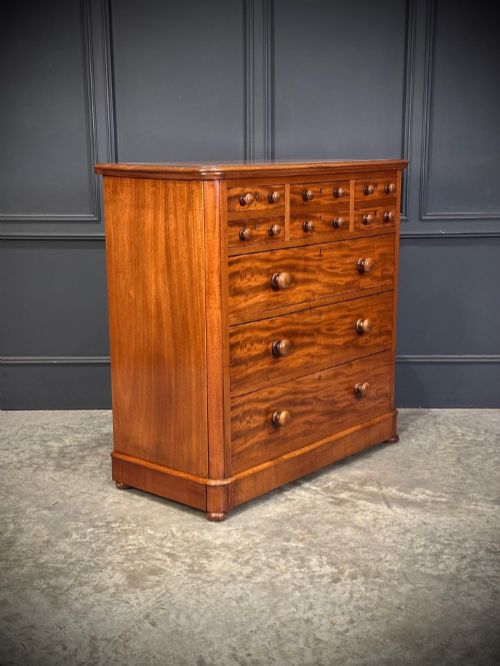
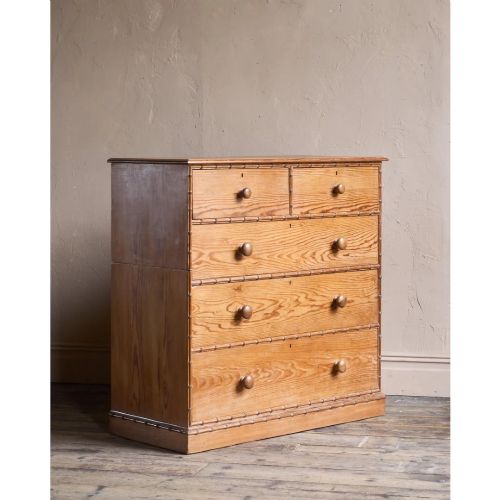
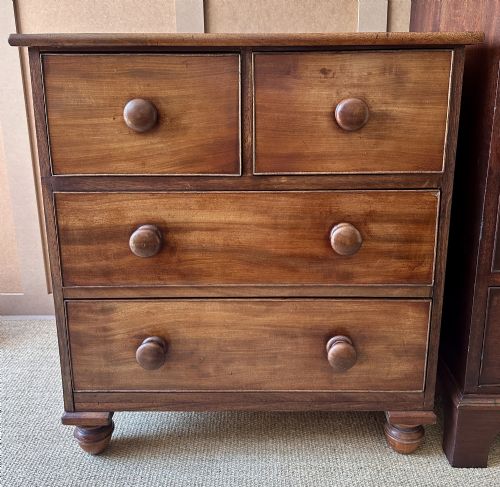
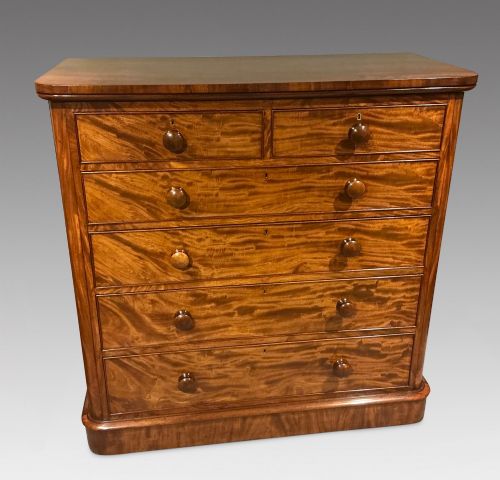
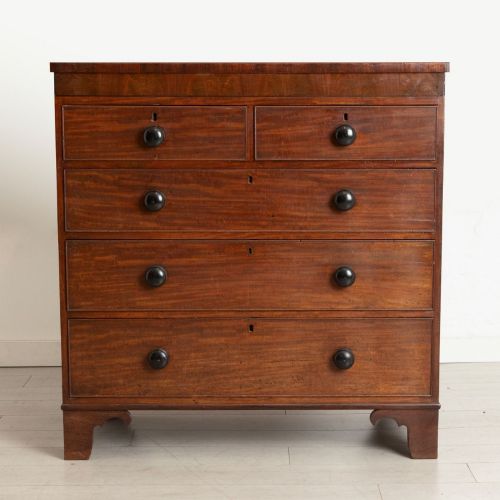
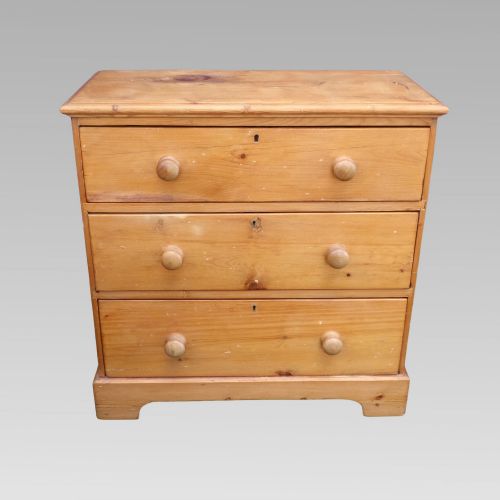
A wooden turned knob chest offers honest storage, with pine and mahogany examples dominating the Victorian selections.
Wooden Turned Knob Chest
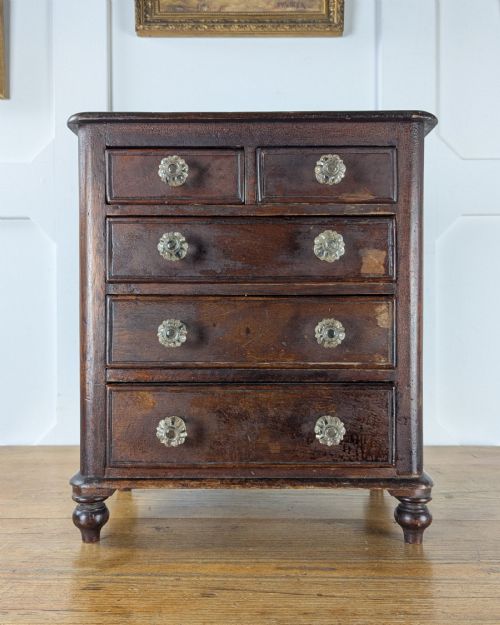
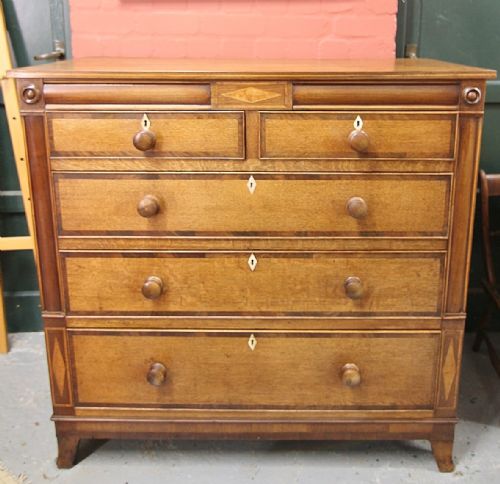
A wooden turned knob chest provides practical domestic storage through stacked drawers, appearing most frequently in Victorian pine and mahogany forms across this selection. Buyers seeking a wooden turned knob chest will encounter standard bedroom sizes alongside miniature apprentice pieces and tall five-drawer variants.
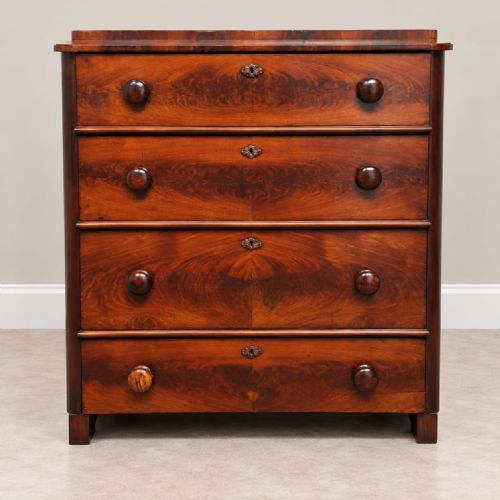
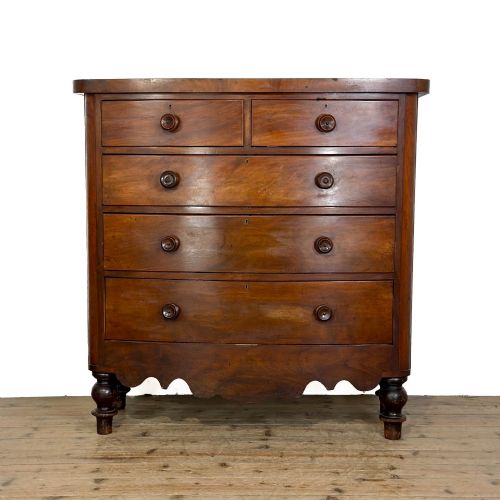
The periods represented span from Georgian and Federal styles up to Arts and Crafts examples from nineteen-ten. Pieces range from straightforward painted or waxed utility items to bow front designs with flame mahogany veneer.
Proportions vary from small bedside formats to large room-anchoring chests holding up to seven drawers including secret compartments. Regional English and American workshops produced these staples of the nineteenth century for everyday household use.
Construction and materials
Makers constructed these chests primarily from solid pine and mahogany, occasionally applying flame mahogany veneer to primary drawer fronts for visual depth. Structural framing relied on traditional timber joining techniques suited to heavy daily domestic use.
Hardware details incorporate turned wooden knobs, sometimes complemented by brass, iron, glass, or bone accents on specific drawers. Surfaces received finishes of simple wax or paint, preserving the natural grain of the wood.
The listings span Victorian, Georgian, and Arts and Crafts periods, featuring pine, mahogany, and flame mahogany veneer.
Judging quality and character
Quality separates standard utility pieces from finer expressions through the selection of timber, such as well-figured flame mahogany veneer versus plain pine planks. The precision of the drawer construction and the retention of original turned wooden knobs dictate the desirability of a chest.
Subtleties in secondary woods, clever secret drawer mechanisms, and clean proportions elevate certain examples far above basic regional carpentry.
Howard and Sons
The Wooden Turned Knob Chest Glossary
- Bow front
- A convex curved cabinet front that projects outward in an arc. This styling became particularly popular during the Victorian and Federal periods.
- Flame mahogany veneer
- A thin layer of wood sliced from mahogany showing a distinctive flickering flame pattern. Cabinetmakers applied this to primary drawer fronts for decoration.
- Apprentice piece
- A miniature scale model demonstrating a craftsman's skill to attain master status. These small chests duplicate full-size furniture proportions exactly.
- Secret drawer
- A concealed compartment built into the framing behind standard drawers. These hidden spaces often require a specific release catch to open.
- Waxed finish
- A protective coating rubbed into the timber surface to impart a soft sheen. This traditional treatment nourishes the pine or mahogany while maintaining a natural texture.
Wooden Turned Knob Chest: Frequently Asked Questions
What is a wooden turned knob chest?
A wooden turned knob chest is a traditional storage unit featuring horizontal drawers operated by rounded wooden handles turned on a lathe. These pieces served generations of households for storing garments and linens.
Most surviving examples date from the nineteenth century and utilise durable timbers like mahogany and pine. Their simple mechanical design ensures straightforward daily use.
How do I date a wooden turned knob chest?
Dating relies on examining the timber species, construction methods, and hardware styles. Victorian pieces often display turned feet and knob handles, while Georgian examples lean towards different proportions and internal framing.
Pine items with waxed finishes frequently point towards country workshops, whereas mahogany bow front versions suggest urban cabinetmaking traditions.
Where were these chests used?
These chests functioned primarily as bedroom furniture for holding folded clothing and personal belongings. Their sturdy construction made them essential household items across domestic settings.
Smaller formats, including miniature apprentice chests, likely served on tabletops or served as salesman samples. Larger five or seven-drawer variants anchored principal sleeping quarters.
Are all turned knobs original?
Many chests retain their original turned wooden knobs matching the primary timber of the frame. Replacements do occur due to loss or heavy use over generations of service.
Inspect the turning style and wear patterns on the handles to determine if they match the age and species of the chest body.