






Dark Painted Sideboard
A dark painted antique sideboard brings deep tone and practical surface space to a room, offering sturdy storage rooted in centuries of craftsmanship.
Dark Painted Sideboard
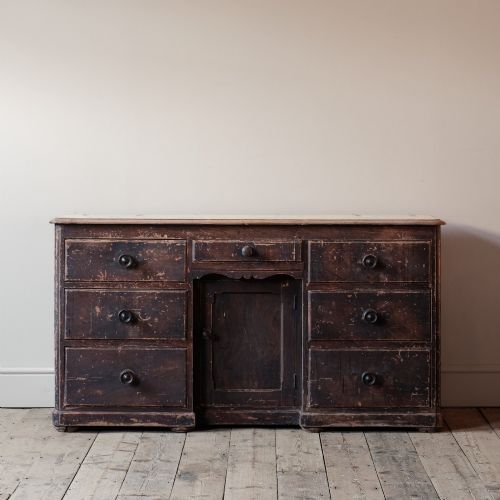
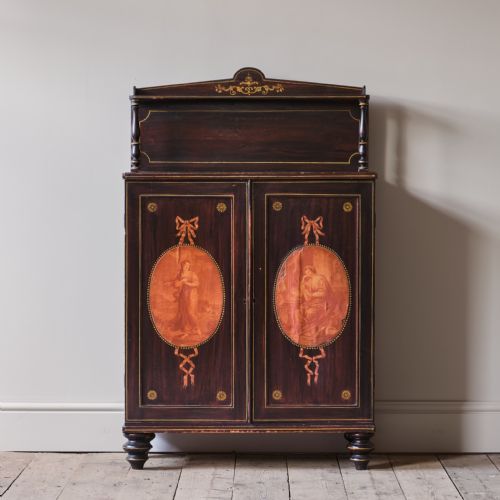
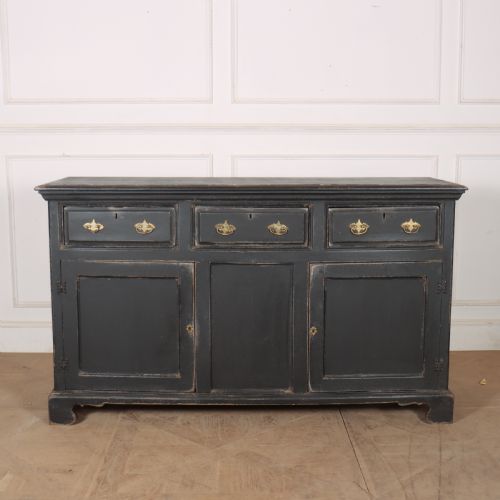
A dark painted antique sideboard covers a broad range of low storage forms, from kitchen dresser bases and potboards to serving tables and chiffoniers. These items provide surface display and concealed storage while carrying the heavy character of aged dark paint.
The pieces appearing on this page span the eighteenth and nineteenth centuries, alongside select early twentieth-century examples. English country houses, French provincial settings, and Dutch workshops all contribute distinct regional interpretations to the selection.
Kitchen dressers, serving tables, and chiffoniers dominate the forms available. Buyers frequently encounter pine and oak structures coated in original dark paint, simulated rosewood finishes, or scumbled surfaces.
What varies in quality
The integrity of the original paint surface dictates much of the visual merit, where untouched historical coatings carry far more character than later decorative layers. The retention of original brass or iron hardware further elevates a piece.
Construction details such as dovetailed drawer boxes and solid potboards distinguish superior regional vernacular pieces from simpler utility furniture. Proportions also matter, with narrow servers and miniature formats offering greater versatility in modern interiors.
Dark Painted Sideboard Retail Price Guide 2026
Typical asking prices for dark painted sideboard among the pieces listed under this phrase on Sellingantiques today, from the lower quarter to the upper quarter. They describe what is for sale here now, not the wider market.
Listings feature pine and oak constructions from the eighteenth and nineteenth centuries, finished in dark paint, scumble glaze, and brass.
The Dark Painted Sideboard Glossary
- Potboard
- An open lower shelf on a dresser or sideboard traditionally used for storing pots and heavy crockery. It sits just above the floor on sturdy stretchers.
- Scumble
- A decorative painting technique where a translucent darker glaze is dragged or brushed over a lighter base coat to simulate grain. This creates mottled or textured patterns across pine furniture.
- Chiffonier
- A compact sideboard or low cabinet featuring enclosed shelving and occasionally a small upper tier. Originating in the nineteenth century, it served dining rooms for silver and linen.
- Dresser Base
- The lower half of a kitchen dresser lacking the upper plate rack. These sturdy tables offer drawers and cupboards beneath a generous top surface.
- Simulated Rosewood
- A paint finish applied to common timbers like pine to imitate the dense dark grain of expensive tropical hardwood. Artisans used fine brushes to paint the grain patterns by hand.
Dark Painted Sideboard: Frequently Asked Questions
What is a dark painted antique sideboard?
It is a practical storage item, such as a dresser base, chiffonier, or serving table, constructed centuries ago and finished with dark paint.
These pieces combine surface display with enclosed storage, bringing historical character and deep colour into modern living spaces.
How do I date a painted sideboard?
Dating relies on examining construction methods, timber types, and the wear patterns within the paint layers. Eighteenth-century pieces often feature hand-planed boards and simpler framing compared to nineteenth-century examples.
Hardware styles and regional vernacular traits also offer clues to the decade of manufacture, distinguishing Georgian work from later Victorian interpretations.
Where should I place a sideboard?
These pieces suit dining rooms, hallways, and kitchens where surface space and concealed storage prove useful. Narrow servers fit neatly into restricted corridors, while wider dresser bases anchor larger dining walls.
Keeping them away from direct heat sources protects the aged timber and preserves the original painted finishes.
What is original paint?
Original paint refers to the earliest decorative coating applied to the timber when the piece was first built. Over generations, this layer acquires natural wear and patination.
Surviving early paint adds significant character and historical value compared to surfaces stripped or repainted in later decades.