




Dark Oil Religious Painting
A dark oil religious painting brings centuries of devotional imagery and dramatic chiaroscuro into a room.
Dark Oil Religious Painting
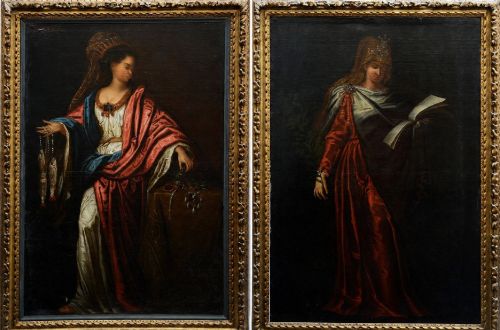
A dark oil religious painting captures sacred narratives, saints, and holy figures through deep shadows and focused illumination. These works emerge primarily from seventeenth and eighteenth-century European schools, reflecting Catholic and Protestant traditions across Italy, Spain, France, and Britain.
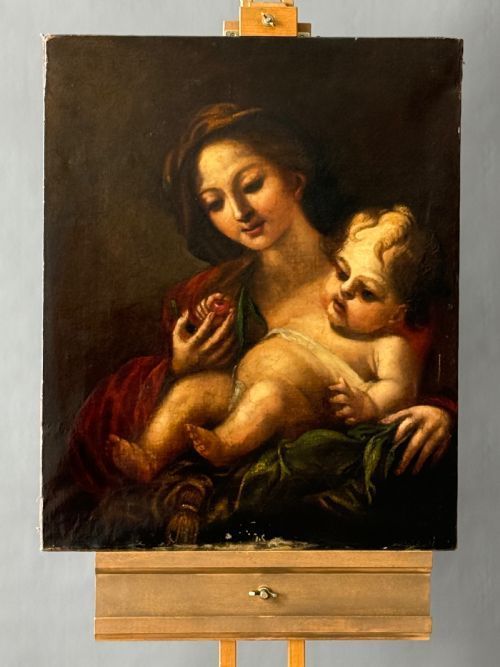
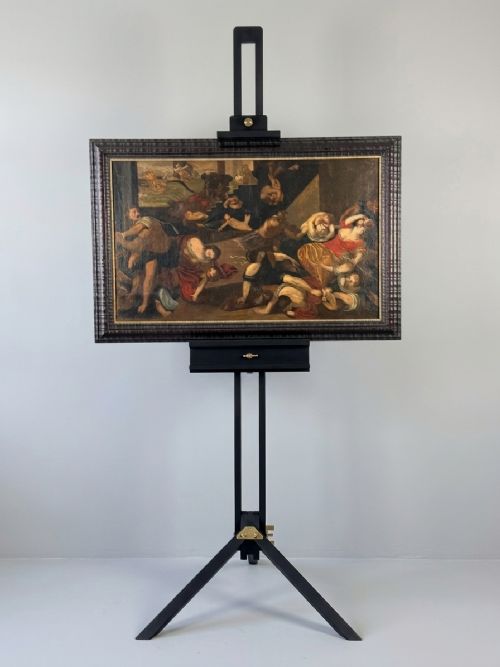
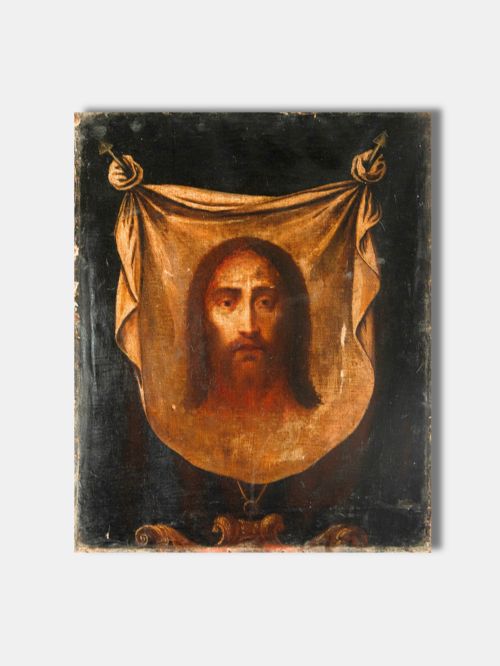
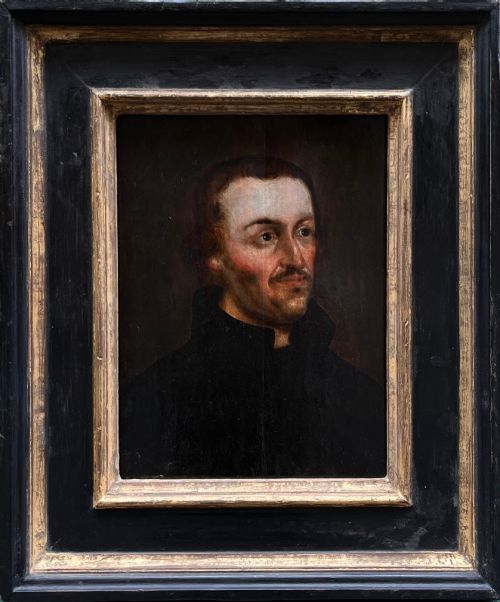
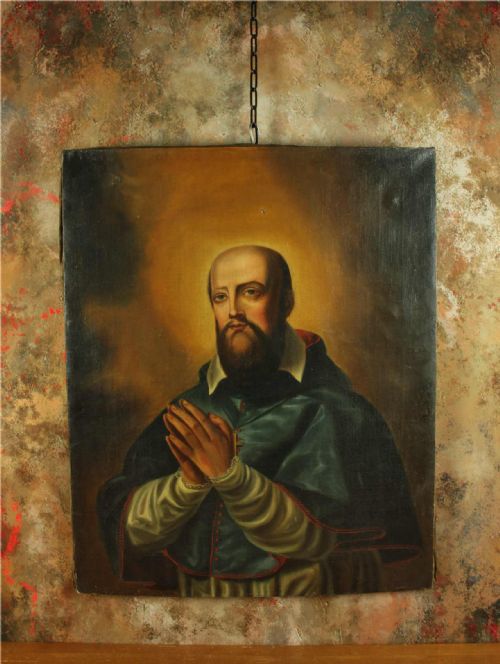
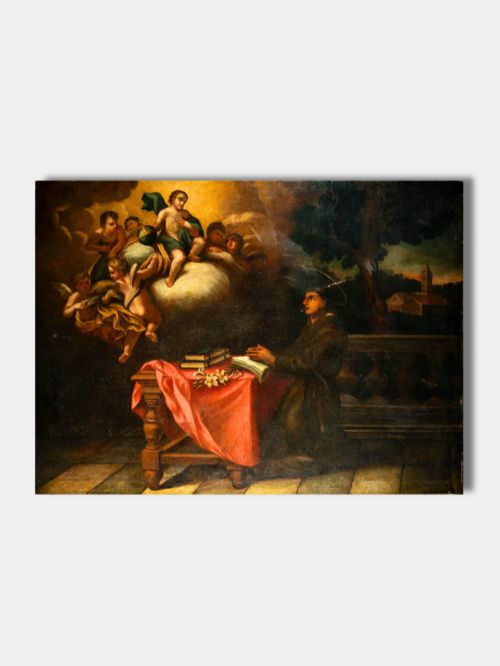
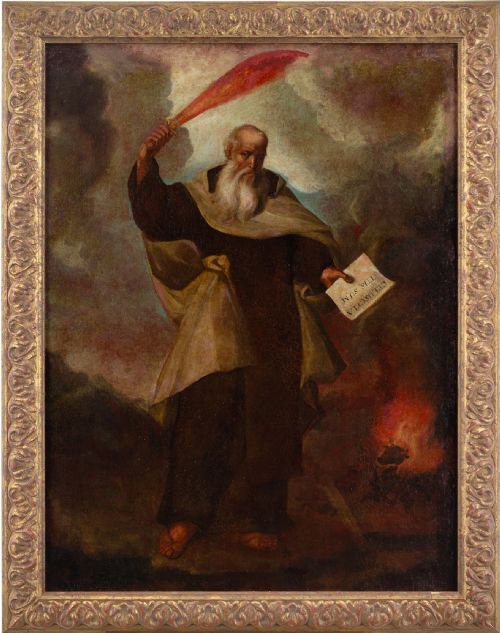
The version most commonly met on this page is an oil on canvas or panel depicting subjects such as the Madonna and Child, biblical narratives, or portraits of theologians and saints. These pieces range from intimate devotional panels to monumental altar studies bearing the rich patination of age.
How they were made
Artists applied oil paint onto stretched canvas, prepared wooden panels, or occasionally copper plates, building rich layers of pigment and translucent glaze. This medium allowed painters to achieve deep, shadowy backgrounds while applying warm highlights to flesh tones and draped garments.
Canvases often received a dark priming layer, which naturally contributed to the shadowy atmosphere characteristic of the period style. Subsequent layers of oil paint were manipulated with brushes and sometimes palette knives to create texture in fabrics, hair, and architectural elements.
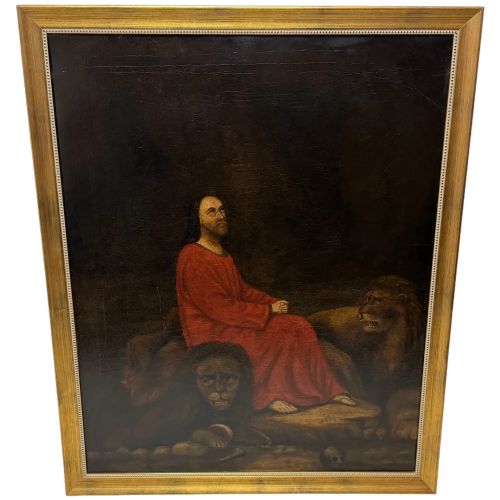
Several saints appear accompanied by traditional attributes, including skulls, books, and curious lions.
What varies in quality
Quality rests in the expressive power of the brushwork, the anatomical conviction of figures, and the structural integrity of the composition. Stronger works display confident handling of light and shadow, capturing psychological depth in the faces of saints and biblical figures rather than relying on formulaic repetition.
The preservation of the original pigment and the stability of the support material also divide examples. Surviving canvases that retain their initial depth of tone without heavy overpainting offer a more direct connection to the artist's hand.
Gaspar de Figueroa·John Scougall·Reynard Le Vieux
The Dark Oil Religious Painting Glossary
- Chiaroscuro
- The use of strong contrasts between light and dark, usually bold contrasts affecting a whole composition. This technique creates dramatic depth and focuses attention on the central devotional figures.
- Old Master
- A painter of skill born before about eighteen hundred, or a painting by such an artist. These works form the historical core of traditional European fine art.
- Panel painting
- A painting made on a flat panel made of wood, copper, or other rigid support. This format predates the widespread adoption of canvas for portable artworks.
- Provenance
- The chronology of the ownership or location of a historical object. A documented history helps confirm the origin and period of religious artworks.
Dark Oil Religious Painting: Frequently Asked Questions
How do I care for an old canvas painting?
Keep the artwork away from direct sunlight, extreme temperature shifts, and high humidity to prevent the canvas and oil paint from cracking.
Dust the surface very gently with a dry, soft brush, and avoid using any water, cleaning sprays, or chemical solvents on the paint layer.
Were these paintings made for churches?
Many large-scale religious works were originally commissioned for altarpieces, chapels, and monastic institutions during the seventeenth and eighteenth centuries.
Smaller panels and canvases were frequently created for private prayer and contemplation within domestic homes.
How can I tell a seventeenth-century piece from a later one?
Seventeenth-century religious works often employ intense tenebrism, darker grounds, and dramatic emotional expressions characteristic of Baroque movements across Spain, Italy, and Flanders.
Later eighteenth and nineteenth-century pieces may introduce softer palettes, different canvas preparations, or distinct revival styles associated with Victorian and Georgian tastes.
What subjects appear most often in these paintings?
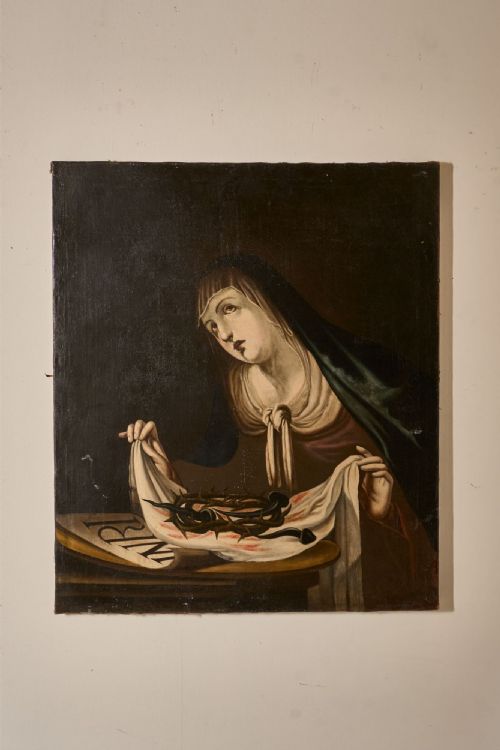
Common subjects include the Virgin Mary with the infant Christ, scenes from the Passion, and figures of penitent saints such as Saint Jerome or Mary Magdalene.
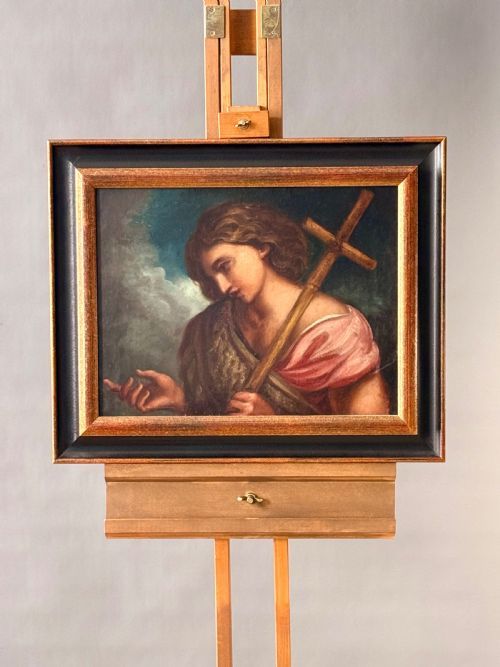
Reformers, theologians, and biblical narratives involving figures like Daniel or Saint John the Baptist also frequently appear.