
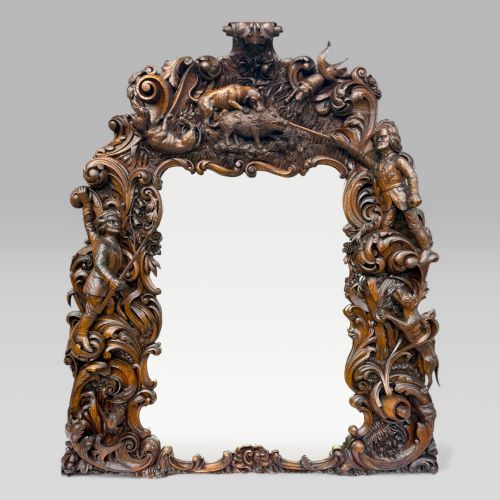
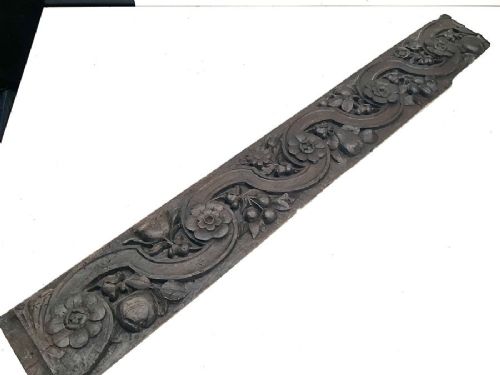
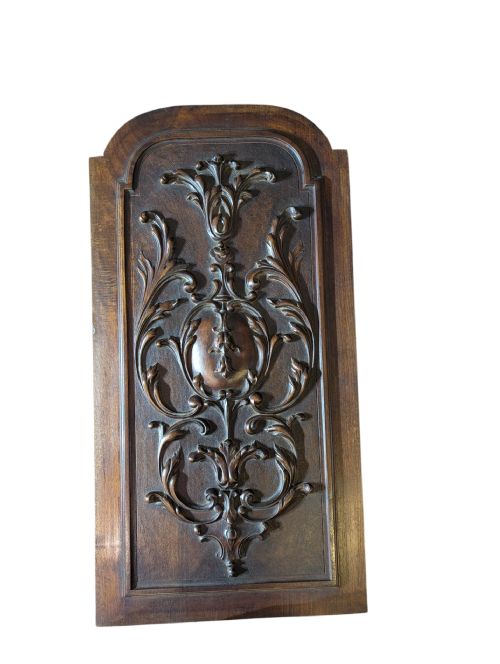
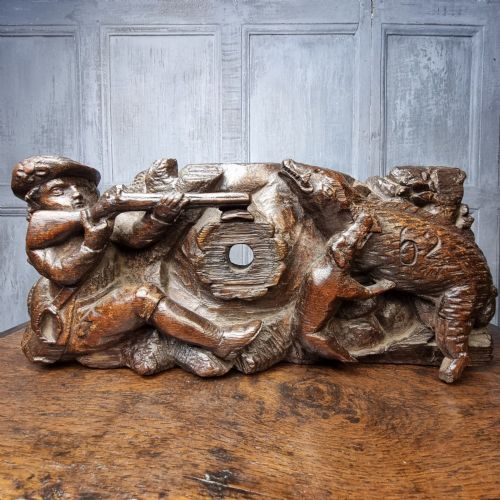
Dark Oak Wall Relief
Dark oak wall relief panels bring centuries of carved timber into modern interiors, offering deep historical character and sculptural presence for the home.
Dark Oak Wall Relief
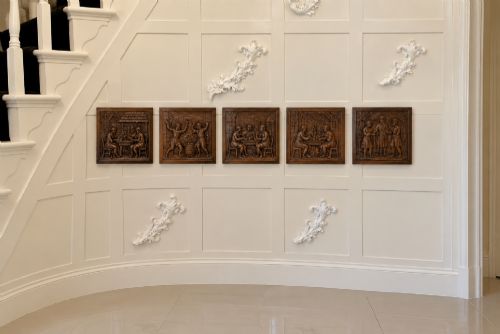
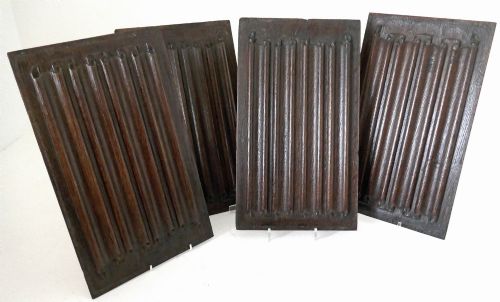
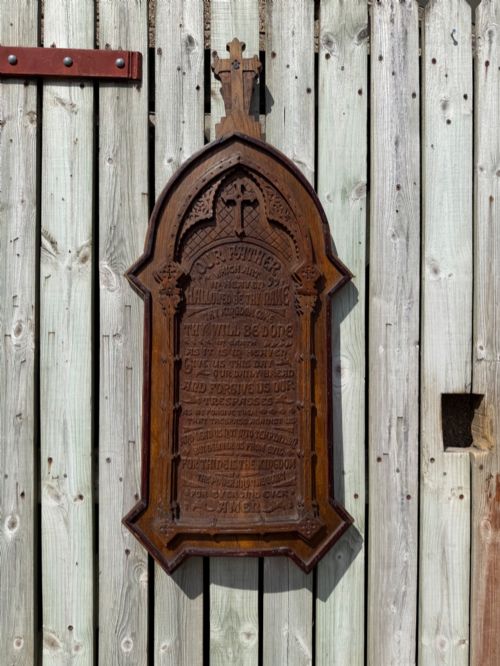
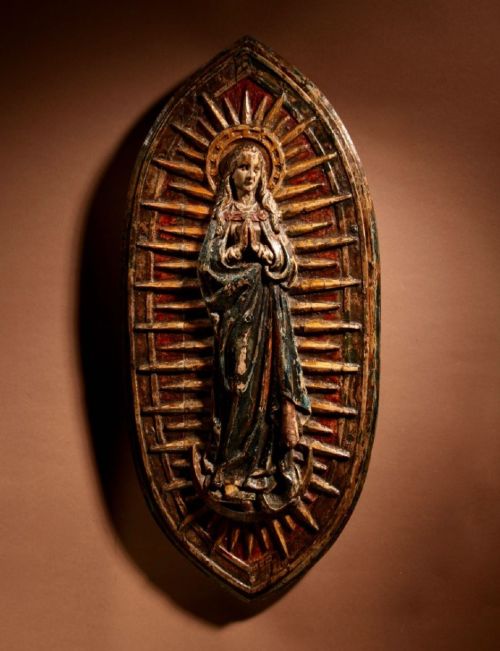
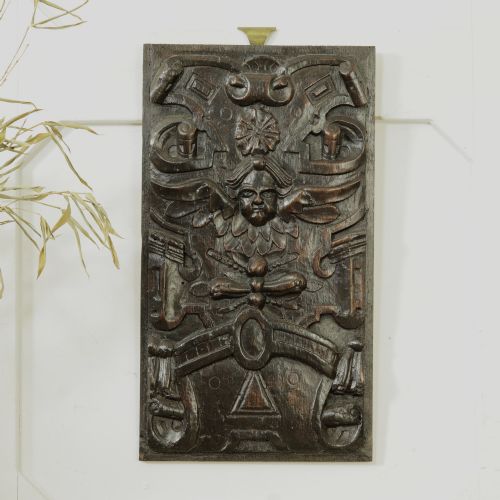
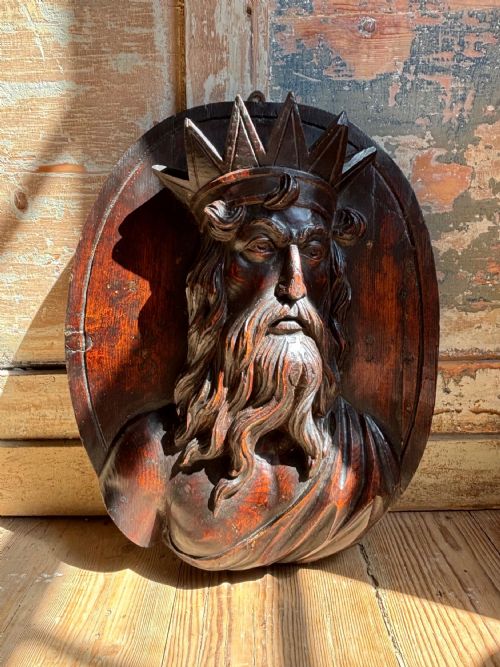
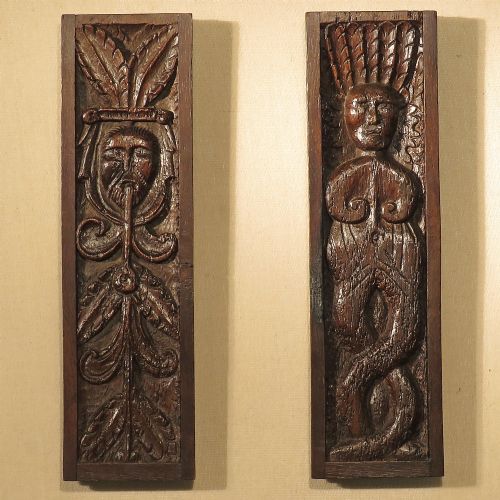
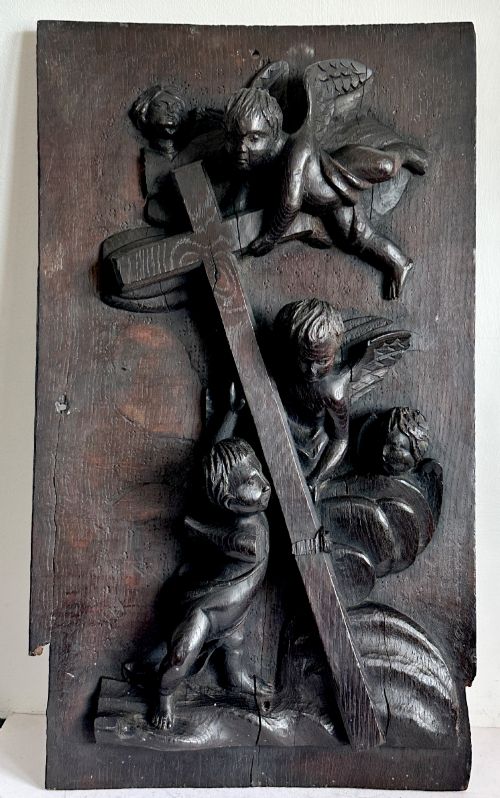
A dark oak wall relief brings architectural history indoors, ranging from medieval ecclesiastical carvings and sixteenth-century linenfold panels to seventeenth-century baroque plaques. These pieces originate as wall panels, friezes, overmantles, and altarpiece fragments created in England, Flanders, Germany, and France.
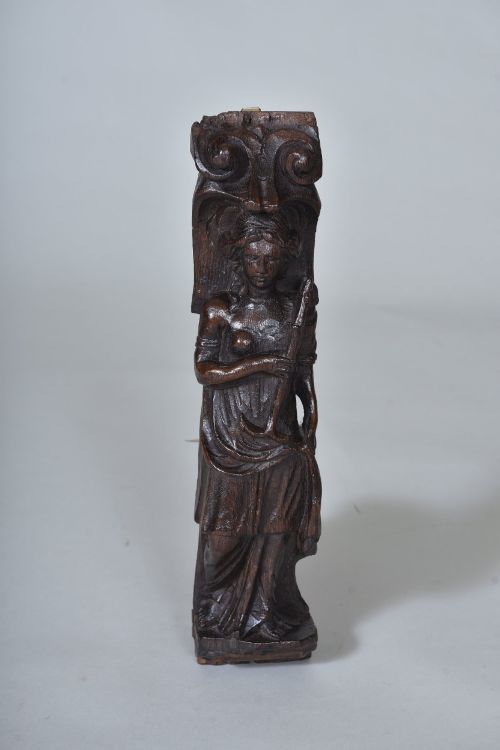
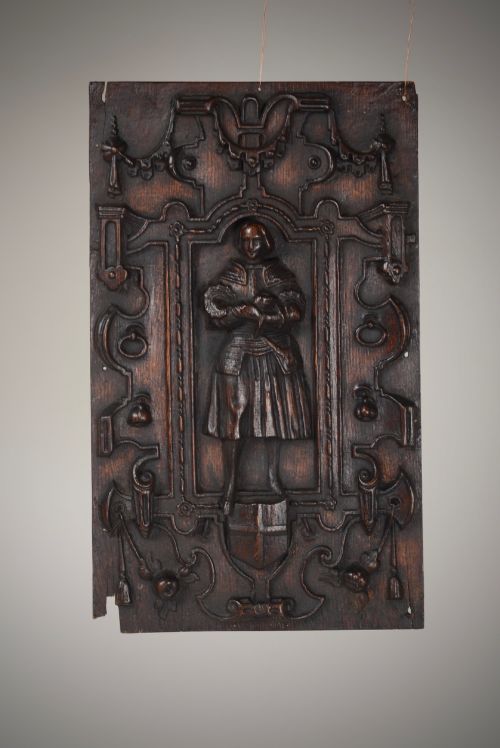
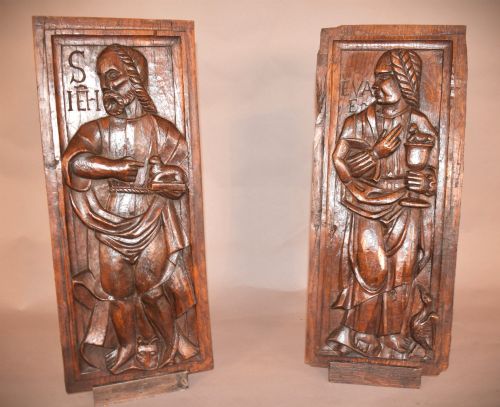
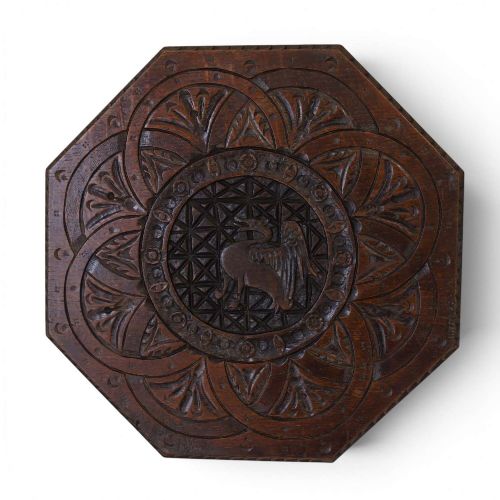
The selection on this page relies heavily upon seventeenth-century and sixteenth-century oak items, alongside nineteenth-century Gothic Revival interpretations and later architectural salvage. Formats span rectangular wall plaques, circular portraits, and deep-relief figural sculptures depicting biblical scenes, allegories, and armorial crests.
How they were made
Craftsmen carved these pieces directly from dense timbers such as oak, walnut, and fruitwood using specialised gouges and chisels to achieve varying depths of relief. Certain panels incorporate secondary materials including bronze, polychrome paint, and gesso to accentuate surface detail.
Surviving works display hand-carved joints and surfaces shaped by historic hand tools, sometimes transitioning from structural architectural salvage or former tabletops into dedicated wall display pieces.
Listings feature oak, walnut, fruitwood, bronze, and gesso across periods spanning the sixteenth century to the arts and crafts era.
What varies in quality
Quality rests upon the crispness of the chisel work and the depth of the carving, distinguishing master-carved figural reliefs with expressive anatomy from more repetitive geometric friezes. Depth of field and the natural patination of the aged timber dictate the visual impact of each piece.
The historical significance of the subject matter, such as distinct religious iconography or documented armorial crests, separates standard decorative panels from exceptional sculptural works.
Edward Pearce
The Dark Oak Wall Relief Glossary
- Linenfold
- A style of wood carving that mimics vertical folds of fabric, popular on sixteenth-century panels. This treatment gives flat timber surfaces a textured, textile-like appearance.
- High-Relief
- A sculptural technique where the figures project significantly from the background plane. This method creates deep shadows and strong three-dimensional form.
- Frieze
- A wide horizontal band of sculpted decoration placed along the upper portion of a wall or furniture piece. These linear carvings often feature repeating motifs or narrative scenes.
- Corbel
- A structural bracket projecting from a wall to support a weight, frequently carved into figurative or grotesque shapes. In wall decor, they serve purely decorative or framing functions.
- Armorial
- Relating to heraldry and family crests displayed on shields or plaques. These carvings identify specific lineages and historical ownership.
Dark Oak Wall Relief: Frequently Asked Questions
Where were dark oak wall reliefs originally placed?
These carvings originated as structural elements within churches, manor houses, and hunting lodges, serving as altarpieces, overmantles, staircase components, and wall panels.
Over time, many of these architectural elements were salvaged and adapted into standalone wall plaques or decorative panels for domestic interiors.
How do I hang a heavy carved wooden panel?
Due to the substantial weight of dense historical timber, secure wall fixings tied directly into structural studs or masonry are essential.
Professional mirror plates or custom French cleats distribute the weight safely across the back frame without stressing the historic wood.
How do I tell a sixteenth-century panel from a nineteenth-century revival piece?
Sixteenth-century and seventeenth-century pieces display tool marks consistent with historic hand-working, alongside natural shrinkage and oxidation within the grain.
Nineteenth-century Gothic Revival items often utilise mechanical preparation methods or exhibit cleaner cut lines characteristic of later historicist revivals.
What is the best way to care for antique oak carvings?
Maintain stable indoor humidity levels and keep antique timber away from direct heat sources to prevent the wood from splitting or warping.
Dust the deep recesses gently with a soft brush and avoid applying modern liquid polishes that can build up within the carved details.