
Dark Oak Table Desk
A dark oak table desk brings substantial timber and practical writing space into a room, spanning centuries of British and continental cabinet-making.
Dark Oak Table Desk
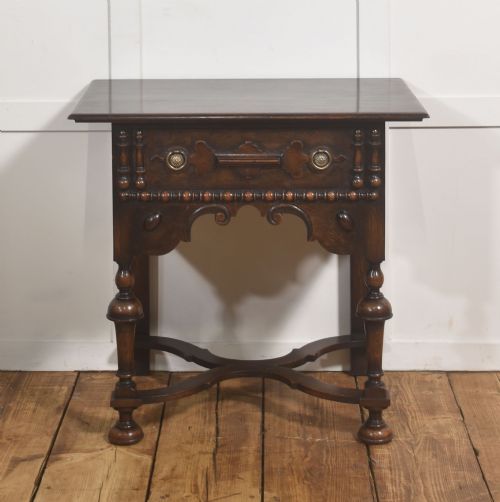
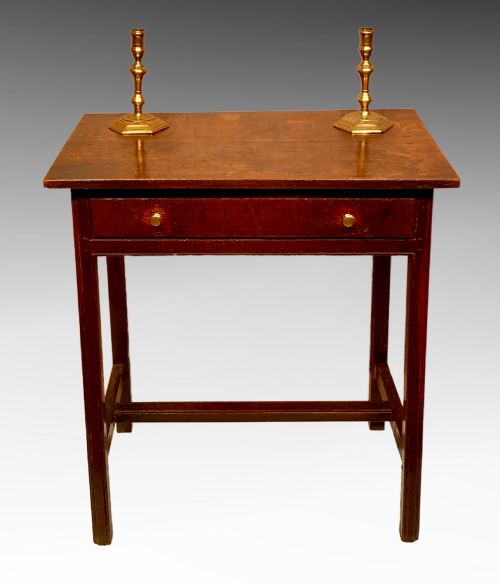
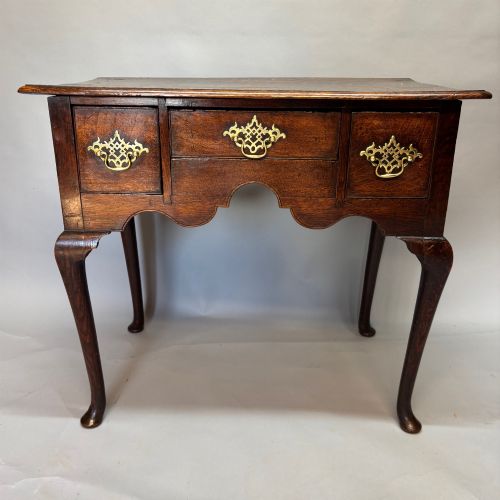
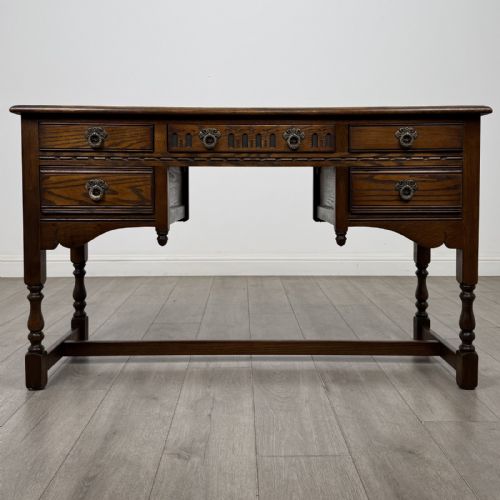
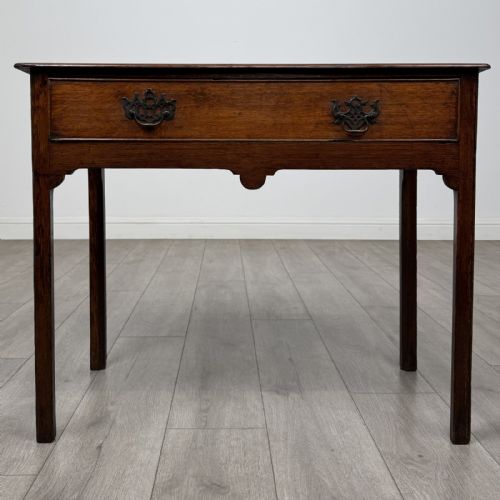
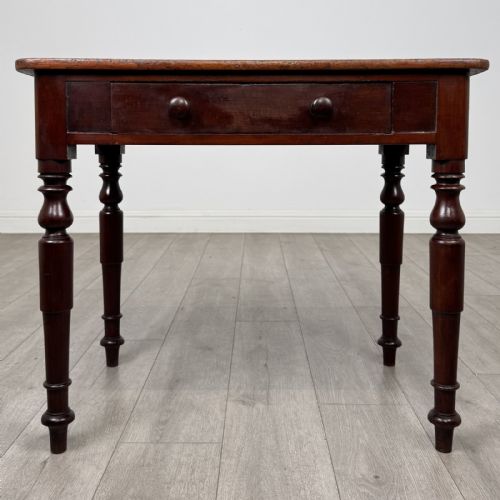
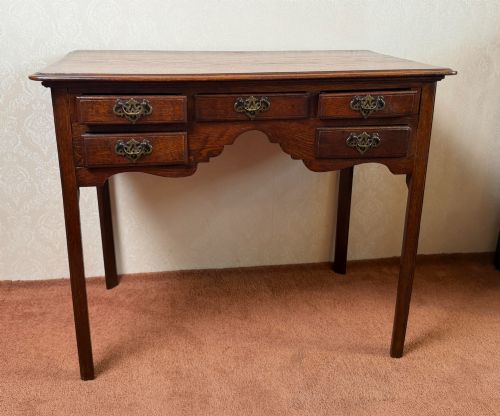
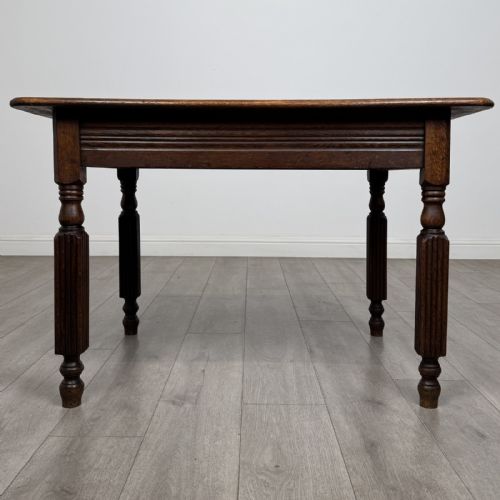
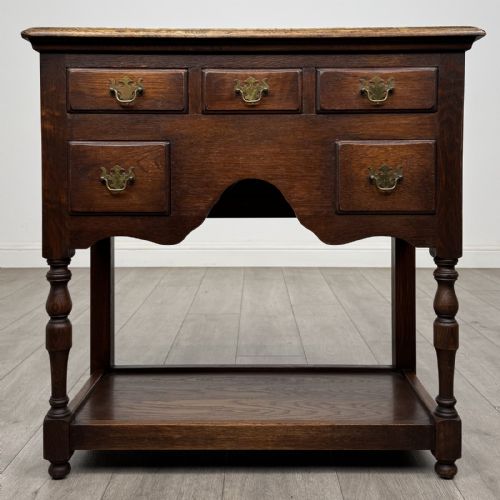
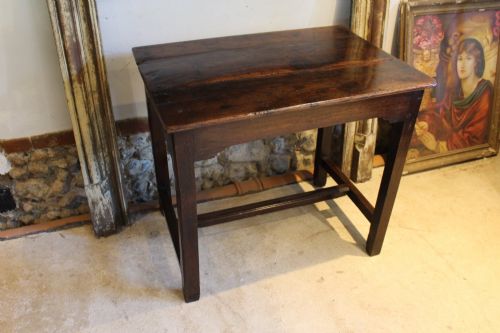
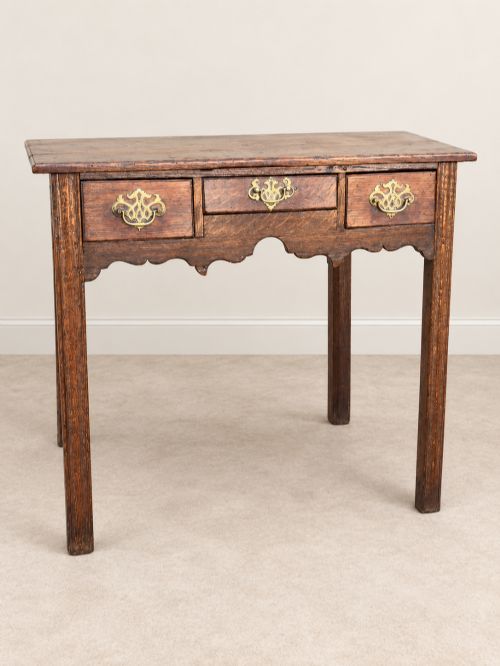
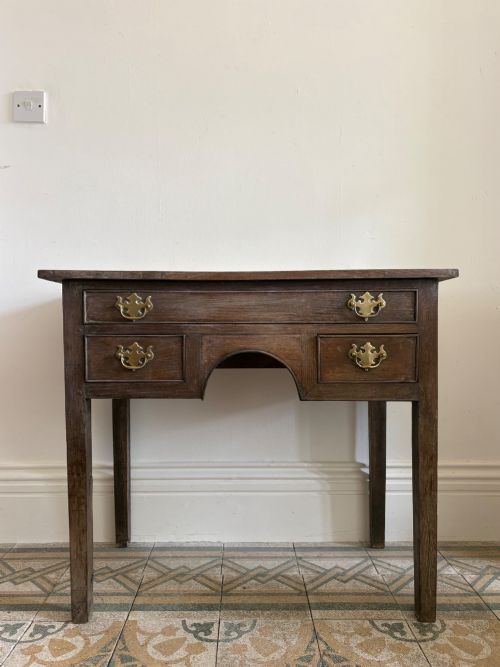
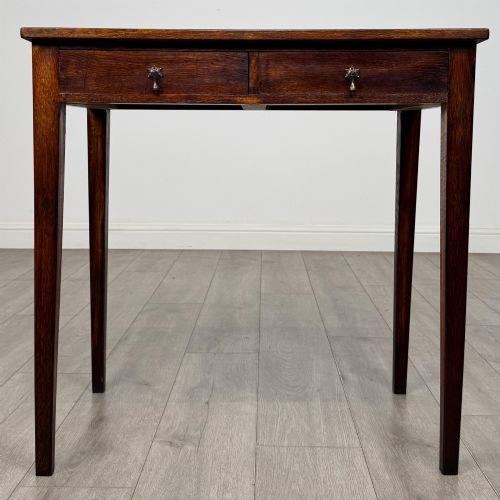
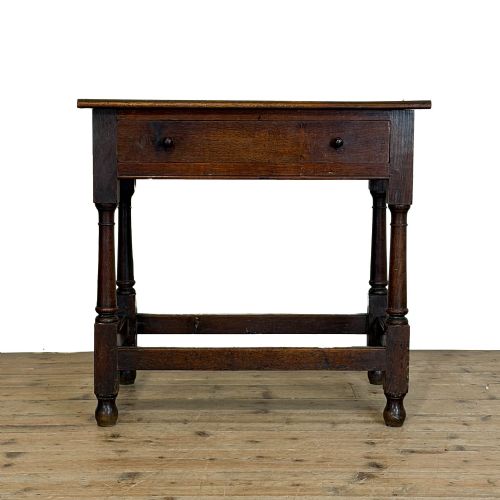
When searching for a dark oak table desk, you encounter forms ranging from simple eighteenth-century lowboys and Georgian side tables to carved Victorian writing desks and Edwardian pedestals. These pieces served as functional surfaces for correspondence, accounts, and domestic administration in period homes.
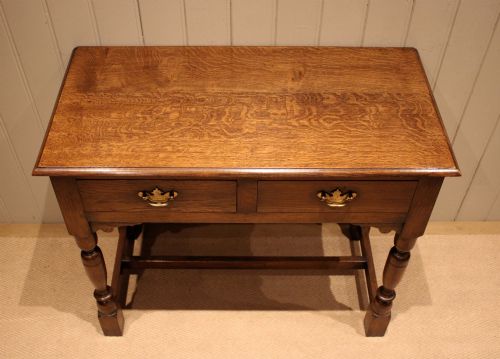
The versions most common on this page combine sturdy oak timber with utilitarian drawers, standing on straight or cabriole legs. Their darker patination develops through decades of wax polishing, handling, and exposure to light.
Makers adapted the basic table desk format across various eras, introducing Jacobean revival carving, Gothic details, or Arts and Crafts simplicity while retaining the essential writing surface and storage drawer.
Materials and construction
Makers utilised solid oak for the primary frames, tabletops, and drawer linings, occasionally incorporating secondary woods such as yew and elm in earlier vernacular pieces. Brass handles, escutcheons, and hinges provide functional hardware, while selected writing surfaces feature inset leather.
Joinery methods rely on traditional pegged mortise and tenon joints for structural stability, alongside hand-cut dovetails for drawer construction. Carved ornamentation, where present, was executed by hand using gouges and chisels to create linenfold, geometric, or foliate motifs.
Materials appearing alongside solid oak include wrought iron, brass hardware, inset leather writing surfaces, and secondary timbers like yew and elm.
Assessing quality and craftsmanship
Quality in these pieces rests upon timber selection and the integrity of the original construction rather than decorative excess. Superior examples display quartersawn oak with prominent medullary rays, coupled with cleanly cut dovetails and minimal later replacement of hardware.
The proportion and balance of the legs relative to the top dictate the visual success of the piece, particularly in earlier lowboys and side tables. Alterations to height, surface stripping, or replacement of drawer runners diminish the integrity of an antique desk.
The Dark Oak Table Desk Glossary
- Lowboy
- A small oak dressing or side table featuring one or more rows of drawers, typically dating from the eighteenth century. These pieces often sat in bedrooms or parlours for personal grooming or writing.
- Linenfold
- A style of carved wooden panelling that resembles folded fabric, frequently seen on revival furniture from the nineteenth and twentieth centuries.
- Dovetail
- A traditional joint formed by interlocking wedge-shaped fingers, used primarily in drawer construction to ensure durable corners without metal fasteners.
- Escutcheon
- A protective plate surrounding a keyhole, usually fashioned from brass on period desks and tables.
- Patina
- The surface sheen and darkening acquired by wood over long periods of use, cleaning, and exposure to light.
Dark Oak Table Desk: Frequently Asked Questions
How do I date an oak desk?
Dating relies on construction methods, timber preparation marks, and hardware styles. Hand-sawn boards, pegged joints, and original brasses indicate earlier periods.
Later Victorian and Edwardian pieces often reveal machine-sawn timber and standardised fixings beneath the drawers.
Were these used for writing?
Many tables and lowboys functioned as writing surfaces before specialised pedestal desks became common. Shallow drawers held parchment, ink, and quills.
Some surviving examples include dedicated leather inserts specifically for writing.
How should I care for dark oak?
Maintain the wood with traditional beeswax applied sparingly and buffed with a soft cloth. Avoid placing oak furniture near direct heat sources or strong sunlight.
Moisture should be wiped away immediately to prevent staining the dark finish.
What is the difference between a lowboy and a desk?
A lowboy is a compact table with drawers, originally designed for multiple domestic tasks including writing and dressing. A desk specifically prioritises a surface for seated paperwork.
Both forms share similar proportions in seventeenth and eighteenth-century examples.