




Dark Oak Hanging Cabinet
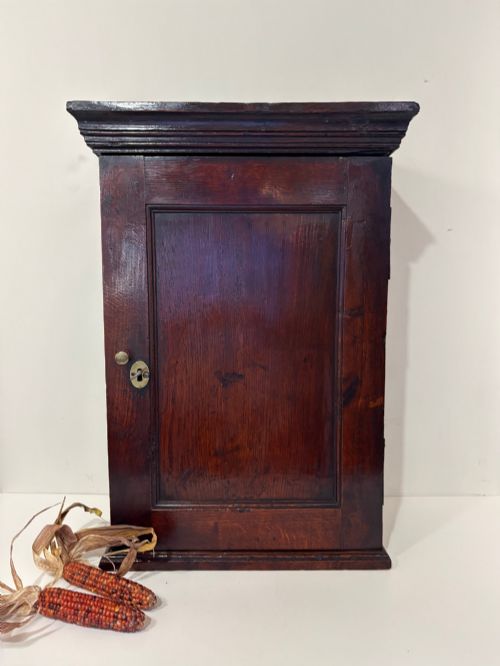
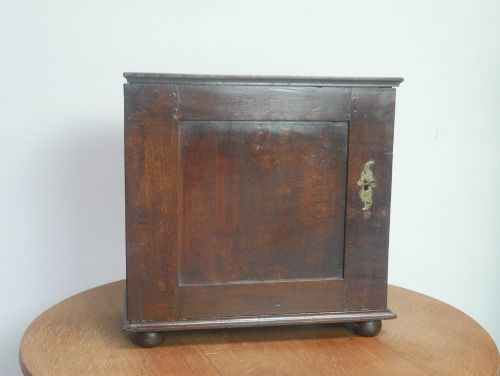
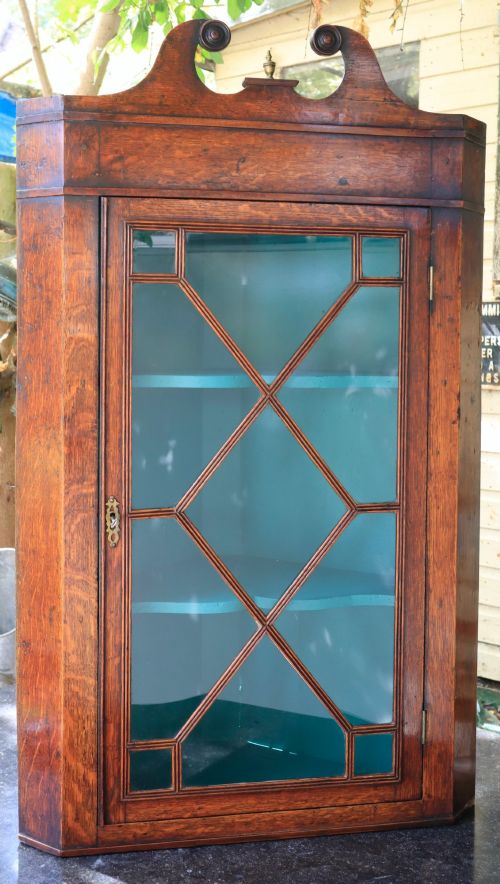
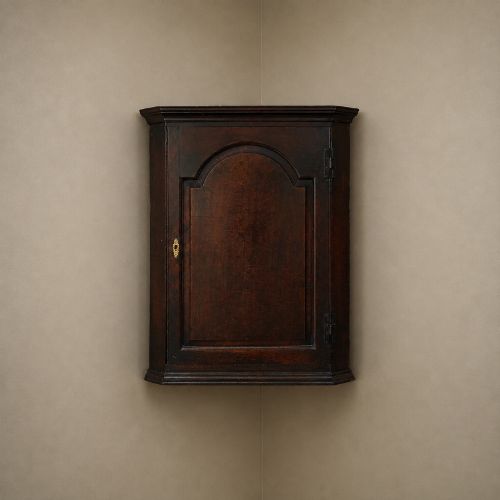
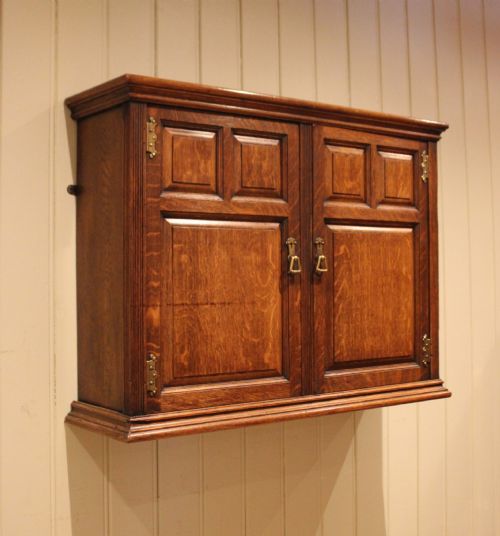
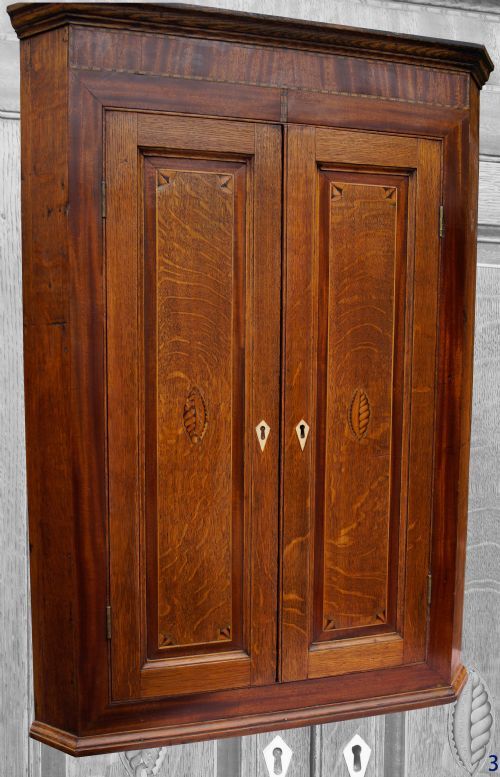
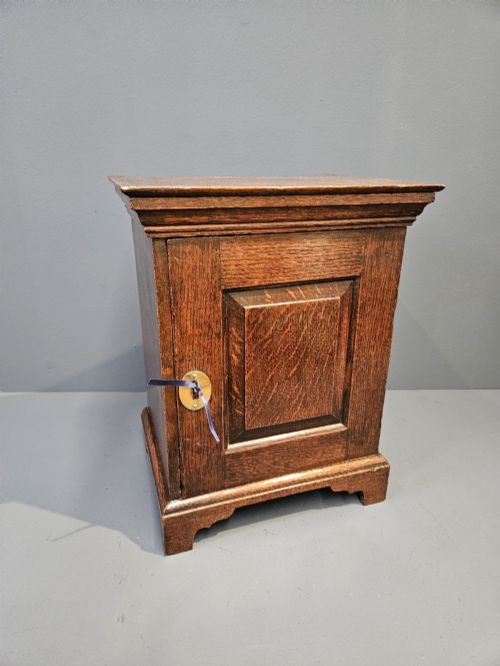
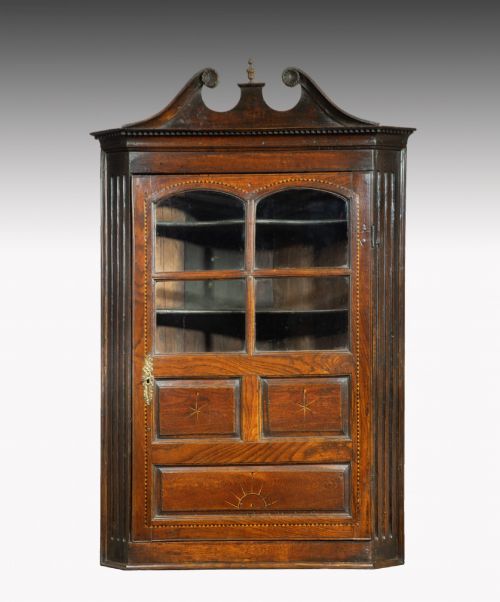
A dark oak hanging cabinet brings compact storage and rich timber grain to domestic walls, spanning provincial centuries from simple spice boxes to bow-fronted corner cupboards.

Dark Oak Hanging Cabinet
A dark oak hanging cabinet serves domestic wall storage across the seventeenth, eighteenth, and nineteenth centuries, taking forms such as spice cupboards, wall cupboards, and corner cupboards. Buyers encounter regional pieces alongside Georgian country examples and occasional French provincial or Victorian country variants.
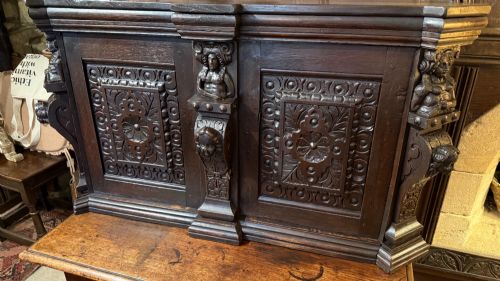
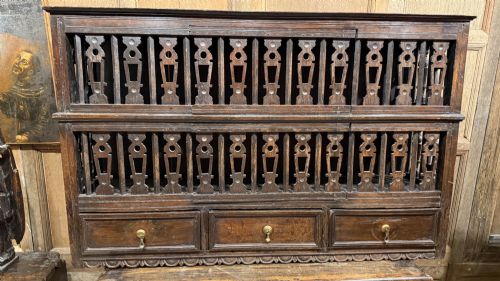
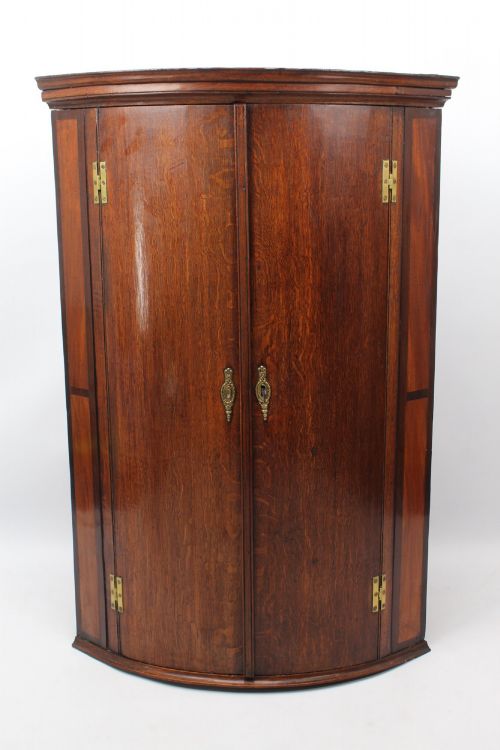
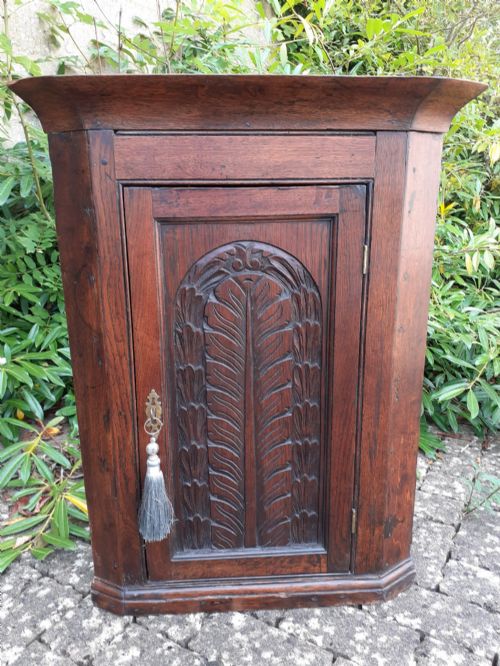
The selection ranges from early seventeenth-century mural livery cupboards and eighteenth-century spice cupboards to bow-fronted corner cabinets and late nineteenth-century wall display shelves. Corner cabinets and flat wall-hanging cupboards dominate the forms, designed to utilise unburdened room angles and wall space.
Distinctions in standard
Quality rests in the crispness of hand-carved decoration, the integrity of pegged joints, and the survival of original brass or iron hardware. Finer examples display well-figured timber grain and subtle architectural mouldings rather than purely utilitarian assembly.
Proportion and surface patination dictate desirability, separating simpler provincial utilitarian boxes from refined Georgian or Aesthetic Movement pieces. The retention of original backboards, shelving, and working locks distinguishes superior survivals.
Listings feature solid oak combined with iron, brass, glass, and pine across Georgian, Victorian, and seventeenth-century periods.
John Moyr Smith
The Dark Oak Hanging Cabinet Glossary
- Bow front
- A convex curved cabinet front that projects outward from the wall corners. This shape softens the angular transition of corner cupboards.
- Spice cupboard
- A small wall-mounted cabinet containing multiple internal drawers for storing culinary spices and herbs. These compact pieces date predominantly from the seventeenth and eighteenth centuries.
- Livery cupboard
- A traditional storage cabinet originally used for food and provisions in large households. Surviving examples from the seventeenth century exhibit robust oak construction.
- Corner cupboard
- A triangular cabinet engineered to fit precisely into room intersections. They maximise storage efficiency in domestic interiors.
Dark Oak Hanging Cabinet: Frequently Asked Questions
How do I hang a heavy antique oak wall cabinet safely?
Modern fixings should engage directly with wall studs or masonry rather than relying solely on old hanging brackets. Professional installation ensures the substantial weight of dense timber is distributed securely.
Traditional mounting points inside the cabinet require careful assessment to bear the load without straining historic joints.
How should I clean and maintain dark oak timber?
Dust regularly with a dry, soft cloth and apply traditional beeswax sparingly to nourish the wood. Avoid modern silicone sprays or excessive moisture which can degrade historic finishes.
Keeping the cabinet away from direct heat sources prevents the oak from drying out and splitting.
How can I tell an eighteenth-century spice cupboard from a later copy?
Authentic pieces exhibit hand-cut dovetails, pit-sawn board marks, and timber shrinkage consistent with age. Iron or brass hardware should show genuine wear patterns rather than artificial ageing.
Internal construction details and traditional peg construction provide reliable indicators of period origin.