


Dark Oak Entryway Seat
A dark oak entryway seat brings substantial timber and practical hall storage to an interior, offering a grounded welcome for any hallway.
Dark Oak Entryway Seat
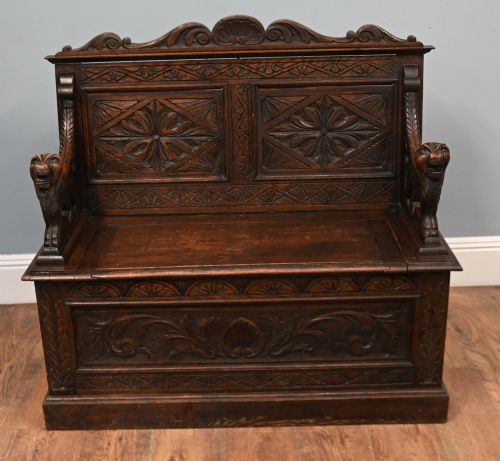
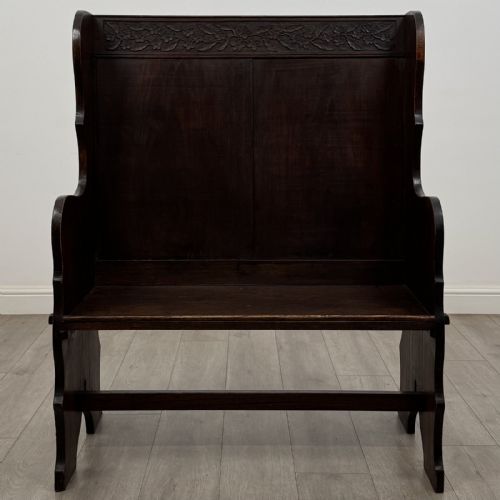
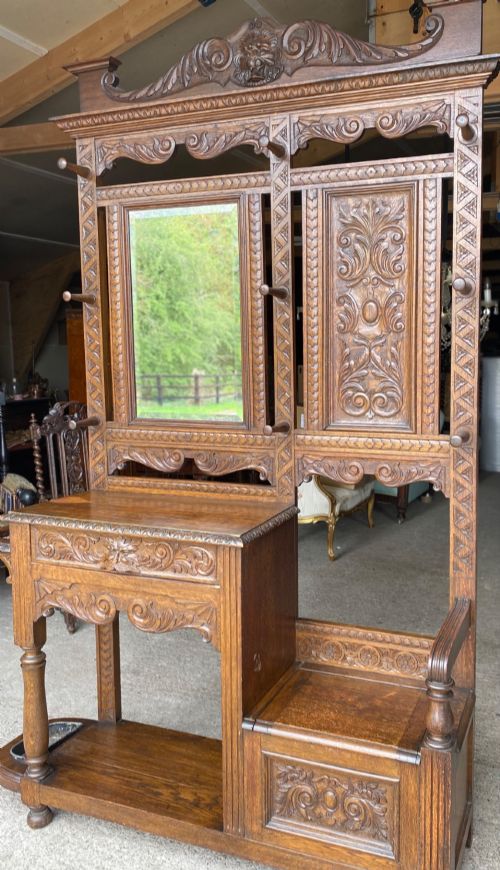
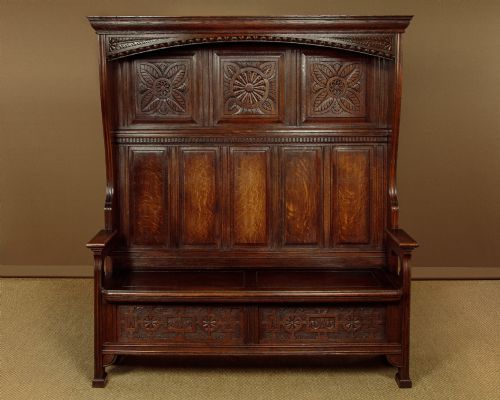
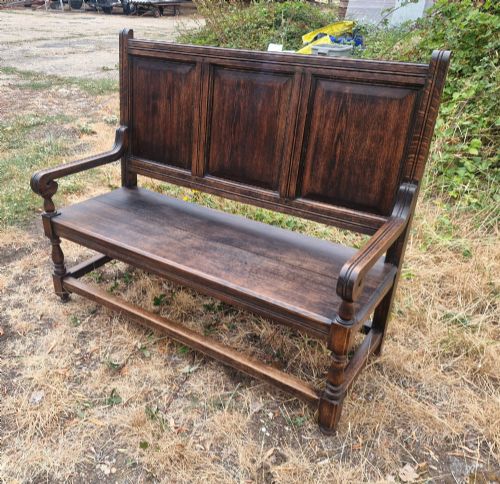
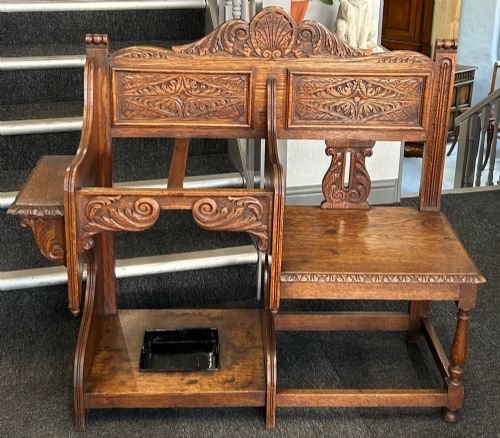
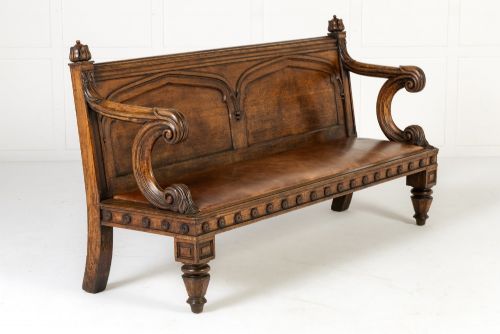
When you search for a dark oak entryway seat, you encounter robust furniture built to anchor a hallway, vestibule or reception space. The selection spans long settles, settles with integrated storage, hall benches and hall stands that combine seating with coat hooks or umbrella holders.
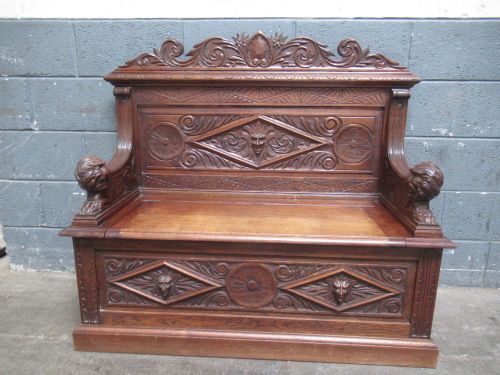
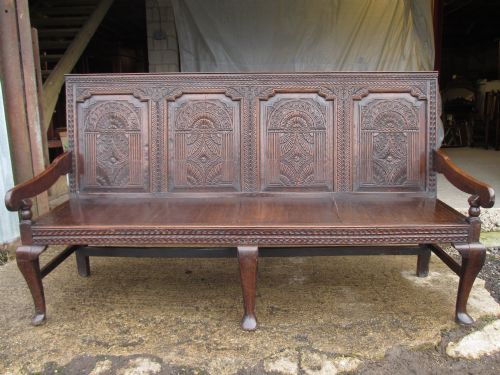
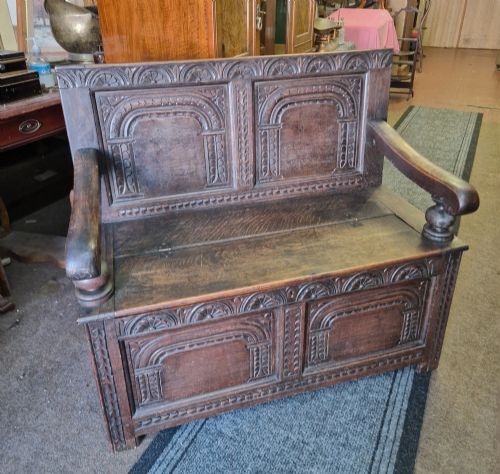
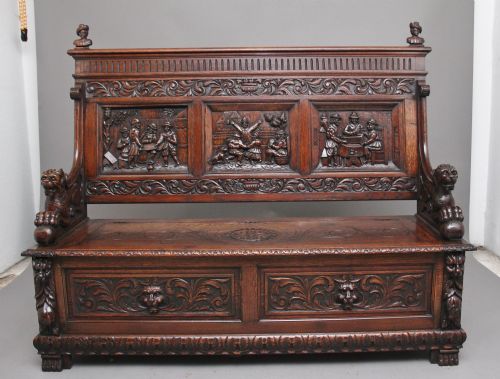
The pieces appearing on this page stretch across multiple centuries, running from early eighteenth century examples through Victorian revivals and Edwardian interpretations. You meet heavy panelled settles, box settles with lift up lids, and carved hall seats displaying distinct period motifs.
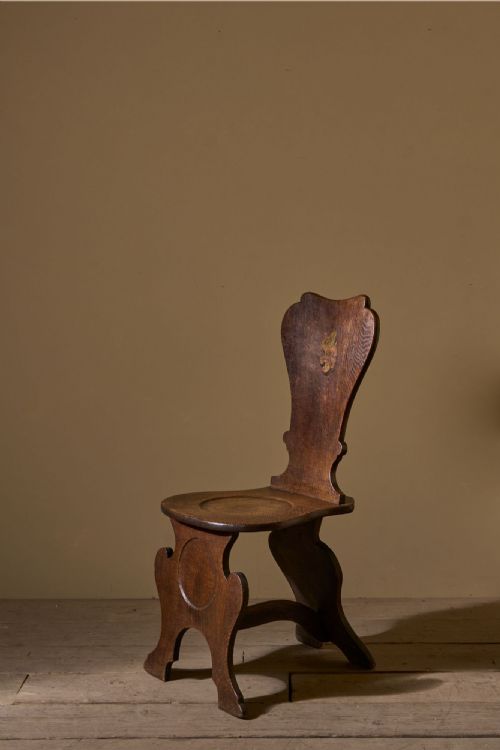
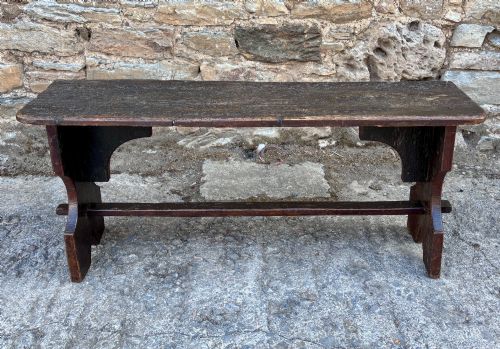
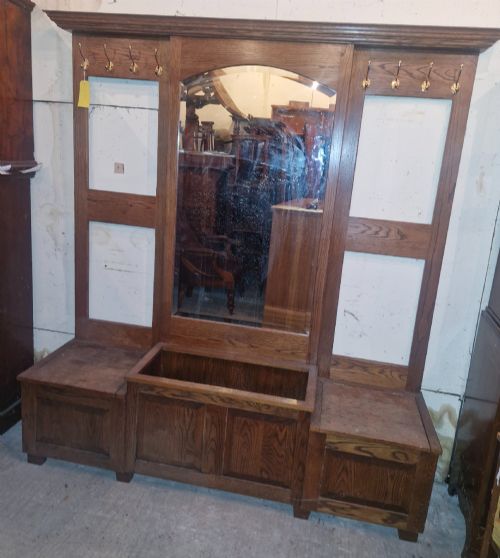
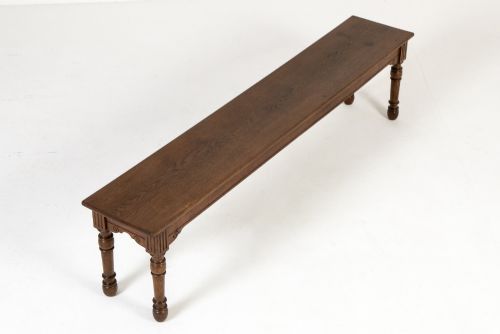
Most variations take the form of high backed benches or settles designed to block draughts near an entrance, often paired with hinged storage beneath the seat. Single hall chairs and multi functional stands also appear, giving options ranging from compact seating to substantial architectural hall furniture.
Materials and construction methods
Cabinet makers relied primarily on solid oak, selected for its dense grain and durability in high traffic entranceways, occasionally supplemented by secondary timbers such as elm. Construction commonly employed traditional mortise and tenon joinery alongside panelled backboards and pegged frames.
Surface ornamentation relied heavily on hand carving, featuring floral patterns, shield backs, and revival styles including Gothic, Jacobean and Renaissance details. Metal elements such as brass mounting, iron hooks and mirror frames were integrated into more complex hall stands and combination units.
Dark Oak Entryway Seat Retail Price Guide 2026
Typical asking prices for dark oak entryway seat among the pieces listed under this phrase on Sellingantiques today, from the lower quarter to the upper quarter. They describe what is for sale here now, not the wider market.
Several pieces double as umbrella stands, proving that past generations lost their wet gear just as easily as we do.
Distinctions in craftsmanship and form
The standard of a dark oak entryway seat rests on the depth and crispness of its carving, the integrity of its timber framing, and the proportion of the overall form. Pieces featuring deeply articulated relief work, original box storage compartments and well balanced structural framing stand apart from simpler utilitarian builds.
Subtleties in historical execution dictate the character of each piece, from the architectural rigour of early panelwork to the exuberant revival styling of later nineteenth century workshops. Integrity of the timber, balanced proportions and the harmonious integration of functional elements such as lift up lids or umbrella stands define the upper tiers of the range.
James Shoolbred & Co
The Dark Oak Entryway Seat Glossary
- Settle
- A wooden bench with a high back, solid arms and often a closed box base beneath the seat, designed originally to keep out draughts in domestic halls.
- Box settle
- A variation featuring a hinged lid on the seat base, offering concealed storage for boots, blankets or everyday items.
- Hall stand
- A tall entryway piece combining a seat with vertical panels, mirror glass, coat hooks and umbrella wells.
- Sgabello
- A light, portable wooden chair with trestle supports and an upright back, frequently used in narrow hallways during the Renaissance and later revival periods.
- Carolean
- A decorative style inspired by the reign of Charles II, characterised by rich scrolling ornamentation, carved crowns and high relief foliage.
Dark Oak Entryway Seat: Frequently Asked Questions
What is a dark oak entryway seat used for?
These pieces provide a practical spot for putting on or removing footwear while offering a strong visual anchor for a hallway or boot room. Many variations incorporate enclosed storage beneath the seat or integrated upright stands for coats and umbrellas.
Their robust timber construction allowed them to withstand heavy daily use in busy entrance spaces over centuries. Today, they serve the same functional purpose while bringing period character to domestic interiors.
How do I identify an eighteenth century settle?
Eighteenth century examples typically display pegged frame construction, heavily panelled backs, and substantial oak boards that show genuine signs of age and wear. The joinery is often hand cut, and the overall proportions are simpler and heavier than later Victorian revival pieces.
Carving on earlier pieces tends to be more restrained or geometric, reflecting the prevailing vernacular styles of the period. Box bases on these pieces generally feature hand wrought iron hinges and substantial internal timber partitions.
Where should I place a hall bench?
A hall bench works best against a clear wall in a spacious entryway, boot room or wide corridor where its architectural back can be fully appreciated. Because many versions feature high panelled backs or attached mirror stands, pairing them with adequate clearance prevents the hallway from feeling overcrowded.
They also function effectively in large reception rooms or landings where additional seating and rustic texture are required. Ensuring the depth of the seat matches the proportions of your hallway is the main consideration for placement.