
Dark Oak Display Shelf
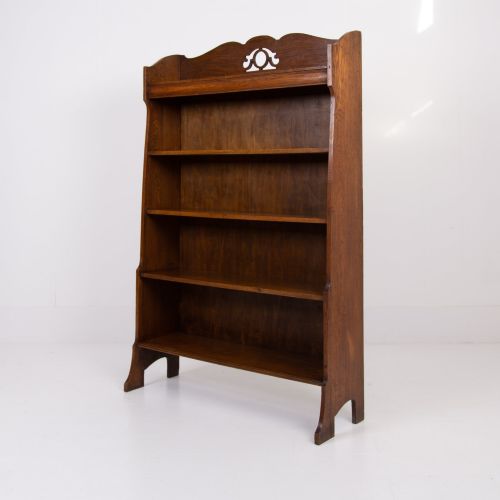
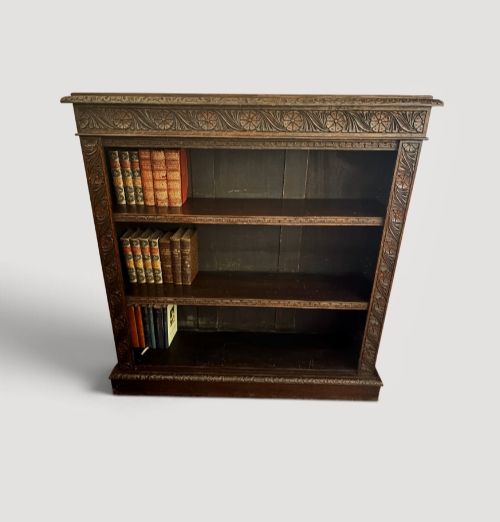
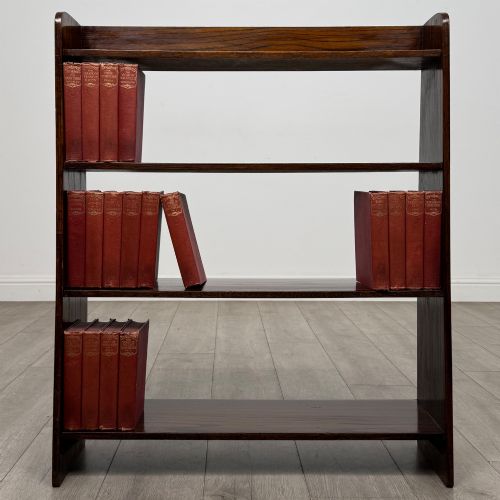
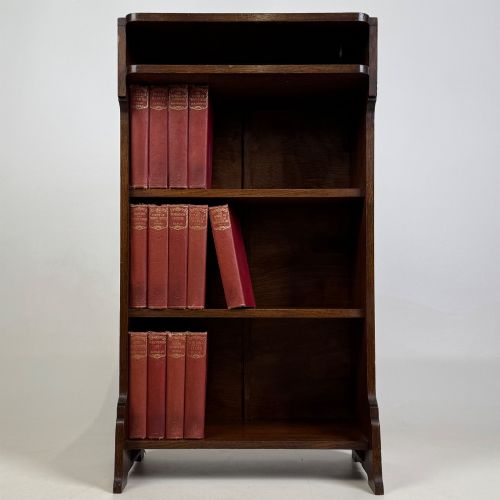
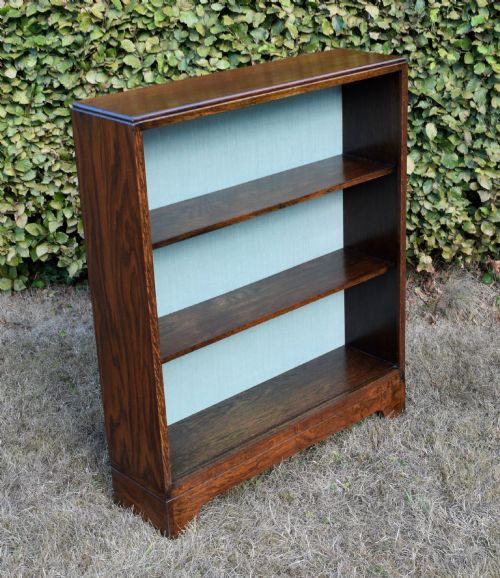
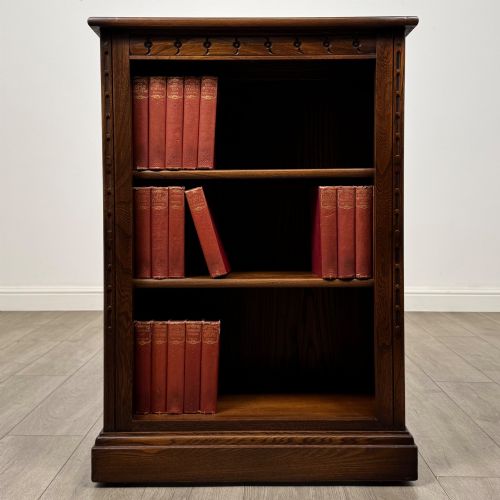
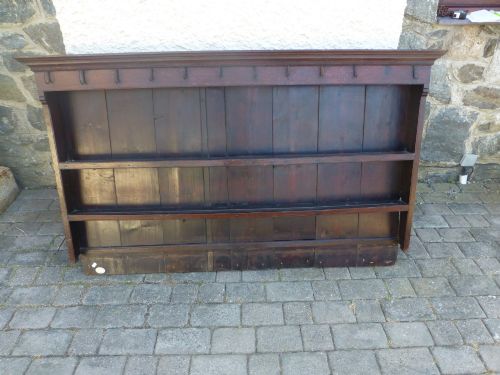
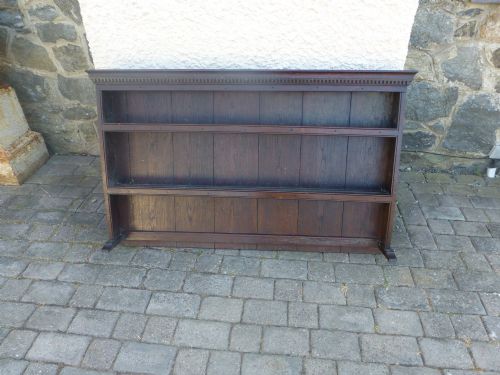
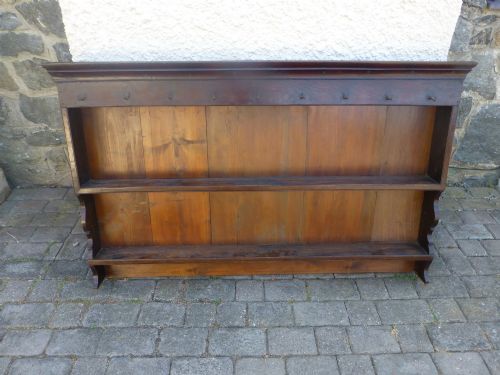
A dark oak display shelf brings sturdy timber and open storage together, offering a practical stage for books and ceramics.

Dark Oak Display Shelf
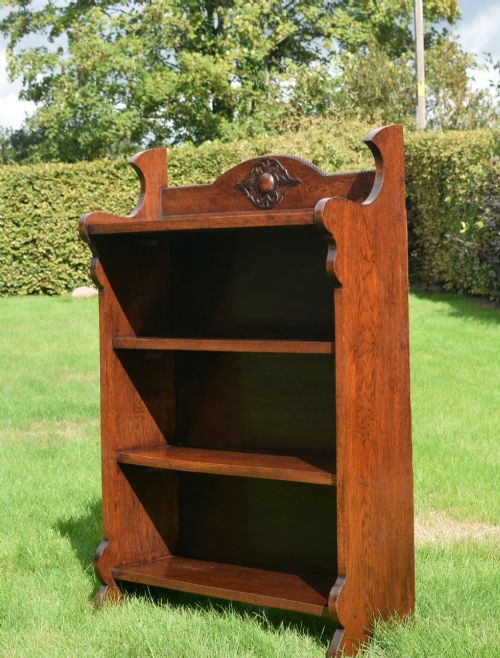
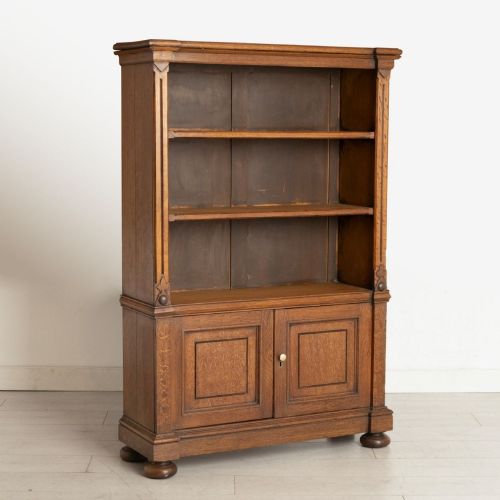
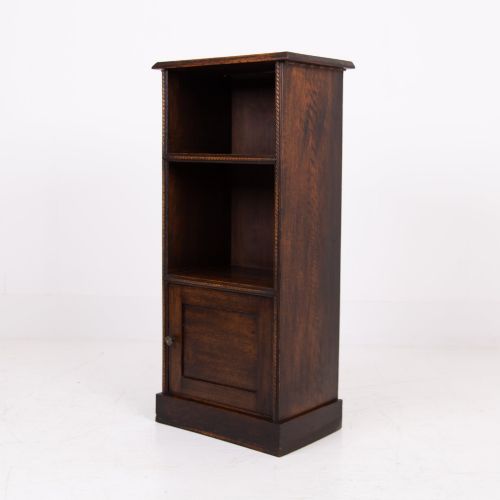
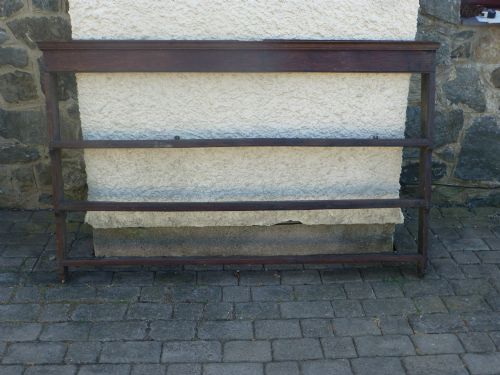
A dark oak display shelf spans several distinct historical forms, appearing most frequently as open bookcases, wall-mounted plate racks, and small standing cabinets. These pieces serve to organise volumes and exhibit prized objects within domestic interiors.
Makers adapted these shelves for varying domestic spaces, producing tall adjustable library bookcases alongside compact wall shelves and corner cabinets. Each variant retains the signature dark oak tone suited to traditional and period rooms.
What varies in quality
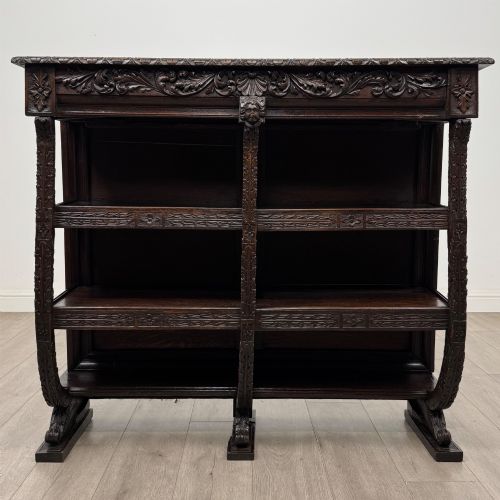
The standard of carving and the selection of timber grain define the upper tier of these pieces, distinguishing robust architectural bookcases from simpler utility furniture. Superior examples display crisp hand-carved ornamentation and well-matched boards.
Hardware choices and structural ingenuity, such as adjustable shelving mechanisms and integrated cupboards, also separate exceptional items from standard workshop output. Finer pieces maintain balanced proportions and uncompromised timber integrity throughout.
Liberty & Co.·John Moyr Smith
The Dark Oak Display Shelf Glossary
- Delft rack
- A wall-mounted wooden shelving unit traditionally designed to display ceramic plates and platters. These pieces often feature grooved plate rails and small flanking cupboards.
- Open bookcase
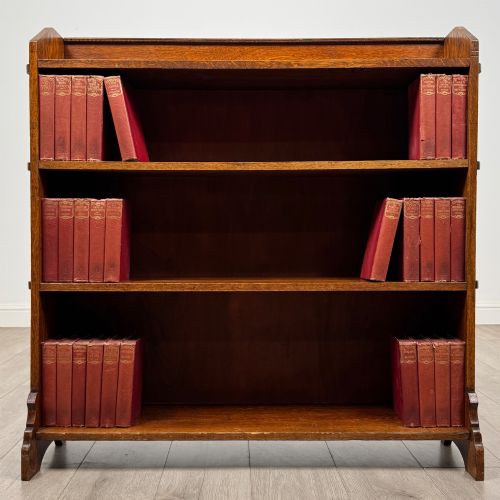
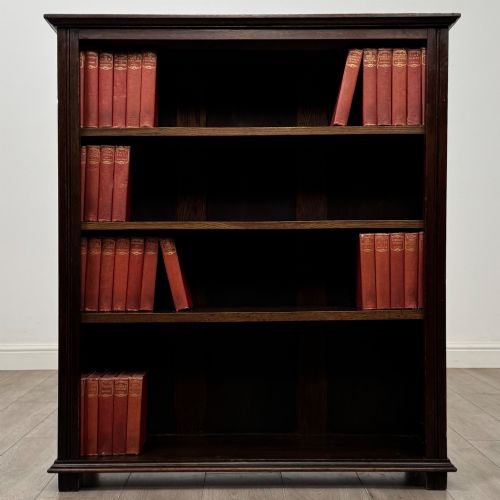
- A piece of freestanding furniture featuring horizontal shelves without front doors. This form allows immediate visibility of book spines and displayed objects.
- Arts and Crafts
- A design movement prioritising traditional craftsmanship, visible construction, and simple forms. Pieces from this tradition often highlight the natural grain of the oak.
- Aesthetic Movement
- A late nineteenth-century style focusing on artistic visual qualities rather than narrative content. Furniture from this period frequently incorporates stylised carved details and contrasting metal hardware.
Dark Oak Display Shelf: Frequently Asked Questions
Where should I place a dark oak display shelf?
These shelves suit studies, living rooms, and dining spaces where their open construction allows easy access to books and tableware. Placing them away from direct heat sources protects the timber from drying out.
Wall-mounted plate racks work well above sideboards or dining tables, while taller bookcases anchor empty wall spaces effectively.
How do I distinguish Edwardian shelves from Victorian ones?
Victorian examples tend to feature heavier proportions, deep dark finishes, and elaborate carved ornamentation. Edwardian pieces often present lighter frames and simpler lines.
Examining the backboards and interior construction methods helps confirm the manufacturing period more accurately.
Can these shelves hold heavy books?
Many nineteenth and twentieth-century bookcases feature thick oak boards and adjustable shelf supports designed for heavy volumes. Checking the depth and thickness of the timber ensures suitability for large collections.
Wall-mounted racks require secure fixings into solid masonry or studs to support heavy ceramics safely.
What is the difference between a plate rack and a bookcase?
Plate racks feature narrow, shallow shelves often equipped with front retaining rails to keep plates upright. Bookcases provide deeper, wider surfaces designed to stack books vertically.
Both forms utilise dark oak but serve entirely different domestic storage functions.