

Dark Oak Dining Set
A dark oak dining set brings substantial timber character and generous seating to a room, spanning rustic farmhouse tables to formal carved revival suites.
Dark Oak Dining Set
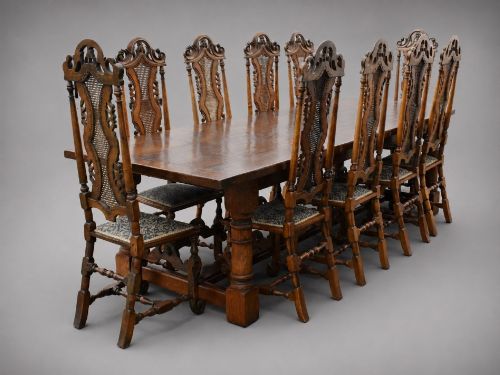
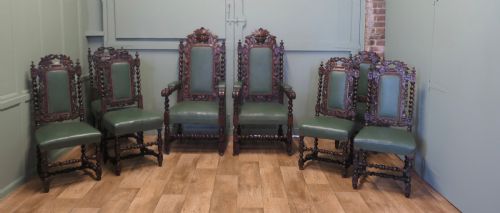
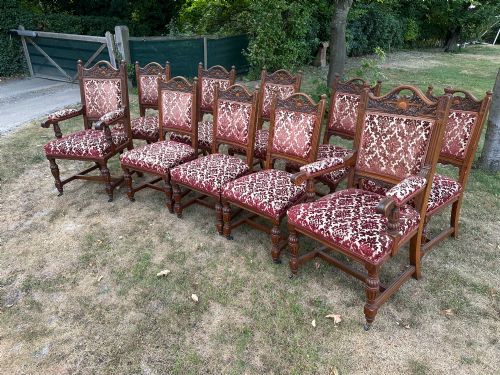
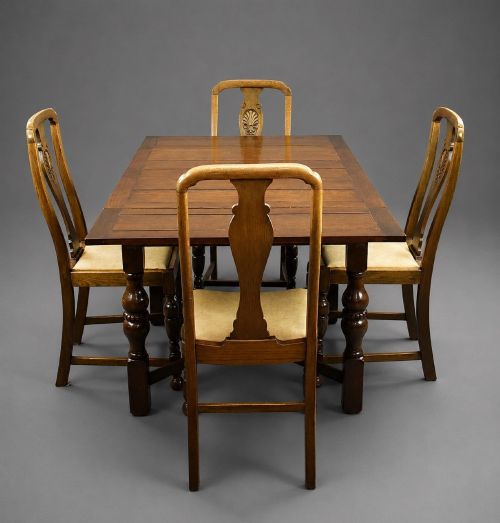
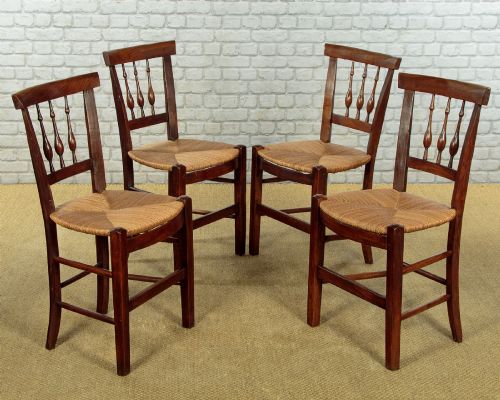
A dark oak dining set typically pairs a substantial timber table with a matching assembly of chairs, ranging from modest four-piece configurations to extensive seating groups of ten or more. These groupings emerge across periods from the seventeenth century through to the interwar decades, reflecting shifting domestic habits in dining arrangements.
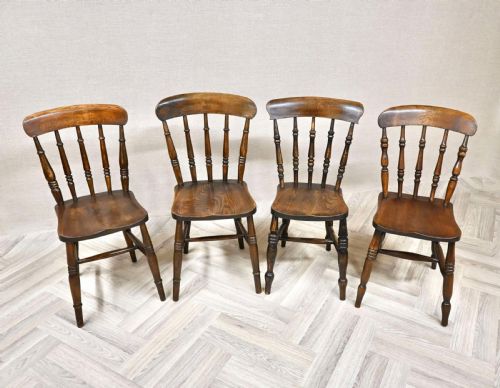
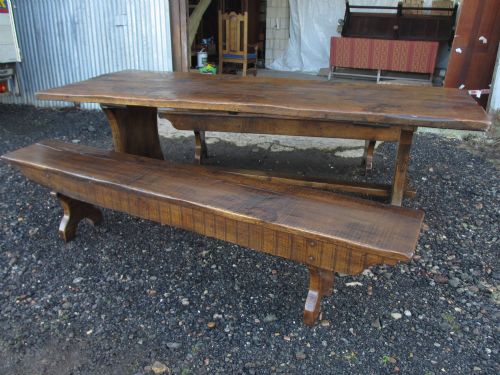
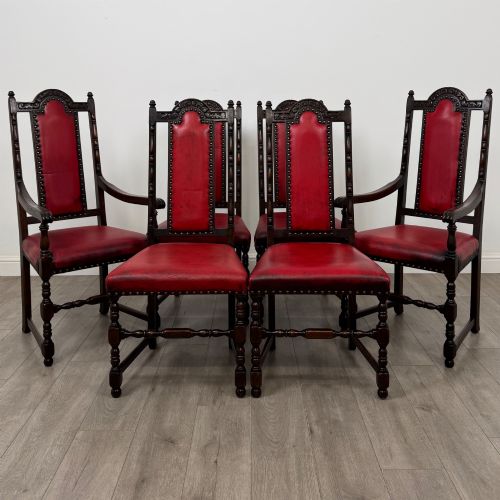
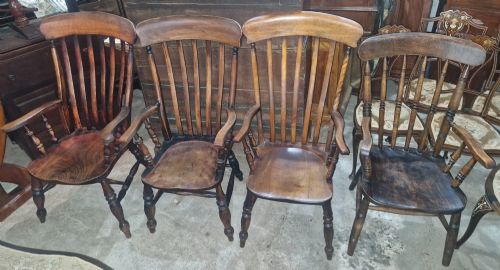
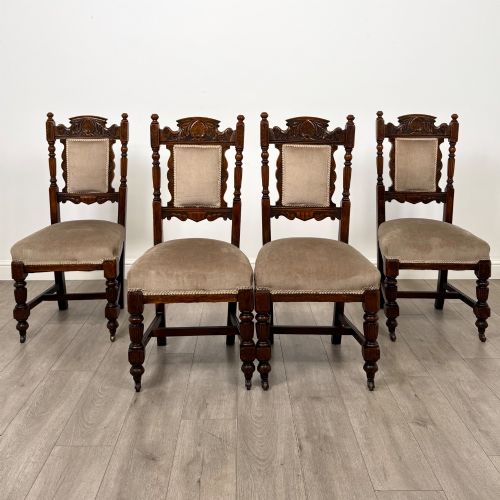
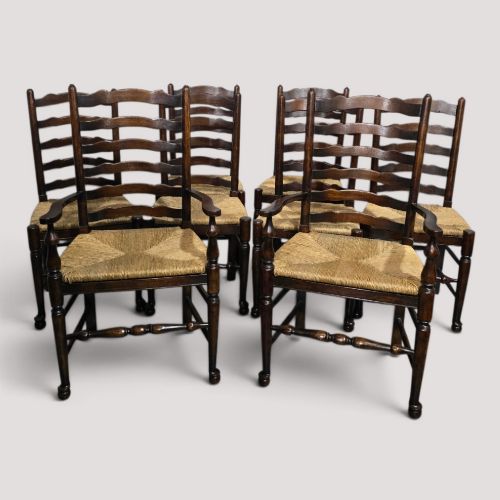
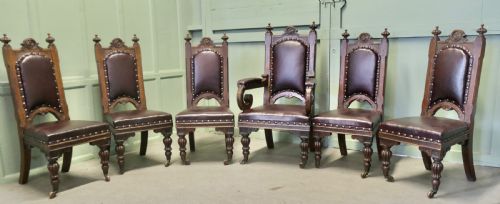
The most common configurations encountered on this page combine sturdy refectory or draw-leaf tables with ladder-back, Windsor, or high-backed revival chairs. Styles draw heavily upon Jacobean, Queen Anne, and Gothic revivals, alongside English country and Arts and Crafts traditions.
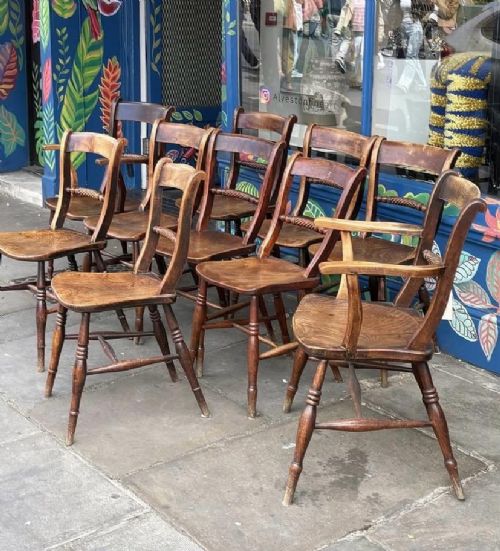
Regional variations appear regularly, including Welsh and Irish forms alongside English country pieces. Buyers frequently encounter harlequin sets where individual chairs share common stylistic traits while displaying subtle variations in their turning or joinery.
Materials and construction
Oak serves as the primary structural timber across every piece, prized for its density, visible grain, and deep natural colour. Secondary woods like elm, beech, and rush frequently appear in seating components, providing contrasting textures and resilient support for everyday use.
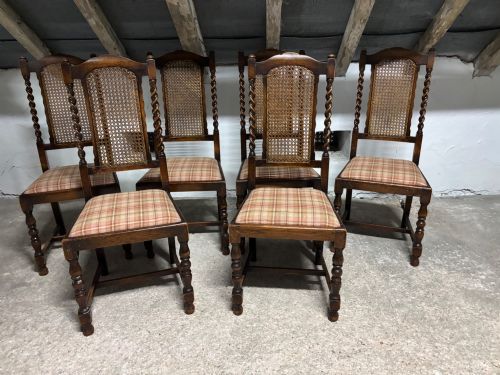
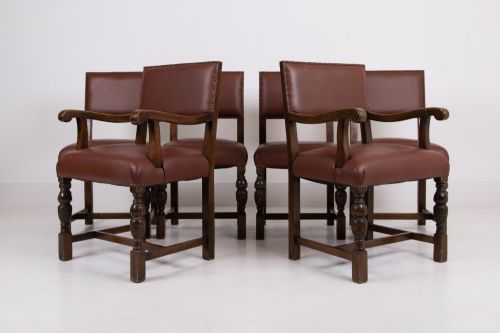
Joinery relies upon traditional pegged mortise and tenon frames, ensuring robust longevity for tables and heavy-use chairs alike. Surface embellishments incorporate hand-carved detailing, barley twist turnings, and pegged joints rather than modern mechanical fasteners.
Current listings feature dark oak dining sets spanning the seventeenth century through to the Edwardian era, incorporating regional farmhouse chairs and formal revival suites.
Distinctions in craftsmanship
Quality reveals itself in the selection and matching of the oak timber itself, where dense grain patterns and quarter-sawn figuring elevate a piece above standard utility furniture. The depth and crispness of carved details, from strapwork panels to elaborate crest rails, demonstrate the skill of the original maker.
Structural integrity depends upon the tightness of the original joints and the condition of supplementary materials such as rush seats, cane panels, or leather upholstery. Uniformity across larger sets of chairs separates purpose-built dining suites from assembled groups brought together at a later date.
The Dark Oak Dining Set Glossary
- Refectory table
- A long, narrow dining table historically used in communal halls and characterised by sturdy legs united by stretchers. These tables provide substantial surface area and prominent timber presence.
- Draw-leaf table
- A table equipped with pull-out leaves stored beneath the main top, allowing the surface area to expand easily for larger gatherings. This clever mechanism preserves a compact footprint when daily entertaining demands less space.
- Barley twist
- A decorative turning technique resembling a twisted rope, carved into chair legs or table supports. This motif appears frequently in seventeenth-century revival furniture.
- Ladder-back
- A chair back featuring multiple horizontal arched slats resembling the rungs of a ladder. These vernacular chairs often incorporate rush or woven seats for kitchen and dining use.
- Harlequin set
- A group of dining chairs that share a unified style, period, or material but display subtle individual variations in their construction. Such collections evolved as sets were gathered or supplemented over time.
Dark Oak Dining Set: Frequently Asked Questions
How do I care for antique oak dining furniture?
Maintain a stable room temperature away from direct heat sources and strong sunlight to prevent the timber from drying out or splitting. Apply traditional beeswax periodically to nourish the wood and preserve its deep, lustrous finish.
Avoid using modern silicone polishes, which build up a greasy film over decades of accumulated patina. Gentle dusting with a dry lint-free cloth is sufficient for routine maintenance.
Can I mix different chair styles with an antique oak table?
Combining different chair styles is a traditional approach that creates a relaxed, collected interior rather than a rigid matching suite. Harlequin sets demonstrate this historic practice by uniting chairs of the same era with complementary silhouettes.
Ensure that the seat heights and arm clearances align comfortably with the underside of the dining table. Matching the timber tone helps bridge minor differences in decorative carving or turnings.
How can I tell an older oak dining set from a later revival piece?
Examine the construction methods and tool marks visible on the underside and interior surfaces of the furniture. Hand-sawn boards, pegged joinery, and irregular timber shrinkage indicate earlier periods of manufacture.
Revival pieces from later centuries often employ machine-cut components and standardised hardware while closely imitating historic styles. The weight of the timber and the character of the surface wear also offer reliable clues to genuine age.