



Dark Oak Coat Stand
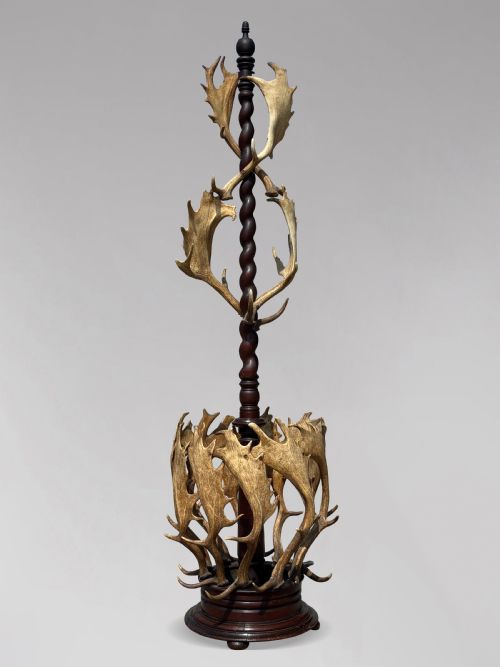
A dark oak coat stand brings heavy grain and grounded presence into a hallway, offering a sturdy place for hats, coats, and sticks.
Dark Oak Coat Stand
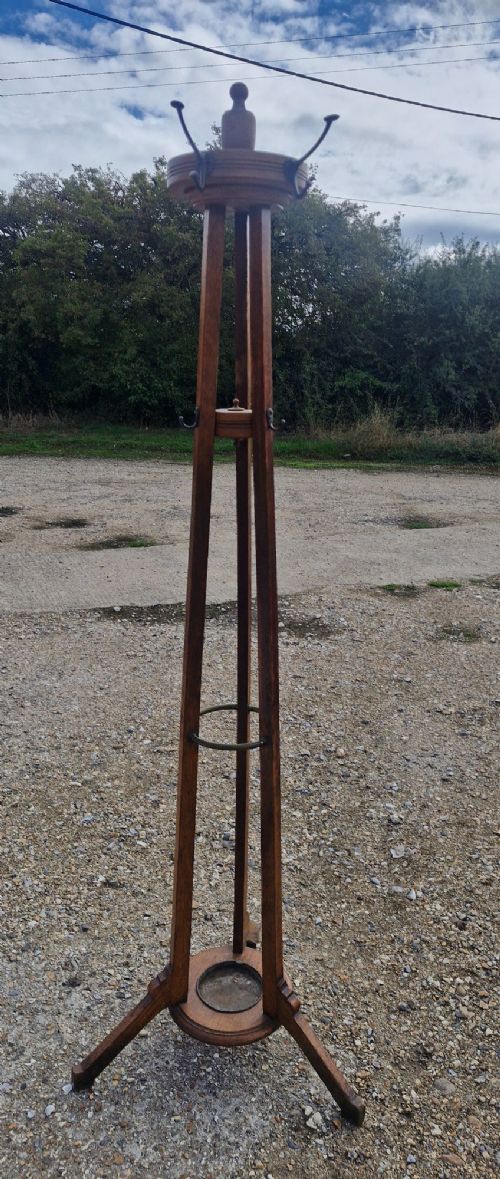
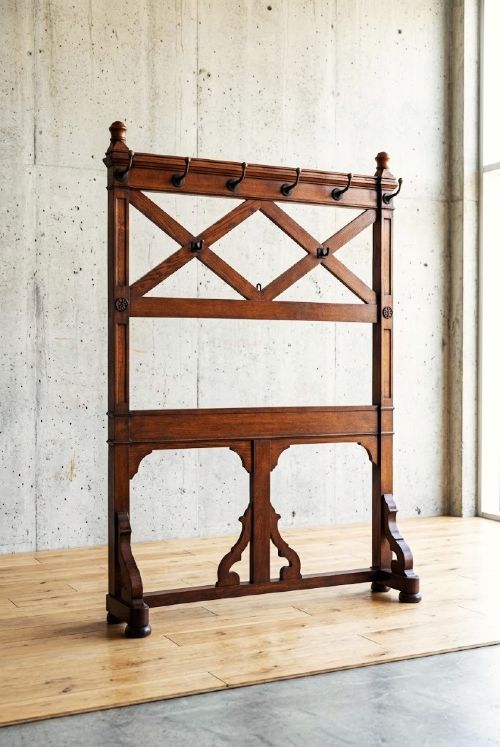
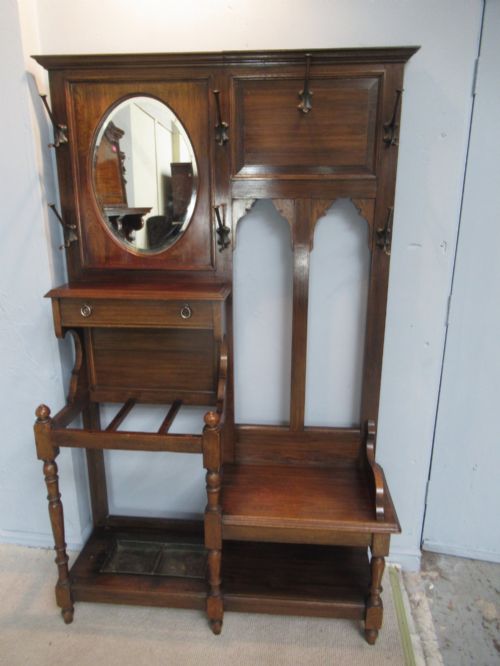
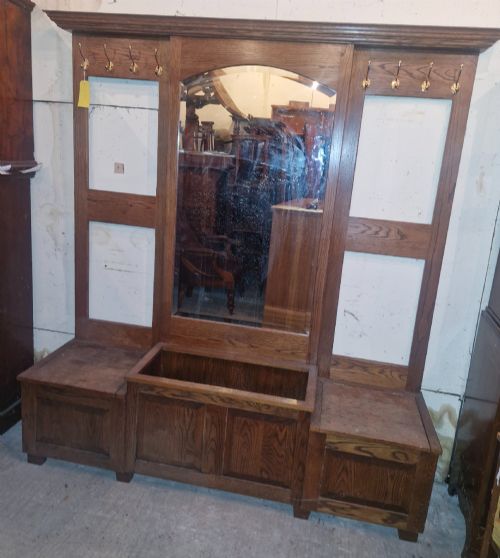
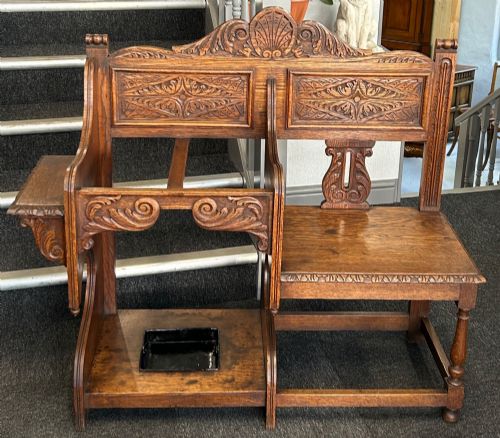
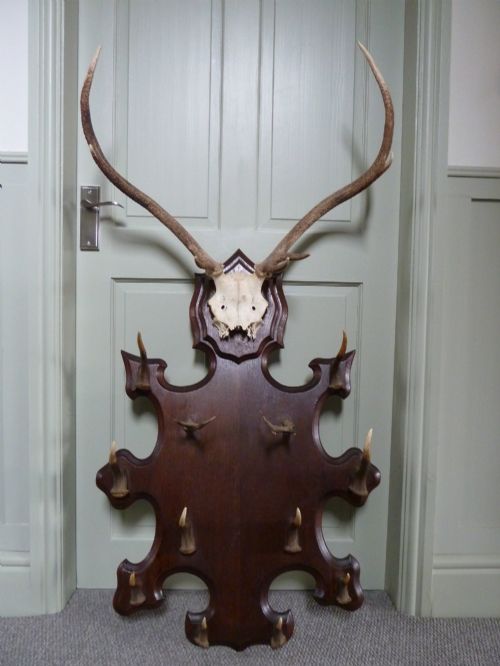
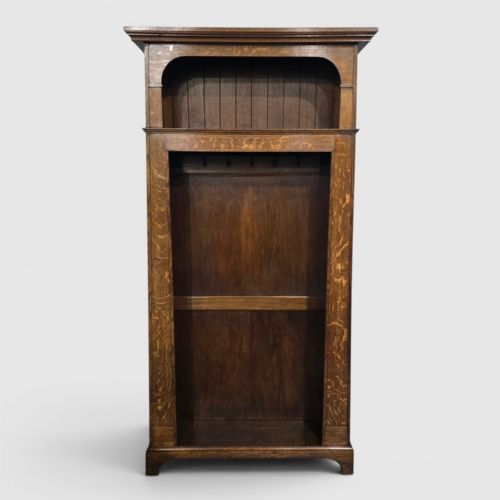
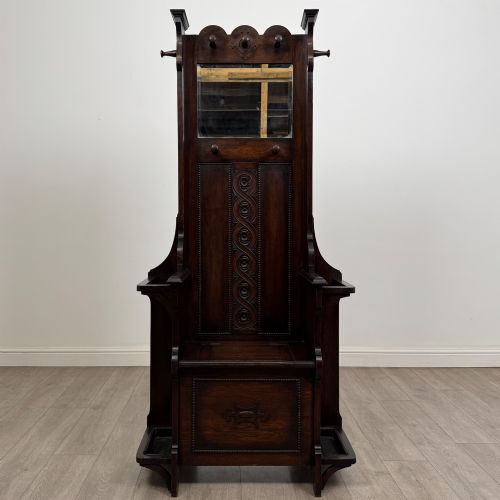
A dark oak coat stand serves as a substantial piece of entrance furniture designed to hold garments and walking gear. These pieces range from upright rotating frames and wall-mounted racks to large combination hall furniture incorporating seats, mirrors, and umbrella wells.
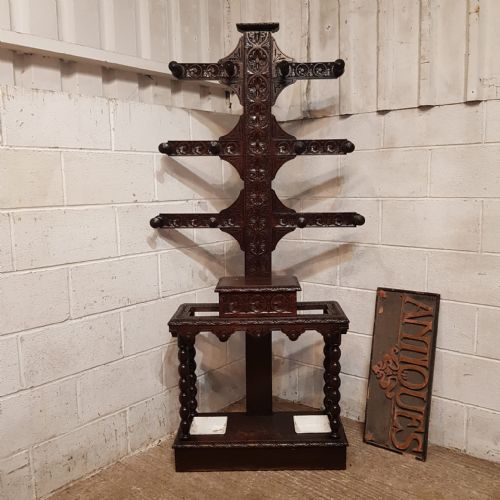
The examples gathered here span the Victorian, Edwardian, and early twentieth-century periods, alongside distinct movements like Arts and Crafts and Gothic Revival. Buyers will encounter both simple wall-mounted rails and monumental carved timber structures intended for country houses.
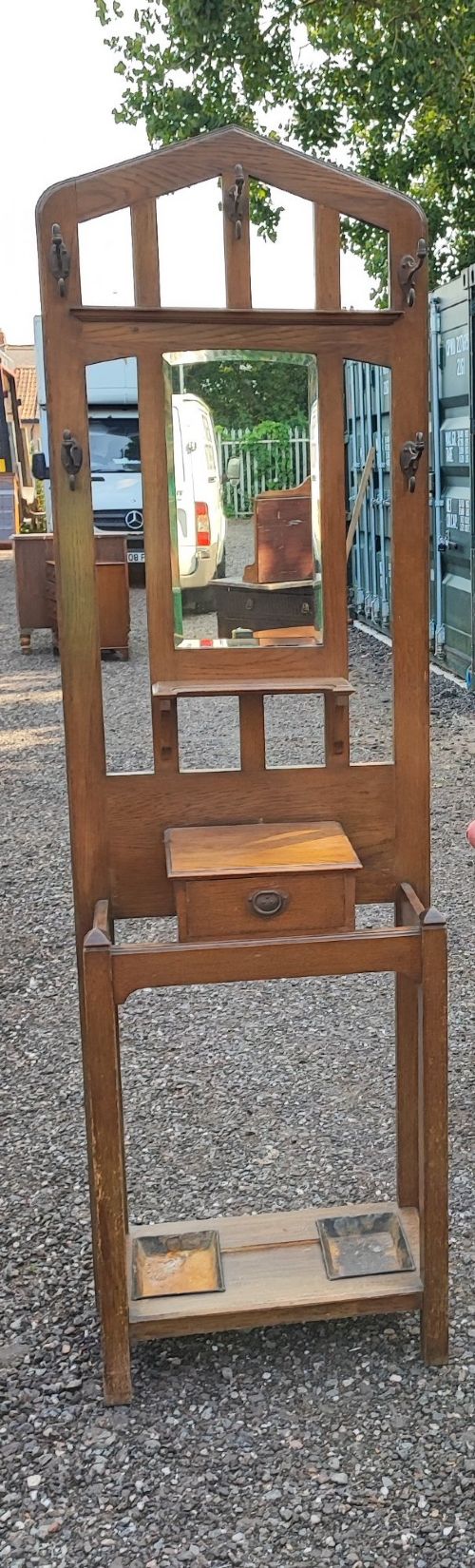
Many of these designs integrate functional accessories such as brass hooks, metal drip trays, and coopered oak barrels bound with brass. The underlying dark oak material unites them, providing a dense, heavy presence suited to high-traffic entryways.
What varies in quality
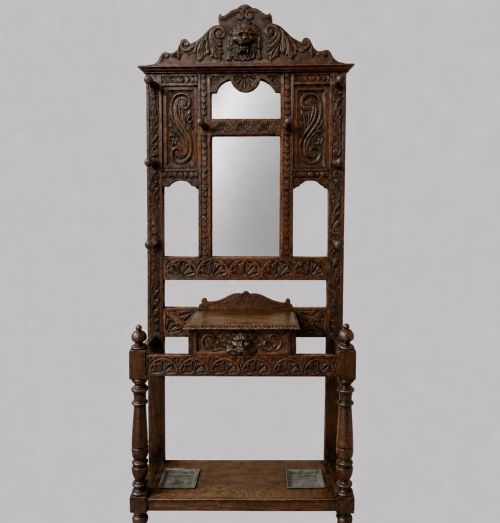
The depth and crispness of the carved ornamentation separate standard production items from exceptional workshop pieces. Deeply undercut foliage and expressive figures demonstrate superior craftsmanship compared to shallow, mechanically assisted milling.
Integration of secondary materials like cast brass hooks, bevelled mirror glass, and heavy metal drip trays dictates the overall integrity of the piece. Superior examples maintain original hardware and stable structural framing without excessive timber shrinkage or loose joints.
The selection includes pieces spanning the Victorian and Edwardian eras, utilising oak, brass, cast iron, and carved wood.
J. Parker of Woodstock·Fischel
The Dark Oak Coat Stand Glossary
- Hallstand
- A piece of entrance furniture combining coat hooks, a mirror, and umbrella storage, often featuring a central bench. It provides a comprehensive storage solution for visitors' outerwear.
- Coopered
- Built using narrow staves of oak bound together with metal hoops, much like a wooden barrel. This technique is frequently observed in cylindrical umbrella and stick stands.
- Gothic Revival
- An architectural and decorative style drawing inspiration from medieval forms, characterised by pointed arches and heavy relief carving. Pieces in this style often display ecclesiastical motifs.
- Greenman
- A sculptural architectural ornament depicting a human face surrounded by or sprouting from foliage. It appears frequently in carved wood on late nineteenth-century hall furniture.
- Arts and Crafts
- A design movement valuing traditional craftsmanship, visible construction, and simple forms over mass production. Pieces from this tradition avoid excessive ornamentation in favour of honest material expression.
Dark Oak Coat Stand: Frequently Asked Questions
How do I secure a tall coat stand?
Tall upright frames require careful placement on level flooring to prevent wobbling under heavy garments. Some designs benefit from discreet wall tethering if the base footprint is narrow.
Heavier multi-functional hall stands distribute weight across a wider base and often incorporate a bench or heavy umbrella well for natural stability.
Where should I place a hall stand?
These pieces suit entrance halls and corridors where visitors remove outdoor wear. Adequate clearance allows coats to hang freely without crowding passageways.
Consider the position of natural light sources to make the best use of integrated mirrors and polished brass fittings.
How do I maintain dark oak timber?
Regular dusting with a dry cloth keeps the surface clean, while occasional application of traditional beeswax feeds the dark timber. Avoid placing solid wood furniture near direct heat sources to prevent splitting.
Protect the base from damp walking sticks by ensuring metal or ceramic drip trays are emptied and dried regularly.
How can I date a piece?
Dating relies on stylistic clues, hardware types, and construction methods. Victorian pieces often feature heavy, elaborate carving, whilst Edwardian examples tend toward lighter proportions and simpler linear frames.
Examining the fixings, screw types, and backboards provides further indication of whether a piece originates from the mid-nineteenth century or the early twentieth.