
Dark Oak Carved Chair
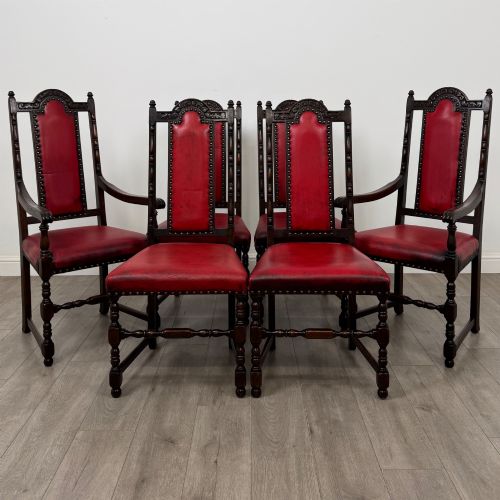
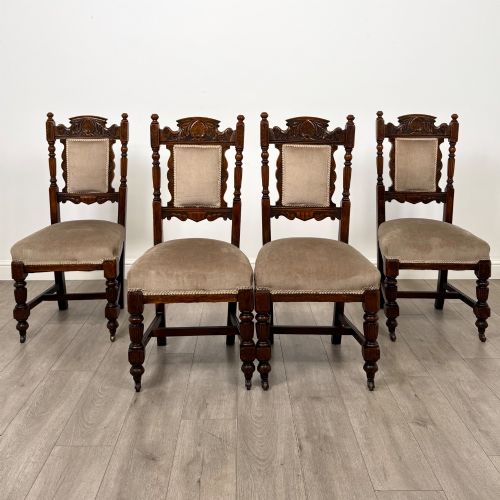
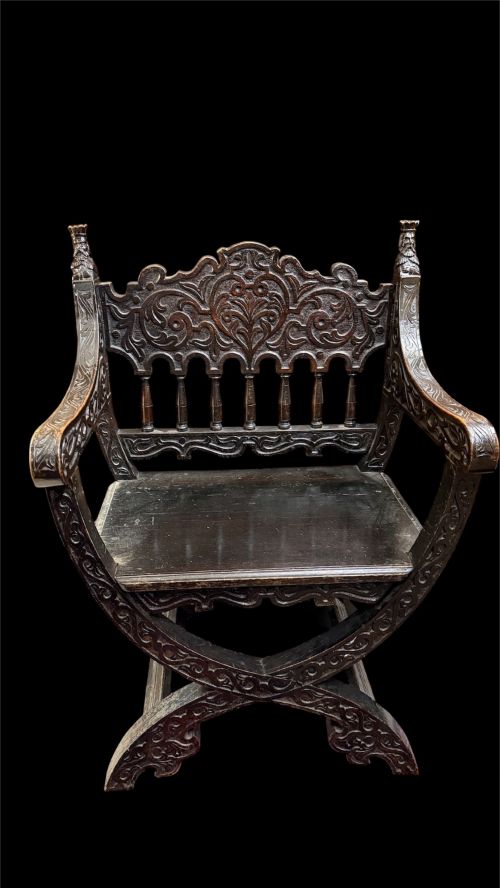
A dark oak carved chair brings centuries of timber and chisel work into a room, offering deep grain and sturdy joinery.
Dark Oak Carved Chair
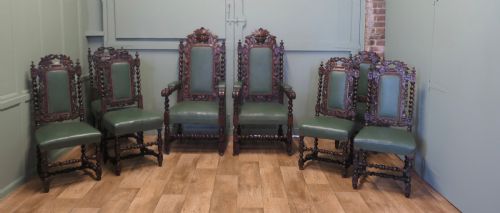
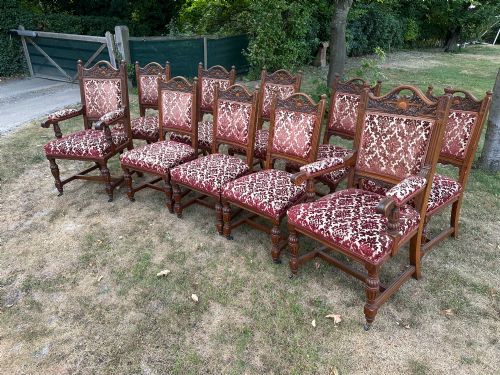
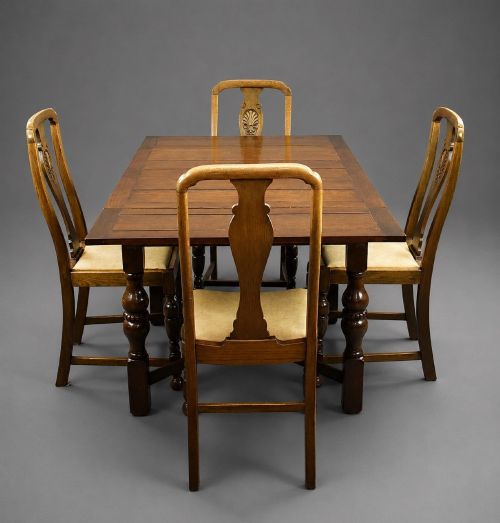
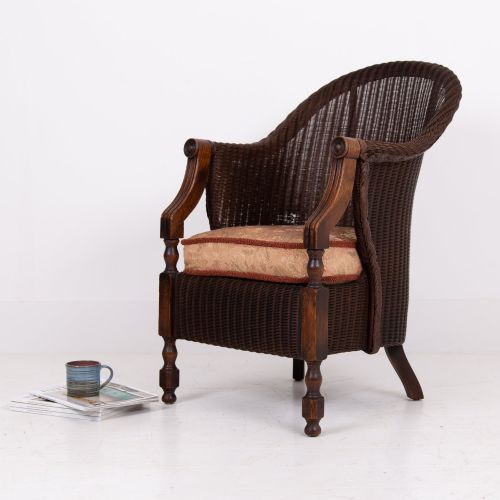
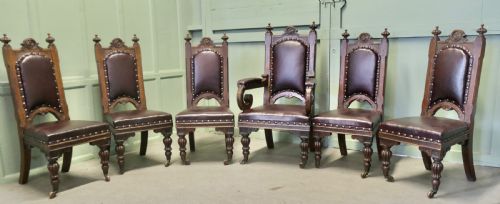
A dark oak carved chair encompasses everything from tall dining sets and heavy wainscot armchairs to slender hall seats and rocking chairs. Buyers seeking a dark oak carved chair will frequently encounter nineteenth-century revival pieces alongside genuine seventeenth-century examples.
The selection ranges across armchairs, side chairs, and desk chairs, often found in matched sets or as single statement pieces. Origins stretch across English, Scottish, and continental workshops spanning the sixteenth century to the Edwardian period.
Materials and Construction
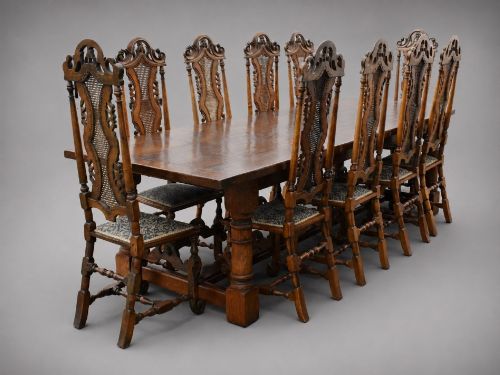
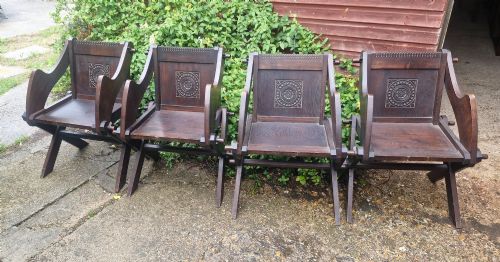
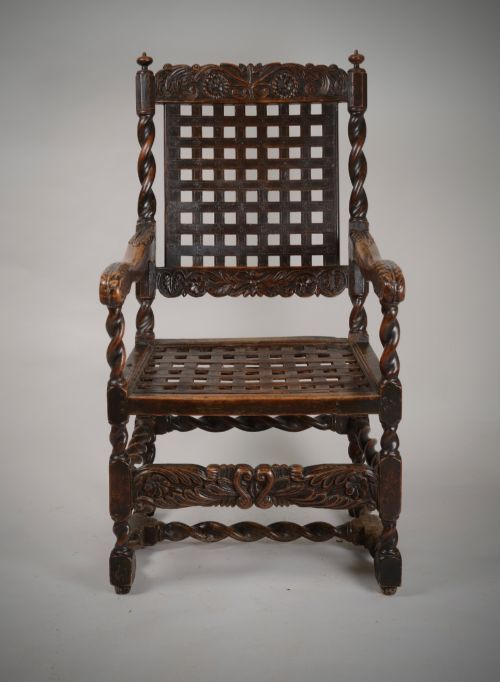
Makers built these pieces primarily from solid oak, sometimes combining elm or walnut, joined with traditional mortise and tenon methods. Surfaces received deep carving in relief, panel backs, and occasional turning such as barley twist supports.
Seating areas often integrated timber panels, cane work, or rush, while later examples incorporated upholstery in fabric, leather, or velvet. Details such as brass tacks and inscribed woodwork complete the construction.
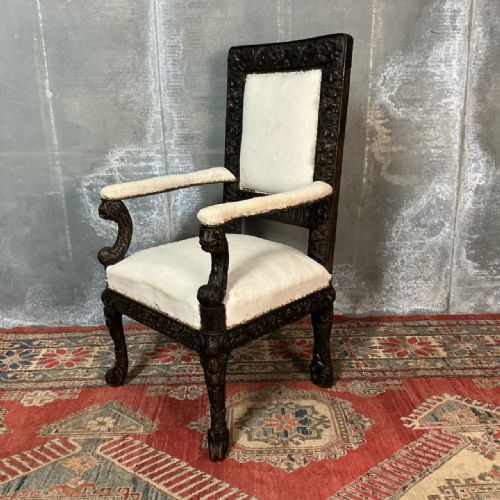
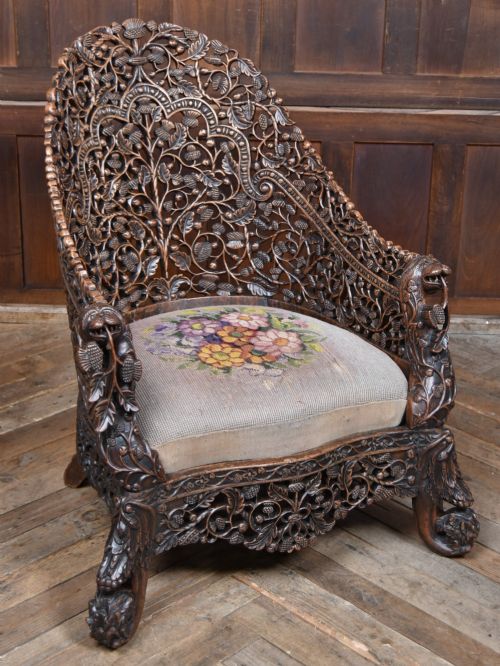
One stubborn nineteenth-century armchair stands ready with lion monopodia feet after Thomas Hope, ensuring your parlor guards itself.
Craftsmanship and Proportion
Quality rests in the crispness of the chisel work and the depth of the timber's natural patina rather than surface polish alone. Superior examples maintain strict architectural balance and tight joinery across arms, legs, and carved backs.
The integration of original structural elements against later replacement parts distinguishes finer survivals. Weight, timber density, and the harmony of the carving define the upper tier of these pieces.
john Taylor of Edinburgh
The Dark Oak Carved Chair Glossary
- Wainscot chair
- A heavy wooden armchair from the sixteenth or seventeenth century featuring a panelled back and solid seat. These pieces represent early joined furniture traditions.
- Barley twist
- A turned wooden column resembling a twisted rope, popular in seventeenth-century furniture and revived in later periods. This technique added vertical movement to chair legs and stretchers.
- Sgabello
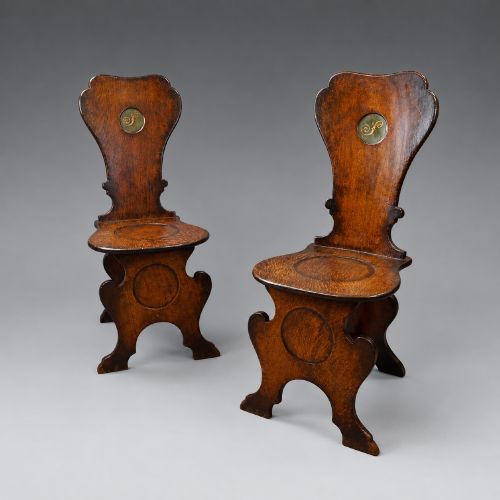
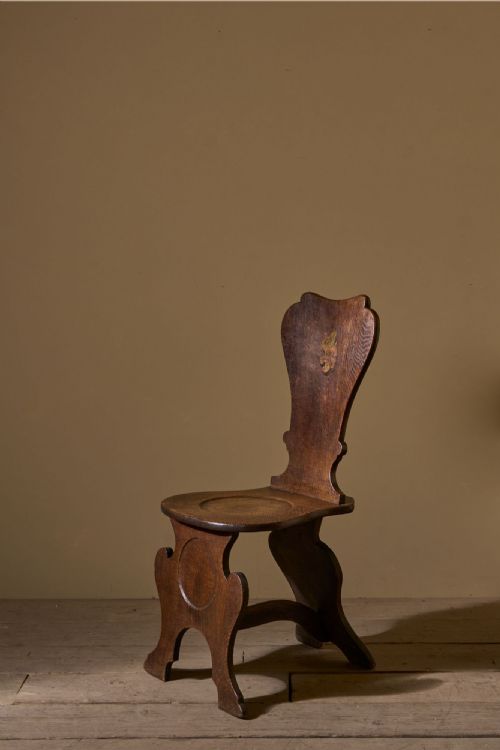
- A Renaissance chair style with a high back and solid trestle supports instead of legs. They functioned primarily as hall seating in grand houses.
- Bergere
- An enclosed upholstered armchair with exposed wooden framing and cane sides. The style provides comfortable seating while retaining visible woodwork.
Dark Oak Carved Chair: Frequently Asked Questions
How do I identify a seventeenth-century chair?
Seventeenth-century examples display pegged joints, hand-split oak panels, and deep patination developed through centuries of handling. The timber often shows tool marks unique to early carpentry.
Construction methods rely heavily on mortise and tenon joinery without modern metal fasteners. The weight and rigidity of the oak remain distinct from later revival pieces.
Can I use these chairs daily?
Most sturdy oak chairs accommodate regular use provided the joints remain tight and stable. Dining chairs and armchairs from the nineteenth and twentieth centuries suit everyday seating.
Early seventeenth-century items require more care due to age and dried timber. Placing them away from direct heat sources protects the original wood and joins.
What is a wainscot chair?
A wainscot chair is a heavy wooden armchair constructed with panelled backs and solid wooden seats. They originated when oak was the primary material for domestic joinery.
These pieces were status symbols in early households, often placed at the head of a table. Their robust frames have allowed many to survive in working condition.
How do I clean dark oak furniture?
Dust surfaces regularly with a dry, soft cloth to prevent particle accumulation. Avoid harsh chemical cleaners that strip the historic wax and natural patina.
Occasional application of quality beeswax maintains the moisture in the timber. This preserves the deep tone characteristic of aged oak.