

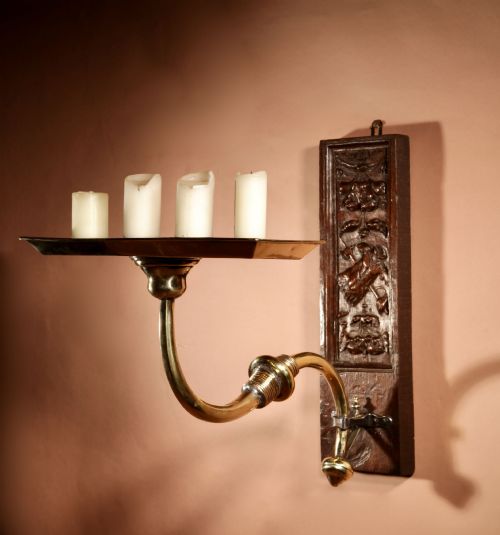
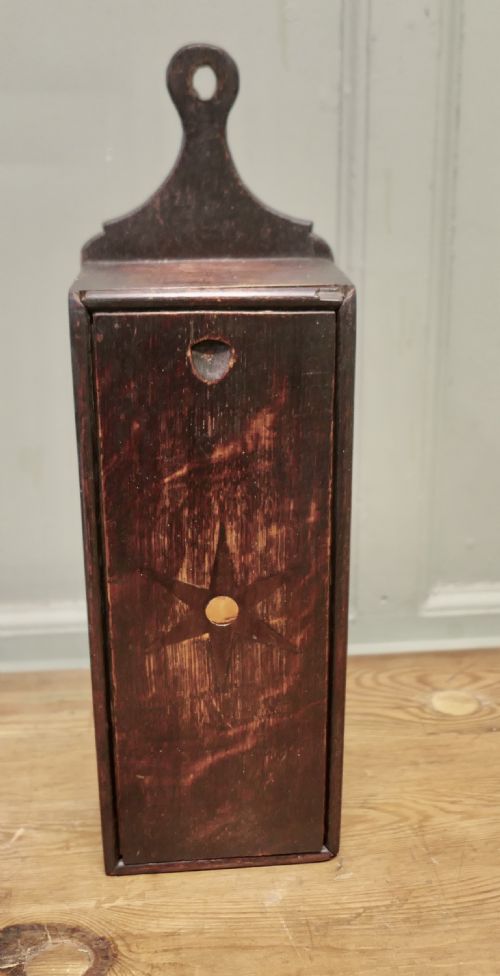


Dark Oak Candle Holder
These dark oak candle holder examples bring centuries of timber and turned grain into rooms that need a solid, tactile light source.
Dark Oak Candle Holder
A dark oak candle holder combines heavy timber with practical illumination, appearing across periods from the eighteenth century through the Edwardian era. You will encounter table candlesticks alongside wall-hanging designs and candle boxes.
The prevalent forms on this page include pairs of turned barley twist candlesticks and hand-carved pieces showing distinct regional or folk characteristics. Many incorporate brass nozzles or prickets to secure the taper safely.
Origins stretch from the George III style down to nineteen-twenties English workshop production, utilising hardwoods with deep, aged patinas. Each piece reflects the interior lighting needs of its specific decade.
Materials and construction
Makers utilised solid oak and assorted hardwoods, often shaping the timber on a lathe to create open barley twist stems and turned profiles. Iron and brass components were frequently integrated as drip pans, sockets, or wall brackets.
Carving was executed by hand, resulting in detailed folk art figures or subtle geometric enrichment on the shaft and base. The wood was finished to highlight the natural grain, acquiring darkness and depth through handling over generations.
Dark Oak Candle Holder Retail Price Guide 2026
Typical asking prices for dark oak candle holder among the pieces listed under this phrase on Sellingantiques today, from the lower quarter to the upper quarter. They describe what is for sale here now, not the wider market.
One exceptional folk art pair depicts poachers carrying game down the length of the wooden stem.
Quality differences
The distinction between standard workshop output and superior examples lies in the sharpness of the hand-carving and the balance of the turned profile. Barley twist stems show greater finesse when the pitch is even and the timber is dense.
Integration of secondary metals also dictates standard, as fitted brass bobeches and secure wall mountings require precise metalworking. Condition of the timber surface, free from clumsy modern repairs, preserves the integrity of the piece.
The Dark Oak Candle Holder Glossary
- Barley twist
- A helical turning resembling a twisted rope, frequently utilised on the stems of wooden candlesticks during the Edwardian period and nineteen-twenties.
- Pricket
- A sharp metal spike projecting upwards from the centre of a drip pan to secure the base of a candle.
- Bobeche
- A small collar or pan fitted below the candle nozzle to catch melting wax before it reaches the wooden stem.
- Folk art
- Utilitarian objects shaped by non-professional makers, often featuring vernacular carving styles and unconventional sculptural details.
- Wall sconce
- A lighting fixture designed to be fixed to a vertical surface, projecting a candleholder forward into the room.
Dark Oak Candle Holder: Frequently Asked Questions
How do I date an oak candlestick?
Dating relies on combining the turning style, the metal fittings, and the tool marks visible on the timber. Earlier pieces show hand-finished surfaces, whilst later twentieth-century examples display more uniform machine working.
Examining the base and the wear around the candle socket reveals how long the timber has been exposed to handling and heat.
Are these candle holders safe to use?
Most antique holders accommodate standard taper candles, though modern safety requires watching the flame as it approaches any wooden or brass components. Ensuring the candle sits firmly in the socket prevents movement.
Many collectors use them with modern drip-catching inserts to protect the historical timber from wax damage.
What is a pricket candle holder?
A pricket holder uses an upright spike instead of a socket to impale the base of the candle. This style predates standard cylindrical sockets and appears on older ecclesiastical and domestic pieces.
Pairing a pricket with a wider drip pan protects the supporting oak shaft from falling wax.
How should I clean dark oak?
Maintenance requires only a soft, dry cloth to remove dust from the carved grain and turned sections. Avoid harsh modern polishes or water, which can damage the aged patina of the hardwood.
Occasional application of specialist wax helps nourish the timber without clouding the dark finish.