





Dark Navy Carpet
These Persian and Caucasian floor coverings bring deep indigo tones to any room, offering the rich textures of woven wool.
Dark Navy Carpet
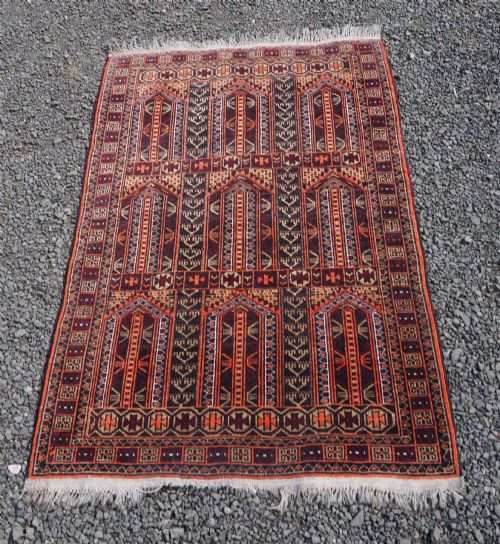
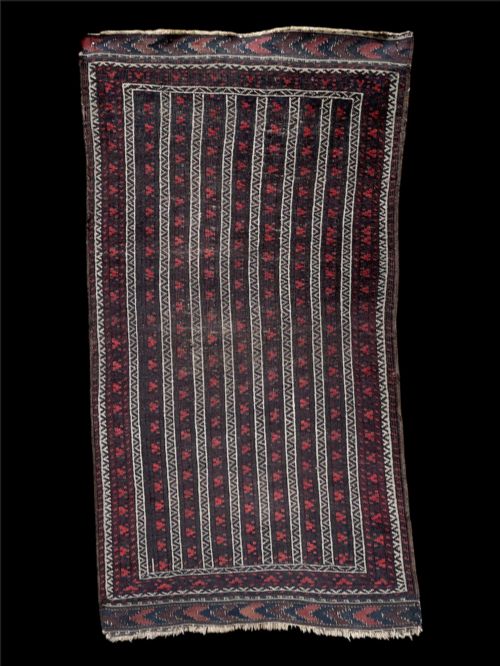
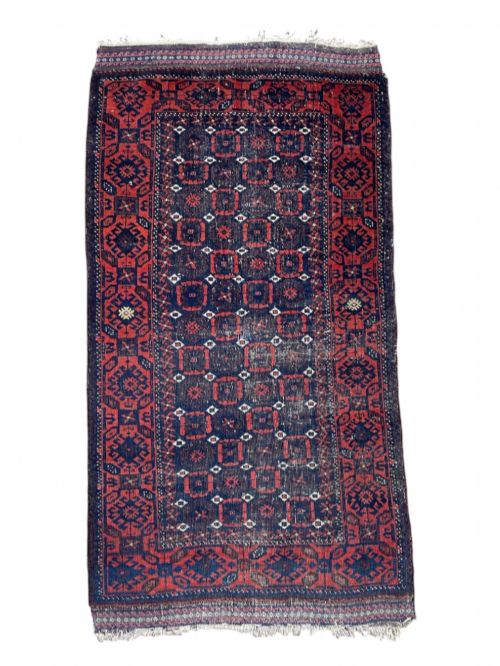
A dark navy carpet selection encompasses antique village and tribal woven floor coverings featuring deep indigo grounds. Buyers searching this phrase meet nineteenth and early twentieth century room-sized carpets alongside smaller runners and prayer mats from Persian and Caucasian regions.
The inventory on this page ranges from nomadic Baluch and Qashqai village weavings to room-sized Mahal and Tabriz carpets. These floor coverings bridge formal workshop production and tribal artistry, united by their dark blue foundational colour.
How They Were Made
These textiles utilise natural wool pile knotted onto sturdy cotton or wool foundations. Artisans worked on vertical or horizontal looms, employing hand-spun yarn dyed with plant extracts to achieve deep navy tones.
Weaving techniques combine symmetrical and asymmetrical knots depending on the tribal or workshop origin. The resulting structure provides density and resilience for daily floor use.
Listings span periods from the nineteenth century through the 1930s, constructed primarily from wool and cotton materials.
What Varies in Quality
Quality rests upon knot density, the clarity of drawing, and the depth of the indigo dye. Tighter foundations and finely spun wool separate workshop masterpieces from simpler village floor coverings.
The complexity of design variants, such as Herati or Mina Khani patterns, distinguishes exceptional weaving. Hand-spun wool retains saturation differently than machine-spun yarns, affecting how light interacts with the dark navy pile.
The Dark Navy Carpet Glossary
- Mihrab
- An arch-shaped design element found in prayer rugs that points toward Mecca. This motif often frames the central field of the textile.
- Herati
- A repeating botanical pattern composed of a central rosette enclosed by leaves. It appears frequently across Persian and Caucasian carpets.
- Mina Khani
- A symmetrical all-over pattern of daisy-like flowers linked by delicate vines. This design frequently spans the dark navy field of tribal weaves.
- Pile
- The vertical surface of the carpet formed by the cut ends of knots. Wool pile provides both cushioning and durability.
Dark Navy Carpet: Frequently Asked Questions
How do I clean an antique navy carpet?
Professional dusting and specialist hand-washing preserve wool pile and natural indigo dyes. Avoid harsh chemical treatments that strip natural lanolin from the fibres.
Regular gentle vacuuming without a beater bar removes surface grit before it settles into the wool foundation.
Are these carpets suitable for heavy foot traffic?
Wool possesses natural resilience that handles hallway runners and living room placement with ease. Dense construction distributes weight across the foundation threads.
Placing an appropriate underlay beneath the floor covering prevents slipping and reduces fibre friction against hard floors.
How do I distinguish tribal from workshop rugs?
Tribal weavings display geometric motifs and asymmetrical designs created from memory by nomadic groups. Workshop pieces exhibit precise symmetrical curves and predetermined cartouche borders.
Regional characteristics help identify specific groups such as Baluch or Qashqai weavers.
What causes variations in navy blue tones?
Natural indigo extraction produces shifts in shade known as abrash. These tonal variations occur between dye batches and add depth to the dark navy field.
Age and exposure to light gently soften the wool pile over decades of domestic use.