

Dark Marble Side Table
A dark marble side table brings a solid surface and polished stone top into a room, favoured for both utility and decorative presence.

Dark Marble Side Table
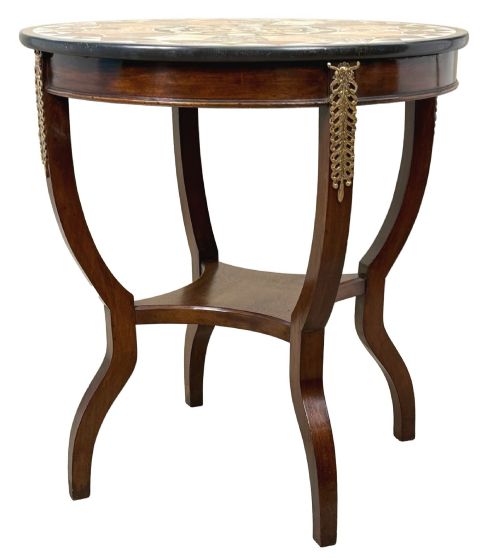
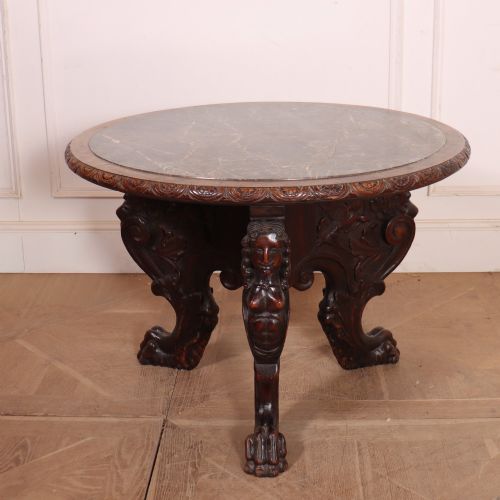
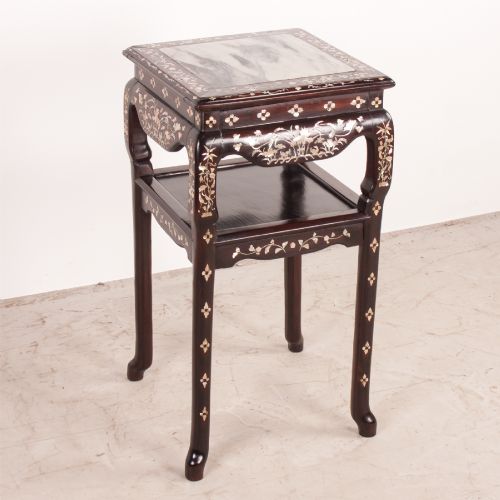
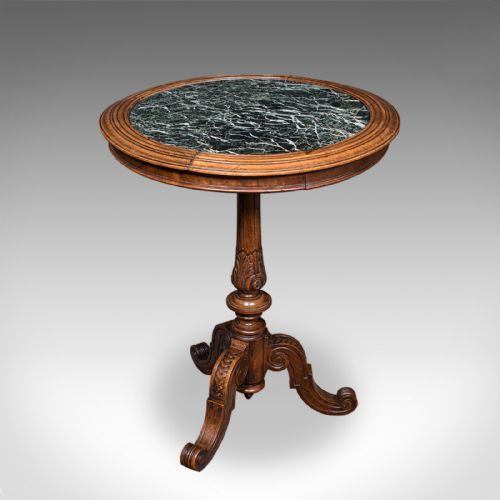
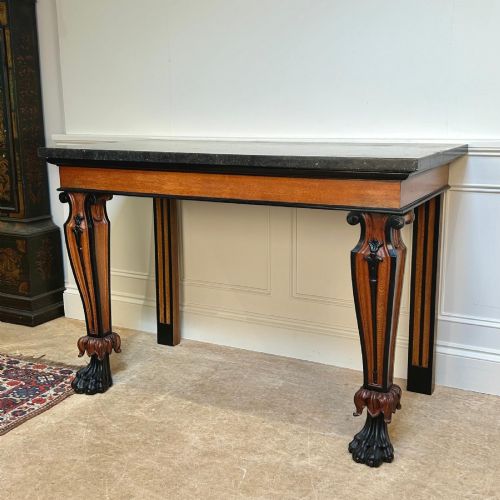
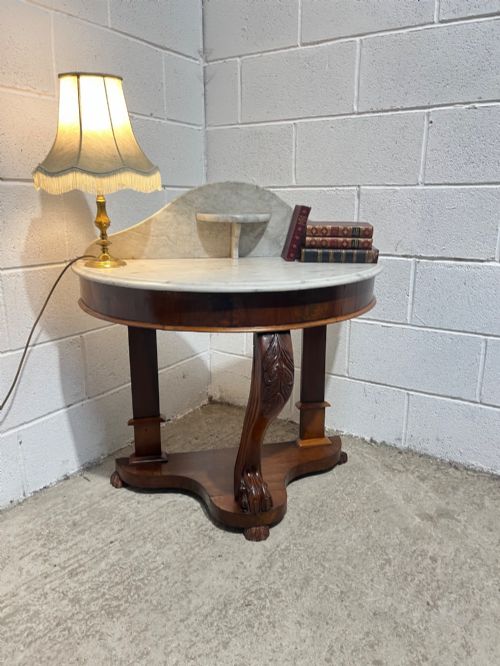
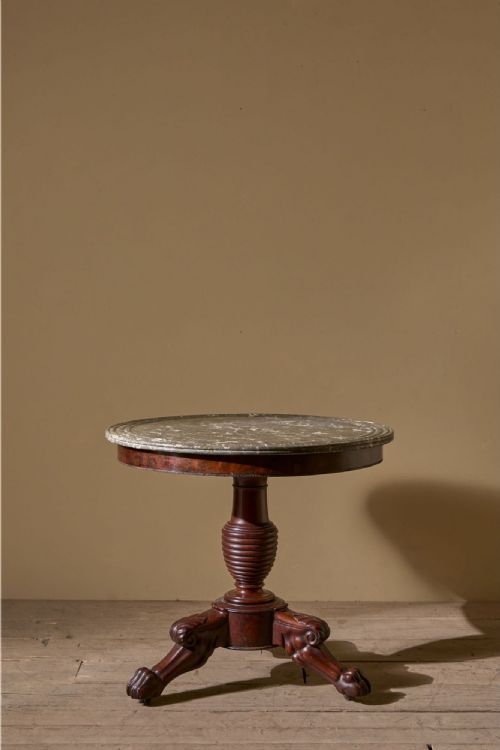
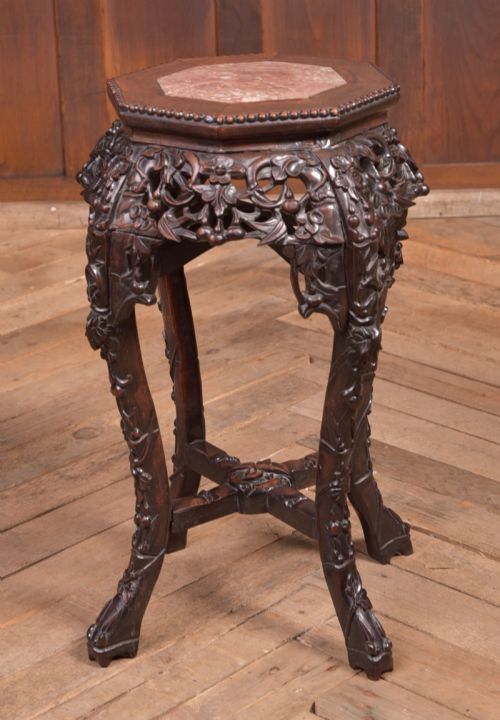
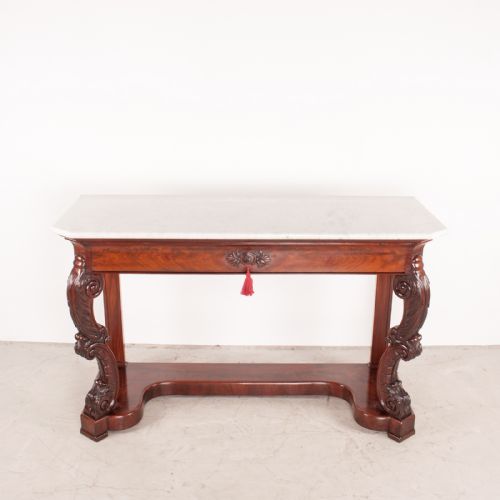
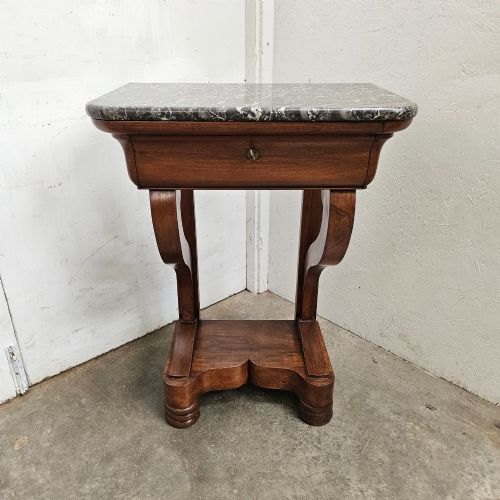
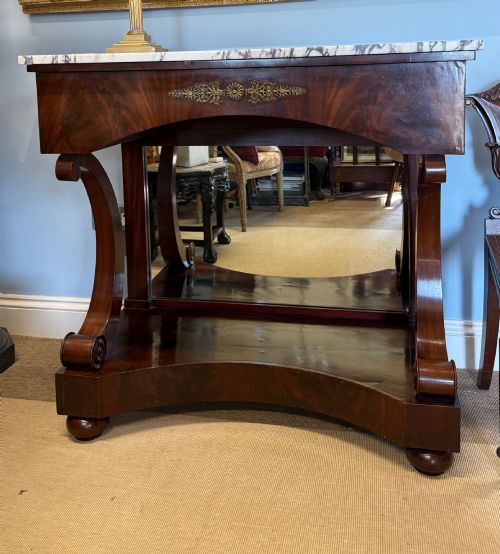
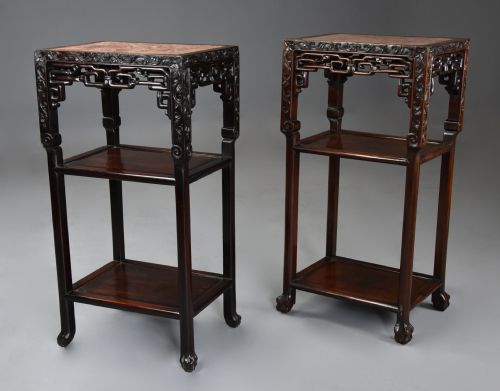
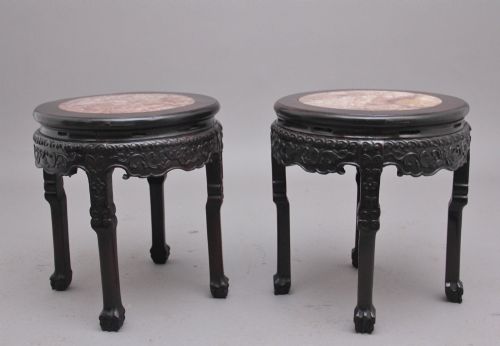
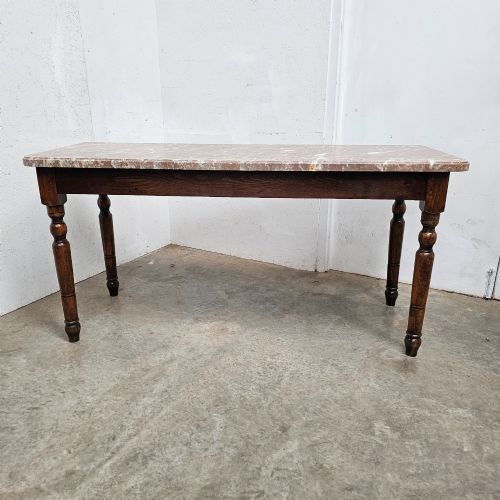
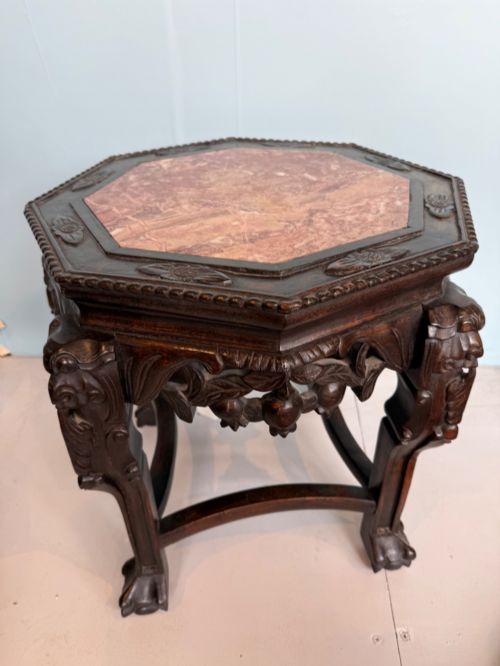
A dark marble side table typically manifests as a console, lamp table, occasional piece, or gueridon originating from the nineteenth century. These items combine timber frames with heavy stone tops, serving practical functions in hallways, reception rooms, and drawing rooms. The selection includes both British cabinet-making and continental European pieces, alongside Chinese export stands with inset stone panels.
Buyers encountering this search phrase often meet Victorian and Regency examples alongside French Empire and Italian neoclassical forms. The wooden bases range from mahogany, walnut, and rosewood to carved Chinese hardwoods and oak. Such tables function effectively to display lamps, plants, and decorative objects while introducing varied grain and mineral patterns to an interior scheme.
How they were made
The construction of a dark marble side table relies on joining dense timbers such as mahogany, walnut, rosewood, and hardwood to support a heavy stone slab. Frames often feature hand-carving, turned legs, or brass mounts, while tabletops utilise fitted grey, fossil, or rouge marble inset into wooden surrounds. In Chinese export and Qing dynasty examples, mortise and tenon joinery secures carved hardwood frames designed to hold inset marble panels.
Surface finishes include French polishing on woods like mahogany and walnut, alongside painted or gilded details on French and Italian pieces. Stone surfaces are cut and polished to highlight the natural dark veining, specimen arrangements, or fossil inclusions within the marble. Iron and brass components are incorporated structurally or decoratively to reinforce the tables and frame the stone.
Materials recorded across the selection include mahogany, walnut, rosewood, oak, hardwood, brass, iron, and specimen marble.
What varies in quality
The standard of a dark marble side table rests on the integration between the stone top and the wooden framework. Superior examples display precisely fitted marble inserts, high-grade timber with rich grain patterns, and confident carving rather than mass-produced ornamentation. The depth of the stone polish and the stability of the support structure largely dictate the standard of execution.
Origin and maker attribution also separate pieces, with works associated with documented cabinet-makers commanding greater interest. The complexity of the base - ranging from simple occasional table legs to elaborate swan supports, ormolu mounts, and intricate Chinese carving - reflects the ambition of the original workshop.
James Shoolbred·Jean Joseph Chapuis
The Dark Marble Side Table Glossary
- Gueridon
- A small circular table on a central pillar or multiple legs, frequently fitted with a marble top. Originating in France, these tables became popular throughout the nineteenth century.
- Console table
- A table designed to stand against a wall, often secured to the structure or supported by elaborate front legs. They commonly feature marble tops and mirror backs.
- Specimen marble
- Stone composed of various coloured or patterned marble fragments assembled into a geometric or pictorial mosaic top. It demonstrates high levels of stonemasonry skill.
- Jardiniere stand
- A tall pedestal or low table designed to hold plant pots, frequently incorporating inset marble panels to resist moisture damage. These are typical of Chinese export pieces.
- Ormolu
- Gilded bronze or brass mounted onto furniture frames for decorative effect. It appears frequently on French Empire and Victorian pieces.
Dark Marble Side Table: Frequently Asked Questions
Where should I place a dark marble side table?
These tables suit hallways, drawing rooms, and studies where a sturdy surface is required for lamps or decorative objects. Their polished stone tops offer resistance to everyday use while anchoring a room visually.
Positioning them against a wall as a console or beside seating as a lamp table allows the timber frame and marble top to catch the light effectively.
How do I clean the marble top?
Maintenance requires mild soap and warm water applied with a soft cloth, followed by thorough drying to protect the polished surface. Harsh chemicals and acidic liquids should be kept away from the stone to preserve its finish.
Regular dusting prevents abrasive particles from dulling the sheen of both the marble and the polished wood beneath.
Are these tables freestanding?
Many examples are fully freestanding, including gueridon tables, centre tables, and occasional pieces meant to be viewed from all angles. Console tables were traditionally designed to stand against a wall, sometimes with flat backs.
Checking the finish on the rear of the frame will indicate whether a table was intended to sit against a surface or float in a room.
How can I tell the period of the table?
Dating relies on examining the timber species, construction methods, and stylistic cues such as Regency curves, Victorian proportions, or French Empire ormolu mounts. Tool marks and the ageing of the wood provide further clues to the workshop era.
The specific variety of marble and the manner of its setting also point towards particular manufacturing periods, from nineteenth-century European workshops to Qing dynasty Chinese studios.