



Dark Marble Gueridon
A dark marble gueridon brings neoclassical gravity to a room, offering a sturdy stone surface supported by mahogany, bronze, and classical mounts.
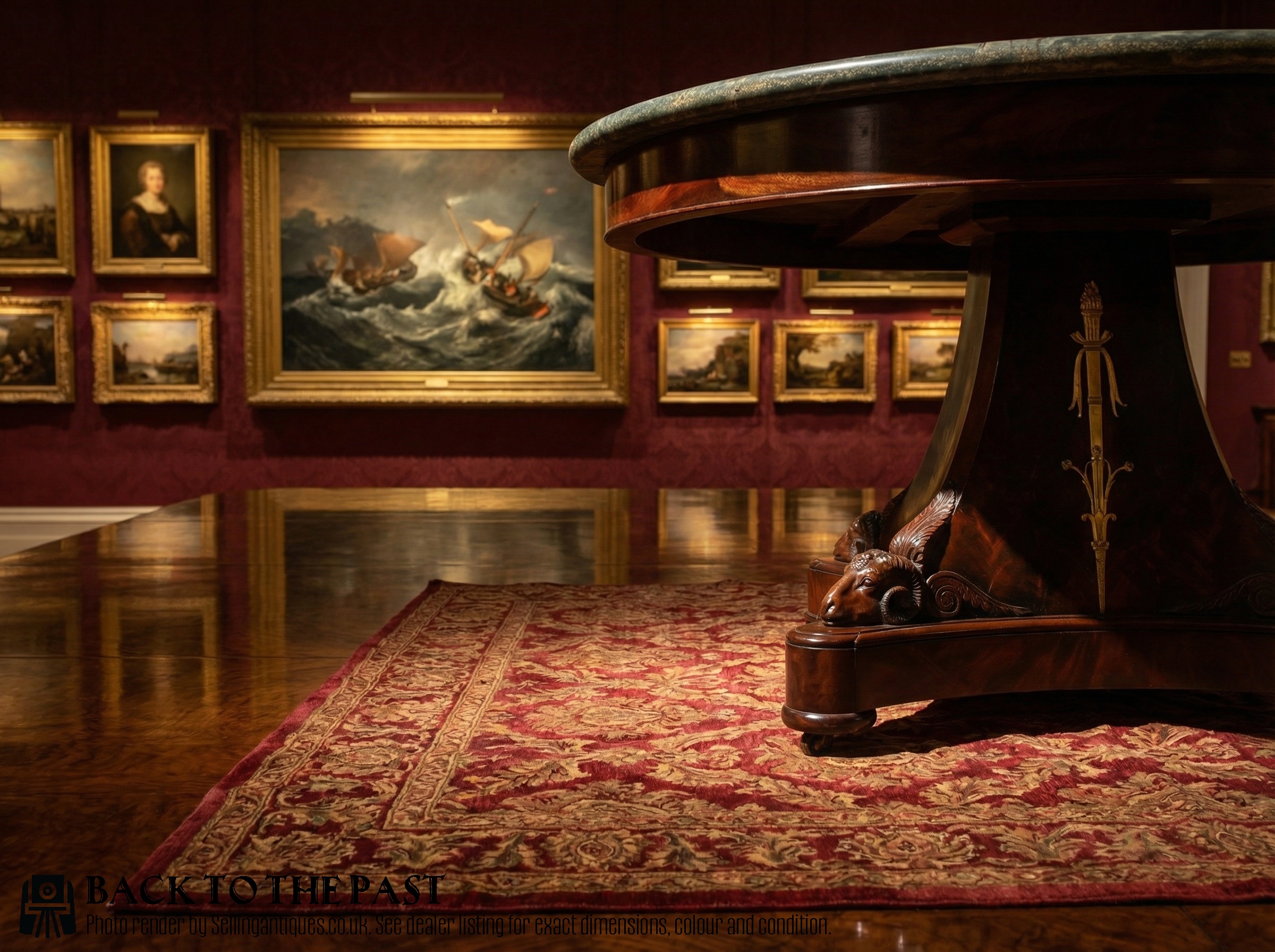
Dark Marble Gueridon
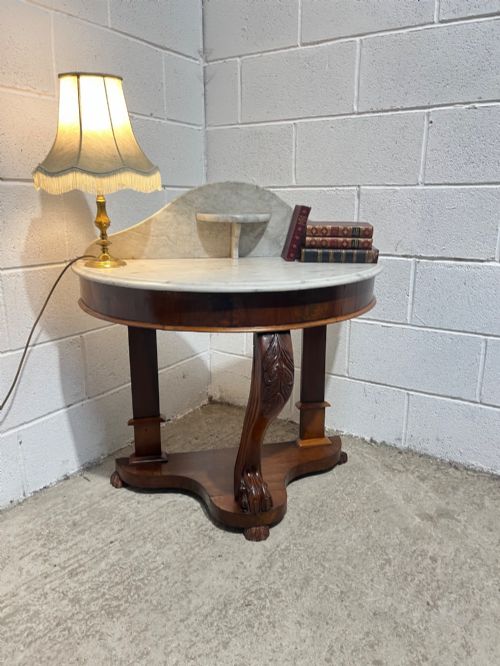
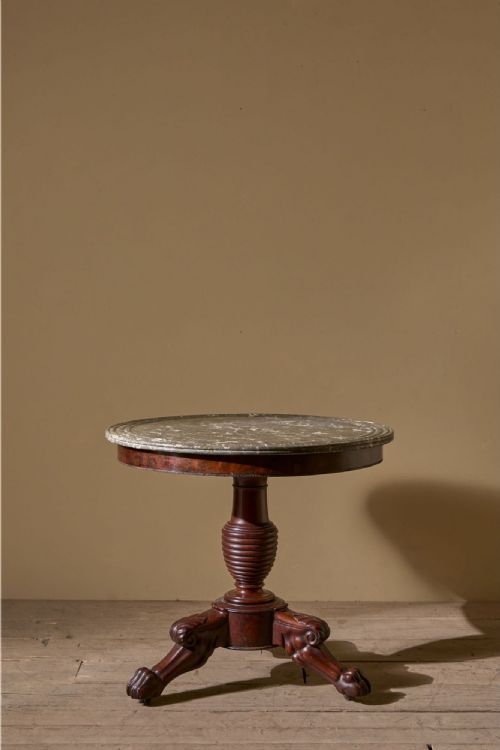
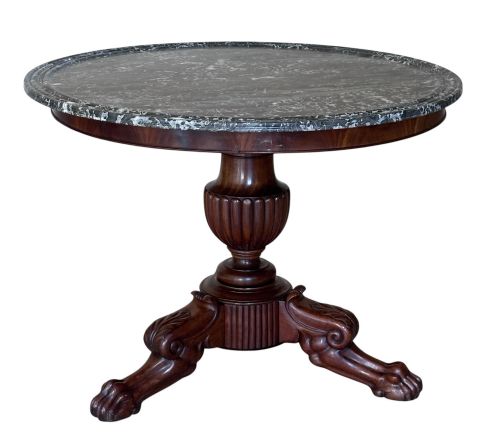
A dark marble gueridon is a circular or occasional table designed for lamps, plants, or display, rooted primarily in nineteenth-century French and Regency traditions. You will most frequently meet nineteenth-century French examples on this page, often built in mahogany with heavy grey or dark marble tops.
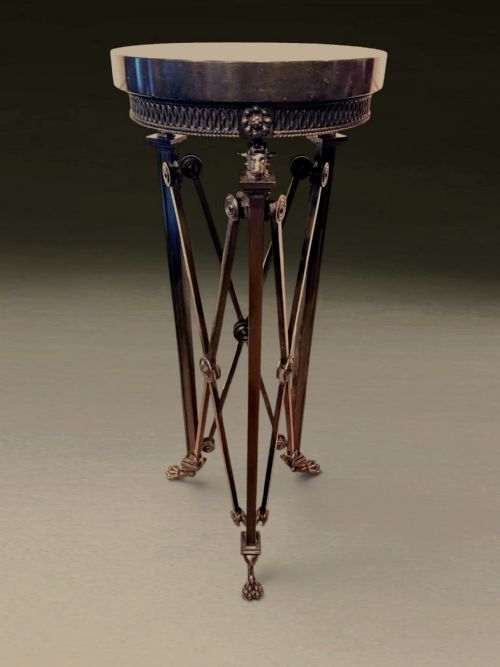
These tables take various forms beyond the standard centre table, including lamp tables, plant stands, and occasional wine tables. The structural design frequently incorporates classical motifs such as rams heads or swan supports, leaning heavily into Empire and Louis Philippe aesthetics.
While the majority of pieces originate from French workshops during the eighteen-fifties and sixties, earlier Regency iterations also appear. The unifying characteristic across these disparate forms remains the combination of a cool stone surface and a dark timber framework.
How they were made
Cabinetmakers constructed the frames using dense timbers like mahogany and occasionally coromandel, ensuring adequate support for heavy stone tops. These wooden structures were shaped to receive turned columns or pillar supports, frequently accented with brass or gilt bronze mounts.
The stone surfaces consist of heavy grey or dark marble, precision-cut to fit the circular or occasional table tops snugly. Metal detailing, including cast brass galleries and mounts, was meticulously fitted to the timber and stone components to complete the neoclassical silhouette.
Listings feature nineteenth-century French and Regency pieces built from mahogany, brass, and grey marble.
What varies in quality
Quality reveals itself in the weight and figuring of the marble top and the density of the underlying mahogany framework. Superior examples display crisp casting in the brass and bronze mounts, particularly around sculptural elements like rams heads and swan details.
The joinery and stability of the central pillar or leg supports distinguish finer pieces from standard production. A well-balanced frame maintains rigid alignment even under the substantial weight of a genuine stone top.
The Dark Marble Gueridon Glossary
- Gueridon
- A small circular table on a pillar and claw base, originating in seventeenth-century France. These pieces served variously as torchieres, lamp tables, and centre tables.
- Empire
- A neoclassical design style spanning the late eighteenth and early nineteenth centuries. It draws heavily on ancient Roman, Greek, and Egyptian motifs.
- Centre table
- A freestanding table finished on all sides so it can occupy the middle of a room rather than sit against a wall. They frequently share forms with standard gueridons.
- Ormolu
- Gilded bronze mounts and decorative elements applied to furniture frames. The technique involves coating bronze with a finely ground mercury and gold amalgam before heating.
- Specimen marble
- A tabletop composed of various coloured marbles fitted together in geometric or pictorial patterns. Such tops denote high decorative ambition.
Dark Marble Gueridon: Frequently Asked Questions
What is a dark marble gueridon used for?
These tables function primarily as lamp tables, plant stands, or occasional display surfaces in drawing rooms and hallways. Their sturdy stone tops make them practical for holding objects without risking heat or liquid damage to the wood.
Historically, they occupied central positions in rooms or sat beside seating arrangements to provide accessible surface space. Their compact footprints allow them to fit into corners where larger rectangular furniture cannot go.
How do I date a nineteenth-century gueridon?
Dating relies on observing stylistic shifts between the Regency, Empire, and Louis Philippe periods represented in the woodwork and mounts. Heavier architectural proportions and specific classical motifs often point towards earlier nineteenth-century production.
Examining the construction methods beneath the tabletop and inside the pillar base provides further chronological clues. Secondary timbers used in the internal framing help confirm the manufacturing era.
Are these tables heavy to move?
The combination of dense mahogany frames and thick marble slabs makes these pieces surprisingly weighty. Care must be taken when repositioning them to lift from the wooden underframe rather than the stone top.
Despite their solid construction, many nineteenth-century examples utilise removable marble tops to ease transport. This modular approach protects both the stone and the timber joints during movement.
How do I care for the marble top?
Routine maintenance involves wiping the stone with a soft, damp cloth and avoiding acidic cleaners that can etch the polished surface. Periodic waxing of the wooden base keeps the mahogany nourished without affecting the stone.
Placing felt pads beneath heavy objects placed on the marble prevents scratching. Gentle handling preserves the original polish achieved by nineteenth-century stonecutters.