
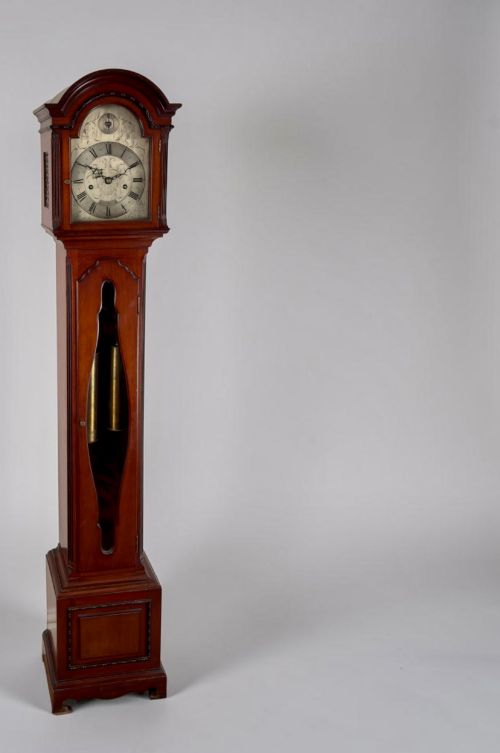
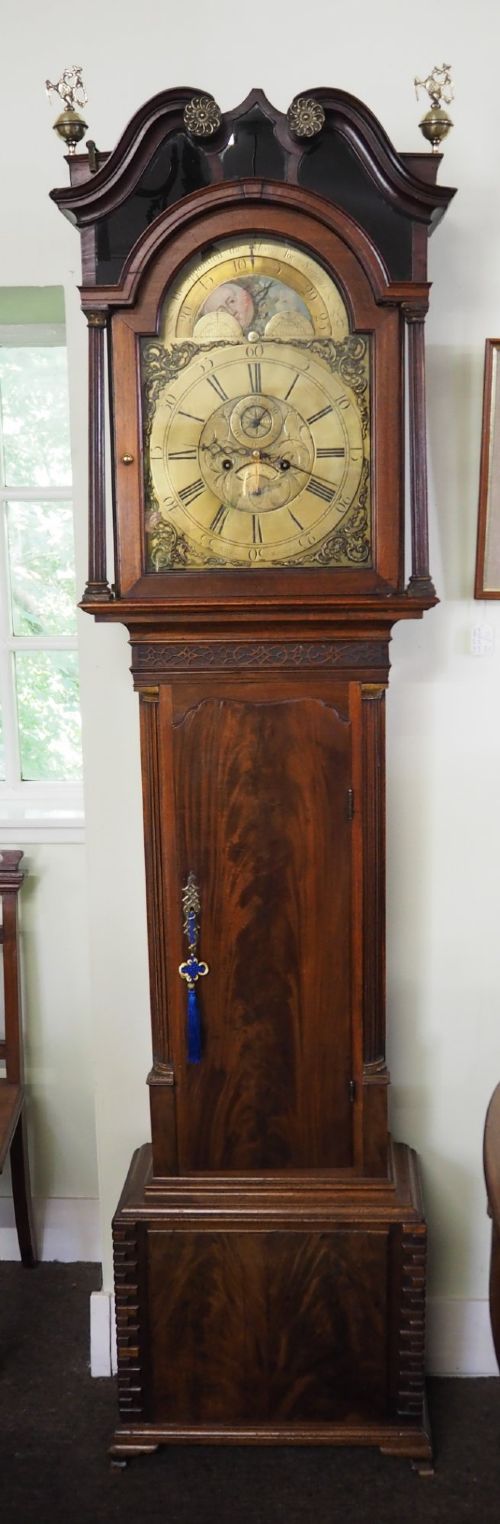
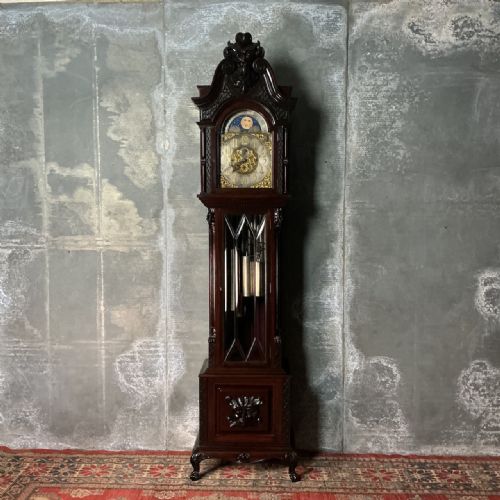
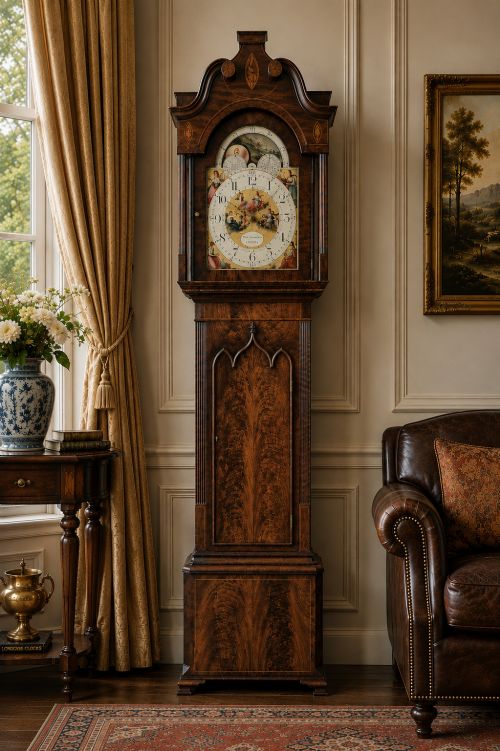
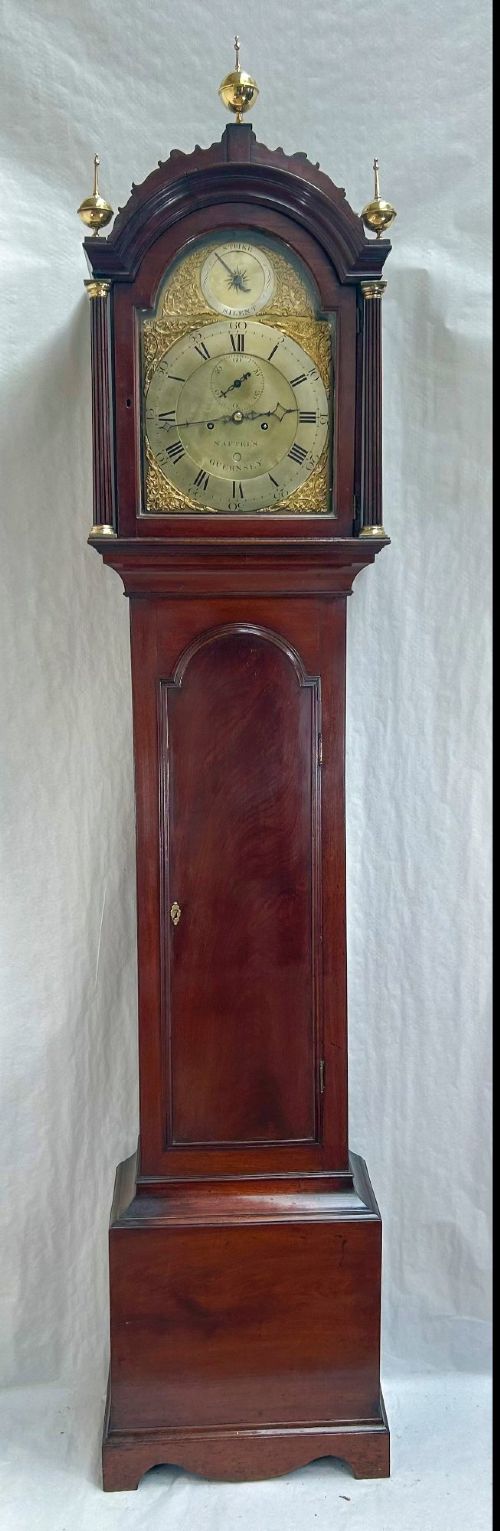
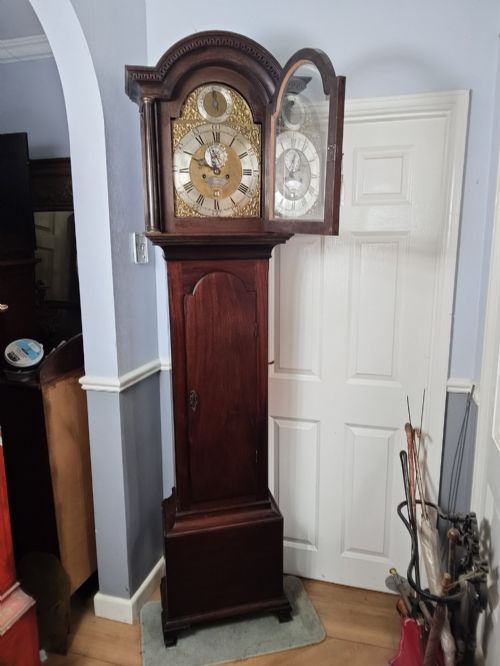
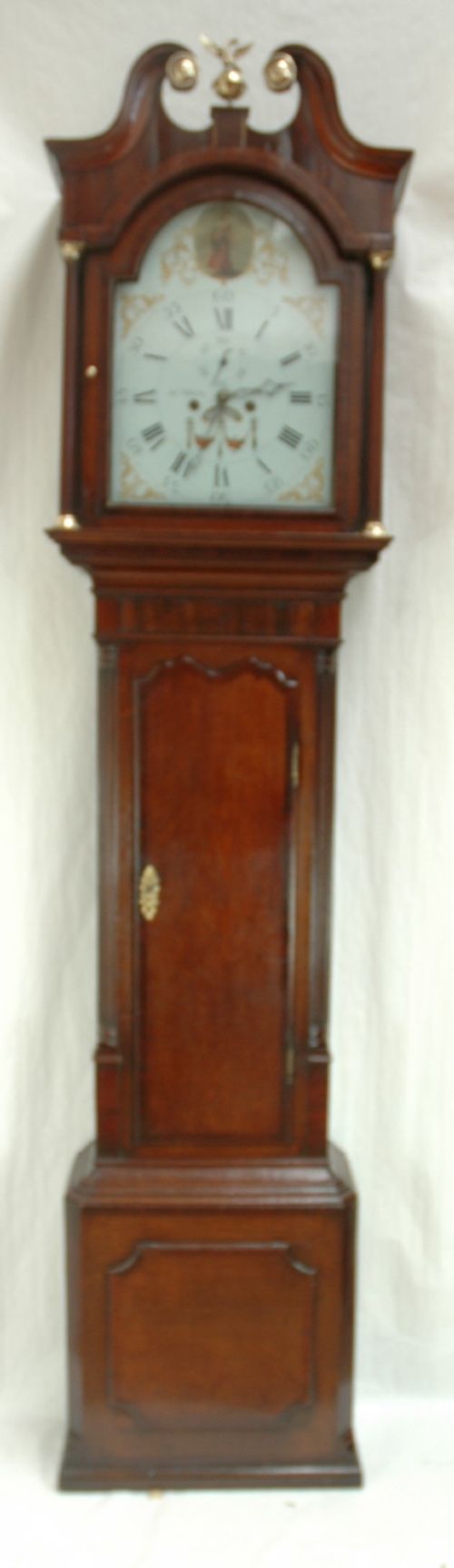
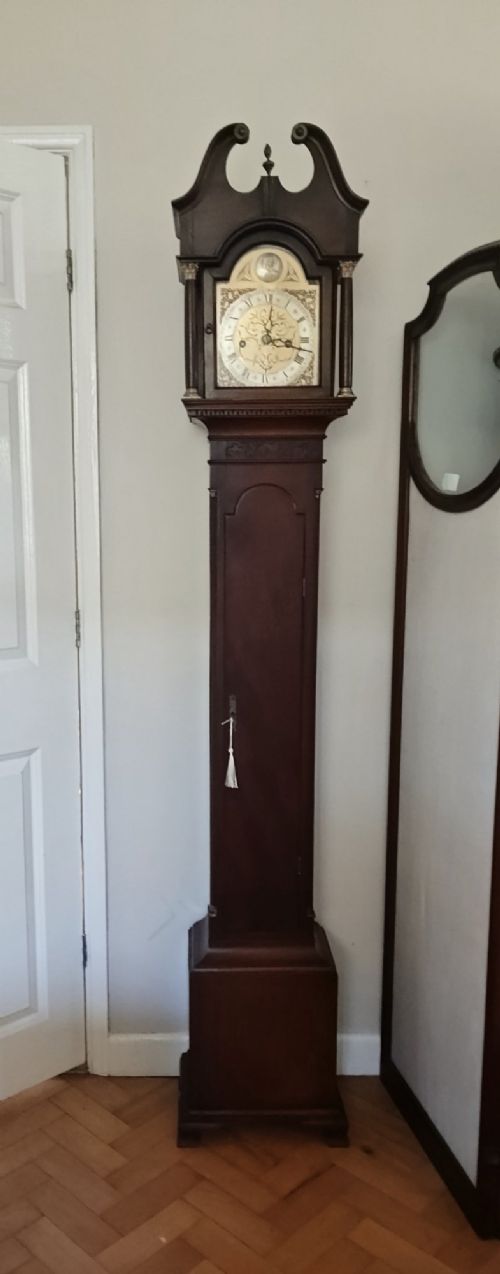
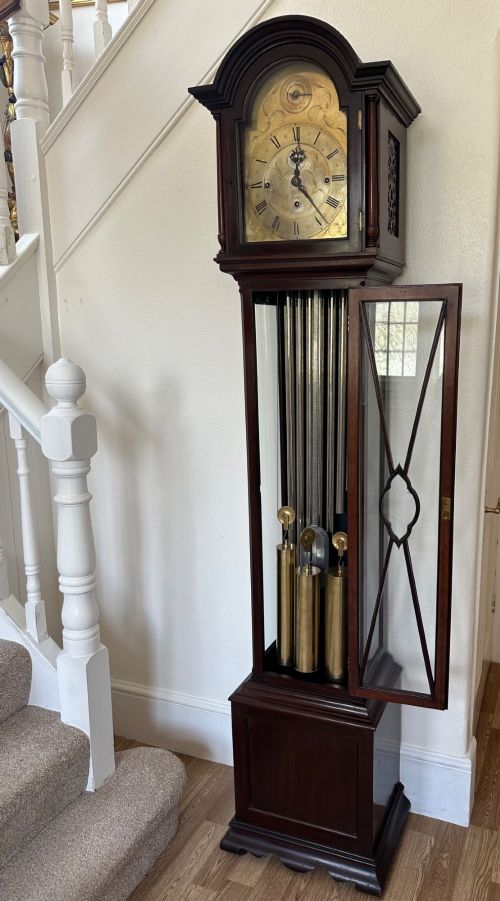

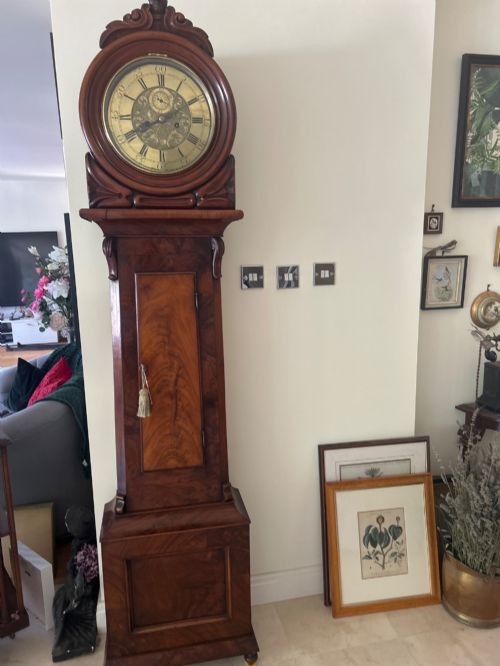
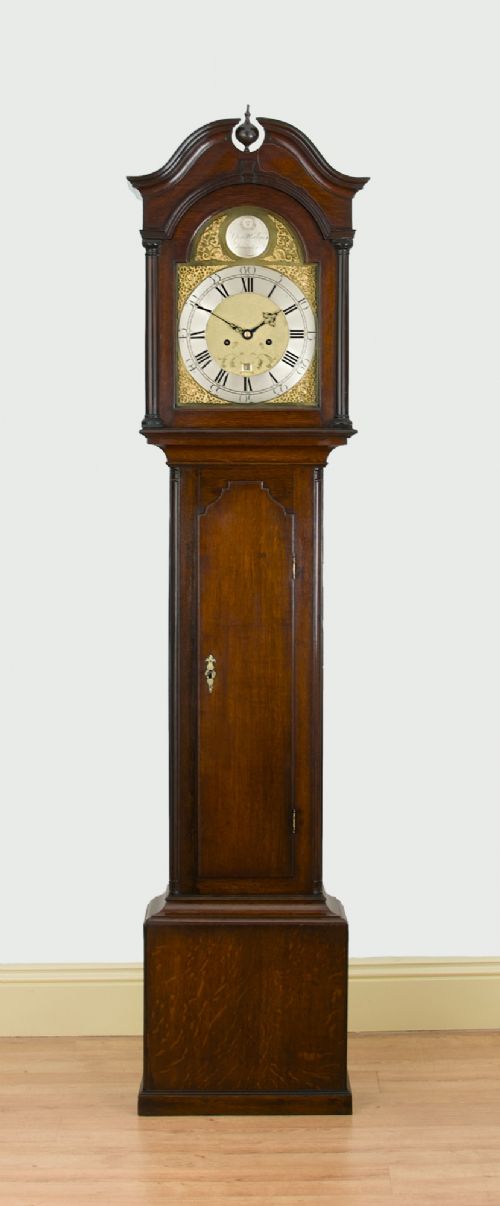


Dark Mahogany Tallcase Clock
A dark mahogany tallcase clock commands attention in a hallway, measuring time through periods from the eighteenth century to the Edwardian era.

Dark Mahogany Tallcase Clock
A dark mahogany tallcase clock stands as a floor-standing timepiece enclosed in a tall wooden case, frequently referred to in listings as a longcase, grandfather, or grandmother clock. These vertical instruments span multiple eras, appearing across Georgian, Regency, Victorian, and Edwardian periods.

Materials and construction
Cabinetmakers utilised solid mahogany and figured mahogany veneers over secondary timbers like oak, constructing tall housings designed to protect intricate weight-driven or spring-driven movements. Cases frequently display carved ornamentation, brass dial appliques, and glazed access doors.
Dial construction combines engraved brass, silvered chapter rings, and painted iron or steel surfaces, sometimes incorporating subsidiary mechanisms such as moon rollers, tidal indicators, or strike-silent functions.
Some Edinburgh models incorporate a horse design within their historical records, bringing an equestrian touch to the ticking.
Markers of quality
The calibre of the movement largely defines the hierarchy of these timepieces, distinguishing simple thirty-hour or eight-day trains from complex quarter-striking, musical, or chiming mechanisms with multiple tubes or bells. Maker attribution also elevates an example significantly.
Cabinet work distinguishes standard production from superior pieces through the selection of figured timber grains, proportions of the hood and trunk, and the presence of specialised dials like moonphase displays.
Gillett and Johnston·Samuel Kellett·George Hallifax·Henry Weedon·Edward Shepley·Joseph Gibson·Thwaites London·Charles Dowsett·William Moon·Edward White·William Betagh·Handley and Moore·James Tregent·Thomas Goddard
The Dark Mahogany Tallcase Clock Glossary
- Tallcase clock
- A floor-standing timepiece with a weighted movement enclosed in a vertical wooden case. These instruments are also known in various listings as longcase or grandfather clocks.
- Moonphase
- A mechanism displaying the lunar cycle on a rotating dial face. This complication tracks the phases of the moon through a painted aperture.
- Chapter ring
- The circular ring on a clock face that bears the hour numerals. These are commonly formed of silvered brass.
- Strike-silent
- A mechanism that allows the striking train to be disengaged so the clock remains quiet at night. This function prevents the hour chimes from sounding during sleep hours.
- Drumhead
- A circular dial housing that sits atop the trunk of specific regional tallcase clocks. This style appears frequently in Scottish Regency examples.
Dark Mahogany Tallcase Clock: Frequently Asked Questions
What is a tallcase clock?
A tallcase clock is a weight-driven pendulum timepiece housed inside a tall wooden enclosure that rests directly on the floor. These pieces are commonly called grandfather clocks.
They serve as both precision instruments and architectural furniture, designed to stand upright in hallways, living rooms, and stairwells.
How do I wind an eight day clock?
An eight day movement requires winding every week using a specialised crank key inserted into winding holes on the dial face. This action draws the suspended weights back up toward the top of the case.
Care must be taken not to overwind the mechanism, as this can place excessive tension on the internal springs or gut lines.
What does a moon roller do?
A moon roller mechanism rotates behind a shaped aperture on the dial to track the lunar cycle across a twenty-nine and a half day period. This visual display indicates whether the moon is waxing, full, or waning.
In historical domestic settings, this feature assisted with night travel and agricultural scheduling.
How do I date a longcase clock?
Dating relies on examining stylistic clues in the wooden case, such as bracket feet, pediments, and veneer types, alongside the construction of the dial and movement. Signatures or engraved names of known makers recorded on the brass face also help establish chronology.
Georgian, Regency, and Victorian design markers indicate specific decades of production across the eighteenth and nineteenth centuries.
Where should I place a tallcase clock?
A tallcase clock requires a stable, level floor and a secure attachment to a wall through the backboard to prevent tipping. Rooms with stable temperatures and low humidity help protect the mahogany timber case and internal steel components.
Placement should avoid direct sunlight and drafts from heating vents to preserve the wood finish and keep the pendulum swinging evenly.