


Dark Mahogany Swing Mirror
A dark mahogany swing mirror offers a practical and elegant addition to any dressing table, moving smoothly to catch the light.
Dark Mahogany Swing Mirror
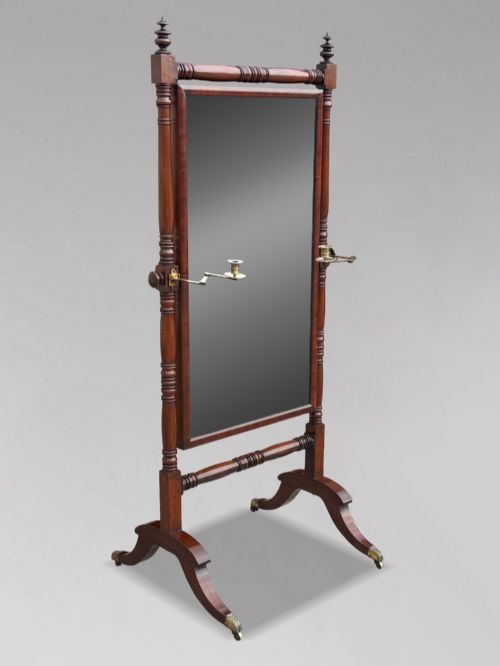
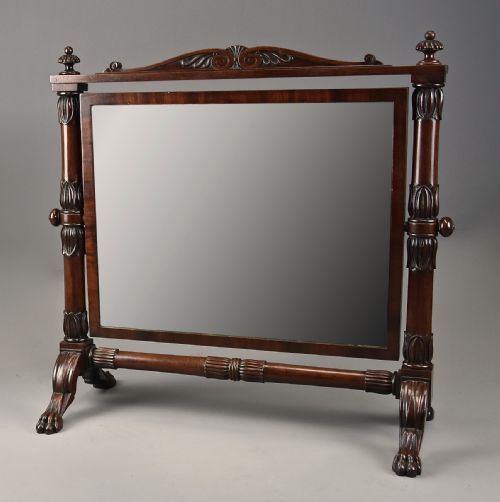
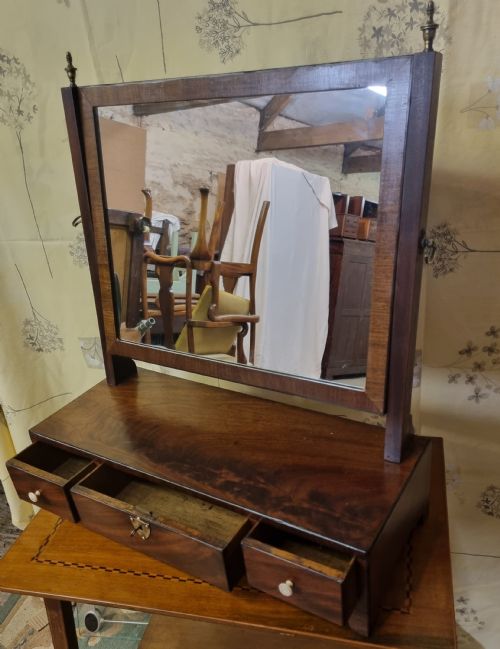
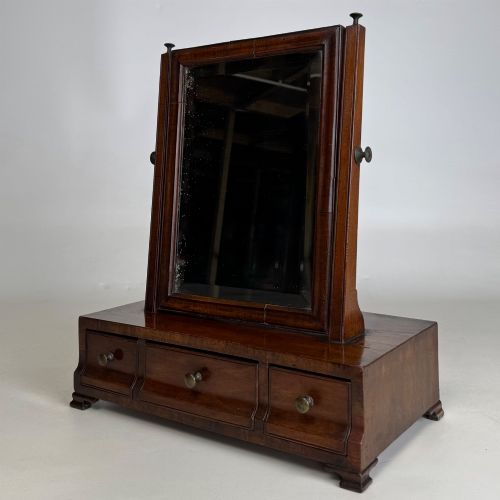
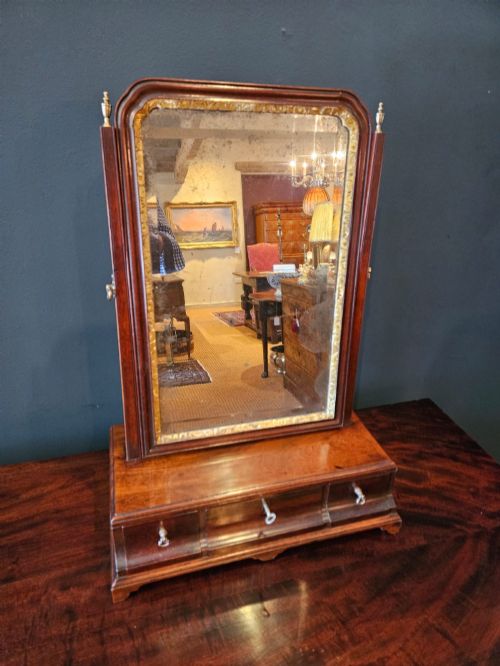
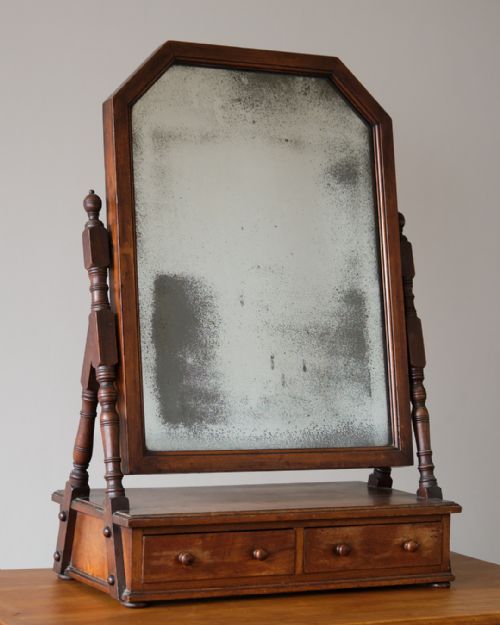
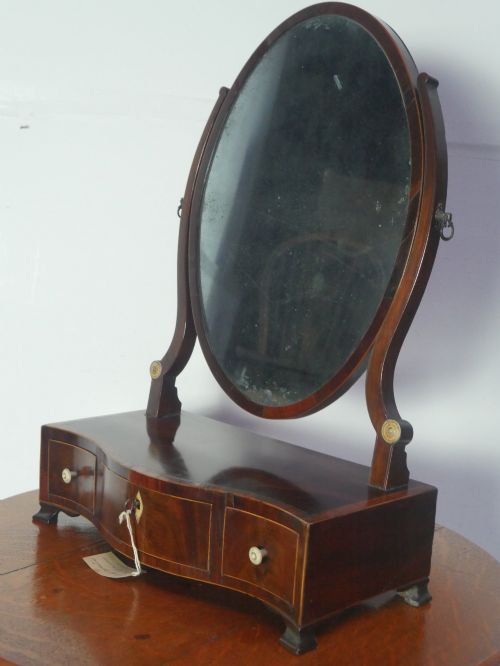
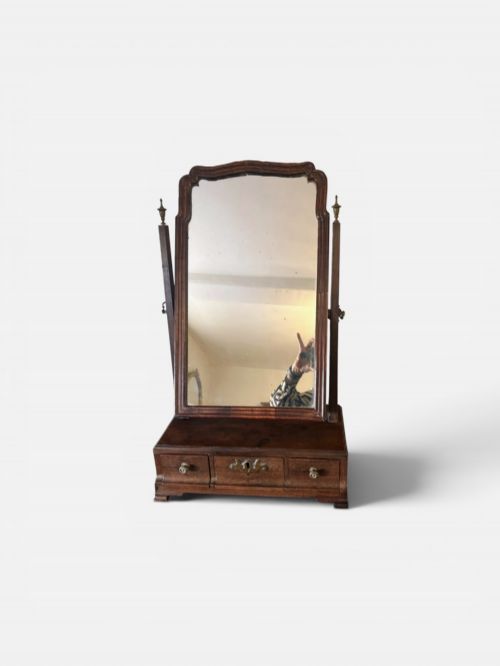
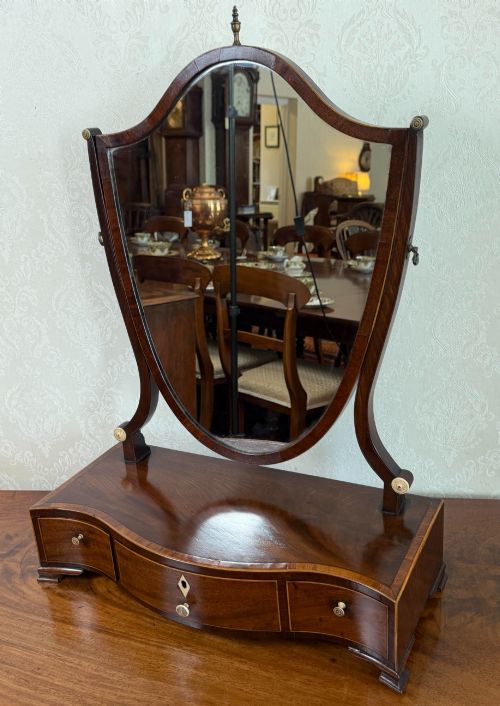
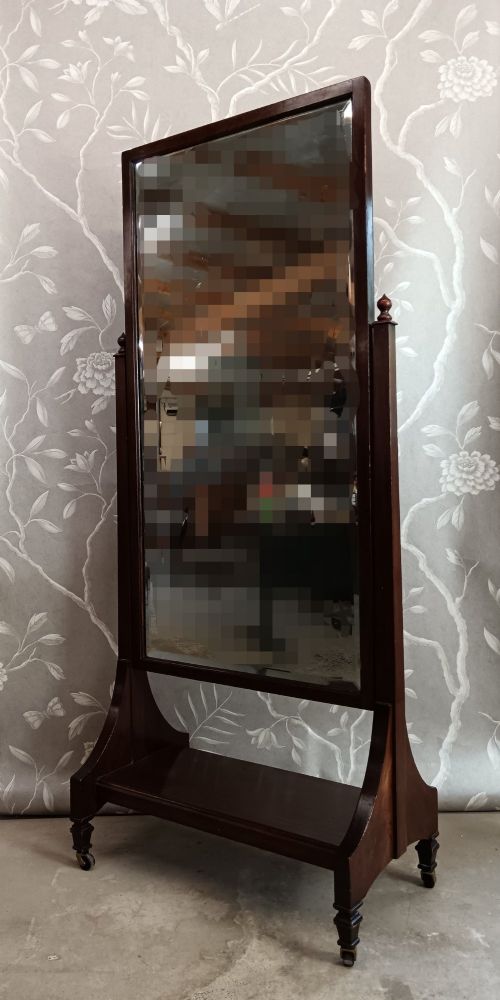
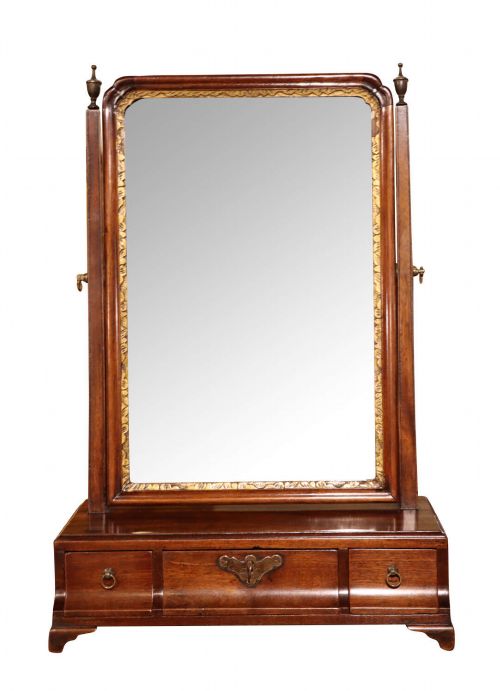
A dark mahogany swing mirror is designed for daily grooming, sitting atop a chest or dressing table to tilt as needed. These pieces take several forms, appearing frequently as table top toilet mirrors with small drawers or as taller floor-standing cheval mirrors.
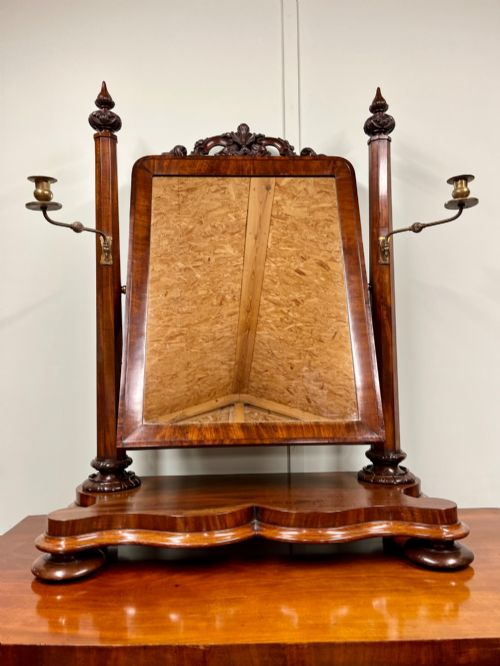
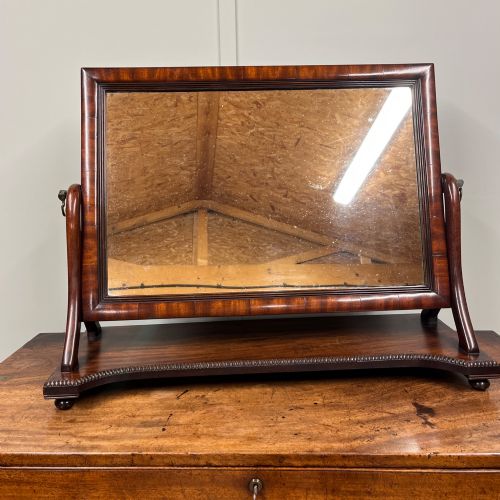
The selection ranges from simple 19th century examples to elaborate Georgian and Regency pieces. Makers shaped the timber into rectangular or oval glass frames mounted on upright supports.
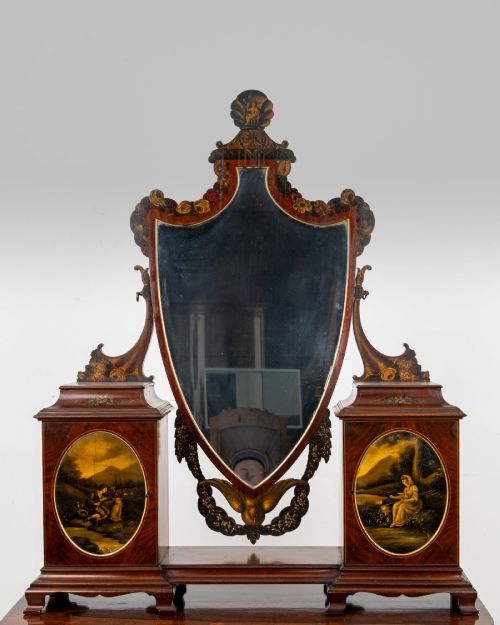
Originating largely from British workshops, these mirrors served bedrooms and boudoirs across multiple stylistic eras. The format remained consistent even as decorative details shifted from George II parcel-gilt work to Victorian Gothic Revival.
What varies in quality
Quality rests in the crispness of the timber carving and the depth of the mahogany grain. Pieces featuring flame mahogany veneers or intricate Dutch marquetry inlay sit higher on the scale than plain, utilitarian examples.
Proportion and the retention of original brass hardware dictate desirability. Well-proportioned uprights and intact drawer linings show that a piece received careful handling over centuries.
Object forms range from compact tabletop toilet mirrors to full-length freestanding cheval mirrors and fitted vanity tables.
P & MA Nicholson·Heal & Sons
The Dark Mahogany Swing Mirror Glossary
- Cheval mirror
- A large, full-length dressing mirror supported by a freestanding frame with four legs. This design allows the entire glass plate to swing freely between vertical posts.
- Toilet mirror
- A smaller tabletop mirror usually fitted with a base containing one or more small drawers. These pieces sat upon dressing tables for close-up grooming.
- Parcel-gilt
- Partially gilded woodwork where gold leaf highlights specific carved details against a dark mahogany background. This technique was favoured on finer Georgian and George II examples.
- Stringing
- A narrow inlaid line of contrasting timber, such as boxwood, set flush into the mahogany surface. It defines the edges of drawer fronts and mirror frames.
Dark Mahogany Swing Mirror: Frequently Asked Questions
Where should I place a swing mirror?
These mirrors suit dressing tables, chests of drawers, or sturdy sideboards where their pivoting action proves useful. Freestanding cheval versions stand directly upon the floor in bedrooms or dressing rooms.
Ensure the surface is level to prevent unnecessary strain on the brass pivots and wooden uprights over time.
How do I date a mahogany mirror?
Dating relies on observing structural characteristics, timber choice, and secondary woods. Georgian pieces often display slender proportions and fine bracket feet, while Victorian examples tend to be heavier with bolder carving.
Hardware such as brass screw caps and the construction of internal drawer boxes also provide clear chronological clues.
Are the mirror plates original?
Many older pieces retain their original glass, which can exhibit light foxing or small dark spots. These natural ageing marks confirm the considerable age of the object.
Replacement glass does occur and is usually cleaner and brighter than historic silvered plates.
How do I care for the mahogany finish?
Maintain the timber by dusting gently with a soft, dry cloth and avoiding direct sunlight. Excessive heat and moisture will damage both the mahogany veneer and the old polish.
Apply a quality wax sparingly only when the wood appears dry to preserve the natural lustre.