



Dark Mahogany Nest Tables
Dark mahogany nest tables bring together timber, clever engineering and practical surfaces that tuck neatly away when floor space matters.
Dark Mahogany Nest Tables
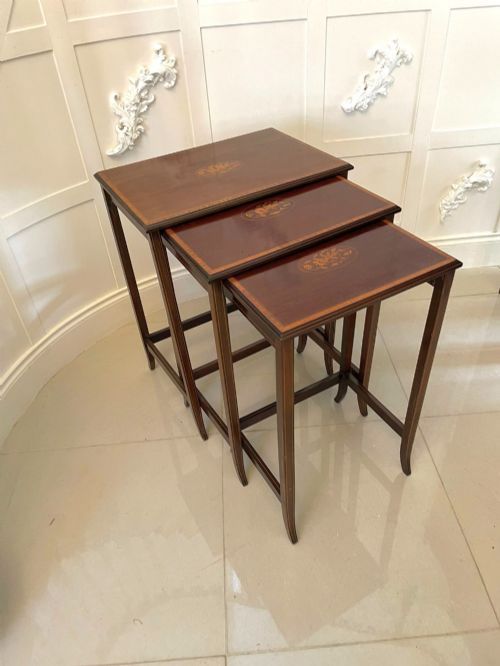
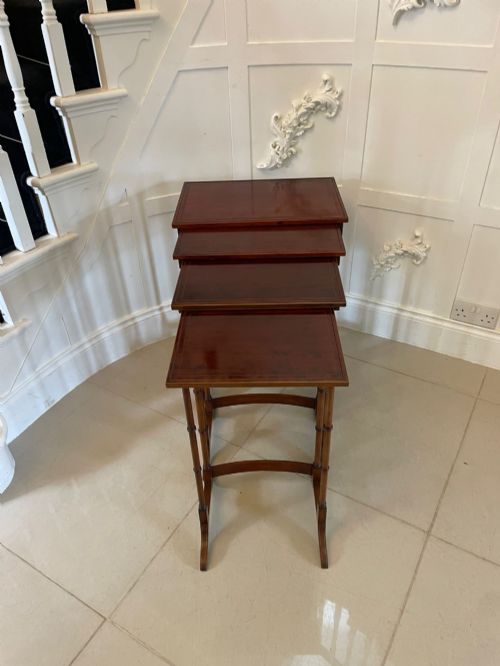
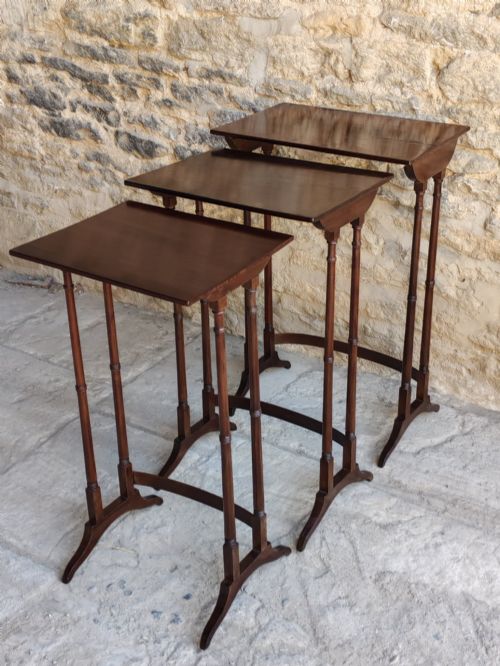
Dark mahogany nest tables comprise sets of graduating occasional tables designed to slide one beneath another when not in use. They appear across several periods, with Edwardian and Victorian examples forming the bulk of what turns up here alongside Georgian, nineteenth century and later pieces.
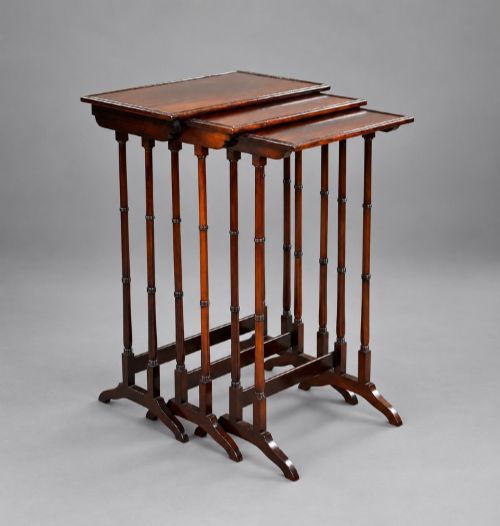
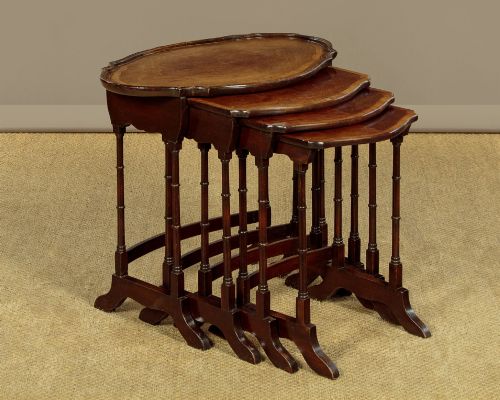
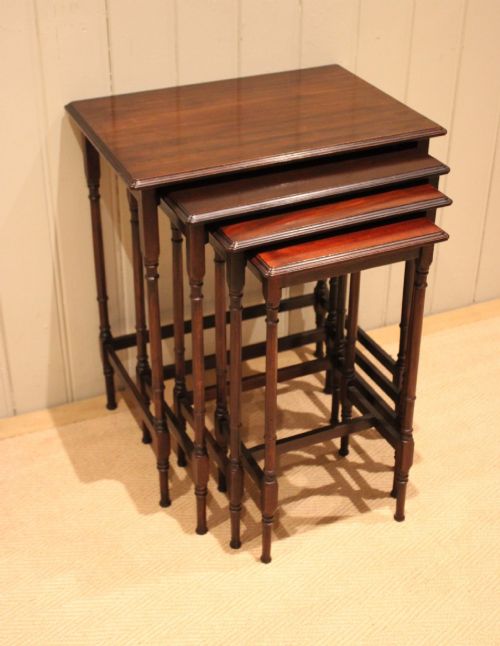
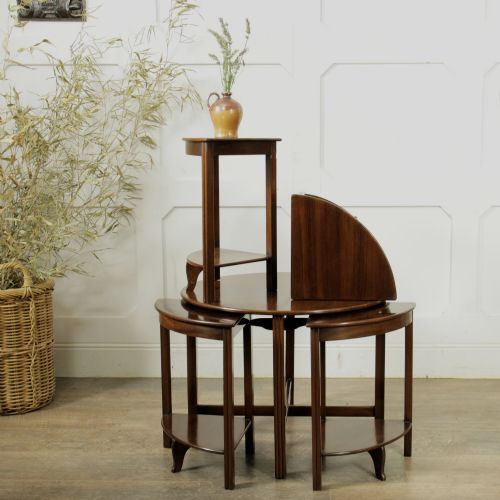
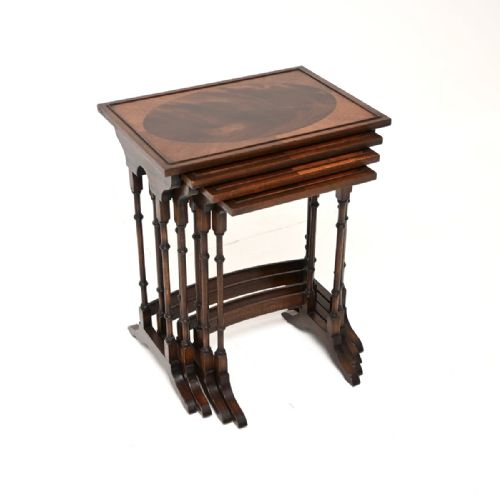
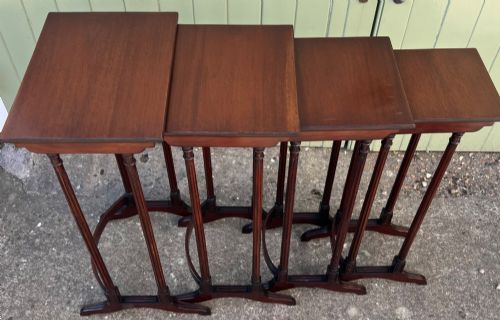
The configurations vary between sets of three, four, or occasionally five tables, taking rectangular, circular or oval forms. Makers from the Edwardian era onwards frequently produced quartetto sets, which arrange four tables in a descending sequence.
These pieces function primarily as occasional side or coffee tables in sitting rooms, offering movable surfaces for lamps or cups without cluttering the room. Buyers choose them for their combination of rich timber tones and space saving utility.
Materials and construction
Makers built these nests from mahogany and figured mahogany timber, frequently applying veneer over solid wood frames. The selection focuses on dark grain patterns that take a deep polish.
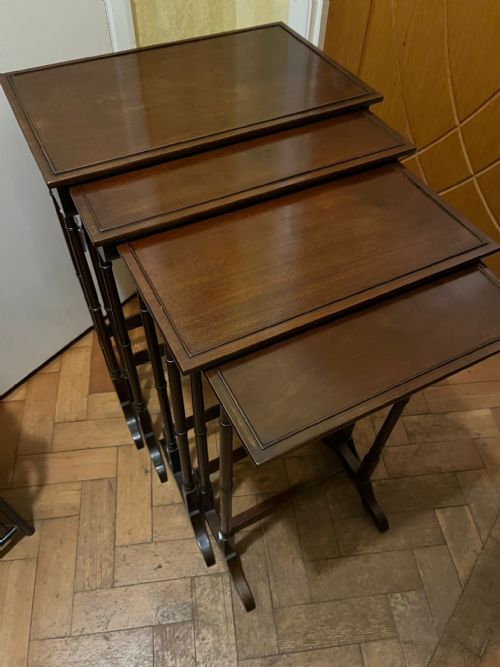
Many examples incorporate boxwood inlay and satinwood stringing to accent the borders of the tabletops. These decorative lines contrast sharply against the dark mahogany body.
Tables are constructed to fit closely within one another, requiring precise tolerances in the legs and frame dimensions so each smaller piece slides smoothly into place.
Dark Mahogany Nest Tables Retail Price Guide 2026
Typical asking prices for dark mahogany nest tables among the pieces listed under this phrase on Sellingantiques today, from the lower quarter to the upper quarter. They describe what is for sale here now, not the wider market.
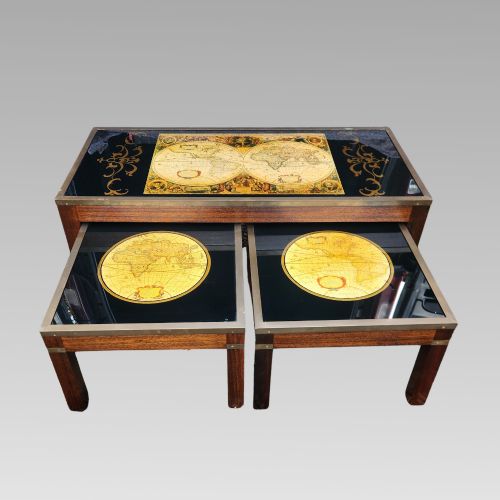
Table forms span nest of four, quartetto, circular and oval coffee table configurations.
Judging quality
Quality rests heavily on the selection of the mahogany timber and the presence of figured grain or decorative inlay. Plain timber lacks the depth found in finely figured or satinwood accented tops.
Construction rigidity distinguishes superior sets from ordinary ones, as smaller tables in a nest often suffer from loose joints due to constant sliding. A well made set retains stability across every tier without excessive lateral play in the legs.
Waring & Gillow
The Dark Mahogany Nest Tables Glossary
- Quartetto
- A matched set of four graduating tables designed to nest together. This term appears frequently in nineteenth century and Edwardian listings.
- Inlay
- A decorative technique where contrasting woods such as boxwood or satinwood are set into the mahogany surface to form lines or patterns.
- Veneer
- A thin layer of figured mahogany applied over a secondary timber base. This method allows cabinetmakers to display striking grain patterns across the tabletop.
- Occasional table
- A small movable table intended for intermittent use in a living space. These form the individual units within a nest.
Dark Mahogany Nest Tables: Frequently Asked Questions
How do you clean dark mahogany?
Wipe surfaces gently with a soft, dry cloth to remove dust without disturbing the polished finish. Avoid household sprays that leave silicone residues on the wood.
Apply a traditional beeswax polish sparingly when the timber appears dry, buffing it firmly after application to restore the natural sheen.
What is a quartetto nest?
A quartetto nest consists of four graduating tables designed to slide completely beneath the largest top. This specific grouping became particularly popular during the Victorian and Edwardian periods.
Each table diminishes in height and width just enough to clear the frame of the next one up, allowing the entire set to occupy the floor space of a single small table.
Can these tables hold heavy items?
The smaller tables in a nest possess lighter frames and slender legs intended for cups, books or small lamps. Placing heavy objects on the subordinate tiers risks straining the joints.
The largest primary table offers the sturdiest surface in the set, though caution remains wise with antique furniture built for light occasional duty.
How do I date an Edwardian nest?
Edwardian nests often feature light boxwood stringing, satinwood crossbanding and slender turned or pillar supports. The timber tends to show a lighter reddish brown tone compared to deeper Victorian examples.
Construction clues include machine cut elements alongside hand finishing, reflecting the manufacturing methods common around nineteen hundred.